
Augusta is a popular winter salad onion variety. It has become popular with domestic gardeners for its cold hardiness, excellent yield, and shelf-stable bulbs. Its main advantage is the ability to produce very early greens and fully formed bulblets by planting the sets in the fall.
Introduction to the variety
Augusta is a vegetable variety bred abroad. Its origins are attributed to the Czech company Semo. Other sources suggest it was developed in the Netherlands or Poland.
This variety is classified as an early short-day onion. Its growing season lasts between 260 and 280 days, including the winter months. When planting sets outdoors in the fall, gardeners harvest within the following timeframes:
- mid-April – cutting of very early greens;
- In the second half of April and in May, gardeners collect small bulbs with green feathers (this harvest does not store for long and is intended for consumption fresh within a short period of time);
- In June and July, the harvest of turnips takes place, by which time they have time to fully form and ripen.
The Augusta onion has excellent technical characteristics:
- frost resistance (the crop is not afraid of frost of -20°C, it winters in open ground even without shelter);
- immunity to diseases;
- lack of tendency to bolt;
- high yield - 120,000 kg per 1 hectare of onion planting is obtained by farmers when growing the variety on an industrial scale;
- shelf life of turnips (they are stored in a cool and dry place without losing their marketable appearance and taste until the end of winter).
External data
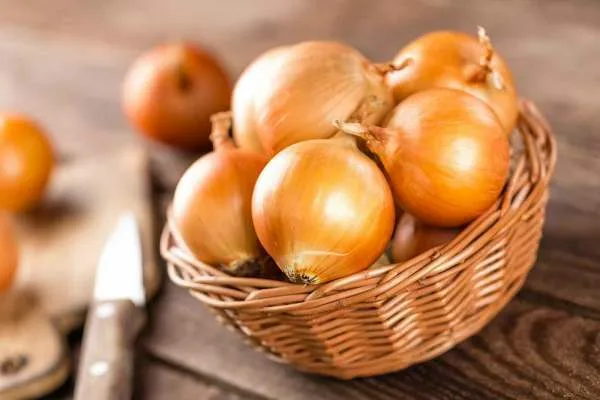
Bulbs of this variety have distinctive features:
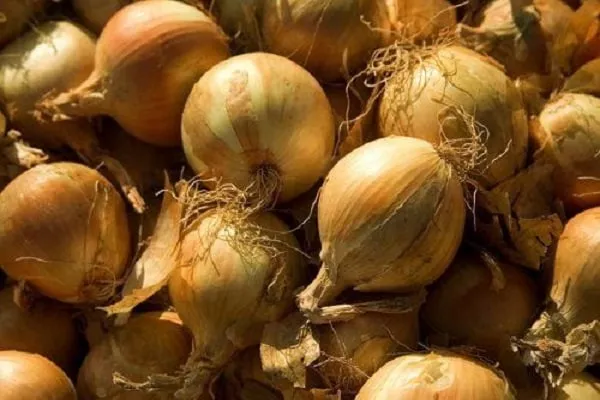
- weight - from 120 to 250 g (with enhanced agricultural technology the figure reaches 350 g);
- flat-round shape;
- golden color of dry scales, which are distinguished by their density and cover the turnip in 4-5 layers;
- internal juicy scales of white or cream color.
Augusta plants produce a lot of juicy, beautiful greenery, rich in vitamins and other substances beneficial to human health.
Taste characteristics and purpose
Experts rate the vegetable's flavor as excellent. It's semi-spicy, quite delicate, and harmonious.
The Augusta winter onion harvest has versatile uses. Housewives add it to a variety of dishes:
- vegetable salads;
- soups;
- second courses.
Subtleties of agricultural technology
Choose a suitable plot in your garden for planting winter onions: open, level, and sunny. Keep in mind that this variety is picky about soil. Grow it in the following soils:
- loose;
- lungs;
- fertile;
- with neutral acidity;
- moderately moist (plants do not tolerate marshy soils and close groundwater levels);
- sandy loam and loamy;
- where you previously grew beans, corn, potatoes, zucchini, cucumbers, tomatoes, cabbage.
- ✓ Make sure that the area is not subject to standing water even after heavy rains.
- ✓ Check the soil pH level, it should be between 6.0-7.0 for optimal onion growth.
Dig over the area, clear away weeds, and apply fertilizer. The vegetable doesn't like fresh organic matter. Don't use it immediately before planting the onions. Do this well in advance, 12 months before planting. The day before planting, apply mineral fertilizers rich in nitrogen, phosphorus, and potassium.
Determine the planting time for August onions taking into account the local climate:
- 14 days before the ground freezes;
- 28-30 days before the arrival of real cold weather with frosts;
- at an air temperature of +5-6°C.
Onion sets will need to be prepared for planting. Follow these steps:
- Sort out the bulbs, discarding damaged and spoiled specimens;
- Dry the selected seed material by leaving it in a paper bag in a living area;
- warm up the seed onions for 24 hours on a warm radiator;
- A few hours before planting, soak it in water with the addition of potassium permanganate or copper sulfate.
- ✓ Use only healthy sets without signs of disease.
- ✓ Before planting, treat the seedlings with a fungicide solution to prevent fungal diseases.
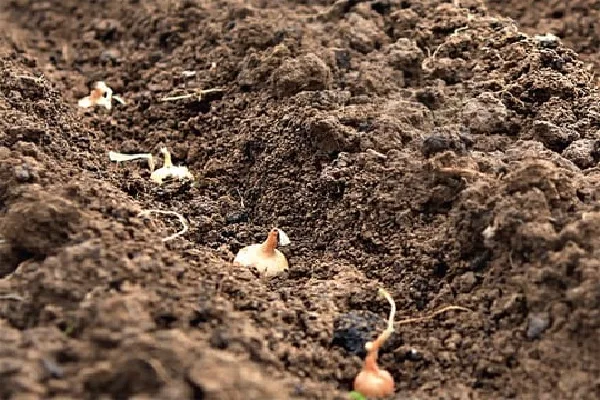
Start sowing on a cloudy, but not rainy, day. Level the soil and make furrows in it, 5 cm deep. Loosen the bottom of each furrow to allow the onion roots to grow and develop.
Plant the onion sets with the bottom down, following the pattern:
- the distance between the bulbs is 8 cm (if they are large, increase the step to 10 cm);
- row spacing is 20-25 cm.
After planting, there's no need to water the bed. Sprinkle it with mild peat moss. As winter approaches, you'll need to cover the onion bed with additional plant debris. During colder months, cover it with snow.
In the spring, begin fertilizing. After the snow melts, water the first sprouts with nutrient-rich solutions:
- mullein solution (1:10);
- ash infusion;
- complex mineral fertilizer dissolved in water.
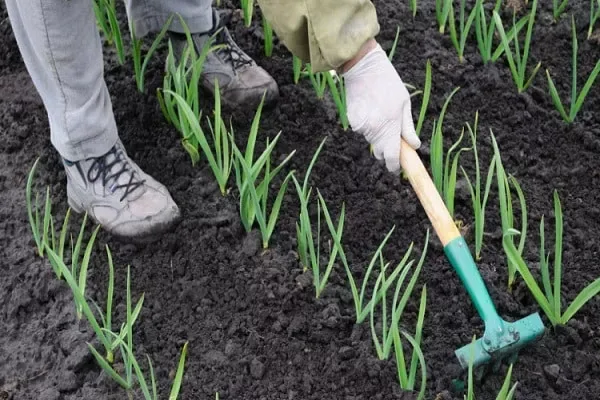
Young, fragile greens require moderate watering. Stop watering a month before harvesting. Don't forget to loosen the soil and weed the beds regularly. You'll also need to take care to protect the plants from pests.
Reviews
Augusta is a variety of winter onion grown from sets. Gardeners value it for its excellent frost resistance and disease resistance. It's the best choice for those looking for an early harvest of greens and long-lasting onions that will last until next winter.