
Albion F1 is a mid-season, high-yielding onion variety. Gardeners appreciate it for its salad flavor, disease and cold resistance, and hardiness. It is intended for growing in open beds. In a single season, gardeners can harvest beautiful, juicy onions from seed.
Who developed the variety and when?
Albion is a Dutch vegetable hybrid developed 15 years ago by Bejo Zaden. Their goal was to develop a high-yielding, cold-resistant white onion for cultivation in northern and central Europe.
Description of the plant and bulbs
When grown in a garden bed, the Albion onion produces foliage that has the following characteristics:
- related to the vertical type;
- green;
- with a light waxy coating on the surface;
- in the amount of 5-7 pieces per one turnip.
Gardeners don't cultivate this variety for its greens. The hybrid is designed to produce a bountiful harvest of bulbs. These bulbs are distinguished by their high commercial quality and possess the following characteristics:
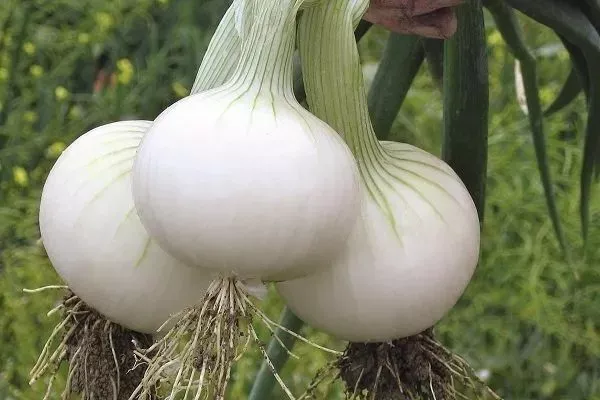
- large size;
- weight - from 70 g to 100 g;
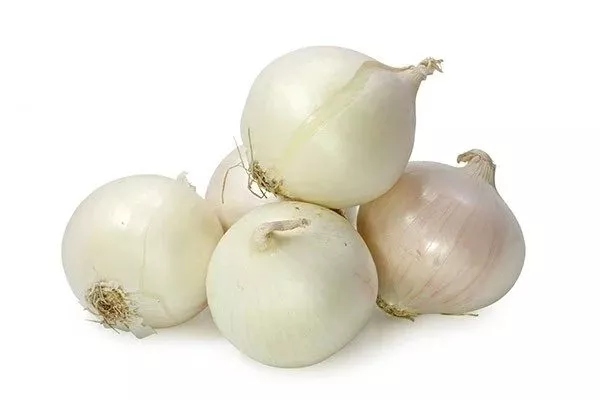
- smooth rounded shape, tapering to the top;
- density;
- medium-thick neck;
- protruding bottom;
- two-celled rudimentation;
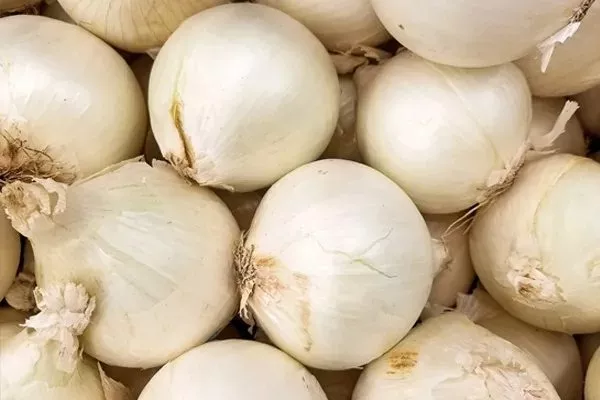
- dry scales of pearl-white color, of good quality compared to other types of white onions, in the amount of 4-5 pieces;
- juicy scales of snow-white color, containing up to 14% dry matter.
Taste characteristics and purpose
This vegetable variety is considered a salad vegetable. It has a pleasant, semi-sharp flavor, with a hint of sweetness and a hint of bitterness.
The Albion onion's flesh is very juicy and crisp. It contains many beneficial nutrients:
- ascorbic acid;
- B vitamins;
- minerals.
By consuming the vegetable fresh, you will receive many healing effects:
- improve digestion;
- boost your immunity;
- You will acquire antibacterial protection against colds and ulcers.
The Dutch hybrid's harvest is intended for universal use:
- onions are added fresh to vegetable salads;
- used for preparing soups, as well as meat, fish, mushroom, and vegetable dishes;
- canned;
- dry.
Ripening and yield
Albion is a mid-season onion variety. Its harvest matures in 90-120 days (from germination to foliage lodging). The bulbs mature in 42-46 days.
Albion is considered a high-yielding vegetable crop. Its characteristics are as follows:
- 1.5-2 kg per 1 sq. m of planting is the marketable yield if you grow the vegetable from seeds;
- from 16,700 kg to 22,000 kg per 1 ha of crops is the commercial yield of turnips during industrial cultivation of the hybrid;
- 39,400 kg per 1 ha is the maximum yield obtained during the Albion variety testing in 2007 by the Mozyr State Agricultural University;
- 70% is the maturity rate of turnips at the time of harvest;
- 95% - onion ripening after ripening;
- Excellent shelf life of the harvest - the shelf life of the harvest is 5 months (until December), during which the bulbs retain their commercial qualities.
Landing features
Albion onions prefer black and alluvial soils. Prepare the planting site in the fall, as they don't respond well to fresh fertilizer. Enrich the garden soil with organic matter:
- manure;
- peat.
During autumn digging, also apply half the dose of potassium-phosphorus fertilizer. Apply the remaining amount in the spring, along with a nitrogen mixture.
Plant the hybrid in a bed that meets the following requirements:
- solar;
- cleared of weeds;
- with non-acidic fertile soil.
The best predecessors for vegetable crops:
- legumes;
- potato;
- cucumbers;
- tomatoes.
Plant the hybrid from seeds. It can also be grown from seedlings. Prepare the planting material:
- Soak the seeds in water for 2-3 days.
- Then keep them for 8-12 hours in a strong solution of potassium permanganate.
When sowing Albion onion seeds, follow the following pattern:
- seeding depth - 1 cm;
- the distance between plants is 10-15 cm;
- the distance between rows is 30 cm.
Carry out landing by following the algorithm of actions:
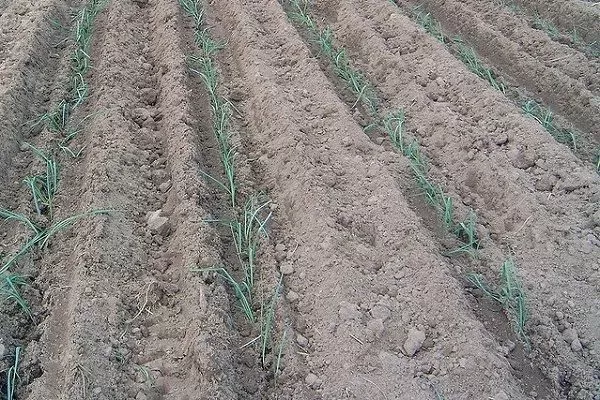
- Dig up the area.
- Prepare furrows 1.5-2 cm deep.
- Place the seeds in the furrows.
- Cover them with soil.
Optimal timing for sowing the hybrid:
- late April or early May - if you are planting seeds directly in an open bed (choose the date taking into account the climatic features of the region, eliminate the possibility of recurrent frosts);
- March - if you grow vegetables through seedlings;
- In the first days of May, transplant the seedlings into open ground.
Subtleties of agricultural technology
To get a rich harvest, take proper care of your onion bed:
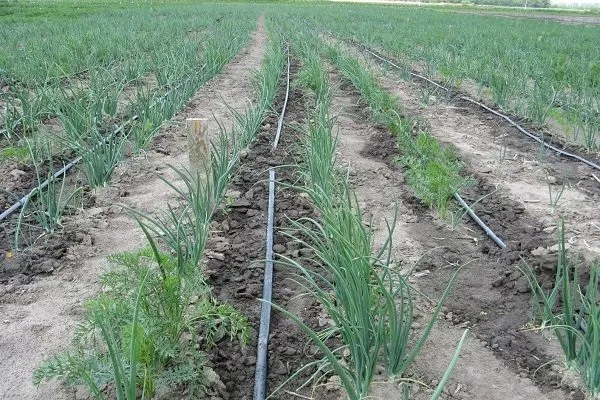
- Water itAfter sowing the seeds, water the soil every other day. Once the sprouts emerge, reduce the frequency to once every 7 days. After that, onions don't require frequent watering.
After rain, wait 2-3 days for the soil to dry out. Only then should you begin watering the bed. Stop watering in July. - Remove weedsRegular weeding is essential for this hybrid due to its slow germination rate. If neglected, weeds will overwhelm the crop.
- FertilizeAs an initial fertilizer, use mullein diluted with clean water (1:10). In early May, apply nitrophoska (15 g per 10 liters of water) to accelerate crop growth and increase yield.
Resistance to diseases and pests
The hybrid boasts high resistance to pests and diseases common to vegetable crops, particularly pink root rot. Proper care after planting will ensure the plants remain disease-free and free from insect attacks.
Pros and cons
Albion has managed to win the love of domestic gardeners thanks to its numerous advantages:
The hybrid also has its disadvantages:
Reviews
Albion F1 is one of the most popular onion hybrids in our country, developed by Dutch breeders. With proper cultivation techniques, it delights gardeners with its high yield, marketable appearance, and wonderful onion flavor.