
Velikan is one of the most popular potato varieties, attracting attention for its high productivity and excellent taste. It adapts well to various growing conditions and has excellent shelf life, making it ideal for both market and home use. Proper care is essential.
History of origin
The Velikan variety is the result of research by scientists at the A. G. Lorkh All-Russian Research Institute of Potato Farming. Its creators were breeders I. M. Yashina, A. V. Matyushkin, A. A. Zhuravlev, and S. S. Salyukov.
The parental forms used for breeding were the hybrid 946-3 and Effect. In 2013, it was added to the State Register of the Russian Federation.
Appearance of the bush
This is a table variety with large tubers. The plant has a tall, semi-erect rosette of large, richly green leaves.
It is characterized by rapid survival and the development of a powerful root system, on which a large number of tubers are formed.
Roots
The Velikan variety is a large-fruited variety. It has a perfect oval-round shape with a smooth, shiny surface. Its weight ranges from 104 to 143 g, sometimes reaching 150 g.
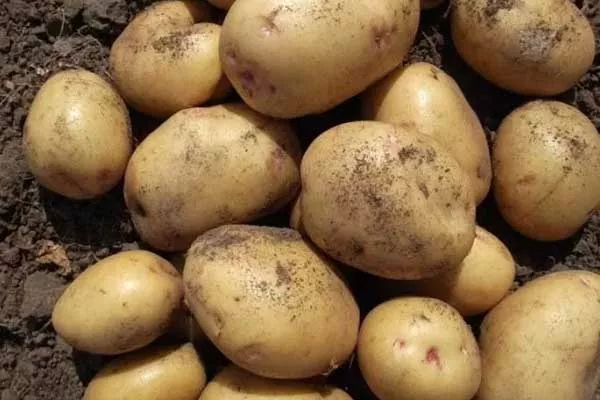
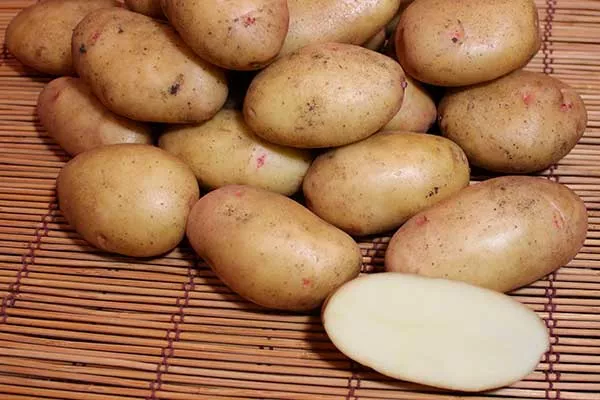
The skin is thin, almost translucent, with a small number of shallow, reddish-tinted eyes. The color is light beige.
Taste and purpose
This variety has excellent flavor and an attractive presentation. The creamy flesh has a moderately dense, oily consistency, not prone to wateriness or mealiness. The color remains unchanged when peeled and cooked.
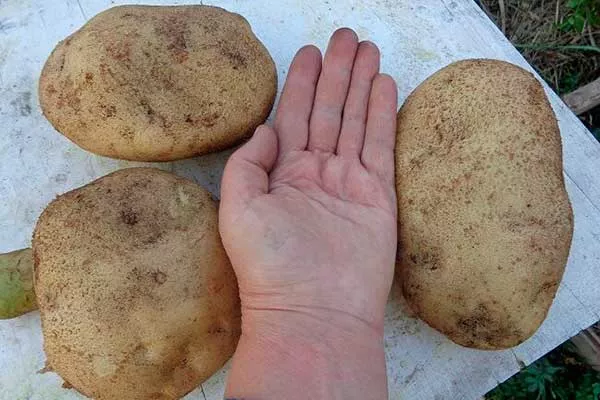
When cooked, the tubers crack slightly but retain their shape and develop a pleasant flavor. The starch content of the pulp is approximately 19%, making this variety suitable for the production of flour and freeze-dried puree.
The vegetable is boiled in its skin or peeled, used in soups, stewed, baked, fried, added to salads, chips, and frozen vegetable mixes. This variety is ideal for making French fries.
Productivity
The Giant ripens 3-3.5 months after germination. Begin harvesting in mid-August. The variety's yield is:
- 1-1.8 kg from one bush;
- 2.9-4.2 kg per 1 sq. m;
- 290-420 kg per 1 ar.
The maximum yield reaches 613 kg per are, but this requires cultivation on fertile soils with a light structure and compliance with standard agricultural practices.
Other characteristics
The plant's flowering period is characterized by the formation of small flowers with vibrant corollas that are intensely colored on the inside. During this period, the bushes appear particularly decorative thanks to the rich green leaves and contrasting flowers.
The vegetables are suitable for long-distance transportation. They store well throughout the winter without losing their flavor. The variety is resistant to potato cancer, leaf curl, stripe and rugose mosaic, rhizoctonia, and scab. However, it is susceptible to late blight and golden nematode.
Landing
Proper crop cultivation is key to achieving a high yield. To achieve the best results, it's important to follow certain recommendations.
Optimal timing
Begin planting when the soil at a depth of 15 cm warms up to +10°C, otherwise the tubers may rot. In central Russia, the best time is late April or early May. In northern regions, the timing shifts by a month, and in the south, planting can begin as early as early April.
Crop rotation rules
Avoid growing potatoes in the same area for at least 3-4 years to avoid soil depletion and the accumulation of pathogens. Alternate plantings with legumes, grains, or cruciferous vegetables (such as cabbage and radishes). These help restore the nutrient balance in the soil.
Avoid planting tubers after nightshade crops such as tomatoes to minimize the risk of common diseases.
Soil requirements and preparation
For planting, choose a well-lit location with deep groundwater. Begin preparing the beds in the fall by digging them to a depth of 30 cm and removing all larvae.
In the fall, apply 5-6 kg of manure per square meter. Slightly acidic soils are suitable, but if they are too acidic, amend them with lime or ash. In the spring, dig the beds again to the depth of a bayonet, again removing insect pest larvae.
To enrich the soil, add 30 g of superphosphate and 15 g of urea per square meter. Some vegetable growers recommend adding 4 kg of humus. Mix the fertilizer thoroughly into the soil.
Preparation of planting material
Carefully sort the tubers. Large specimens without signs of disease or damage are suitable for growing. To protect potato crops from disease and increase their resilience to adverse environmental conditions, prepare the roots properly:
- Treat them with a light pink solution of potassium permanganate or copper sulfate (1 teaspoon per 3 liters of water). Soak the planting material in this solution for 30 minutes, then dry thoroughly.
- Rinse with a solution of 3 liters of water and 0.5 teaspoon of boric acid and let dry completely.
- Stimulate sprout formation by dipping potatoes in any growth stimulant, such as Rastvorin, following the instructions for use.
- Place the processed root vegetables on sawdust or newspaper in a bright place and periodically spray with water at room temperature.
- ✓ The size of the tubers should be at least 50-60 mm in diameter to ensure high yield.
- ✓ Presence of 3-5 eyes on each tuber for optimal growth.
After 2-4 weeks, sprouts will appear on the tubers. When they become strong and long, transfer them to a room with a temperature of 10…12°C for 48 hours.
Landing
There are three ways to plant potatoes. Choose the most suitable and convenient option for you:
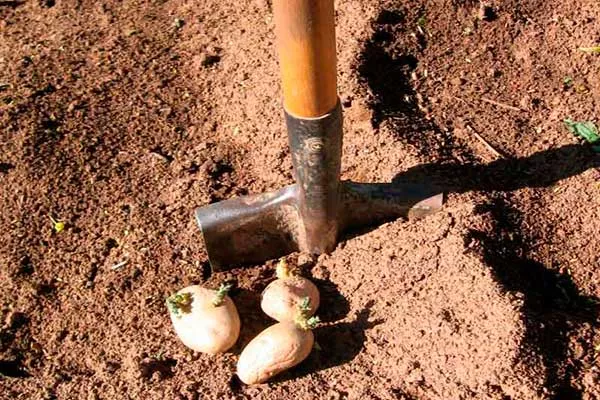
- Under the shovel. Dig holes 30-40 cm apart and about 10 cm deep. Place a layer of compost or rotted manure on the bottom, then place the tubers and cover with soil, leveling the surface.
- In the combs. Leave 70 cm between rows, and arrange the ridges from south to north. The distance between potatoes in a row should be 30-40 cm. As the plants grow, hill them up.
- In the trenches. Maintain a row spacing of 50-70 cm and a planting depth of 30 cm. Place straw on the bottom, then a layer of compost or rotted manure, sprinkled with a small amount of soil. Place the tubers on top and cover with soil.
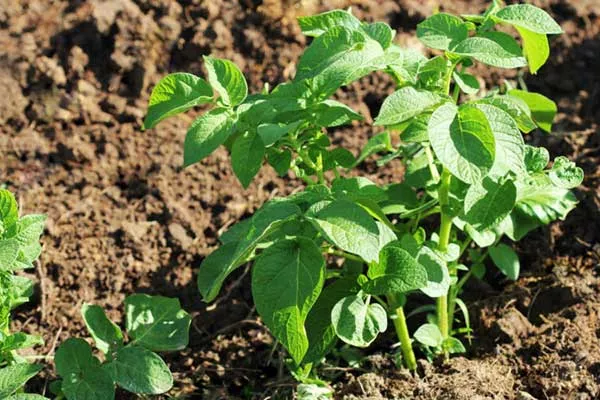
On sandy and sandy loam soils, the latter method is preferable. In loamy soils, potatoes are more often planted in ridges. The spade method is considered traditional and is suitable for plots where the crop has been grown for many years.
Care
The yield of the Velikan variety directly depends on the care provided to the plants. To achieve maximum results, it is necessary to adhere to basic agricultural practices.
Watering
Water the plantings three times: before the first hilling, before flowering, and after flowering. Pour enough water under each bush to soak the soil to a depth corresponding to the root system.
If hot weather sets in during the period of active tuber growth, increase the frequency of watering. If rain occurs, stop watering.
Loosening, weeding, hilling
Bushes require regular loosening of the soil, which not only improves the quality but also helps to destroy pests that overwinter in the soil.
Weeds steal nutrients from potatoes and can serve as a habitat for dangerous insects and pathogens. Therefore, it's important to regularly remove weeds, preferably by hand, to minimize the risk of damaging the root system.
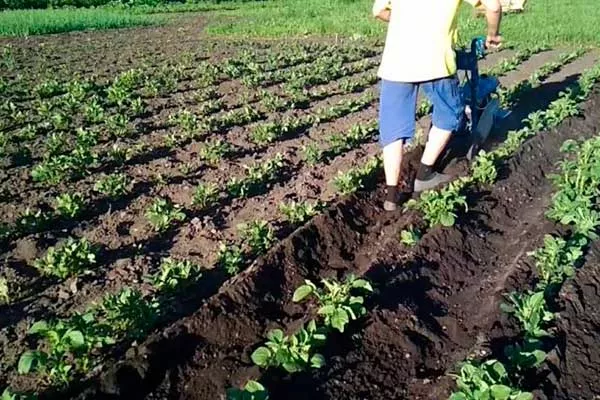
Carry out the first hilling when the shoots reach a height of 10-15 cm. This promotes root development, which in turn improves the overall health of the bushes and reduces the number of pests on the leaves. Plan the second hilling during flowering, approximately three weeks after the first.
Fertilizing the Giant potato
Use both organic and mineral fertilizers, applying them as root and foliar feeds. After emergence, when the potatoes especially need nitrogen, apply slurry (in a 1:10 ratio), herbal infusion, or saltpeter.
- The first feeding should be carried out 2 weeks after germination, using nitrogen fertilizers.
- The second feeding should be carried out before flowering, using phosphorus-potassium fertilizers.
- The third feeding should be carried out after flowering, using potassium fertilizers.
Apply the second fertilizer before flowering, eliminating nitrogen and adding phosphorus in the form of superphosphate. After flowering, potassium is essential. Any potassium-containing mixtures are effective, except those containing chlorine. The dosage of all mineral fertilizers should follow the instructions on the packaging.
Diseases and pests
The crop has good immunity, but with improper agricultural practices, it can be susceptible to various problems. Follow these recommendations:
- Don't plant tubers in the same area for more than three years. Tomatoes are poor predecessors.
- Before planting, treat the root crops with fungicides - Fitosporin or Hom.
- After emergence, additionally treat with fungicides.
- In summer, use insecticides: Decis, Biotlin, Iskra, Aktara and Fufanon.
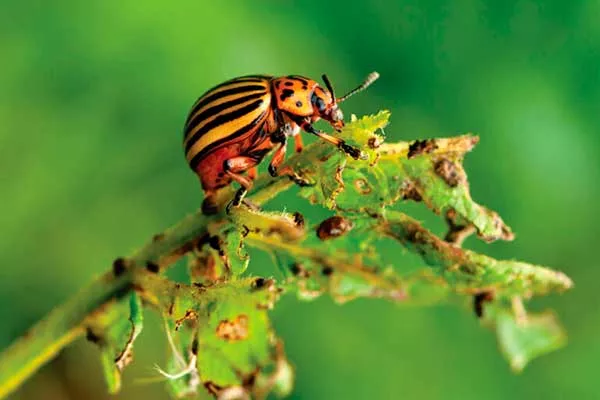
To reduce dependence on chemical drugs, use folk methods:
- Fill the space between the rows with sawdust.
- Water the soil with a weak tar solution.
- Use Colorado potato beetle traps.
- Dust the bushes with ash.
- Spray with an infusion of garlic, mustard or chili pepper.
Harvesting and storage
The root vegetables ripen in early August, as indicated by the yellowing of the tops. Trim them a week before harvesting to ensure the tubers are at their tastiest. Use a pitchfork to minimize damage to the vegetables, which are easily visible due to the light color of the skin.
Follow these recommendations:
- Dig up potatoes only in dry weather, otherwise they will be dirty.
- After removing from the soil, leave the root vegetables to dry and carefully clean off any dirt using a dry material.
- Sort the vegetables, removing any damaged or infected ones. Sort them by size, keeping small and large ones separate.
- Set aside tubers the size of a chicken egg for planting immediately and keep them separate from the main crop.
Store tubers in wooden boxes, plastic nets or clean, dry bags in a dark, dry place.
Positive and negative qualities
Before growing a crop in your garden, carefully review the pros and cons of the variety to avoid potential difficulties in the future. Velikan has many advantages:
Among the negative qualities, some gardeners note the need for regular preventative treatment, sensitivity to improper storage conditions, soil quality and fertilizer requirements, the risk of infection with poor crop rotation, and possible problems with pests, especially in warm weather.
Reviews
The Velikan potato is a versatile variety that will satisfy the needs of both novice and experienced vegetable growers. Its high yield, excellent flavor, and good storage qualities make it an attractive choice. By following proper cultivation practices and caring for the plants, you can grow strong plants and produce high-quality, large, and delicious tubers.