
The Varyag potato isn't widely available, as it appeared relatively recently. However, farmers and gardeners who have grown the variety are confident it meets all their needs and requirements. Varyag boasts excellent transportability, shelf life, and marketability. It is disease-resistant but susceptible to nematodes.
Characteristics of the variety
Before planting potatoes, carefully familiarize yourself with the variety's characteristics—this will allow you to determine in advance whether Varyag is worth growing in your area.
History of selection
The Varyag variety was bred in 2014 at the A.G. Lorkh Potato Research Center by specialists A.A. Meleshin and O.V. Meleshina. Official registration in the State Register of Breeding Achievements occurred in 2018. This table variety is a cross between Udacha and Mavr.
Description of tubers and bushes
The shrub is a semi-erect intermediate type with an average height of 45-55 cm. It also has other characteristic features:
- leaf blades – classic green, open type and medium size;
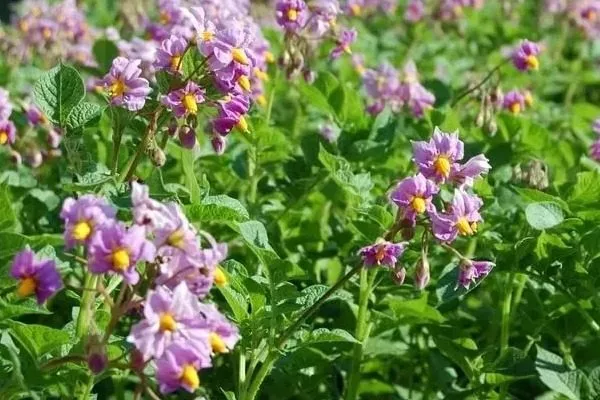
- flowers – lilac shade;
- the number of root crops from one bush – 8-12 pcs.;
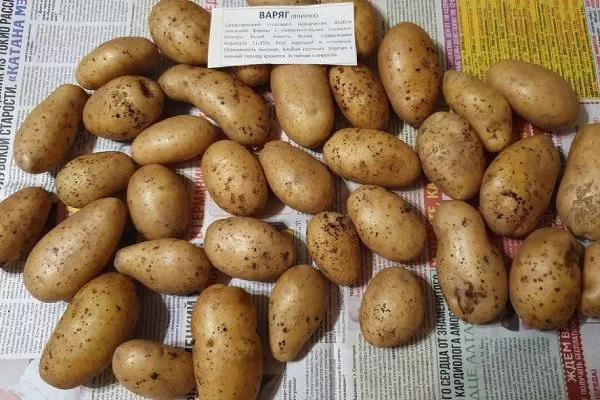
- tuber shape – oval-elongated;
- weight of potatoes – varies from 95 to 140 cm;
- length of fruits – about 14-17 cm;
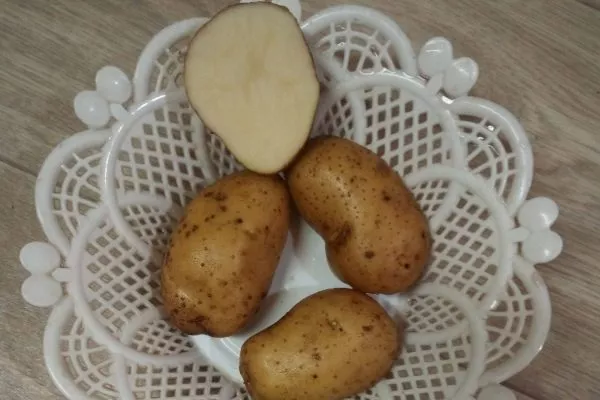
- pulp – creamy in color, dense in structure;
- peel – yellow and smooth, with small eyes.
Commercial and taste qualities of tubers
Varangian tubers have excellent marketability and flavor, ranging from good to excellent. Their firm consistency prevents them from becoming overcooked during cooking, making them ideal for salads, side dishes, soups, and baking. The variety is classified as Type A, indicating its intended use.
Peculiarities:
- The starch content of the tubers ranges from 14.5% to 15.5%, making Varyag a nutritious and healthy option.
- The variety is characterized by marketability of up to 95-97% and mechanical stability during transportation with a minimum percentage of spoilage (less than 8%).
- Varyag has a high shelf life of 95-96%, which is important for long-term storage.
Productivity and harvest timing
In the central part of the country, variety testing results showed that Varyag yields range from 14 to 41 tons per hectare, exceeding the yields of varieties such as Kolobok and Lugovskoy. Record yields of 43.5 tons per hectare were recorded in the Bryansk region.
Flowering is short-lived, but the variety is mid-season: the full ripening cycle takes 95-105 days, although the first young potatoes can be dug up as early as 75-80 days.
- ✓ High resistance to cancer and late blight, but requires prevention against nematodes.
- ✓ The tubers have a high shelf life (95-96%), which makes the variety ideal for long-term storage.
Disease resistance
Domestic breeders have developed a new variety that boasts high yields and resistance to pathogens such as canker, late blight, and the rugose and striped mosaic viruses.
However, Varyag is susceptible to cyst nematodes, the spread of which can be limited by preventative measures. The main one is crop rotation:
- It is recommended to return potatoes and other nightshades to their original location no earlier than after 3-4 years;
- In the intervals between plantings, legumes, grains and vegetables should be grown.
Seed-borne viral infection can reduce yields by up to 80% over time. Treatment of infected planting material is only possible in the laboratory using apical meristem. Therefore, developing the Varyag variety is a key way to prevent the spread of infection.
Landing features
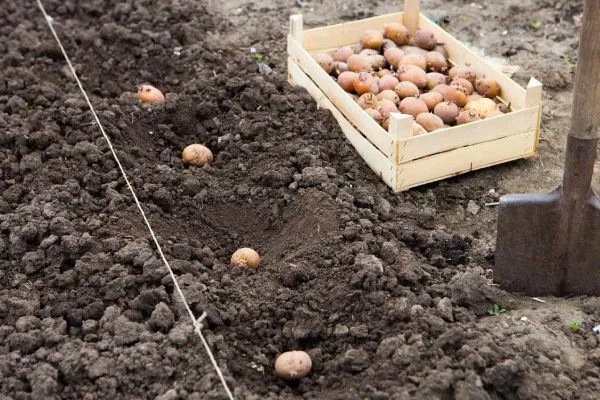
Before planting, the tubers of this variety are pre-germinated indoors at a warm temperature. Planting in open ground occurs between April 20 and May 15, with a soil temperature of at least 13 degrees Celsius (55 degrees Fahrenheit) crucial.
- ✓ The optimal soil temperature for planting should be no lower than 13°C, but no higher than 18°C to prevent premature germination.
- ✓ The planting depth of tubers should be adjusted depending on the soil type: on light soils - up to 10 cm, on heavy soils - no more than 5 cm.
Other planting nuances:
- Selection and preparation of beds. It's recommended to prepare the garden in the fall: dig the soil to a depth of 10-14 cm and fertilize with manure. In the spring, the soil should be loosened again. The Varangian variety is best grown in sunny areas where cucumbers, zucchini, carrots, onions, or legumes were grown in previous seasons.
- Landing. The tubers are planted in open ground, placing them in holes 5-8 cm deep. When planting, it is necessary to follow a pattern with a distance of 30 cm between tubers and 70 cm between rows.
Why should you adhere to varietal planting characteristics:
- Using a 75x30 cm spacing scheme, denser planting was 7.3% more productive than more sparse planting.
- The study also analyzed the effects of pre-planting treatment of seed tubers using Prorastin, a drug that promotes growth and protects against disease.
Before planting, the tubers were germinated for a month at a temperature of 16-19°C (61-66°F) and exposed to natural light. Immediately before planting, the tubers were treated with the indicated preparation. This treatment resulted in a 13.1% increase in yield.

Thus, in combination with the early planting date, the yield increased by 18%.
Care instructions
To maintain plant immunity and vigorous growth, it's essential to strictly follow gardening recommendations, including regular watering, fertilizing, and hilling. Failure to follow these procedures can lead to plant diseases and wilting.
Subtleties:
- Moisturizing. It is recommended to water the plant beds 3-4 times during the growing season. The first time should be during the development of the green mass, and the second during flowering. All waterings are best done in the evening to avoid sunburn.
- Hilling and loosening. These procedures are carried out after moistening the soil. They help eliminate soil compaction, facilitate oxygen and moisture access to the root system, and promote the strengthening of the main root. Plants should be earthed up at least three times per season: when shoots reach 8-12 cm, two weeks later, and before budding begins.
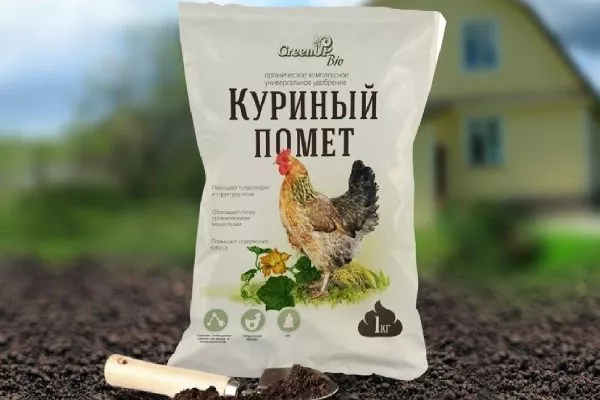
- Nutrition. Fertilizing should be done in conjunction with watering. It is recommended to use organic components: a solution of chicken manure or urea at the initial stage of development, potassium sulfate during budding, and superphosphate during flowering.
Harvesting and storage
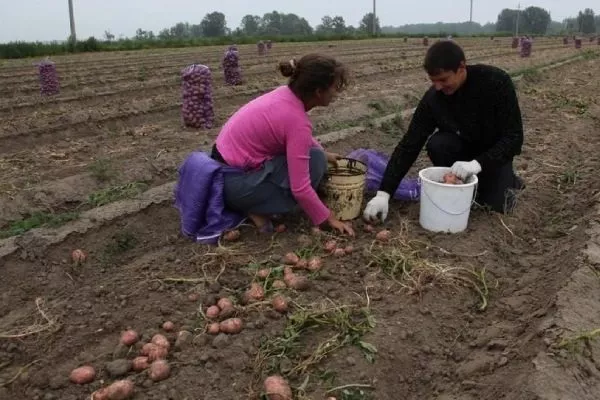
Warm, dry weather is recommended for harvesting Varangian potatoes. Two weeks before harvesting, trim the tops and stop watering to prepare the tubers for storage. Preparation and storage instructions:
- After harvesting, it is necessary to carefully inspect the potatoes and remove any damaged or rotting tubers.
- Storage should be carried out in cool rooms with a temperature not exceeding 3-4 degrees Celsius.
- A basement, cellar or glazed loggia is ideal.
Advantages and disadvantages
Although Varyag is a relatively new hybrid in the vegetable industry, it has already established itself as a highly productive and high-quality variety. However, the variety also has other positive aspects:
There are also disadvantages:
Gardeners' reviews
The Varyag potato is a high-yielding variety with excellent resistance to the most dangerous potato diseases. To prevent nematode infestations, simply follow crop rotation guidelines and apply preventative treatments. This potato produces filling and delicious dishes.