
Zekura is a mid-early table potato variety. It is very popular among European farmers. Russian gardeners are also showing interest in it. This potato is popular among vegetable growers due to its consistently high yield, marketable appearance, good flavor, and excellent shelf life.
Breeding history
The variety owes its origins to German breeders working at Solana GmbH & CO KG (Hamburg). It was developed in the first half of the 1990s. Since 1997, the Zekura potato has been listed in the Russian Federation State Register as suitable for cultivation in home gardens in the Central Black Earth Region.
Characteristics of the variety
This vegetable variety has many excellent characteristics:
- high and stable yield;
- unpretentiousness;
- undemanding to care;
- winter hardiness (it grows even in regions with a harsh climate such as Western Siberia);
- strong immunity (its bushes are resistant to potato cancer, leaf curl virus, late blight, scab, spotting, nematodes and other pests with the exception of the Colorado potato beetle);
- excellent quality of the harvest.
What does the bush and tubers look like?
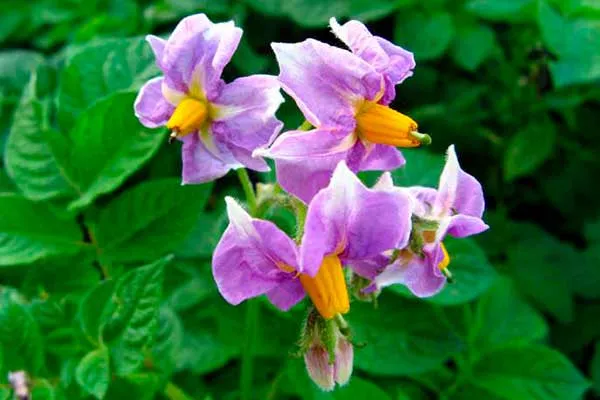
Zekura plants are distinguished by the following characteristics:
- compactness;
- average height - 0.35-0.5 m;
- belonging to an intermediate type;
- moderate spreading;
- leaves: open, simple, light green;
- flowers with red-violet petals, collected in a small corolla.
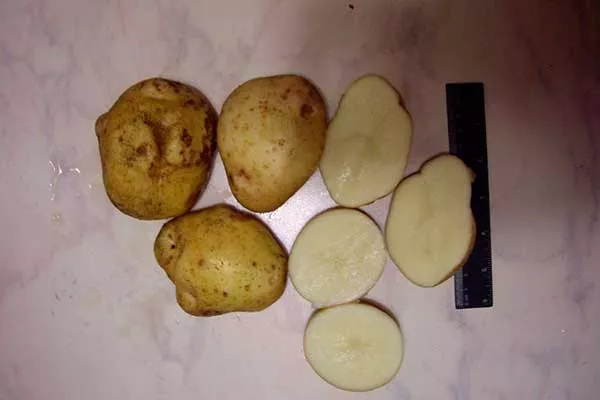
Bushes of this variety have a well-developed root system. Each one produces up to 20 medium-sized or large tubers. Small potatoes are almost never found in the nest.
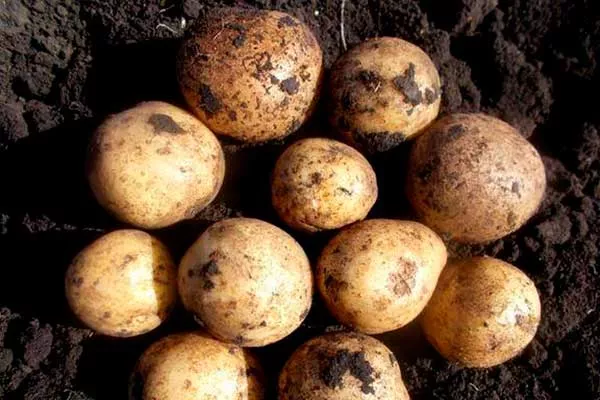
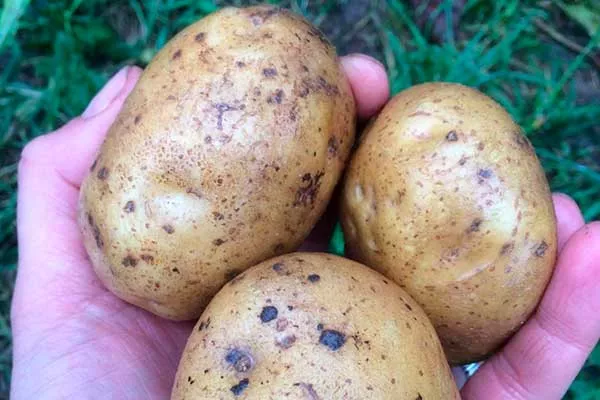
The tubers of this variety have the following characteristics:
- weight - from 59 g to 150 g;
- oval oblong shape;
- peel: smooth, yellow;
- a few small eyes with a superficial location;
- with yellow flesh.
Taste characteristics and purpose
The Zekura potato is renowned for its excellent flavor, with a subtle, pleasant sweetness. Its starch content ranges from 13% to 18.2%. It is a culinary type B vegetable—medium-cooking.
This vegetable has a universal culinary purpose:
- it is boiled in its skins and to obtain puree;
- deep-fried;
- added to vegetable stew;
- used as an ingredient in soups and salads.
Ripening and yield
Zekura is a mid-early potato variety. Its harvest matures 80-95 days after emergence. The first tubers can be harvested after 65-70 days.
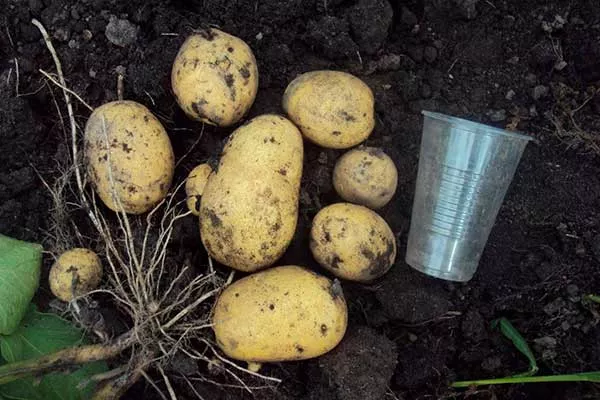
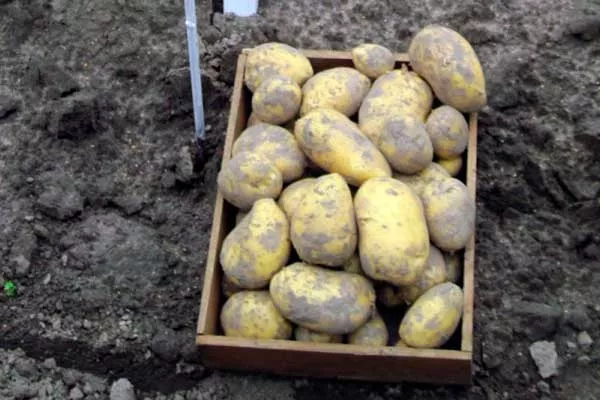
The bushes of this variety are very productive. Its yield figures are as follows:
- from 19,500 kg to 32,300 kg per 1 ha of planting - average;
- 36,500 kg per 1 ha is the maximum (a record yield was obtained during variety testing in the Oryol region).
Zekura tubers have excellent shelf life, reaching 98%. Their marketability is 79-96%.
Necessary climatic conditions
This vegetable crop adapts well to any climate. It produces its highest yields when grown in the Black Earth Region (Belgorod, Voronezh, Kursk, Lipetsk, and Tambov regions).
This potato is also successfully grown in garden plots in other regions of the Russian Federation:
- Volga-Vyatka;
- North Caucasian;
- Middle Volga;
- West Siberian;
- Far Eastern.
Due to its good adaptation to climatic conditions, it is widespread in most European countries. It is also actively cultivated in Moldova, Ukraine, and Belarus.
Soil requirements
This vegetable crop is unpretentious and not particularly demanding regarding soil composition. However, to produce a bountiful and high-quality harvest, it requires soil that meets the following requirements:
- loose;
- moisture-intensive (Zekura bushes, despite their drought resistance, bear fruit best when grown in soil with high humidity);
- light loam;
- with neutral or slightly acidic pH (6.5 - 7.0);
- fertile.
- ✓ Soil pH levels should be strictly between 6.5-7.0 to ensure maximum yield.
- ✓ The soil should have high moisture capacity, but without stagnant water.
Experienced gardeners improve the fertility of the soil intended for potato beds by adding manure during the fall tillage. The recommended application rate of organic fertilizer is 300 kg per 100 square meters.
Advantages and disadvantages
The Zekura potato has become a popular choice in domestic gardens thanks to its high and consistent yield. It also boasts other advantages, such as:
The vegetable variety also has its disadvantages:
How to grow a variety in a plot?
For planting potatoes of this variety, select a site with the following characteristics:
- smooth;
- located neither on a slope nor in a lowland;
- with good sunlight;
- protected from the wind.
Prepare it in the fall:
- clear away weeds and plant debris;
- dig the soil to a depth of 35 cm;
- add manure or complex mineral fertilizer (consumption: 30–40 g per 1 sq. m);
- If the soil is heavy, add sawdust or coarse sand (consumption rate: 500-700 g per 1 sq. m).
Plant Zekura potatoes in your garden at the following times:
- in the central regions - after May 10;
- in the north - 7-10 days later;
- in the south - at the end of April.
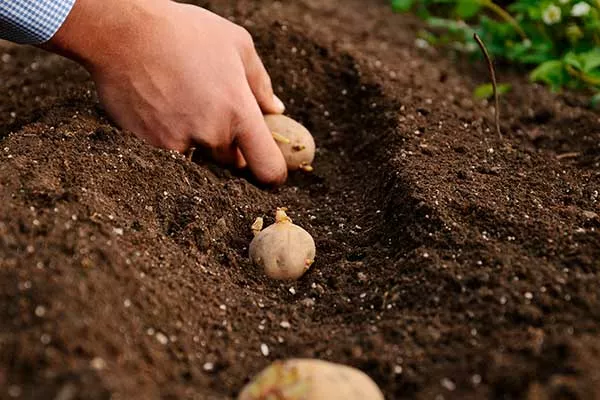
Prepare tubers for planting 30 days before:
- discard old, damaged, dry specimens;
- transfer the potatoes selected for planting to a well-lit and warm room (+12-15°C);
- lay it out on the floor in several layers;
- Moisten with water periodically for better germination.
- 30 days before planting, transfer the tubers to a room with a temperature of +12-15°C to warm up.
- Moisten the tubers daily to encourage germination.
- Before planting, treat the tubers with an ash solution to strengthen their immunity.
Pre-planting treatment of seed potatoes of this variety with fungicides is not required. Zekura is renowned for its strong immunity. However, dusting it with ash powder is a good idea.
Follow this algorithm for planting potatoes:
- Form furrows, oriented north to south, leaving 60 cm between them.
- Prepare planting holes (their depth is 8-10 cm), maintaining a distance of 30-50 cm between them.
- Place 2 tubers in each.
- Fill the holes with soil containing the potatoes.
Care
Growing Zekura potatoes is easy. The cultivation techniques are standard and no different from those for domestic varieties. To ensure a bountiful harvest, follow these steps:
- Water the potato bedsThey require weekly watering during periods of prolonged drought. Pour settled water under the bush and between the rows. The recommended rate is 3 liters per plant.
- Loosen the soil under the bushesPerform this procedure every time after watering and after rain. Do this to prevent the formation of an air-tight crust on the soil surface.
- Weed your potato plantingsDon't let weeds choke out vegetable growth. Combine weeding with loosening the soil.
- Hill up the plants in the garden bedPerform this procedure three times per season. Hill up the potatoes for the first time when the sprouts reach 15 cm in height. Then, repeat the procedure every 21 days.
- Apply fertilizerFertilize potato beds several times per season. Do this for the first time before hilling the plants. Use a mullein infusion (1:10).
The next application of nutrients should be made during the budding and blooming period. Add potassium salt, superphosphate, and wood ash.

Harvesting, storage and use of crops
Gardeners dig up Zekura potatoes during the first ten days of August. This should be done during dry weather. Here's how to handle the harvested tubers:
- Leave it in the field to dry;
- Sort it out.
- Discard spoiled and damaged specimens.
- Place the tubers in bags.
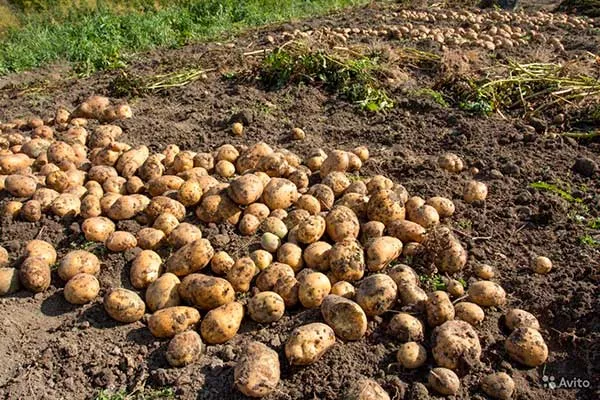
Place your harvest in a cellar for long-term storage. Ensure the following conditions ensure optimal shelf life:
- the temperature regime in the vegetable storage is +2-4°C;
- humidity level is 70–80%.
Diseases and pests
The variety is characterized by strong immunity. Zekura bushes are resistant to many diseases, particularly fungal infections. They are rarely attacked by pests. However, improper cultivation practices and unfavorable weather conditions can lead to planting diseases.
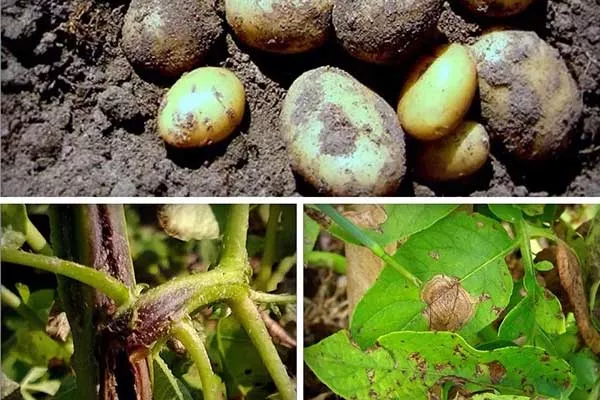
Preventative measures such as treating tubers and treating tops with fungicides are not necessary when cultivating this variety. Take other measures:
- do not plant seed potatoes in the same place 3 years in a row;
- do not grow this vegetable where tomatoes, eggplants, or peppers were previously grown;
- after the seedlings have sprouted and reached 15-20 cm in height, dust the planting with ash;
- water the spaces between rows with a weak solution of birch tar;
- pour sawdust between the furrows;
- Mulch the beds with straw.
In case of pest infestation, use commercial insecticides. Treat your plants with the following products:
- Biotlin;
- Agravertin;
- Match;
- Vertimek;
- Colorado.
Reviews
Zekura is a crumbly table potato variety. It is characterized by consistently high yields, strong immunity, and excellent shelf life. The harvest is 95% preserved until spring. It is grown in almost all regions of our country.