
Few domestic gardeners and large farmers are familiar with the Vector potato, as it appeared relatively recently. However, the variety is gaining popularity each year due to its excellent characteristics and qualities. However, it is important not to plant this variety in areas where the golden potato cyst nematode has been detected.
History of origin
This potato variety was developed in the 1980s at the A.G. Lorkh Research Center, a leading Russian research institute specializing in potato research and breeding. Its genealogy includes hybrid seeds and the Zarevo variety, a Ukrainian potato with a pleasant flavor, round, juicy tubers, and high yield potential.
The following specialists took part in the development of the variety: Isolda Maksimovna Yashina, Evgeniy Alekseevich Simakov, Boris Vasilievich Anisimov, Alexey Alekseevich Zhuravlev, Irina Nikolaevna Kozlovskaya, Maria Alekseevna Kuznetsova, Elena Vasilievna Oves, Tatyana Ivanovna Smetanina, Svetlana Yuryevna Spiglazova, Emil Khavkin Efimovich.
General description
Unlike its Belarusian counterpart, our Vector has a highly uniform surface in terms of color—a fact that gardeners should be aware of. Unscrupulous sellers try to sell Belarusian Vectar instead of the domestic variety. However, the varieties differ completely in characteristics—only the color and shape of the roots are the same.
What does the bush look like?
| Name | Disease resistance | Ripening time | Drought resistance |
|---|---|---|---|
| Vector | High | 80-110 days | High |
| Vectar Belarusian | Average | 90-120 days | Average |
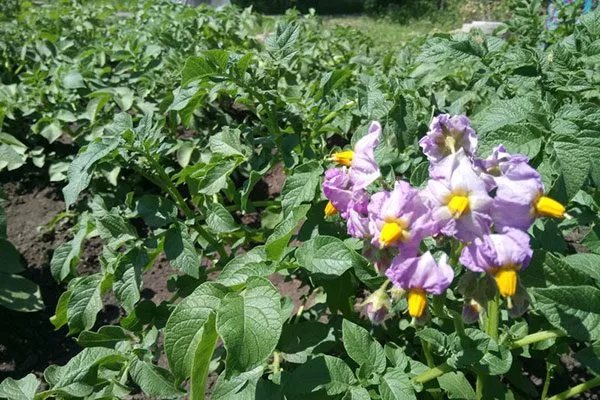
The bush is considered compact, as its height does not exceed 45 cm under the most favorable conditions. However, it typically reaches 35 cm.
Other characteristic features of appearance:
- leaves - intermediate type and small size;
- shade of leaf blades – dark green;
- flower color – purple;
- type of shrub – sheet;
- shoots – semi-erect, which significantly saves space in the beds.
Characteristics of tubers
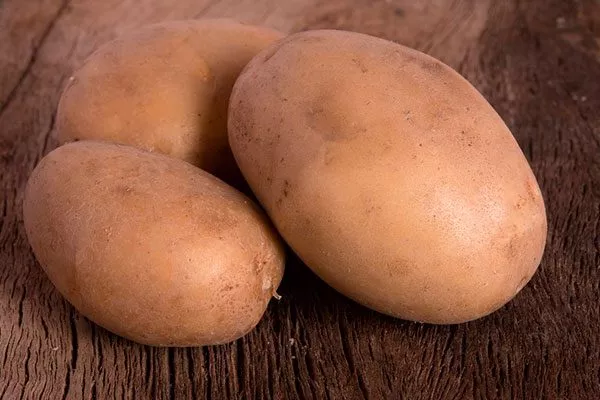
This variety belongs to the culinary category BC, meaning the tubers cook slowly. Therefore, they are best used in dishes that require the tubers to retain their shape. These include fried potatoes, French fries, chips, entrees, and baked potatoes.
Their distinctive features:
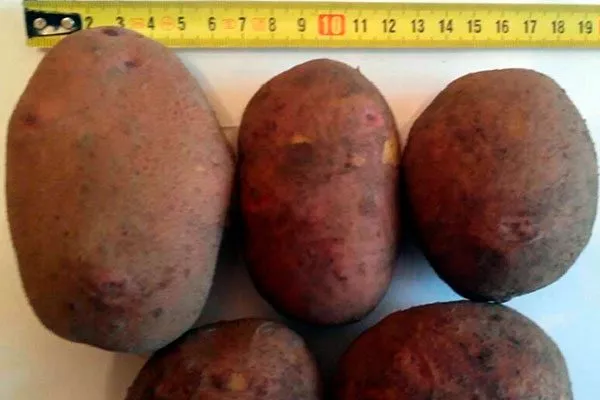
- form - round-oval;
- eyes – small, almost invisible;
- skin color – reddish;
- weight - from 90 to 145 g;
- surface – uniform shade, smooth texture;
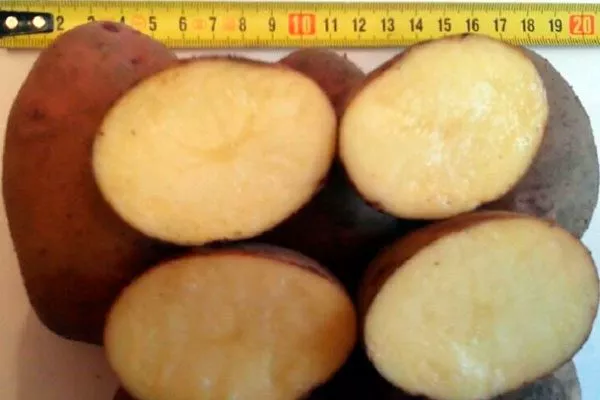
- pulp – compacted, light yellow in color, with starch content of up to 17.5%.
Productivity, storage
Vector's record yield is 403 centners per hectare. This is twice the yield of the classic Aurora variety. However, the average fertility level ranges from 180 to 265 centners per hectare.
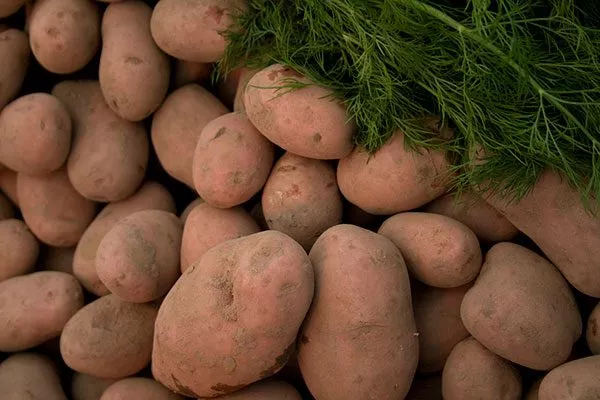
Each bush yields 1.5-2 kg of tubers, and up to 10 kg per square meter. Vector potatoes have a long shelf life, with a shelf life of 95%.
Disease resistance
Vector has impeccable resistance to such lesions and problems as:
- viral diseases (Y, X, L);
- potato cancer;
- leaf curling;
- rugose mosaic;
- banded mosaic;
- late blight of foliage and tubers.
Which regions are best suited for and what climate requirements does it have?
This potato variety is ideal for growing in central Russia, where it is officially approved, but it also demonstrates impressive results in other regions. It produces particularly well in climates with high temperatures.
Ripening time
This crop belongs to the class of table varieties that mature in a medium period. It takes 80 to 110 days for the tubers to reach full (biological) maturity, but the period depends on the specific location and current weather conditions.
Drought resistance, frost resistance
This variety is highly resistant to drought and low temperatures. It can withstand significant temperature fluctuations.
Comparison with the Belarusian Vector
To determine which potato variety is in front of you based on external characteristics, pay attention to this minor difference:
| Characteristic features | Domestic Vector | Belarusian Vectar |
| Bush in height | Maximum 45 cm | From 60 to 70 cm |
| Bush type | Upright, compact | A bit spreading, untidy |
| Flowers | Classic purple | Also purple, but lighter |
| Skin surface color | Uniform | Spotted |
Fundamentals of agricultural technology
The Vector potato cultivation technology allows for autumn planting. It's important to note that roots planted at a depth of approximately 15-17 cm can survive winter temperatures down to -10 degrees Celsius.
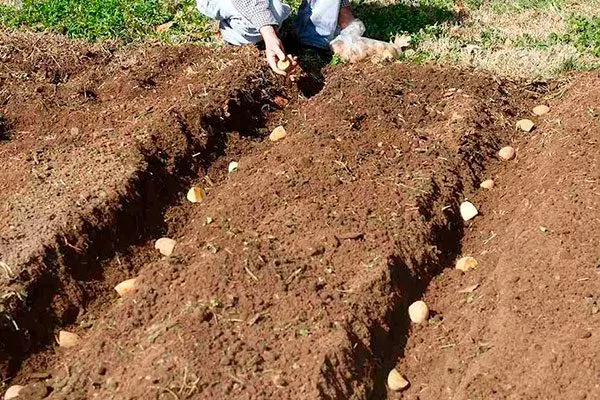
Basic rules for growing, regardless of the planting period:
- The variety prefers moderately moist loamy soils with a neutral reaction.
- Before planting, it is necessary to carefully select the tubers: they should be of medium size, have many eyes and have no signs of mechanical damage or other lesions on the skin.
- Before planting, the root vegetables are sprouted, hardened, and treated with special preparations to promote growth and development. To do this, arrange the potatoes in a single row in a wooden box, lining the bottom with a layer of sawdust. Place them in a bright room at a temperature of about 15-17 degrees Celsius.
- A week before planting the potatoes, take them outside to warm up in the sun.
- Preparing the soil for growing potatoes occurs in two stages: in autumn and spring:
- In the fall, clear the area of weeds and thoroughly dig it to a depth of 30 cm, bringing the bottom layer of soil to the surface. Add organic fertilizer to the soil: 3-4 kg of humus and 100-120 g of wood ash, respectively (per square meter).
- In the spring, the plot is dug again, creating holes with a distance of 45-55 cm between rows. It is recommended to set a distance of 30 cm between potato bushes.
- The planting depth of Vector potatoes ranges from 10 to 20 cm, depending on the soil density: in loose soil, the tubers are placed slightly deeper, and in dense and clayey soil, closer to the surface.
Care
To enjoy a bountiful potato harvest, you need to pay attention to plant care:
- You can avoid watering before flowering, but once budding begins, the plants will require regular watering. Potatoes should be watered every time the top 6-8 cm of soil dries out. Apply approximately 2-3 liters of water per plant. Watering should be done in the evening, followed by loosening the soil.
- The potato bushes are hilled as they grow. Initially, this is necessary to support the weak young plants, but later, hilling promotes proper potato development.
- During the growing season, potatoes require two additional fertilizers:
- during active flowering, a potassium solution is used (one tablespoon per 10 liters of water);
- After flowering, use phosphates (ratio 1:10).
- ✓ To increase yield, apply foliar feeding with a solution of microelements during the budding phase.
- ✓ Use drip irrigation to maintain optimal soil moisture, especially during dry periods.
Harvesting
Harvesting begins according to established planting dates and careful examination of the fruit's external characteristics. Cool but dry weather is essential.
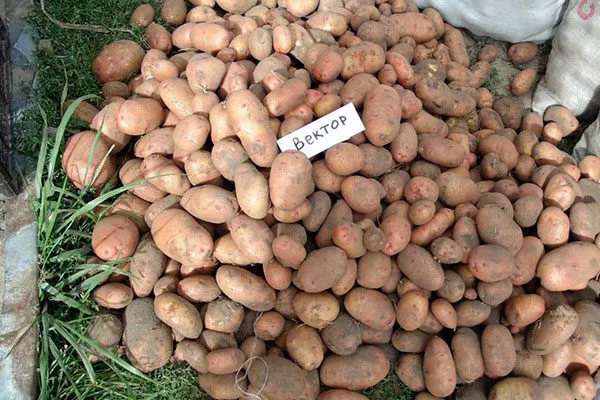
Storage of the harvest
Before storing your harvest, there are a number of important steps to take:
- Potatoes must be carefully placed in a bucket or other container to avoid mechanical damage;
- After removing the tubers from the ground, they should be dried by laying them out on a clean and flat surface;
- It is necessary to sort the crop to exclude fruits with signs of disease.
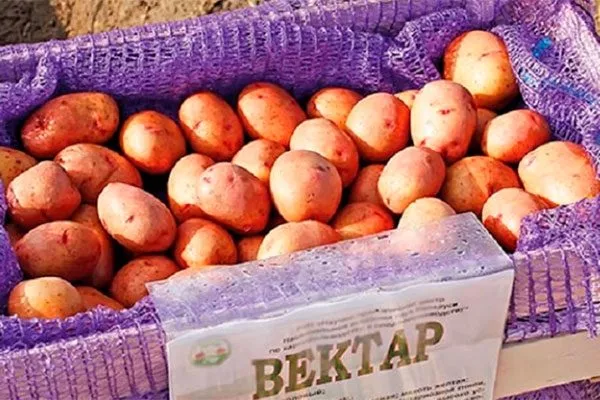
This crop is highly resistant to long-term storage, allowing it to be stored under standard conditions until the next harvest.
Pests and diseases
This potato variety is resistant to canker diseases and has a rare ability for this crop to resist late blight. Furthermore, it has strong immunity to a variety of foliar diseases, including mosaic and leaf curl.
However, the variety is susceptible to the golden potato nematode, which can reduce yields by 25-35%, and in extreme cases, up to 90%. Controlling this pest in industrial settings is difficult due to the high cost and environmental impact of nematicides.
No less dangerous for potato bushes are insects:.
- To control Colorado potato beetle populations and their larvae, hand-collecting is recommended. In cases of widespread infestation or rapid reproduction, Corado insecticide can be used according to the instructions.
- The mole cricket, which burrows through the soil, can be controlled by placing eggshells in the soil. One effective method of control is planting chrysanthemums around the potatoes. If these measures are ineffective, insecticides such as Rembek and Terradox should be used.
- To protect potato crops from wireworm pests, it is recommended to treat the seeds with a weak solution of potassium permanganate and use sticky Bazudin as an insecticide when planting.
- Beer traps are effective for slug control. Traps containing beer should be destroyed. If traditional methods fail, Pochin can be mixed with soil.
It is important to focus on preventive measures:
- To prevent potatoes from becoming susceptible to diseases, they should be planted in the same spot no more than once every 3-4 years. It's best to sow soil-cleaning crops, such as corn, legumes, and perennial grains, between plantings.
- Before planting potato tubers, it is recommended to treat them with a weak solution of potassium permanganate.
- To prevent diseases, experienced agronomists strongly recommend treating vegetables with fungicides. A product called Maxim has proven particularly effective against potato scab.
Advantages and disadvantages
The new variety has many positive aspects, but the following advantages stand out in particular:
This potato has one, but significant, problem: the tubers suffer from the golden potato cyst nematode, a dangerous pest that can reduce yields by 30-50%.
Reviews
The Vector potato from Russian breeders deserves special attention, as it possesses many positive characteristics. The variety does have one drawback: nematode infestation, but this problem is easily resolved by carefully cultivating the soil and young plants.