
The Vasilek potato has received many positive reviews due to its excellent characteristics. Its low maintenance, excellent yield, and delicious tubers make it a welcome addition to any garden. This crop requires care and attention. Knowing how to grow it will help you achieve a bountiful harvest and high-quality tubers.
History of appearance
Developed in 2007, this variety was based on research conducted by the A. G. Lorkh All-Russian Research Institute of Potato Farming, with the participation of Russian scientists including E. A. Simakov, S. V. Ovechkin, and S. S. Salyukov. Genetic material from the Chugunka variety and the D-31-88 hybrid was used in its development. It was added to the State Register of the Russian Federation in 2014.
Description of the Vasilek potato with a photo
Cornflowers attract attention with their distinctive appearance, both as plants and fruits, making them easily distinguishable from others. This allows for unmistakable location of potato plants, even if several different varieties are grown in a plot.
Bush
Reaches 50-60 cm in height, with semi-erect, sturdy stems covered with medium-sized, dark green leaves.
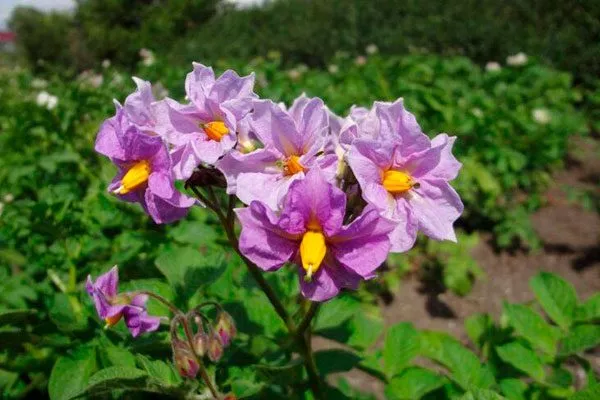
Other characteristics of the culture:
- The foliage has visible veins and slightly wavy edges.
- The flowers are purple-pink. The corolla diameter is up to 0.7 cm, and the internal anthocyanin content is low. The inflorescences consist of 5-6 buds.
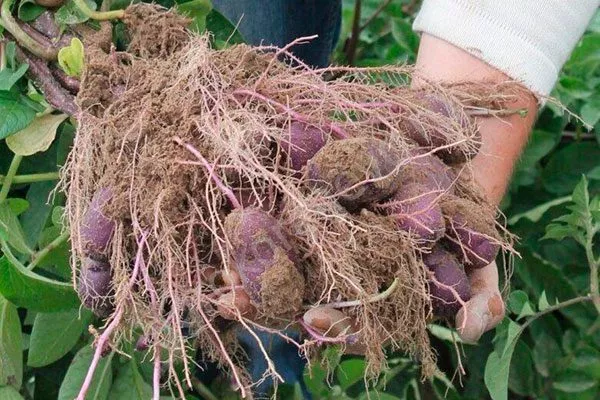
- The root system is well branched, including numerous shoot and stolonic shoots.
Tubers
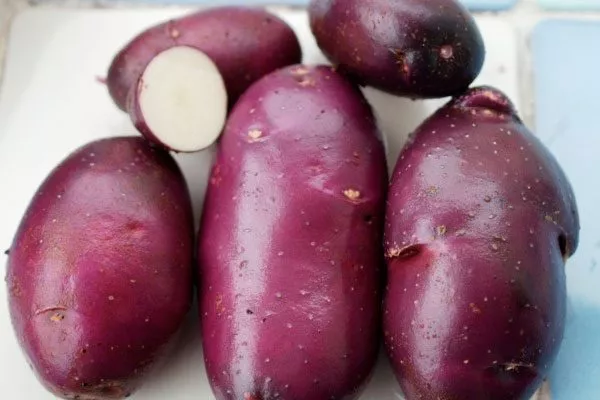
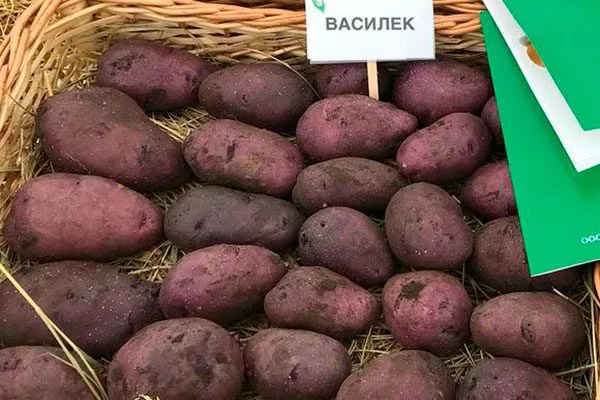
It is distinguished by its smooth, elongated tubers. Each one averages 77-112 g in weight. The skin is thin, smooth, and blue-violet in color. The eyes on the tubers are small and barely noticeable.
Characteristics of the Vasilek potato
Studying a variety's characteristics will help determine its potential and growing efficiency. This useful information will provide the necessary recommendations for proper crop care.
Taste qualities of Vasilek potatoes
The light cream-colored flesh has a dense, oily, and starchy texture, completely devoid of wateriness. Sometimes yellowish veins can be seen in the flesh. The potato does not darken when peeled or cooked.
It contains up to 16% starch and is high in vitamins C and E. Its high antioxidant and carotenoid content makes it particularly valuable for dietary nutrition. It's suitable for boiling, frying, and adding to soups, borscht, and salads. It can be baked, stuffed, and cooked in its skin.
Ripening time
The Vasilek potato is a mid-early variety. It takes only 80-100 days from germination to harvest. Full germination typically occurs two weeks after planting. Harvest time is August.
Productivity
It has a medium productivity level, reaching approximately 180-200 centners per hectare. The tubers are susceptible to mechanical damage due to their thin skin, so they require careful transportation to maintain their marketable quality.
Characterized by excellent shelf life. When stored properly, the tubers retain their marketability until the following season. Storage waste typically does not exceed 4-5%.
Growing regions
Although Vasilek is zoned for the central region of Russia, many gardeners report good results even in northern regions. Growing the crop in the south of the country is not recommended due to its low tolerance to dry air.
Disease resistance
It has high resistance to cancer and is rarely attacked by nematodes. It has average susceptibility to rugose streak mosaic and moderate vulnerability to late blight.
Advantages and disadvantages
This domestically bred variety is in high demand due to its excellent characteristics. Its tubers are ideal for healthy eating, rich in vitamin C and other beneficial nutrients.
This variety has some drawbacks. It's susceptible to golden nematode and has moderate resistance to several diseases, such as rugose mosaic and tuber blight. It can't be grown in acidic soils.
Landing rules
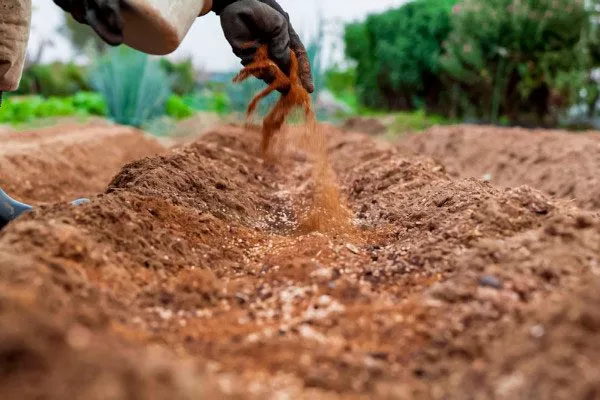
It has few climatic and soil requirements, but performs best in light, fertile soil. Heavy soils can negatively impact yield, so it should be fertilized with organic fertilizer before planting.
- ✓ The soil should be pre-enriched with organic fertilizers one month before planting.
- ✓ The soil temperature during planting should not fall below +15°C to ensure optimal germination conditions.
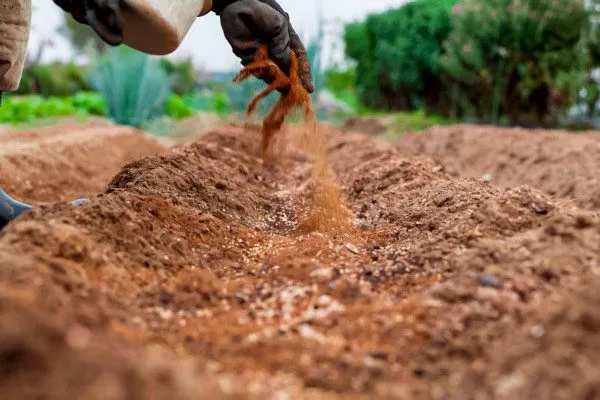
When growing crops in beds with boggy peat soil, prepare the soil beforehand to create optimal growing conditions. It's important to maintain crop rotation, following recommendations for adjacent crops.
Recommended neighbors:
- legumes (beans, peas, lentils);
- cucumbers;
- cabbage;
- green manure (oil radish, clover, alfalfa, mustard);
- pumpkin crops;
- roots.
How to care
During the early stages of plant development, it's especially important to loosen and weed the soil after each watering or rainfall. This ensures the soil retains nutrients and allows air to reach the roots, which promotes plant growth.
- Watering and fertilizing. It doesn't require frequent watering; 3-4 times per season is sufficient. Water the plant when the top 7-9 cm of soil dries out. For nutrition, use various organic and mineral fertilizers, applying them exclusively to the roots.
- Loosening and weeding. Weeding is an essential part of care. Two weeks after planting, loosen the soil between rows to a depth of 8-10 cm to ensure oxygen reaches the plant roots. Weeding helps eliminate weeds, which can compete with the potatoes for nutrients.
- Hilling. It plays an important role in potato cultivation. It prevents potatoes from appearing on the soil surface and increases the surface area for root development.
Carry out the first hilling when the emerging seedlings reach a height of 7-10 cm, preferably after rain or in the evening. The height of the mounds should be at least 15 cm.
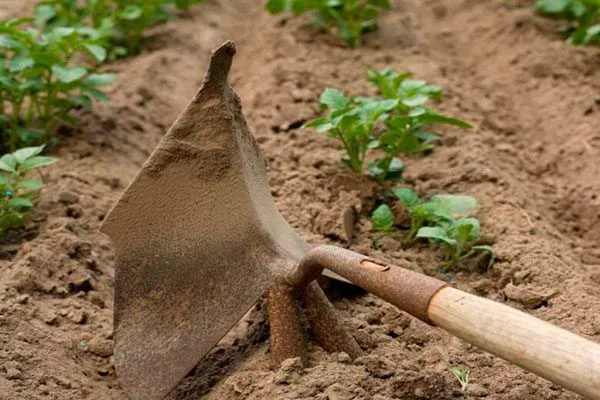
Compliance with all agricultural practices contributes to successful cultivation and ensures a high yield.
Harvesting and storage
A sudden wilting of the shoots usually occurs in the second half of August, which is a sign of harvest time. Begin digging in dry weather. Leave the dug-up tubers in the garden bed for 2-3 hours to dry, then move them to a dark place.
- Dry the tubers for 3 weeks in a well-ventilated area.
- Sort the tubers by size before placing them in the cellar.
- Maintain storage temperature within +4-6°C and humidity 80-85%.
Before storing the harvest in the cellar, dry it for three weeks. First, sort the tubers by size. Optimal storage conditions are: 4-6°C and 80-85% humidity.
Gardeners' reviews of the Vasilek potato
The Vasilek potato is popular among gardeners due to its attractive tubers, good shelf life, and excellent flavor. This variety is successfully grown for both personal consumption and commercial purposes. It produces high yields. To obtain a bountiful harvest, proper planting and care are essential.