
The Unika potato has only recently gained popularity, but its distinctive flavor has already attracted true connoisseurs. This cultivar is noted for its large bushes and tubers, its low maintenance, and its generous yields. With proper care, gardeners are rewarded with high-quality, all-purpose potatoes.
History of appearance
The Unica variety, originally from South America (Peru), was introduced by Jorge Alberto Espinosa. The potato arrived in Russia by accident in the mid-2000s. The tubers were brought to Omsk for comparative testing of varieties bred in Russia, the Netherlands, and South America.
Description of the Unique potato variety
To truly appreciate this variety's qualities, simply glance at its plants and tubers. Their appearance speaks for itself, setting this variety apart from others.
- ✓ The height of the bush can reach 2 m, which requires additional space.
- ✓ Tubers can reach a weight of up to 1.5 kg, which is unusual for most potato varieties.
Bush
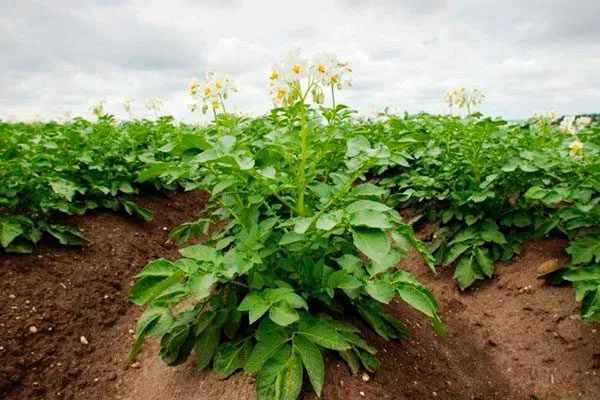
The culture reveals its uniqueness already at the growth stage. Distinctive characteristics of the plants:
- In favorable conditions, for example, in the south of Russia, the height of the bushes can reach impressive parameters of 1.8-2 m, while in minimal conditions it is about 1 m.
- The shoots are strong, densely foliated, and the root system is well branched.
- The leaf blades are small in size and have a shade close to light green, which is lighter than that of many other varieties and hybrids.
- The flowers are snow-white, adding an impressive accent against the dense greenery.
Tubers
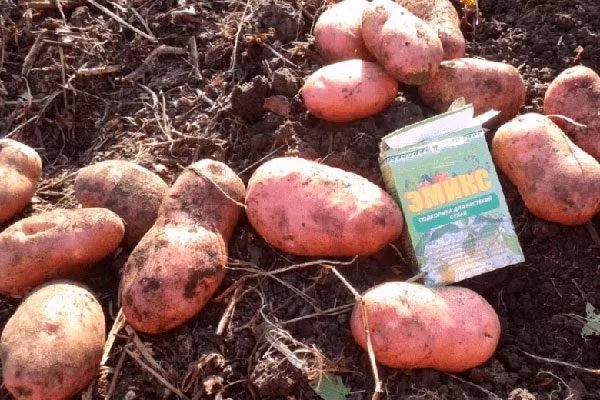
The tubers are large, weighing between 0.75 and 1.2 kg. Larger specimens, weighing up to 1.5 kg, are also found. Other external characteristics:
- The skin is quite thin and elastic, practically devoid of eyes, but if they are present, they are rare and located on the surface of the tuber.
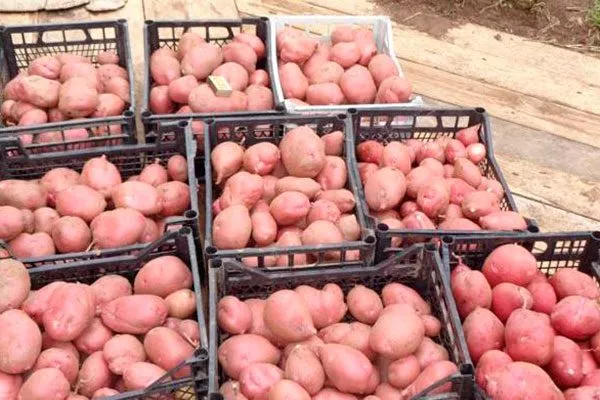
- The skin is colored bright crimson, giving it a distinctive appearance.
- The pulp is uniform in texture, elastic and juicy, with a hint of butter or even almost yellow.
Characteristics of the Unique seed potato
In addition to the unique appearance of the bushes and the large size of the tubers, this plant has other attractive qualities. It's important to examine these qualities before planting.
Taste qualities of the Unique potato
It's known for its ability to retain its shape when cooked without falling apart. Its flavor is also distinctive: when eaten boiled, it offers a salty, slightly sour taste, without any blandness. Thanks to this characteristic, there's no need to add spices.
But it's not just the taste that makes this vegetable so appealing. The tubers contain a large number of nutrients, including potassium, phosphorus, and various vitamins.
Ripening time
It's classified as a mid-season variety. In Siberia, where it was originally introduced, the harvest is 80-95 days after the tubers sprout in the garden. In the south, this process occurs 1-1.5 weeks earlier.
Productivity
It's considered a high-yielding plant. One are can yield up to 320 kg of large potatoes, equivalent to about 40 buckets.
Where is it grown?
It has successfully adapted to the local climate, which is far from ideal for gardening. This demonstrates its high hardiness and ability to cope with adverse environmental conditions.
Disease resistance
This variety is characterized by strong immunity. However, if care instructions are not followed, the bushes may be susceptible to certain diseases:
- Scab. A fungal infection that can affect the tubers, root system, and underground stems of the plant. External signs of infection include the appearance of small spots on the potato, stunted growth, and reduced plant development.
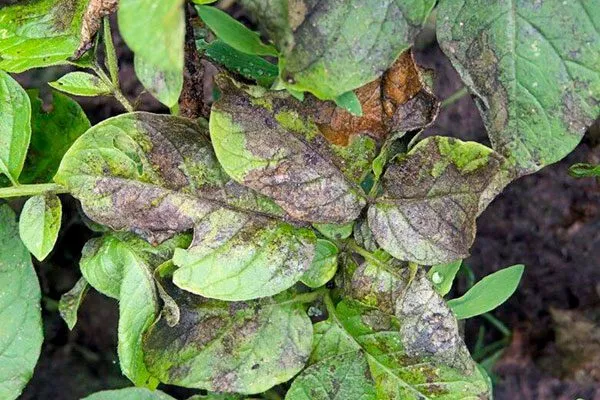
To control the disease, use the following preparations: Agat-25, Fitosporin-M and Prestige KS. - Late blight. It can lead to complete crop loss. This disease most often appears on tubers, but can also affect stems and leaves. Symptoms include brown spots on stems and leaves, and gray spots on tubers.
Treat the bushes with the following preparations: copper sulfate, Metaxil, Acrobat MC and Ditan M-45. - Powdery mildew. A fungal infection that develops under high humidity and temperatures. It attacks the stems and leaves of plants, which can lead to stunted growth and tuber development. The main symptoms include brown spots on the leaves and a white coating on the underside.
To combat this, use Bayleton and Azozen.
Advantages and disadvantages
Before growing Unika potatoes in your garden, make sure they fully meet the varietal specifications. Its advantages include:
Planting Unique potatoes
Pay special attention when selecting seedlings: the tubers should be whole and no larger than medium in size. If you find rotten tubers with weak sprouts, remove them, as such material is unsuitable for planting.
- ✓ Soil pH should be between 5.5-6.5 for optimal growth.
- ✓ The soil must be well drained to avoid water stagnation.
Choose a site with good sunlight and ventilation. Avoid waterlogging and stagnant water. Helpful tips:
- Plant seedlings in the first half of April in southern regions or the first half of May in central regions. For growing in Siberia or the Urals, the best time to plant is the second half of May.
- Soil preparation plays an important role. Although the Unica variety is undemanding, high yields are achieved in sandy, loamy, and slightly acidic soils. Choose sunny, well-drained sites.
- Prepare the plot in the fall, after the previous harvest. Clear the soil of plant debris and weeds, sow green manure, and in October, dig it over and fertilize it with manure. In the spring, dig the soil again and fertilize it with minerals.
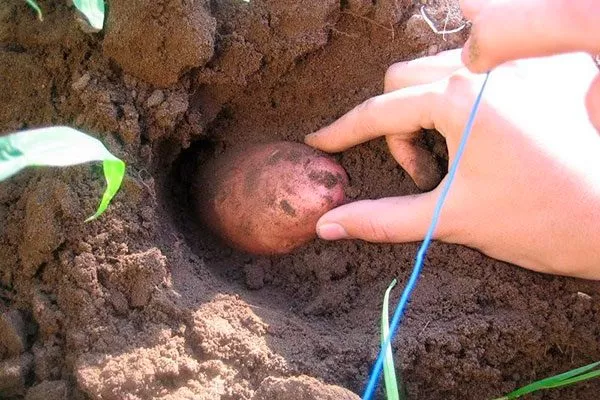
Plant in staggered pits. The distance between rows should be at least 60 cm, and between plants within a row, up to 40 cm. Planting depth depends on soil type: in loose soil, plant the tubers 10 cm deep, and in heavier soil, 5 cm deep.
Care instructions
Caring for the crop doesn't require much time or attention, but it affects the quality and size of the tubers, their immunity, and their yield. Care procedures include the following:
- Regular watering. Keep the soil moist, especially during dry periods. Regular and moderate watering promotes healthy potato growth.
- Top dressing. Fertilize your potatoes according to their needs. Nitrogen-rich fertilizers support green growth, while phosphorus-potassium fertilizers promote tuber formation.
- Weed control. Remove weeds by hand or use mulch to suppress their growth. This will help prevent competition for nutrients.
- Hilling. Carry out this twice per season: the first time when the bushes reach 15-17 cm in height, and again after two weeks.
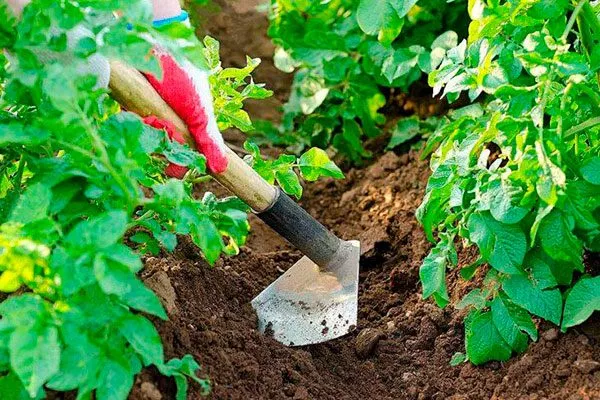
Pay attention to weather conditions, especially during periods of heavy rain or drought, and take appropriate measures to protect plants.
Harvesting and storage
Harvest the tubers using a pitchfork. This keeps the tubers clean and avoids excessive soil digging. After harvesting, thoroughly dry and sort the crop before storing it: remove any damaged tubers and transfer the good ones into several rows of wooden crates.
Reviews of Unique potatoes from gardeners
The Unika potato has earned recognition among gardeners thanks to its excellent varietal characteristics and high yield. It boasts large, high-quality tubers, excellent flavor, and versatility. With proper care and attention, it can produce abundant harvests and disease-resistant plants.