
Synok is a tasty and attractive late-ripening potato. It's renowned for its high yield and easy-to-grow characteristics. The harvested tubers store well and are suitable for both sale and culinary experiments. Growing them isn't time-consuming or labor-intensive, but it does require careful maintenance.
Origin
The "Synok" (synok) variety has become popular among Russian gardeners, appearing in garden plots relatively recently. There are differing opinions about its origins:
- Some claim that the variety originated in Belarus, while others believe that researchers from the Leningrad Research Institute of Agriculture were involved in its development, and it is currently in the variety testing stage.
- According to a third theory, Synok was created by breeders from the Primorsky Research Institute of Agriculture and the Far Eastern Experimental Station of the All-Russian Institute of Plant Protection in the 1970s and 1980s, but was not included in the State Register for unknown reasons. Authorship is also attributed to the A.K. Chaika Federal Scientific Center of Agricultural Biotechnology of the Far East.
Description of tubers and appearance
The bushes grow to a medium height, reaching 50-60 cm. They are robust, but not too spreading. Distinguishing qualities of this plant:
- The shoots are thick and straight, and the leaves are medium-sized. The volume of green foliage depends on the quality of the soil.
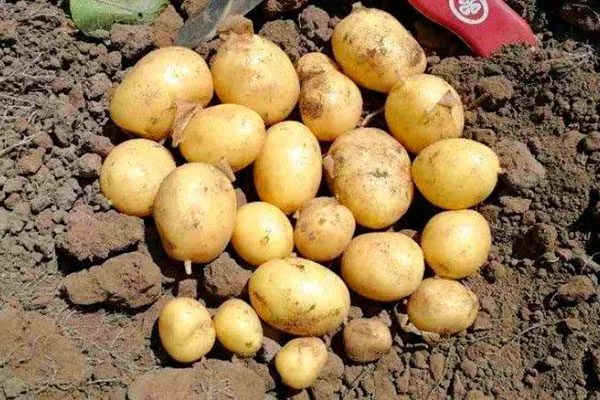
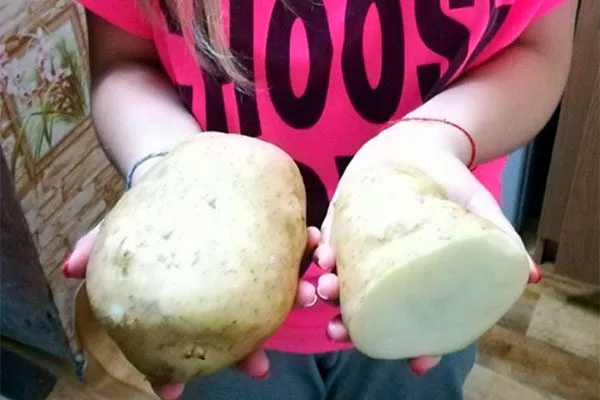
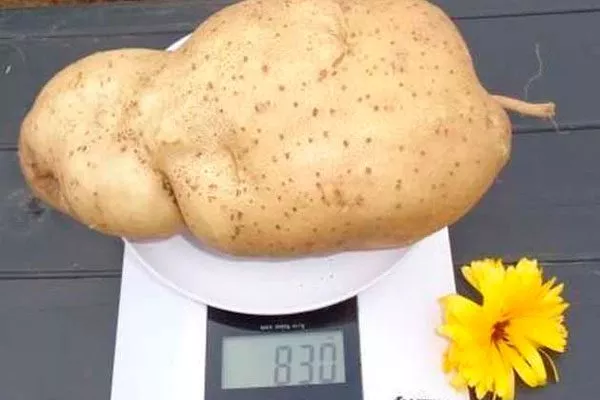
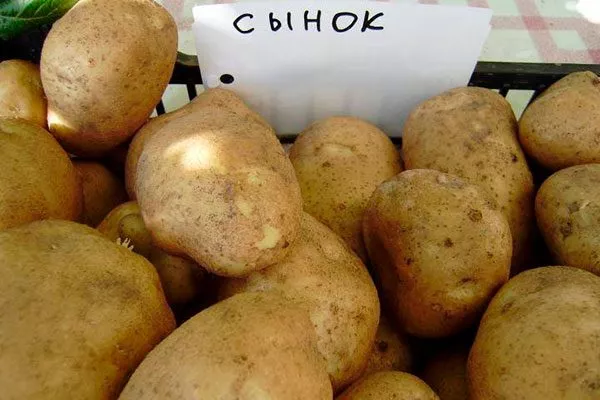
- The tubers are smooth, oval, and slightly flattened. Their weight ranges from 75-80 g to 250-300 g. Very small and deformed tubers are rare.
- The skin has a pinkish tint with a slight yellow tint, covered with a rough “mesh” to the touch.
- The "eyes" are small and superficial, most of them located at the top of the tuber.
- The flesh can be snow-white or creamy.
Chemical composition, trace elements and vitamins
Potatoes are an essential part of many people's diets. They're used in a variety of dishes, from salads and side dishes to soups and main courses. This is because the vegetable is rich in protein, fiber, and amino acids. Potatoes are also high in vitamins and microelements.
Vitamin composition:
- Vitamin A helps to quickly restore strength in case of any illness.
- Vitamin B1 normalizes the functioning of the digestive, cardiovascular and nervous systems.
- Vitamin B2 necessary for the normal breakdown of fats, proteins and carbohydrates.
- Vitamin B6 promotes complete absorption of fatty acids and chemical reactions.
- Vitamin B9 necessary for the functioning of the immune and circulatory systems.
- Vitamin C has a beneficial effect on the functioning of the nervous system.
- Vitamin E fights aging and prevents the process of pathological lipid oxidation.
- Vitamin PP helps fight inflammation and normalize the functioning of the stomach, liver and pancreas.
- Vitamin H promotes fat burning.
Microelements in the composition:
- aluminum;
- boron;
- vanadium;
- iron;
- iodine;
- cobalt;
- lithium;
- manganese;
- copper;
- molybdenum;
- nickel;
- rubidium;
- selenium;
- fluorine;
- zinc;
- chromium.
Characteristics
Sonok is a mid-late crop. Ripening time can vary depending on region and weather conditions, but on average, it takes about 120-130 days from germination to harvest.
Productivity
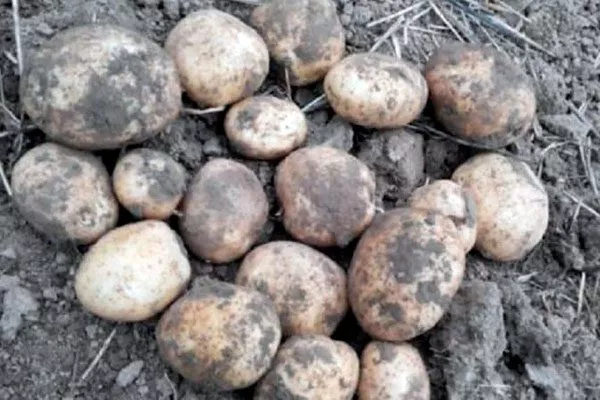
It has a high yield. A single bush can yield 9 to 11 kg of tubers, which equates to at least 15-20 potatoes, and sometimes up to 40.
Disease resistance
It is resistant to scab, canker, blackleg, and golden nematode. There are rare cases of late blight.
Growing regions and climate requirements
It grows successfully in various regions due to its ability to tolerate temperature fluctuations, moisture deficits and excesses, heat, and temporary cold spells. It grows in the Central Black Earth Region, the Urals, Siberia, and the Far East.
Soil requirements
The Synok potato variety achieves its best yield when grown in light, fertile soils with a neutral pH. Sandy loam or loamy soils are particularly suitable.
Advantages and disadvantages of the variety
Before planting potatoes in your garden, study its positive and negative characteristics.
Gardeners note that Synok has no significant shortcomings.
Difference from other varieties
The culture has certain characteristics that distinguish it from other varieties. Among them, the following points stand out:
- Stable harvest even under unfavorable weather conditions during the season.
- The absence of small and deformed tubers, which contributes to an increase in the quality of the harvest.
- Maintaining the yield percentage when using tubers cut into several pieces for planting.
- Savings in planting space are achieved due to the fact that dense plantings do not lead to a reduction in yield.
Landing features
Growing this crop doesn't require any special skills. To ensure a good harvest, follow the planting pattern and provide minimal care.
Follow the recommendations:
- Begin preparing for sowing in the fall. Prepare the seeds by selecting healthy, medium-sized tubers. Three weeks before planting, expose them to light to germinate. Choose a sunny, open location for growing.
It is preferable that the predecessors on the plot be legumes, rye, alfalfa, corn or flax. - Dig over the soil in the fall, adding humus, superphosphate, and wood ash. This variety thrives in neutral soil, so if the pH is high, scatter lime over the surface.
- Planting times vary by region: mid-April or early May in warm climates, and mid- to late May in northern regions. The planting pattern includes a 70 cm spacing between rows and 35 cm between tubers within a row. Plant the tubers in 10 cm-deep holes or along long furrows, adding wood ash.
- ✓ Select tubers weighing 50-80 g, without signs of disease or damage.
- ✓ Give preference to tubers with the largest number of eyes.
How to grow?
Immediately after planting, water and fertilize. The plant will independently extract spring moisture from the soil and nutrients from the fertilizer applied in the fall, which will be sufficient until flowering begins.
Agrotechnical measures:
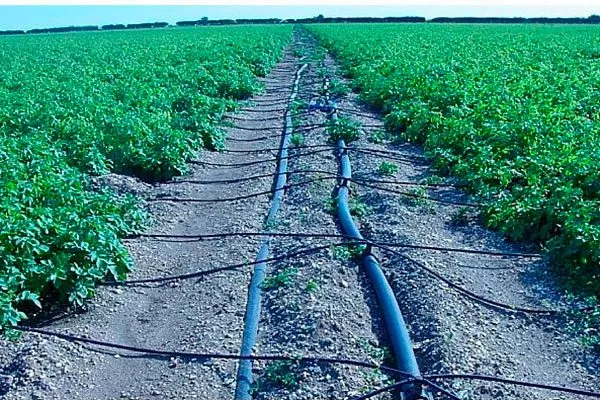
- In the temperate zone, natural precipitation is usually sufficient for normal crop development. In case of dry weather, water thoroughly once. The optimal time for additional watering is during the flowering period, when tubers are forming. In hotter regions, water no more than once every 15 days.
- The variety doesn't require fertilizing if it was added in the fall. If the soil is heavy and hasn't been fertilized, apply phosphorus-potassium fertilizers during flowering and bud formation.
- Weeding is an important part of potato care. Remove weeds as they appear to prevent them from competing with the crop for nutrients in the soil.
- Add humus and ash during autumn digging.
- Add phosphorus-potassium fertilizers during the budding period.
- Apply foliar feeding with microelements during the flowering phase.
Pest and disease control
The variety is resistant to various diseases. The only affliction that can affect it is late blight. The disease most often occurs during damp and cool autumn weather. It is accompanied by the appearance of black spots on the stems, a brownish tint to the foliage, and tuber rot.
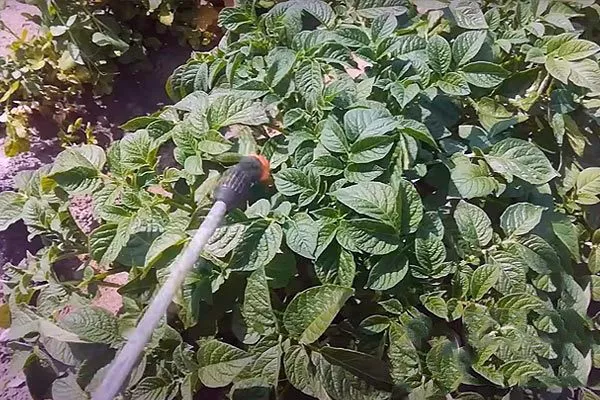
To combat the disease, use Fitosporin, spraying the bushes during the flowering and budding stages. A garlic infusion with potassium permanganate (100 g of crushed garlic per 10 liters of water with 1 g of potassium permanganate added) will also help.
The following pests are dangerous for the crop:
- Colorado beetle. Collect insects by hand or use insecticides.
- Wireworm. The worm burrows into the tubers. To combat it, carefully remove any remaining tops after harvesting the potatoes and dig up the soil in the fall. Planting nearby plants that repel the worm, such as calendula and marigolds, can also help.
- Mole cricket. It destroys roots and tubers. To combat this, use finely crushed eggshells, sprinkled into the holes when planting potatoes.
Be sure to inspect your plantings for diseases and pests to prevent serious consequences in a timely manner.
Difficulties in growing
Planting potatoes in the same area for several years in a row can lead to the accumulation of soil infections and reduced yields. Practice crop rotation and rotate the growing site each year.
Planting seedlings in cold soil can slow their growth and development, negatively impacting the harvest. Wait until the soil warms to the optimal temperature before planting.
Pests and diseases must be controlled, as they can cause serious damage to crops. Regularly inspecting plants for pests and implementing timely control measures will help prevent crop losses.
Harvesting and storage
Harvesting begins 120-140 days after germination. The exact ripening time depends on weather conditions. Readiness is determined by the condition of the tops: if they have yellowed and fallen over, the tubers are ready to harvest.
How and when to collect?
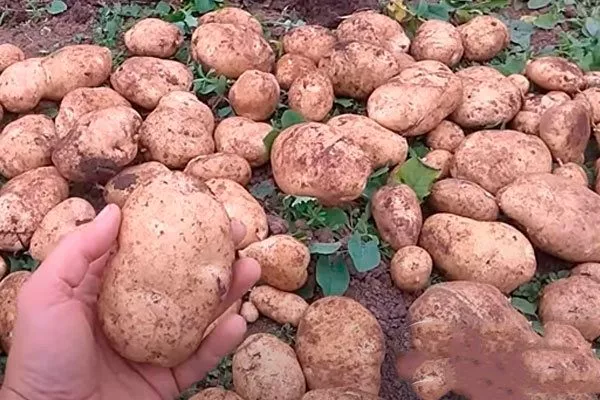
Dry, sunny days are preferred for harvesting potatoes. Dig the tubers with a shovel or pitchfork. Mechanical harvesting is not recommended because each plant produces 25 to 40 tubers, which are located both in the center and on the sides of the plant.
Storage features and shelf life of the variety
The optimal storage temperature for this variety is between +2 and +4°C. The acceptable humidity level is 87-91%. Only under these conditions will the tubers retain their nutritional value and vitamins until the next harvest.
Reviews
The Synok potato is characterized by high yields and excellent flavor, yet requires little effort to grow. It is one of the most popular late-ripening varieties in Russia. It attracts gardeners with its easy storage and large, high-quality tubers. To obtain a bountiful harvest, the crop requires careful care.