
Snegiri is an early-ripening potato variety. It's a table variety highly prized by Russian gardeners. It's loved for its abundant tubers, their excellent flavor, and the frost-resistant nature of its bushes. It's especially popular among residents of Siberia.
Who developed the variety and when?
This variety of vegetable crop is the brainchild of Russian breeders working in various research centers (the A.G. Lorkh Federal Research Center of Potato, the N.I. Vavilov Institute of General Genetics, the Kaliningrad Research Institute of Agriculture, and others):
- Gadzhieva N. M.;
- Lebedeva V. A.;
- Ivanova M. V.;
- Evdokimova Z. Z.
In 2001, Snegir was included in the state register as a variety intended for cultivation in garden plots and small farms in the Northwestern region. Domestic gardeners also successfully cultivate it in other parts of the country.
Description of the plant and tubers
Potato bushes of this variety have the following characteristics:
- belonging to an intermediate type;
- average height;
- erect or semi-erect shoots;
- Large, slightly wavy leaves;
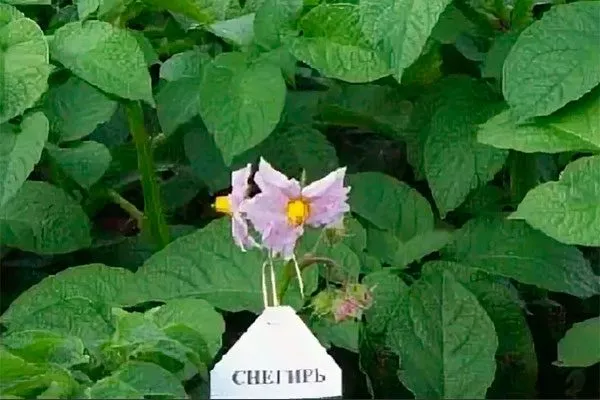
- Flowers are red-violet in color, medium in size.
The tubers of this variety of vegetable crop have the following characteristics:
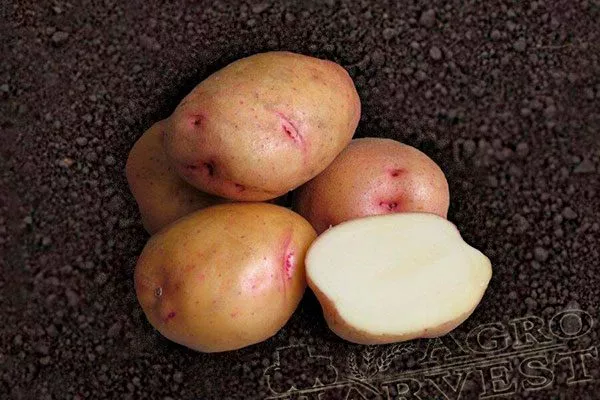
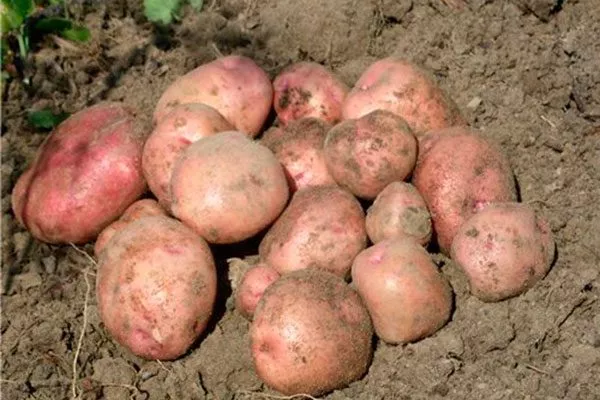
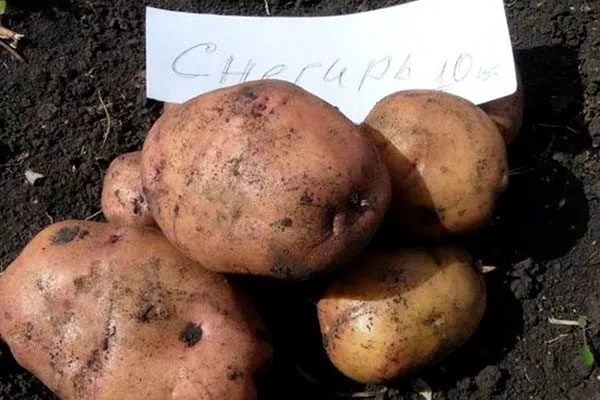
- round-oval shape;
- small in size (their weight ranges from 55 g to 90 g);
- with small, closely set eyes;
- smooth pink skin;
- white flesh.
Characteristics of the variety
Domestic gardeners value the Snegiri variety for its early and uniform ripening of the crop, frost resistance, excellent potato taste, attractive appearance, and good shelf life.
Taste characteristics and purpose
This potato variety belongs to the table vegetable crop category BC. Its tubers cook moderately. Their starch content is 15.7-16.0%. Experts rate the Snegir potato's flavor as excellent, with a tasting score of 7.
Housewives use this vegetable in cooking as follows:
- for making puree;
- frying;
- extinguishing;
- baking in the oven;
- adding to salads in boiled form.
Ripening and yield
This variety is characterized by uniform tuber ripening. Gardeners dig up the first potatoes 45 days after germination. The main harvest occurs 55 days later.
The yield of a vegetable crop varies depending on how long the tubers mature in the garden:
- 13,000 kg from 1 hectare of planting - if 45 days;
- 21000 kg/ha – if 55 days.
The maximum yield of Snegir (35,400 kg/ha) was achieved during variety trials in the Leningrad Region. Marketability is 65-85%, and shelf life is 95%. This potato has low resistance to mechanical damage.
Soil requirements
This variety is demanding when it comes to growing conditions, including soil. To obtain a bountiful harvest, the soil should be as follows:
- light;
- loose;
- moisture- and air-permeable;
- fertile.
- ✓ Soil pH should be between 5.0-6.0 for optimal growth.
- ✓ The soil should be enriched with potassium and phosphorus before planting to increase yield.
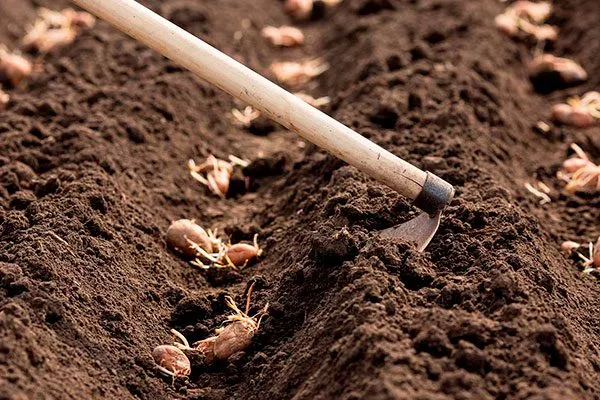
The plot for planting Snegir potatoes should be fertilized with organic matter (humus) in the fall. If the garden soil is heavy, autumn fertilization won't be enough to produce a good harvest of tubers. Applying additional fertilizer (such as wood ash) at planting time will help improve the situation.
Resistance to diseases and pests
The bullfinch extremely rarely suffers from such potato diseases as:
- viral infections;
- Alternaria;
- common scab;
- cancer (pathotype I).
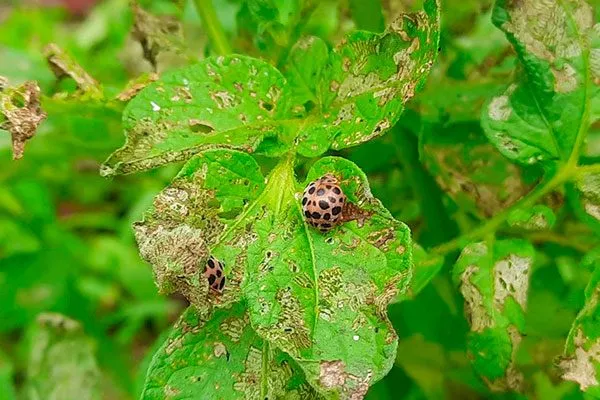
The variety is moderately resistant to these diseases:
- late blight of tubers;
- rhizoctonia;
- ring rot.
Necessary climatic conditions
The Snegir potato variety is intended for cultivation in household plots located in the following regions of the country:
- Northern;
- North-West;
- Central;
- Volga-Vyatka;
- Central Black Earth;
- Middle Volga;
- Ural;
- Far Eastern.
It shows the greatest productivity in the climatic conditions typical of the North-West region of the Russian Federation.
Landing features
When choosing a site for planting Snegir potatoes, consider not only the soil quality but also the plants that previously grew there. The health of this variety's potato plants and their yield depend on this.
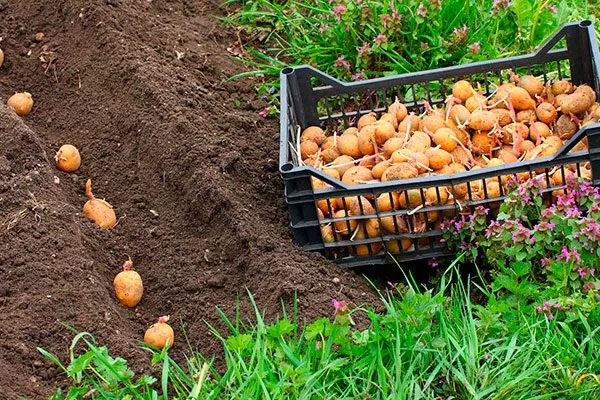
The best predecessors for this vegetable are:
- grain crops;
- legumes;
- cabbage;
- zucchini;
- cucumbers;
- onion;
- garlic;
- beet;
- green manure.
Sort the planting material. Select medium-sized, smooth, healthy potatoes free of disease and pests. Sprout them. Then treat them with fungicides (this will protect the plants from diseases at an early stage of development).
Plant potatoes in the garden bed according to the following scheme:
- the distance between bushes is 25-30 cm;
- distance between rows - 70 cm;
- planting depth: 15 cm (in warm climates, plant the tubers 10 cm deeper).
Subtleties of agricultural technology
Caring for plants of this variety doesn't require any special knowledge or skills. It involves the following steps:
- WateringBullfinch is very responsive to soil moisture in the garden bed. For a good harvest, water the bushes three times per season. Do not irrigate until the tops appear.
The first watering should be done when the plants reach 10-15 cm in height, and the second when they begin to bloom. Water again as the potatoes approach flowering. No further irrigation is required after this. Excess moisture can cause tuber blight. - Loosening and weedingCombine these procedures with watering. Repeat them every time it rains to prevent a hard crust from forming on the soil. Remove weeds so they don't interfere with the growth of the bushes.
- Top dressingThe nutrients added in the fall and during planting are sufficient for the good development and fruiting of the potato bushes.
If desired, fertilize the Snegir potato planting additionally during the initial hilling. Use a potassium and phosphorus nutrient mixture. Supplement the fertilizing with watering and loosening the beds. - HillingThis procedure is necessary to clear the soil of weeds, prevent the tops from clinging to the soil, and saturate the soil with oxygen. Hill the bushes twice during the season: when they reach 15-20 cm in height and 14-21 days after the first procedure.
- Treatments against diseases and pestsSnegir bushes are particularly susceptible to nematodes, late blight, and the Colorado potato beetle. To prevent these problems, practice crop rotation, remove weeds promptly, and avoid overwatering. Use home remedies made with whey, garlic, wormwood, and potassium permanganate.
To treat diseased bushes, use fungicides (Bazudin will protect potatoes from nematodes, Ditan or Bravo will protect against late blight). Collect Colorado potato beetle larvae by hand and treat the bushes with Colorado.

Advantages and disadvantages of the Bullfinch
The variety is loved by domestic gardeners for its advantages such as:
- early maturity;
- uniform ripening of tubers;
- excellent keeping quality of the harvest;
- Excellent taste of potatoes.
Experienced gardeners point out the following disadvantages of this variety:
- not stored for long enough, as with all early varieties of vegetables;
- vulnerability to nematodes and late blight.
Reviews
Domestic gardeners appreciate the Snegir potato for its early ripening, good yield, flavor, and shelf life. This variety is suitable for both small garden plots and large farms.