
The Sineglazka potato has been the most popular and well-known variety since Soviet times. It is widely grown both at home and on large-scale farms. It is considered an easy-to-grow variety and is characterized by excellent taste.
Breeding history
Sineglazka was bred in 1940 in the Smolensk region by crossing cultivated and wild potato varieties. The author is Sergei Demin, but the name was given by Boris Nazarenko, who tested the new variety.
Numerous tests were conducted at experimental stations, which is why Sineglazka was not included in the Russian state register. This was due to the variety's lack of potential. Despite this, regular volunteer farmers also tested the variety.
According to them, the new potato has a long shelf life, is easy to transport, requires little care, and produces a good yield. Consumers noted its pleasant taste. Testing has been conducted for decades, and as a result, Sineglazka is recommended for growing only in private plots.
Description of the variety
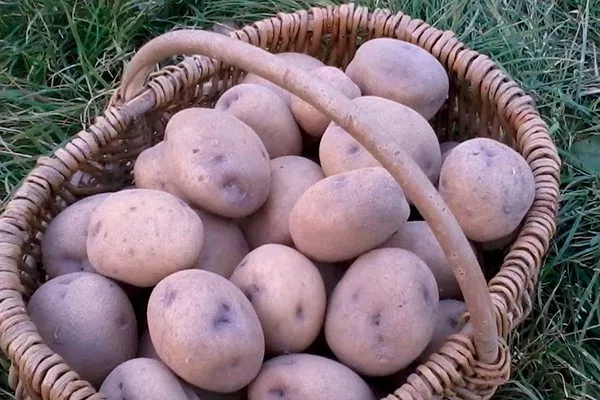
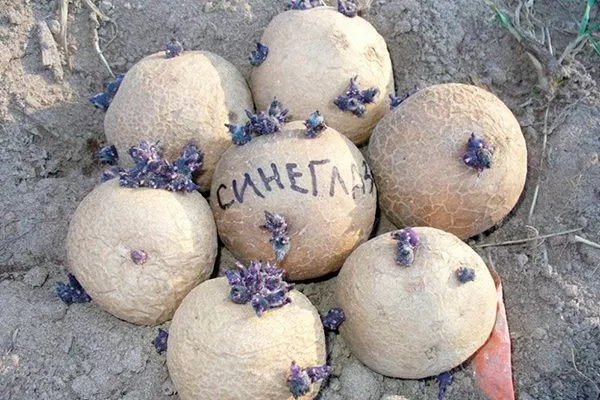
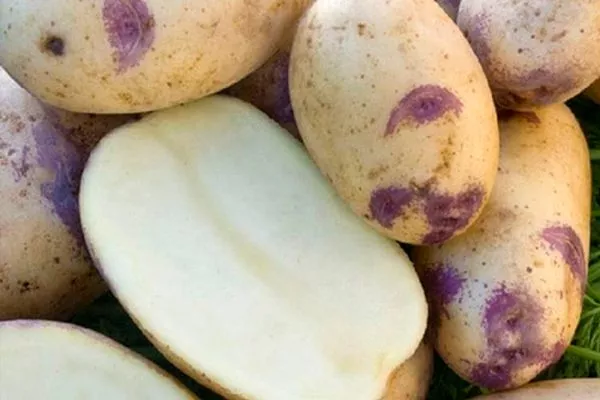
The distinctive feature of the Sineglazka potato is its bluish-purple "eyes" against the vegetable's beige background. This mid-season variety is ready to harvest in 85-90 days, and a maximum of 100-110 days.
Characteristics of the appearance of the bush and root crops
The Sineglazka potato is characterized by a very robust root system, which is where the fruit is located. But the variety also has other distinctive features:
- Tubers. They are quite large, weighing between 170 and 200 grams. They are oval-round in shape, slightly flattened on the sides. The skin is slightly rough and thin. The color can range from beige to grayish-pink, with lilac or violet highlights.

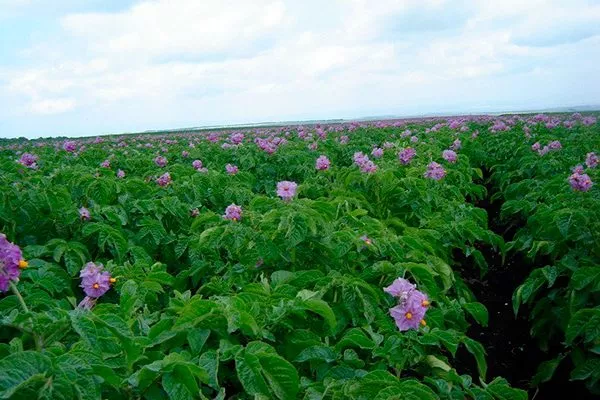
The flesh is usually white, firm in texture, and contains about 15% starch. The eyes are superficial (not very deep). - Bush. Vigorous and spreading, with thick, strong shoots. The green mass grows quickly and abundantly. The foliage is bright green at first, later becoming darker. It is medium in size.
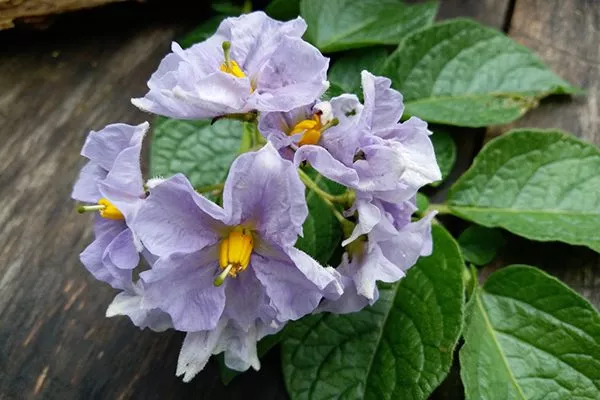
- Inflorescences. They are small, with flowers that come in two shades: a yellow center and lilac or light blue petals. Berries, and later seeds, are formed extremely rarely.
Blue-eyed has the following characteristics:
- the soil must be loose and not heavy, fertile;
- potato disease resistance – excellent;
- Among the pests, wireworms are the most common;
- The shelf life is average, so it is necessary to create special conditions with increased dryness.
Purpose and taste of tubers
The Sineglazka potato has a pleasant, delicate flavor, and the flesh becomes crumbly when cooked, making it ideal for mashed potatoes, stewing, and baking. Frying is also recommended. This root vegetable is ideal for baby food and dietary nutrition.
Climate conditions
The variety is intended for cultivation in the central zone of the country, so it is also ideal for other regions, except for areas with harsh climatic conditions.
Maturation
Potatoes ripen approximately three months after planting, but the variety has a prolonged growing season. The first young tubers are harvested as early as mid-June, and the last ones in September.
Productivity
Sineglazka has excellent fruiting – one bush can harvest 8-12 root crops per hectare – up to 500 centners.
Advantages and disadvantages
The Sineglazka potato variety has many strong points, which is why it is so popular.
Planting and caring for Sineglazka potatoes
The optimal time for planting blue-eyed sineglazka in central Russia is early May. In the south, planting can begin in April. Due to the spreading roots and bush, it is important to strictly adhere to the planting pattern.
- ✓ Soil should have a pH in the range of 5.5-6.5 for optimal growth.
- ✓ Drainage is required to prevent water stagnation.
Selecting and preparing a planting site
The ideal soil is loamy and sandy loam with a neutral pH. Blue-eyed rhizomes do not tolerate heavy soils, high humidity, or shade. Therefore, the site should be sunny and open, but drafts should be avoided.
It's best to prepare the site in the fall, but you can also do it 2-4 weeks before planting. Here's how to do it right:
- Dig over the future garden beds. Be sure to remove any remaining roots from other crops or weeds. Large clumps shouldn't be broken up in the fall (this will prevent pest infestations), but you should do so in the spring.
- Spread organic matter (humus, compost, manure) over the soil surface.
- In the spring, dig up the garden again and add nitrogen and phosphorus.
- Level the surface with a rake.
For site preparation rules, watch the video:
Preparation of planting material
Most often, tubers are planted on private farmland, requiring preliminary preparation. The process is labor-intensive, but it will result in healthy plants and a bountiful harvest. Here's what to do:
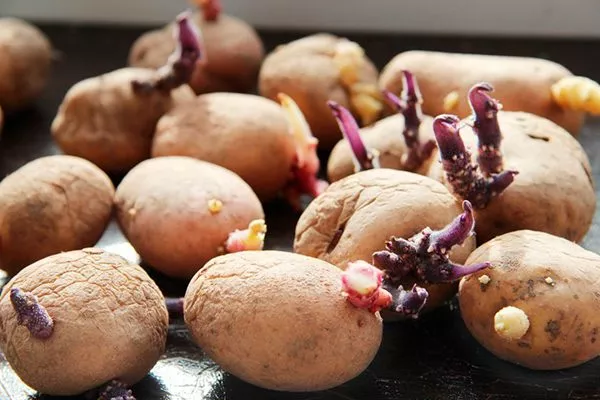
- About a month before planting, sort through the root vegetables. Remove any that are missing eyes, damaged, rotted, or show signs of disease. Leave tubers with eyes no longer than 3 cm.
- Bring the planting material into a room with a temperature of 18-20 degrees Celsius. Humidity should be 85%. If humidity is low, you will need to spray the tubers with water. This is necessary to accelerate bud growth.
- Place the potatoes on burlap or loosely in perforated wooden boxes.
- After 10 days, place the tubers in a room with a temperature of about +10-14 degrees, thanks to which the sprouts will become stronger and will not stretch excessively.
- Treat the tubers against diseases and pests. To do this, dissolve 1 tablespoon of copper sulfate in 6 liters of water. Spray the potatoes with the solution or soak them in the solution for 60-80 seconds.
- After 4-5 days, the tubers need to be nourished. To do this, add 1 tablespoon of superphosphate and ammonium nitrate per 10 liters of water. Soak the tubers for 60 minutes, then spread them out on burlap to dry.
Learn about potato preparation requirements in our video:
Landing rules
The planting method for Sineglazka potatoes varies by region. In southern regions, tubers are planted in furrows or pits, using a spade. In cooler climates, they are planted on ridges or raised beds. The optimal distance between rows is 60 to 80 cm, and between plants within a row, 30 to 40 cm. The depth is 8 to 20 cm (the further south the region, the shallower).
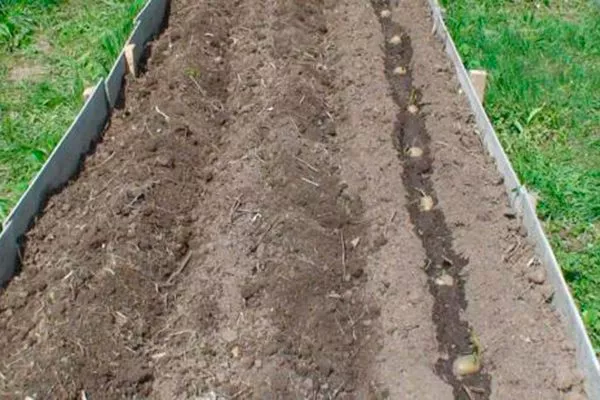
Landing algorithm:
- Dig holes.
- Add a handful of wood ash to each planting hole.
- Place a couple of tubers.
- Fill with loose soil.
There is no need to water the plantings – they will draw moisture from the soil.
Watering and fertilizing
Blue-eyed lilies don't like excessive watering, so water only as needed—when a dry crust begins to form on the soil surface. Watering guidelines:
- the first time water is added after the seedlings have emerged;
- the second time - during budding;
- the third time - after the end of the flowering period.
However, if the weather is excessively dry, the potatoes will need additional watering between these periods. 1 square meter requires 40-50 liters of settled water.
Blue-eyed saffron doesn't need fertilizing during the first half of the growing season, provided the tubers have been properly treated with fertilizers and nitrogen has been added. In the second half, organic matter should be added. You can choose one of the following options:
- scatter chicken manure - 5 kg per 10 sq. m;
- prepare a solution of chicken manure - 1 kg is enough for 15 liters of water;
- add 5 kg of rotted manure per 10 sq. m;
- dilute 1 kg of mullein in 10 liters of water.
Loosening and weeding
Loosen the soil and weed the grass after every watering or rain. To maintain the desired moisture level, mulch the areas around the bushes with straw.
Hilling
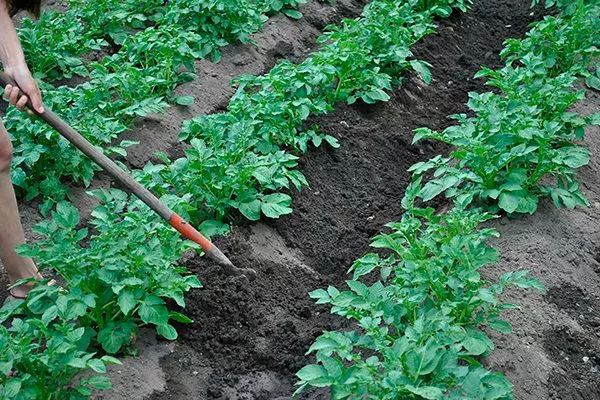
Hilling is an important agricultural technique for Sineglazka. This procedure protects the plant from root drying out and sudden frosts. Hilling is performed twice:
- the first time – when the tops grow to 17-20 cm;
- the second time - before the beginning of the flowering period.
Diseases and pests
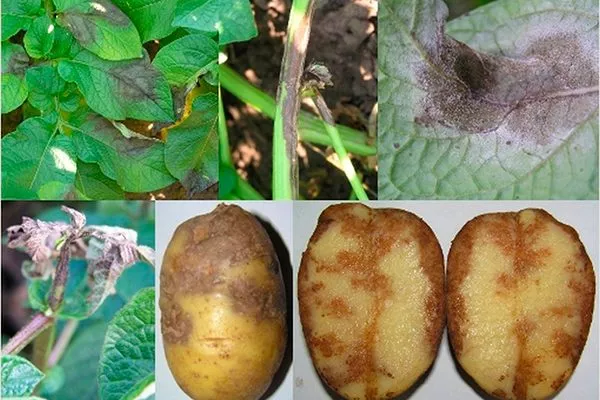
The Sineglazka potato is resistant to diseases and pests, but sometimes the following problems are encountered:
- Banded mosaic. It occurs during budding and is characterized by the death of leaf blades and petioles. As in the previous case, treatment is futile.
- Leaf roll virus. This is a dangerous disease that cannot be cured. It manifests itself as yellowing of the upper leaves and pinking of the lower surfaces. As the disease progresses, the midrib curls, hardening, and brittleness of the leaf blades occur. Affected bushes are burned.
- Potato moth. Initially, the insect lays eggs on the inner surface of the foliage, close to the petioles. Caterpillars then hatch and actively consume the leaves and tubers, causing the potatoes to rot. Treatment with Iskra or Cytocor is recommended.
- Colorado beetle. It's impossible to miss it. Treatment includes Bazikol, Prestige, Dendrobacillin, and similar medications.
- Wireworm. This is a click beetle larva that attacks root crops. Pochin and Bazudin are used for control and prevention.
How to harvest and store?
Harvesting for long-term storage should begin when the crop reaches technical maturity, which occurs after 90 days. This must be done correctly, so pay attention to the following aspects:
- wait for favorable dry weather, but if it rains, do not refuse to dig up, otherwise the tubers will begin to rot and there is a risk of losing the harvest;
- Root vegetables are removed from the ground using a pitchfork or shovel, so be careful not to cut the potatoes;
- Immediately after digging, place the tubers in a dry room or in the sun to dry completely;
- Turn the fruits periodically so that they become dry on all sides.
It is also important to preserve the harvest, for which you should adhere to the following rules:
- sort through the potatoes, removing any damaged or diseased ones;
- separate the tubers by size - it is not advisable to store small root vegetables with large ones;
- For storage you can use burlap or wooden boxes;
- premises – cellar, basement, glazed loggia;
- humidity level – 75-80%;
- temperature – +2-3 degrees.
- ✓ Before storing, the tubers must be completely dry.
- ✓ Do not store potatoes near apples, as they emit ethylene, which accelerates sprouting.
Reviews of the variety
The Sineglazka potato is versatile and extremely popular among domestic gardeners. Despite its shortcomings, farmers continue to grow this variety because, if all agricultural requirements are met, it can yield a decent harvest of delicious tubers.