
The Red Sonya potato variety is not only high-yielding and disease-resistant, but also boasts a long shelf life. It boasts large tubers and excellent flavor. Its versatility and low maintenance make it a successful variety in various regions of the country.
Description and characteristics of the variety
This popular potato variety is popular among gardeners due to its high yield. Its appealing flavor makes it especially desirable even for novice agronomists.
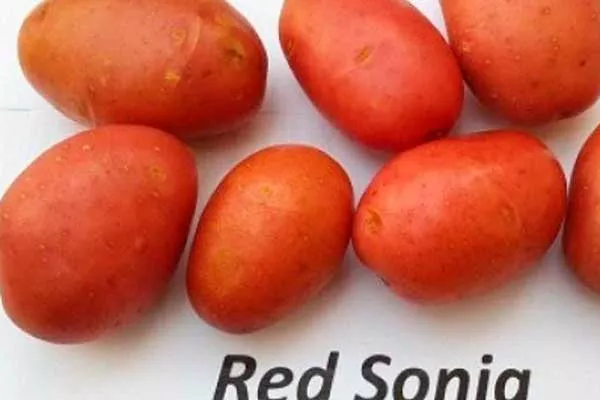
Origin of the variety
Developed in 2012 by German breeders, the variety was only added to the State Register in 2015.
Description of the plant and tubers
The work of experienced specialists is easily recognizable thanks to the unique appearance and characteristics of the resulting potatoes.
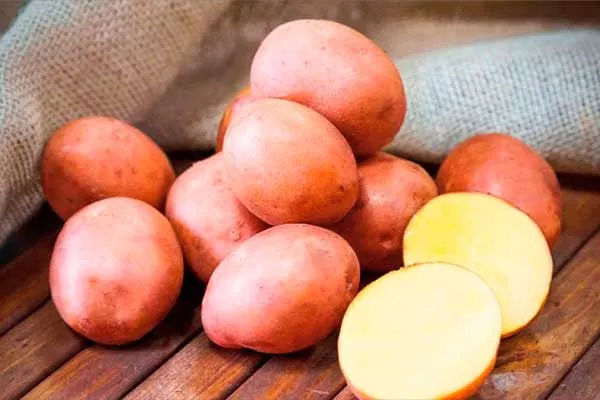
It has the following distinctive features:
- The bushes are tall and upright, well-foliated, reaching up to 60 cm in height.
- Medium and large leaves are colored in light and dark green shades.
- Inside the small flowers there is a corolla, painted in a bright anthocyanin hue.
- Well-formed tops consist of 6-7 stems.
- The weight of one tuber ranges from 78 to 122 g. They have an oval shape with shallow and sparse eyes on a thin, rough skin, colored in a reddish-pink hue.
Taste characteristics and purpose
It's a table variety with a low starch content, making it suitable for dietary use. Its excellent taste has been repeatedly noted in various descriptions:
- It cooks quickly and is moderately cooked, making it ideal for preparing side dishes, first courses, and culinary experiments.
- The only limitation is that during long-term storage, some of the valuable components may be lost, but early harvests are usually not intended for winter storage.
- The first digging yields tasty and healthy new potatoes, and fully ripened tubers can be used for any purpose in the kitchen.
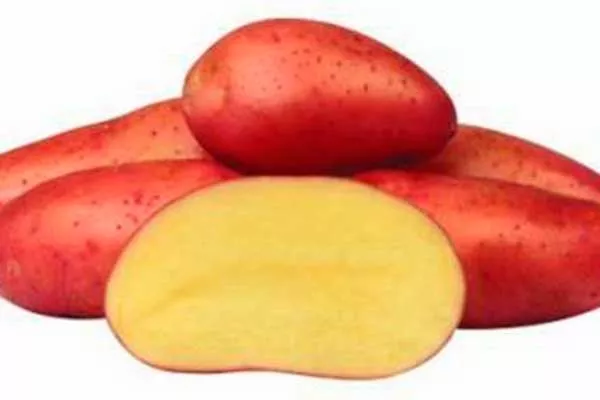
The thin skin and small number of eyes result in a low waste rate (only 3%) during cooking.
Chemical composition, trace elements and vitamins
One tuber contains 0.8 to 1% ash, and the starch content is 12 to 15%. The protein, fat, and carbohydrate content in 100 g of raw potatoes is:
- proteins – 2 g;
- fats – 0.4 g;
- carbohydrates – 18 g.
Among the beneficial minerals contained in potatoes, we can highlight:
- phosphorus;
- potassium;
- sodium;
- magnesium;
- zinc;
- cobalt.
Potatoes contain a full range of amino acids. 100 g of the vegetable contains 20 mg of ascorbic acid, but this amount can decrease to 30% of the original value during storage.
Ripening period
Potato harvesting can begin as early as 65 days after planting. Proper care can speed up the ripening process, and in some regions, the first harvest is harvested in as little as 50 days. This early ripening period allows for repeated planting of root crops in the southern regions of the country during the season.
Productivity
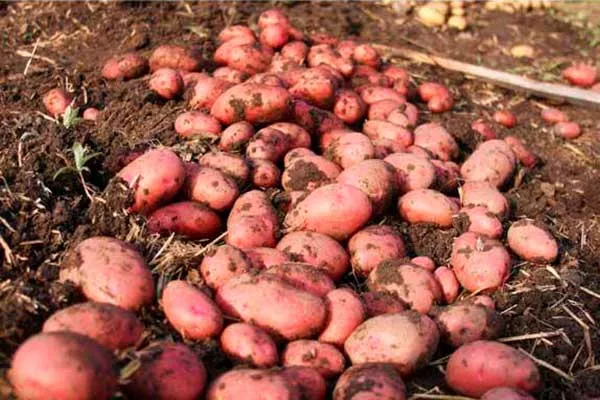
The average yield per hectare ranges from 174 to 340 centners. With proper potato cultivation, up to 10 tubers can be harvested from a single bush. Potatoes have a shelf life of 96%, making them easy to transport.
Disease resistance
This potato variety exhibits low susceptibility to a number of diseases and pests. These include:
- Black spot virus.
- Stem cancer.
- Nematodes.
- Scab.
- Late blight of tubers.
- Blackleg.
Growing regions
The variety is successfully grown in the North Caucasus and Volga-Vyatka regions. Its undemanding climate makes it suitable for cultivation in virtually all regions of the country. In the south, the harvest can be twice a season.
Pros and cons of the Red Sonya variety
Before planting a crop in your garden, study its advantages and disadvantages. Advantages of this variety:
The only drawback is the need to germinate the tubers to obtain an early harvest.
Landing features
Before planting root vegetables, preparation is necessary. About a month before gardening, follow these steps:
- Select the root vegetables, leaving whole and large specimens.
- Place them in boxes and place in a dry, warm place for germination.
- Treat the tubers with special compounds that help strengthen their immune system and stimulate growth.
- ✓ The temperature in the germination room should be stable and be +12…+15°C.
- ✓ Lighting should be diffused, but sufficient to prevent the sprouts from stretching.
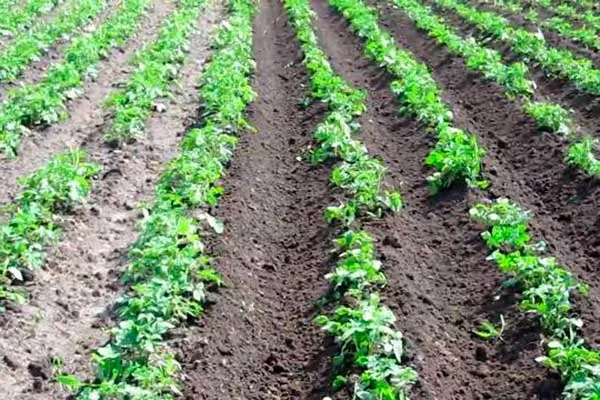
Prepare the soil for planting by selecting a suitable site. Amend the soil with organic matter, such as wood ash, compost, or manure. Then, loosen the soil before planting the root vegetables.
The optimal planting pattern is 32 x 75 cm, with the maximum hole depth for tubers no more than 8 cm for light soils and 5 cm for clay soils. To speed up and simplify the planting process, mark out the rows and dig the holes in advance.
Care nuances
After planting, ensure timely care for the plant. Key agricultural practices include:
- Watering. Apply the first watering immediately after planting, using warm, settled water. Subsequently, water the bushes as needed. During dry weather, apply the watering approximately every 1-2 weeks, preferably between rows. Stop watering when the variety begins to bloom and the leaves turn yellow.
- Top dressing. Potatoes don't require excessive fertilizer. Apply the first fertilizer when the plant begins to form leaves. Use both organic and mineral fertilizers. Apply additional fertilizers every 2-3 weeks, especially during flowering.
- Weeding. Regularly weeding the rows helps improve the quality of root crops and ensure the necessary oxygen content in the soil for the tubers.
- Hilling. This is a mandatory procedure, performed 2-3 times during the growing season. Begin the first hilling when the seedlings reach a height of about 10 cm, and the second when they reach 20 cm. Perform the third hilling 10-14 days after the second.
- Mulching. After hilling, mulch the soil with peat or compost. This will help retain moisture, reduce weed growth, and provide more stable growing conditions for the potatoes.
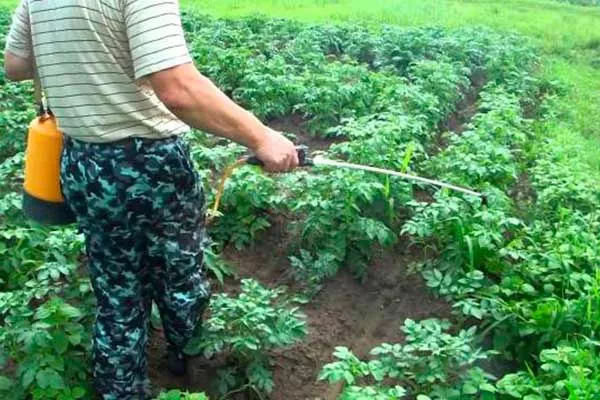
Timely and careful care of the crop will ensure the production of large, high-quality root crops in large quantities.
Pest and disease control
The crop is resistant to numerous diseases, but can be affected by rhizoctonia. It is recommended to use Fitosporin for plant treatment. This product effectively combats the disease.
The most common pest that can attack crops is the Colorado potato beetle. Hand-pick the pests. In case of widespread infestation, use insecticides such as Connect or Euphoria.
Harvesting and storage
It's important to follow certain requirements when harvesting and storing the crop. The Red Sonya variety has excellent shelf life and can be transported over long distances.
How and when to collect?
Mow the tops two weeks before harvest. This procedure improves the quality of the tubers by creating a rough skin and dry eyes. At this time, the potatoes are fully ripe, extending their shelf life.
Storage features and shelf life of the variety
Sort the harvested potatoes, removing any diseased or damaged ones. Treat the vegetables with antifungal agents and dry them in the shade for 14-21 days. Place small and large potatoes in separate boxes and store them in storage.
- ✓ Before storing, tubers must be thoroughly dried for 2-3 weeks.
- ✓ Ventilation must be provided in the storage area to prevent condensation.
The optimal temperature is +2…+4°C, and the humidity level is from 70 to 85%. If all conditions are met, the shelf life is approximately 8 months.
Potential difficulties when growing
Growing Red Sonya potatoes can be challenging. Consider the following:
- Choosing the right growing location, considering light, soil moisture, and drainage, can be a challenge, especially if you have limited space or unfavorable climate conditions.
- Potatoes prefer loose, fertile soil. Preparing the soil for planting can take time and effort, especially if it's weedy or has an unsuitable texture.
- Red Sonya requires regular watering, especially during dry periods. This can be problematic, especially if you don't have access to a water source or have limited watering resources.
After harvesting, proper storage is essential to maintain freshness and quality. Otherwise, vegetables may rot or lose nutrients.
Reviews from vegetable growers
The Red Sonya potato was developed relatively recently, but even in this short time, many agronomists across the country have already appreciated its advantages. It boasts numerous positive characteristics, including resistance to diseases and pests. With proper care, this crop produces high-quality, medium-sized tubers.