
Red Lady is an ideal choice for gardeners seeking a high yield with high-quality tubers. Its attractive appearance, excellent flavor, and resistance to disease and adverse weather conditions make it one of the most popular potato varieties. Proper care plays a major role in this.
Characteristics of the variety
With so many potato varieties available, finding one that's perfectly adapted to a specific region's climate can be challenging. The Red Lady variety stands out as a universal choice for several reasons, the most important of which is its excellent varietal characteristics.
Origin
It was developed in Germany by breeder Karz von Kameke, who worked for the Solana company. In 2006, trials were completed in various regions of Russia and Ukraine. Due to its successful results, it was included in the State Registers of both countries by 2008.
Chemical composition, trace elements and vitamins
It has high biological value due to its content of ascorbic acid (vitamin C) and a full group of B vitamins. The tubers contain iron, vegetable proteins, and organic acids such as citric and oxalic.
Important micronutrients found in this potato variety include potassium and phosphorus. However, the starch content does not exceed 15%.
Ripening period
It has an early maturing period, with the harvest occurring 50 days after planting. Due to its extended growing season, potatoes intended for long-term storage are harvested no earlier than 90 days after planting.
Productivity
Yields range from 170 to 300 centners per hectare. This figure depends on consistent fertilization and daylight hours. The plant prefers fertile soil: the higher the nutrient content, the better the yield.
Drought resistance, frost resistance
The plant exhibits good drought tolerance and can withstand high temperatures. Its frost resistance is low, so it will not survive cold periods without winter protection.
Characteristics of tubers and bush
The bush is medium-height and upright with a spreading crown. The stem is strong, reaching a height of up to 70 cm. The cultivar has the following distinctive characteristics:
- The leaves are medium-sized, dark green, with wavy edges that can be of varying intensity.
- The flowers are small, white or lavender in color, with a bright yellow center.
- The root system is well developed, although small. The roots are thin and branch quickly and extensively.
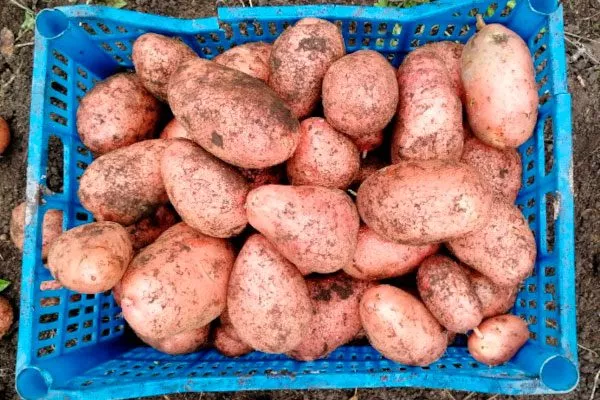
- The tubers can be medium or large in size, with an average weight of 114 to 142 g.
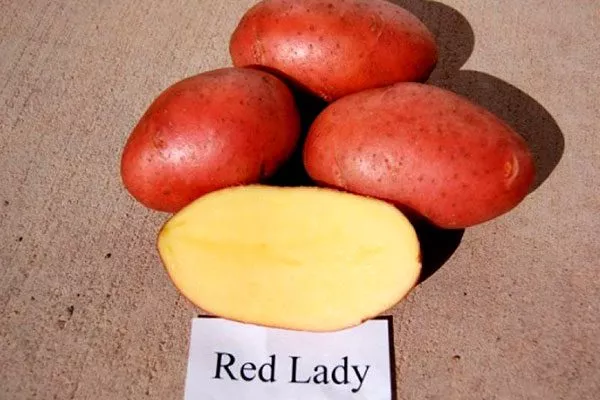
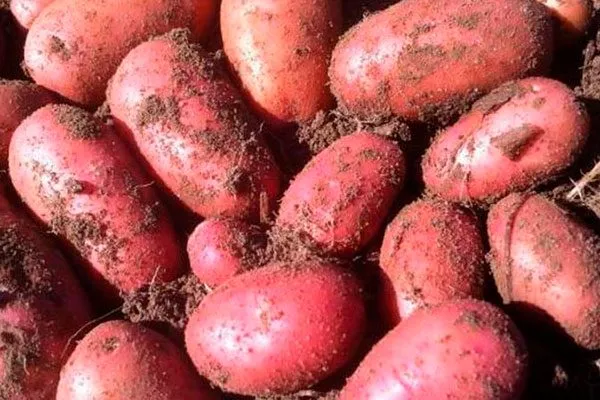
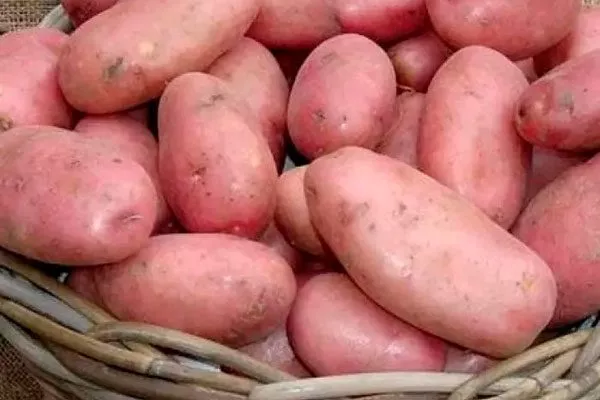
- The shape is elongated-oval, with a rich red skin, the texture of which is slightly mesh-like and slightly rough.
- The flesh is light yellow or cream in cross-section, with small pink eyes.
Purpose and taste of tubers
Red Lady is known for its pleasant flavor and unique characteristic—it doesn't cook down quickly. This makes it ideal for a variety of culinary recipes.
This versatile variety can be used for making chips, French fries, and any other dishes that require cooking. Thanks to its unique properties, the flesh does not darken even after prolonged cooking.
Growing regions and climate requirements
It thrives in a variety of climates and is successfully grown throughout Russia. It is successfully cultivated in the southern regions, as well as in the Far East, the Volga-Vyatka, Central, and Caucasus regions. The variety is popular and successfully grown in the CIS countries.
Advantages and disadvantages
It has many positive characteristics, but also some negative ones. This is important to consider before planting. Advantages of the variety:
What is the difference from other varieties?
The main distinguishing feature is its ability to fully grow and develop even under adverse weather conditions. At the same time, it retains its characteristic flavor and attractive marketable appearance.
Features of planting and growing
Potatoes are easy to grow, making them an ideal choice for both experienced and novice gardeners. Planting considerations include:
- Preparing for landing. Begin preparations a month before planting. Plant potatoes when the soil temperature reaches 10°C. To ensure good germination, use only sprouted seeds.
Grow tubers in a bright room at a temperature of at least 15°C. This helps reduce the risk of increased levels of toxic solanine in the tubers' skins and protects them from pests. Treat the tubers with growth stimulants before sowing. - Soil requirements. For successful germination and development, potatoes require loose, fertile soil. Dig the soil twice, adding humus and wood ash, which not only enriches the soil with nutrients but also prevents fungal growth.
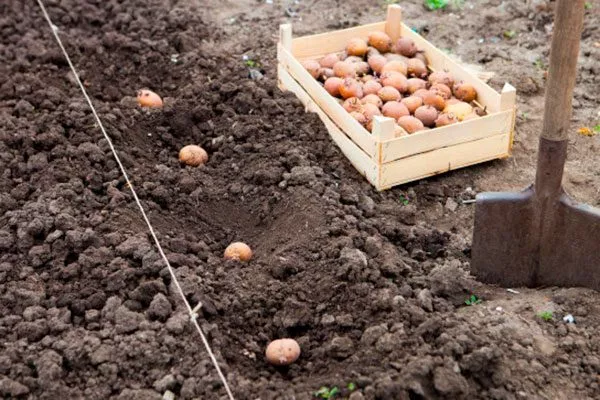
If the soil acidity is high, use dolomite flour or slaked lime. - Landing. When planting, leave a distance of about 35 cm between tubers and 55-65 cm between rows. The depth of the planting holes should not exceed 10 cm. Place the tubers with the sprouts facing up, sprinkle with wood ash, then cover with soil, compact, water, and mulch with sawdust or straw.
- ✓ The optimal depth of soil digging before planting should be at least 25 cm to ensure good aeration.
- ✓ To prevent fungal diseases, it is recommended to apply wood ash at a rate of 1 kg per 10 m².
Caring for Red Lady potatoes is straightforward. Follow these basic agricultural practices:
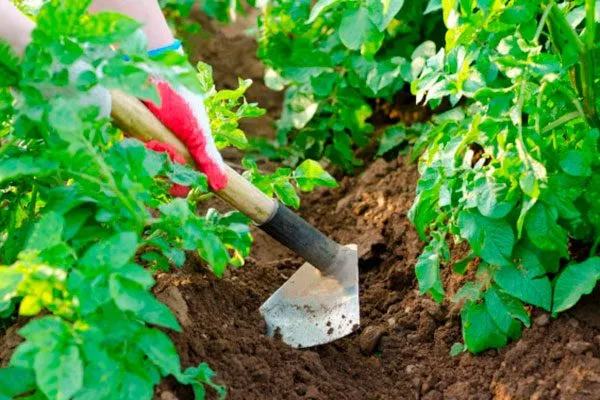
- Watering. This potato variety is heat-tolerant, so it doesn't require frequent or heavy watering. However, during flowering and tuber formation, the seedlings require more moisture. During this period, apply at least 3 liters of water under each plant. Mulching helps retain soil moisture in dry weather, preventing rapid evaporation.
- Top dressing. To ensure healthy growth and a bountiful harvest, fertilize at least three times. Two weeks after germination, apply urea for the first time. To prepare the solution, dissolve 500 g in 10 liters of water and apply 0.5 liters per plant.
If seedlings show slow growth initially, use nitrogen fertilizers to stimulate growth. Before flowering, apply a second fertilizer using a complex mineral fertilizer containing primarily phosphorus.
Apply the third feeding three weeks before harvest. To prepare the solution, use 30 g of superphosphate and 250 g of slurry dissolved in 10 liters of water.
Pest and disease control
Mistakes in potato care can lead to serious problems. Common diseases and pests:
- Scab. The disease affects the underground part of the plant, altering the taste of the fruit and reducing its shelf life. Control of scab involves using sulfate-containing fertilizers and following crop rotation practices.
- Phytophthora. As a preventative measure, treat plants with fungicides. If plants become infected, remove affected leaves and treat with Ridomil-MC or Oxychom.
- Colorado beetle. A dangerous pest. To control it, use insecticides such as Aktara, Colorado, Fitoverm, or Actellic. Apply several times during the season, with the final application occurring 21 days before harvest.
- Apply the first fungicide treatment when the first signs of disease appear.
- Repeat the treatment after 10-14 days, depending on weather conditions.
- Use products with different active ingredients to prevent resistance.
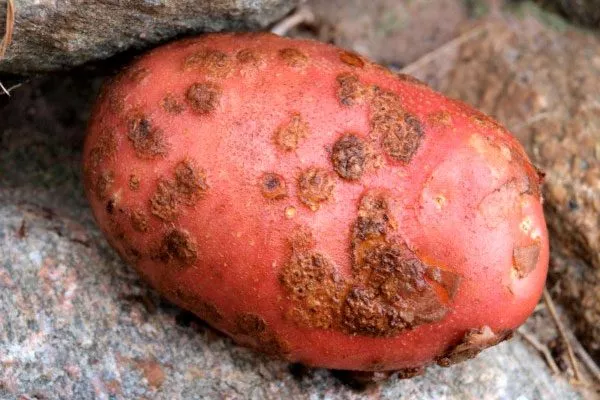
Prevention, proper care, and timely disease and pest control measures will help keep Red Lady potatoes healthy and ensure a good harvest.
Wintering
To overwinter potatoes in the beds, dig holes in a checkerboard pattern and add organic matter. Then, fill the roots with the substrate and cover with pine branches, hay, or straw. Cover the beds with humus or peat to a depth of 10 cm.
If the winter is very cold, the plot can be covered with snow from a neighboring field. In the spring, when temperatures rise above freezing, remove the mulch layer from the beds. If organic matter was used as insulation, it can be left in place, as it will decompose and enrich the soil with nutrients.
Harvesting and storage
Red Lady young potatoes begin harvesting 50-55 days after planting. It's important to properly prepare the tubers for storage.
How and when to clean?
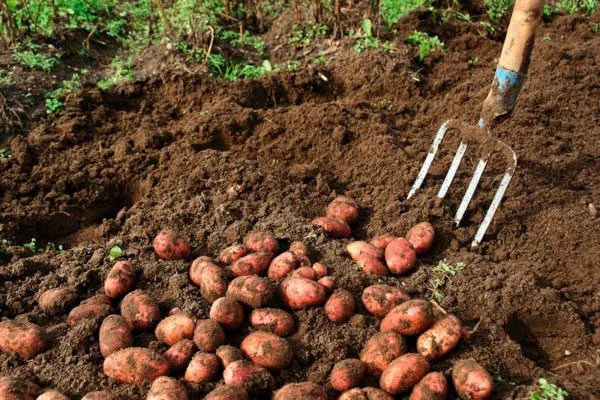
Begin harvesting in late August or early September. First, mow down the tops, leaving no more than 10 cm. Then carefully dig up the harvest with a pitchfork or shovel and leave it outside for 3-4 hours to dry. If the weather is cloudy, move the tubers under cover. After harvesting, burn the greens and dig up the soil.
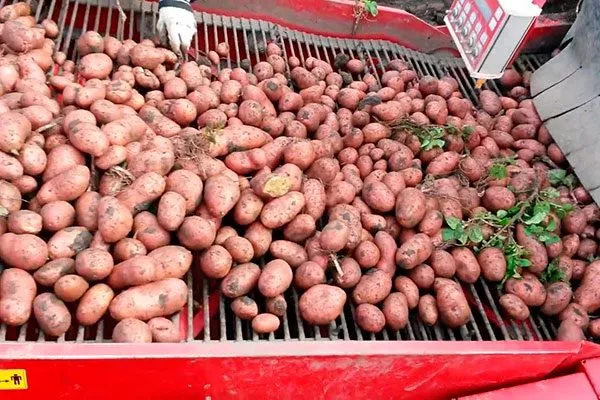
After the tubers have dried, carefully inspect them for damage or darkening and prepare them for long-term storage.
Storage Features
Store ripe tubers in wooden boxes in a dry, dark, cool, and well-ventilated area. The ideal temperature should be between 4-5°C. To improve the shelf life of the tubers, treat them with copper sulfate: dissolve 2 g of powder in 10 liters of water.
What difficulties might arise when growing?
Growing Red Lady isn't particularly difficult, as this variety is easy to maintain. However, there are a few tips that can help increase yields.
According to crop rotation rules, potatoes should be planted in areas previously grown with cereals, carrots, beets, and legumes. These crops not only preserve the soil but also enrich it with nutrients.
Gardeners' reviews
The Red Lady potato is designed for a variety of climates and soil types. This variety boasts a number of outstanding characteristics, making it popular among gardeners and farmers. With proper planting and proper care, it will reward you with generous yields, strong immunity, and excellent shelf life.