
The Natasha potato is characterized by early ripening. This variety easily tolerates temperature fluctuations, adapts to any climate, and boasts good yields. Natasha is also popular for its ease of cultivation, as it doesn't require excessively fertile soil or a specific soil structure.
A Brief History of Breeding
The Natasha hybrid was developed in Germany and first introduced in 2000. Experts from the Solana Group breeding company spent a great deal of effort creating this crop.
Although the variety was bred in Europe, it is officially registered in the Russian State Register. Natasha was registered in Russia in 2013.
Features of the variety
Because the Natasha variety has a moderate spreading habit, the standard planting density of 35,000 plants per hectare is not optimal. This variety can be planted at a higher density, which increases yield, but also requires a larger seeding volume.
- ✓ Optimum soil temperature for planting: +8°C at a depth of 10 cm.
- ✓ Recommended soil pH: 5.0-6.0 to prevent scab.
Description of the plant and tubers
The shrub is considered semi-erect and intermediate. Its height does not exceed 60 cm. The foliage contains large leaf blades of varying shades, from light green to vibrantly saturated. The leaf edges are wavy, and the flowers are snow-white. However, their center is a sunny yellow.
Fruit characteristics:
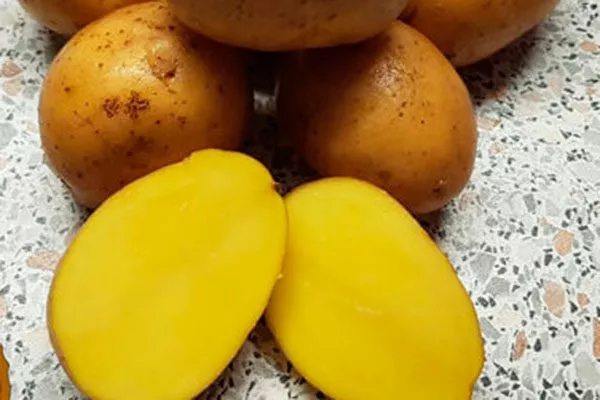
- weight of potatoes – 95-135 g;
- their form is - oval and smooth;
- surface – completely smooth, without bumps or depressions;
- skin – thin, but elastic, and glossy;
- eyes – few in number, brownish, with a superficial location;
- peel color – light yellow;
- pulp shade – dark yellow;
- structure – very dense, which is why the tubers do not fall apart when cooked.
Taste characteristics and purpose
Natasha is distinguished by its excellent taste. This root vegetable, which has received a culinary class AB for quality, does not overcook, which is important to keep in mind when cooking.
This versatile potato variety is ideal for a variety of culinary delights. Individual potato pieces can be baked, fried, or used in salads, and they can also be used to make smooth mashed potatoes.
Ripening and yield
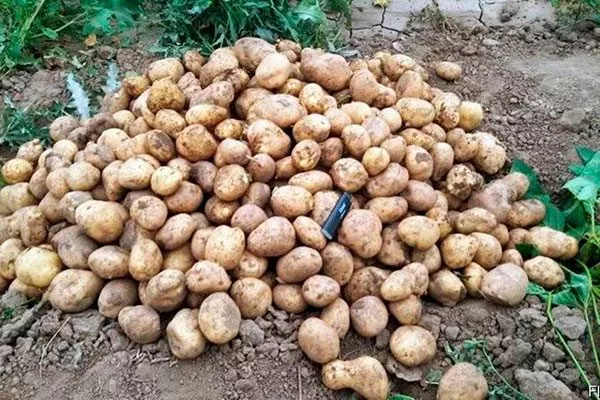
This variety is characterized by rapid maturation: the crop is ready for harvest in just 65-80 days after planting. If you want to try freshly harvested potatoes, you can start digging them 15-20 days earlier. The plants emerge simultaneously, which promotes uniform ripening and harvesting.
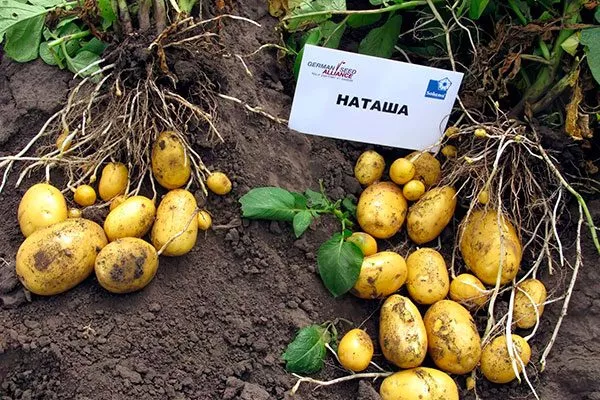
This variety's yield is impressive: 130 to 300 centners of root crops can be harvested from one hectare, and private farms can expect 8-12 kg of potatoes per square meter.
Marketability
Potato quality ranges from 76% to 93%. This high-yielding crop is grown for both home consumption and industrial production.
Resistance to diseases and pests
German plant breeders have earned praise for creating a variety that is resistant to such problems as:
- golden potato cyst nematode;
- potato cancer;
- nest rot;
- Rhizoctonia;
- Y-virus.
- ✓ Resistance to Y-virus: does not require treatment against this disease.
- ✓ High marketability of tubers: 76-93% without additional treatments.
Keeping quality
The Natasha potato is characterized by its stability throughout the winter, retaining at least 93% of its weight. This figure, while not the highest among all potato varieties, remains impressive for an early variety.
Thanks to its elastic skin, the potato survives transportation with virtually no damage. This makes it ideal for mass cultivation.
In which regions of Russia is it usually grown?
The variety was originally recommended for the Middle Volga region, but it is also cultivated throughout the country. Potato ripening times may vary depending on local climate conditions. In cooler climates, the tubers are planted deeper to speed up ripening.
Landing features
For planting potatoes, select tubers the size of a chicken egg or slightly larger. These seeds should be stored separately from regular supplies. They should be removed from the cellar a month before planting. This is important to allow the tubers time to warm up, and for the buds to open and begin sprouting.
For germination, choose a warm room with adequate light. Before planting, carefully inspect each root vegetable. If you find even the slightest damage, remove it from the planting medium.
Features of planting operations:
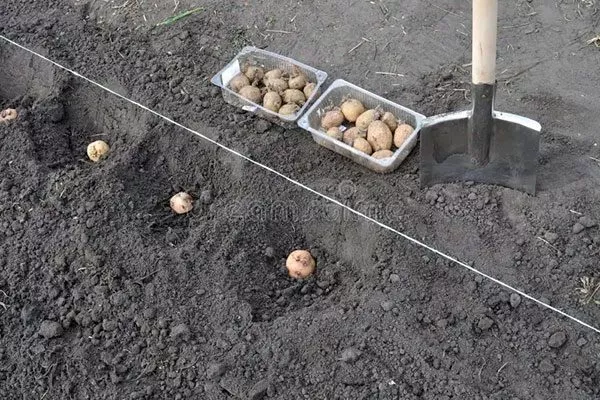
- In large areas, specialized equipment such as cultivators or potato planters are used to plant potatoes. For smaller planting areas, the work is done manually, using a spade to dig the hole.
- At least 70-80 g of ash and 600-800 g of well-decomposed manure must be placed in each hole.
- When planting potatoes, avoid burying them too deeply to avoid additional difficulties during subsequent digging. Also, remember that after covering the potatoes with soil, a ridge will form.
- Potatoes are planted in rows spaced at least 65-75 cm apart. The distance between individual tubers in a row is approximately 35-45 cm, which ensures sufficient light and warmth for the soil.
The first green shoots become visible within 10-12 days after planting, if the soil moisture level and air temperature are at optimal values.
Subtleties of agricultural technology
The Natasha variety exhibits impeccable resistance to adverse weather conditions during the growing season. With proper cultivation practices and care, it can produce a bountiful harvest.
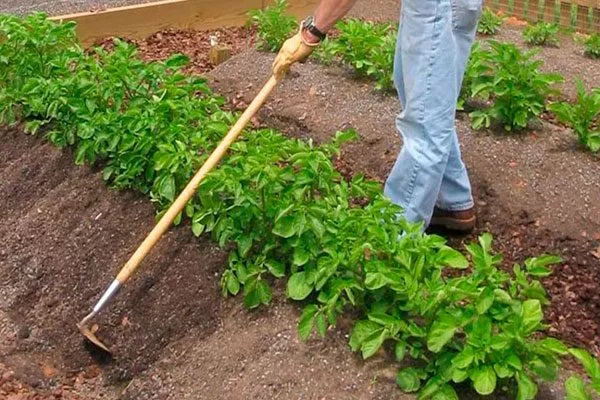
Necessary measures:
- Before the first green shoots appear, weeding should be done several times. This can be done using a rake with long, sharp teeth or a special harrow.
This approach solves two problems simultaneously: it removes small weeds, which dry out quickly when exposed to sunlight, and it removes the crust from the soil surface, which increases aeration and provides more oxygen to the potato roots. - If there's a risk of further frost, it's recommended to cover growing plants with mulch to protect them. This will help retain moisture around the bush and prevent weeds from growing.
- To stimulate the growth of stolons and the formation of more tubers, it is necessary to dig up the soil around the bush twice.
- If the area was fertilized in the fall and fertilizers were added during planting, additional soil feeding is not required during the growing season.
- In conditions with sufficient rainfall, watering is not advisable, as the Natasha variety can produce a high yield even in drought conditions. It's important to be careful with the amount of water, as excess moisture can cause the tubers to rot.
Diseases and pests
The variety has good disease resistance and is relatively unaffected by insect pests. However, it has been noted that the Colorado potato beetle, May beetle larvae, and other insects can cause damage to the plants.
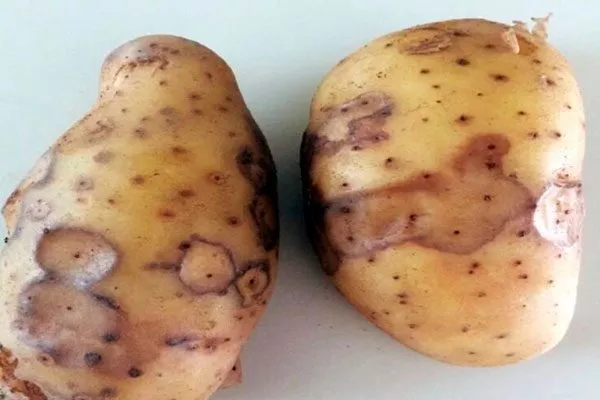
Struggle
If pests or signs of their presence appear (e.g., damage to leaves, shoots, or tubers), specialized chemicals should be used. Given that Natasha is an early-ripening variety, contact insecticides such as Aktara, Decis, and Doctor are primarily used.
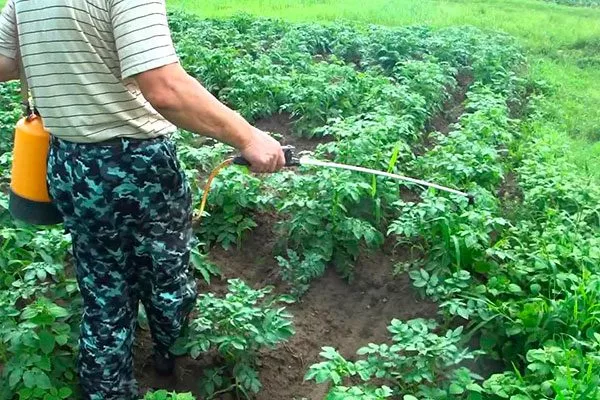
You can use biological products, such as Fitoverm, Bicol, etc. It should be especially noted that pests can develop immunity to chemicals, so treatments must be carried out at least two or three times, using a variety of formulations.
Prevention
To prevent pest attacks on your potato plot, it is recommended to take the following steps:
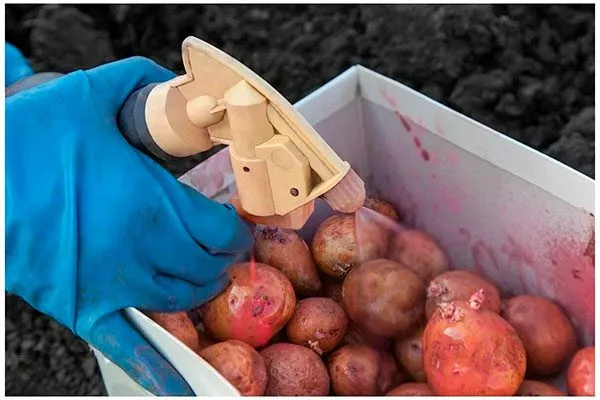
- Before planting, treat the corms with insecticides such as Cruiser or its analogues.
- It is important to take into account the period of activity of the variety, therefore the insecticides used should decompose in no more than 45 days.
- On large farms, it is necessary to follow crop rotation rules, planting potatoes in areas located at least 300 m away from the previous planting site.
- Regular fertilization, loosening, and mulching of the soil are essential. Mechanical tillage destroys a significant number of pests, such as wireworms, and mulching with straw helps repel the Colorado potato beetle.
- After harvesting, it is important to remove all plant debris, last year's sprouted tubers, and other organic waste to reduce the beetles' food source.
Harvesting and storage
Don't delay harvesting the Natasha variety, otherwise the rind will thicken considerably. It's best to choose clear, dry weather for drying the roots outdoors after digging. Before storing, the potatoes should be kept in a shaded area. After this, the tubers are separated into sections for seed, livestock feed, and food.
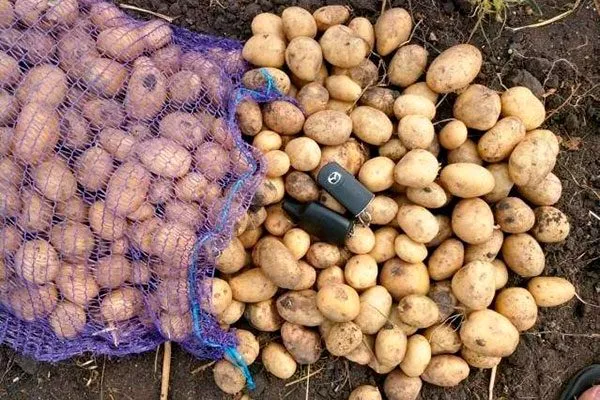
Preservation features:
- To store potatoes in the cellar, a raised platform of planks is created to ensure air circulation around it.
- The tubers are placed in mesh bags or boxes with holes and formed into stacks.
- Potatoes can be stored in a basement or cellar, as well as on a balcony, if direct sunlight does not fall on the tubers.
- Recommended storage conditions include a temperature of +2 to 6 degrees and humidity of 65-80%.
Pros and cons of the variety
German-developed potatoes are a true gift for farmers and gardeners – such a combination of valuable characteristics in a single variety is rare. Key advantages include:
Disadvantages often include susceptibility to Colorado potato beetle attacks and excessive vulnerability to unexpected spring frosts.
Reviews of the Natasha potato variety
The Natasha potato, although it has a Russian name, is a German selection. Despite this, the variety quickly spread throughout our country and became popular not only among private farmers but also among large-scale farmers. It boasts numerous positive qualities and virtually no drawbacks, and is easy to grow in all climate zones.