
The Lyubava potato is a symbol of successful farming and a guarantee of a high-quality harvest. Its unique characteristics, high yield, and excellent taste make it an indispensable addition to any garden. With proper care, it will thrive and yield excellent results.
The origins of the Lyubava potato
The Lyubava potato variety was developed jointly by Moscow and Novosibirsk specialists. Beginning in 2000, the variety was tested and subsequently included in the state register in 2003.
Description of the variety
Named by domestic breeders after the ancient Slavic name Lyubava, this table potato boasts impressive characteristics. In addition to early ripening and an attractive appearance, this variety boasts excellent flavor and consistently high yields.
Description of the plant and tubers
This medium-tall bush is covered in dark green leaves with slightly wavy edges. Its upright shoots are adorned with a few red-violet flowers, among which a moderate amount of vegetative matter is distributed.
Distinguishing characteristics:
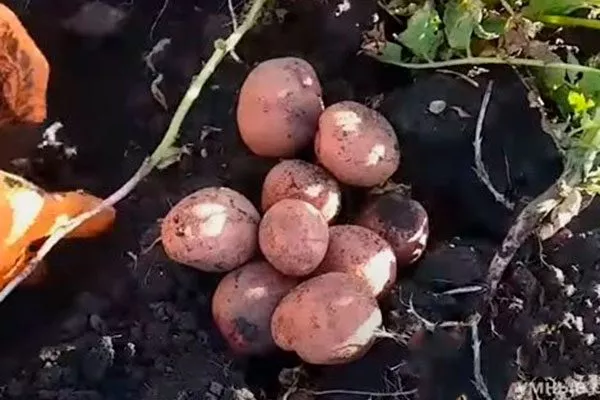
- Each bush is capable of producing up to 20 tubers, which ripen quickly.
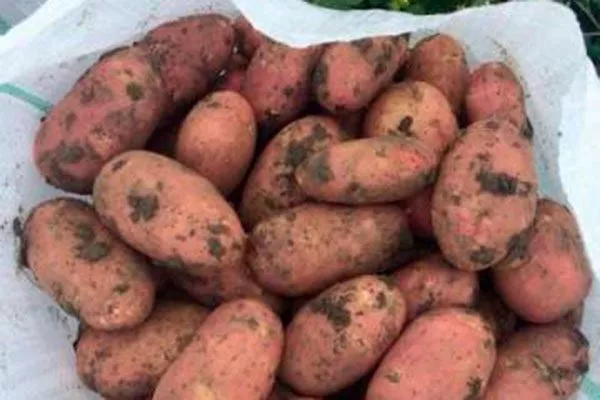
- The tubers have a dense red skin, slightly rough to the touch, with a small number of superficial eyes that are not too deeply embedded.
- The weight of oval fruits reaches from 110 to 210 g, while maintaining a marketable appearance and high shelf life.
These characteristics make them capable of withstanding long-distance transportation and storage under appropriate conditions.
Taste characteristics and purpose
It's versatile. It's suitable for a variety of culinary needs: from frying and stewing to boiling, and can be used in frozen semi-finished products and for making chips.
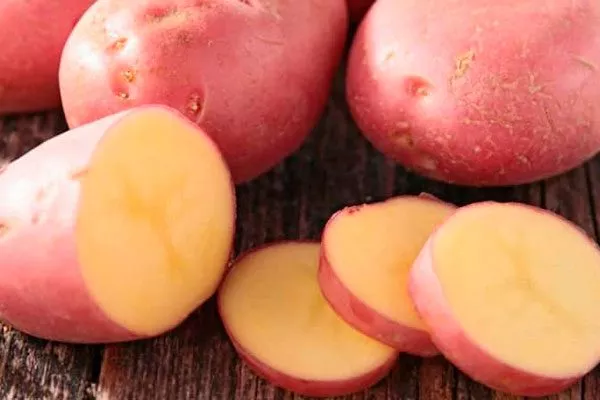
Tubers at technical maturity contain a moderate amount of starch. The flesh does not disintegrate into fibers or darken, making it ideal for a variety of culinary recipes and dishes.
Chemical composition, trace elements and vitamins
When heat-treated, potatoes retain their excellent taste, for which they are praised, and preserve beneficial components such as micro- and macroelements, vitamins C and B. Starch content ranges from 11 to 17%. The amount of starch depends on soil type:
- In fertile soils, the Lyubava potato accumulates a large percentage of polysaccharides, which leads to the crumbly structure of the tubers.
- In poor soils, the starch content is minimal, which makes the tubers more watery and coarse.
Ripening period
Planting begins in late April and continues until the end of May. This variety is recommended for regions with variable climates, so the starting time depends on soil temperatures reaching 10°C or higher.
The first digging can be done as early as 45 days after planting, exclusively for sale or personal consumption. The second digging occurs 55-70 days after the first shoots appear, and the time is counted from the moment of shoot emergence, not from planting.
Harvesting must be done on time, as prolonged exposure to soil not only affects the taste but also reduces the shelf life and its ability to withstand transportation.
Productivity
Proper agricultural practices play a crucial role in growing the crop. Planting it at 30 cm spacing allows for yields exceeding normal levels:
- During the first digging in the ultra-early period, the yield is up to 200 centners per 1 hectare.
- The second digging on the 55th day can yield up to 270 centners per 1 hectare, which is higher than other varieties recommended for cold regions.
- The maximum yield is achieved on the 65-70th day, with a target of 400 centners per 1 hectare.
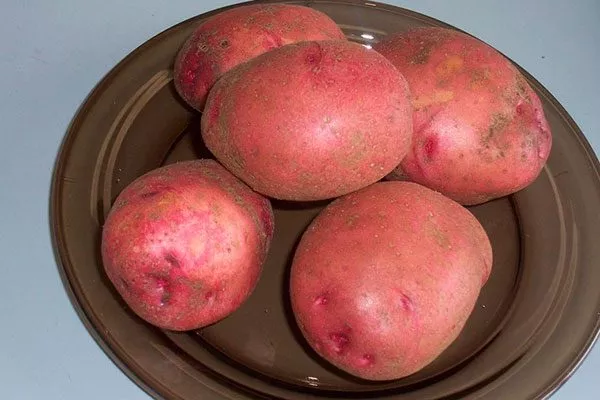
The special value of this variety is determined by its uniform and abundant ripening of tubers: almost all of them are large and smooth, which sometimes makes it difficult to select small tubers for planting the following season.
Disease resistance
It has high resistance to tuber blight and common scab. It is characterized by low immunity to the golden potato cyst nematode.
Which regions are best suited for and what climate requirements does it have?
The variety is suitable for growing in a variety of climates, including unfavorable ones with prolonged periods of drought or frequent rainfall. It is particularly suitable for regions with short summers, such as Siberia, the Urals, and the Far East.
The main advantages and disadvantages of the variety
Most farmers value pink potatoes for their early maturity and high yield. Other traits of this variety include:
May sometimes suffer from late blight when grown in low-lying areas or in areas with poor ventilation.
What is the difference from other varieties?
Lyubava stands out among other potato varieties due to its high starch content, dense tuber flesh, and ease of care.
Features of planting and growing
For successful cultivation, it's important to select the right soil. The crop prefers medium to light soils, such as sandy, sandy loam, loam, and chernozem. Clay soils are not ideal, as they slow tuber growth and increase the risk of rot.
- ✓ Soil pH should be between 5.0-6.0 for optimal nutrient absorption.
- ✓ The soil must be well drained to avoid water stagnation and rotting of the tubers.
Helpful tips:
- Start preparing the soil in the fall: dig up the soil, clear it of weeds, and fertilize it with humus and wood ash.
- For optimal crop development, plant it after beets, cabbage, cucumbers, and green manure. Avoid planting after tomatoes, peppers, potatoes, and eggplant.
- Plant the tubers in April or May, when the soil has warmed to a depth of 10 cm. The tubers should be healthy, without signs of rot or damage, weighing approximately 80 g. Sprout them 1.5 months before planting.
- When the sprouts reach 1 cm, begin the procedure, having first treated the tubers with a growth stimulator.
Care nuances
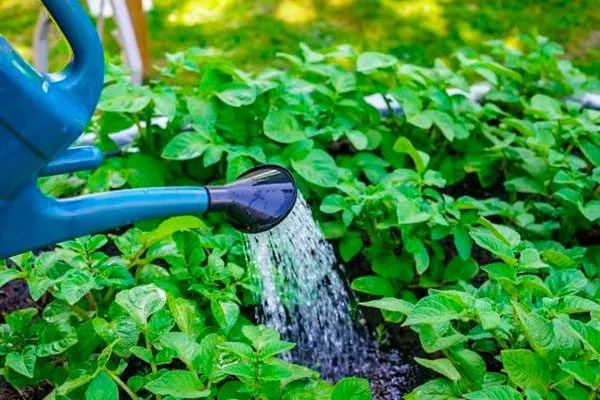
Potato care requires special attention and consistency to ensure a good harvest. Lyubava is drought-resistant, but water the plants when needed, along with fertilizing.
- Two weeks before planting, add compost or rotted manure to the soil at a rate of 5 kg per 1 m².
- 30 days after planting, apply the first nitrogen fertilizer.
- During budding, apply potassium-phosphorus fertilizers.
- After flowering, use complex fertilizers to maintain plant health.
During the growing season, apply three additional fertilizers:
- 30 days after planting - nitrogen fertilizers (15 g urea and 0.5 l mullein per 10 l water).
- During the budding period - potassium-phosphorus fertilizers (15 g potassium sulfate, 15 g superphosphate and 400 g wood ash).
- 2 weeks after flowering – complex fertilizers such as Mag-Bor or Superphosphate.
Weeds can damage plants, so weeding is essential. Hilling improves oxygen supply to the roots and stimulates new growth. Hilling should be done for the first time when the plants reach a height of 10-15 cm, and then every two weeks until flowering begins.
Pest and disease control
When vegetable crops are susceptible to infections and pest attacks, it's important to take measures to protect the harvest. If late blight and common scab are detected on the bushes, spray them with fungicides or a copper sulfate solution. Destroy any damaged plants.
To combat wireworms and Colorado potato beetles, you can collect them by hand. Then treat the plantings with modern insecticides. Important pest control methods include crop rotation, regular weeding, and removal of diseased plants.
Harvesting and storage
Lyubava is an early potato variety that matures in 2-2.5 months. Dry, warm, and windless weather is recommended for harvesting.
How and when to collect?
Dig up potatoes in late August or mid-September, depending on when they were planted. A week or two before harvesting, remove the tops, leaving stems about 15 cm long. This helps speed up ripening and ensures good storage of the harvest.
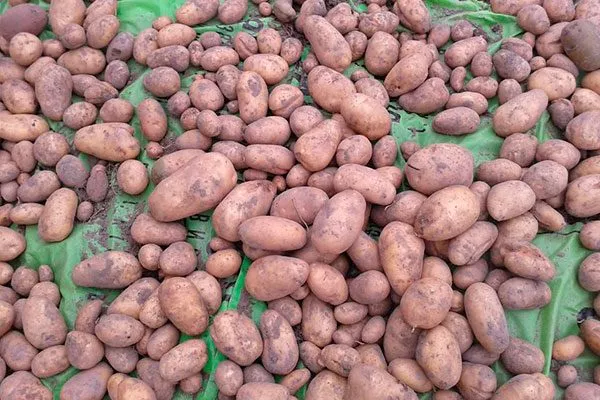
When harvesting tubers, separate them into large and small specimens. For seed potatoes, choose potatoes about the size of a chicken egg. Let the large tubers dry in the sun for a day, then place them in sand-filled boxes or cloth bags. Remove and discard the tops.
Storage features and shelf life of the variety
Store potatoes in a cellar at temperatures between 0 and 4°C. Thanks to their high shelf life (up to 98%), the tubers will last until spring without cracking, rotting, or turning black.
What difficulties may arise when growing
Growing Lyubava and getting a bountiful harvest of delicious potatoes is easy if you follow proper agricultural practices. The variety can even withstand prolonged drought and rainy summers.
Among the potential problems during cultivation, gardeners highlight late blight and insect attacks due to crop rotation violations. There is a risk of poor germination if the germination procedure is not followed.
Reviews
The Lyubava potato boasts excellent characteristics and a superb flavor. It is distinguished by its disease resistance, medium-sized fruit, and early ripening period. Its successful cultivation and bountiful harvest are achieved through careful care and attention.