
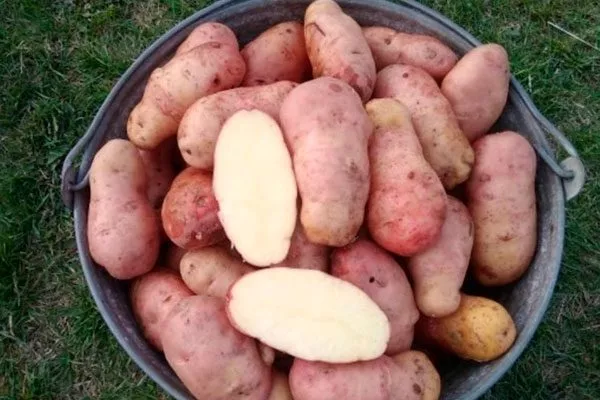
The potato, whose name is of original Russian origin—Lapot—has been around for over 70 decades. Many consider it a true champion of the mid-early season. It boasts the highest yields, easily tolerates drought and cold, and is grown in absolutely all regions of Russia. However, it is not known for its excellent resistance to diseases and pests.
Origin of the variety
This is a folk variety, as it remains unknown where, when, and by whom the potato was developed. Due to the lack of a known originator, the Lapot potato variety was not included in the State Register of our country or any other. There are several theories about its origin:
- The variety originated in Siberia, hence its nickname, "Siberian Bast Shoes." This is confirmed by its adaptability and lack of sensitivity to recurrent frosts and sudden cold snaps.
- The culture was obtained between 1950 and 1960. There are allegedly references to this.
- The breeders' side testifies to Laptya's older age, but there is no confirmation of this.
- This is what the improved Yermak potato, bred in 1978 at the Omsk Agricultural Research Center, became known as. Laptem, the common name for the vegetable, became common.
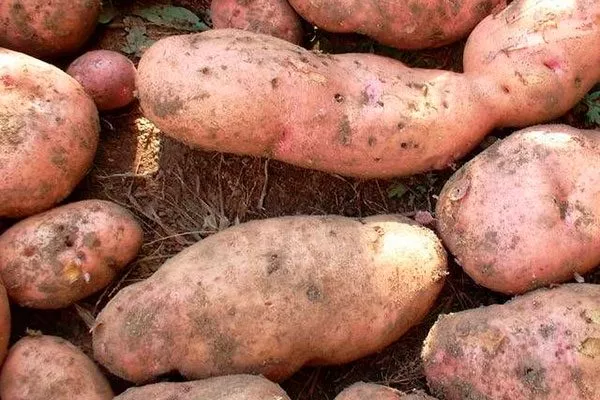
This variety is called by many names: Crimean Rose, White Swan, and so on.
Chemical composition, trace elements and vitamins
Potato tubers contain proteins, carbohydrates, fiber, and starch. Fiber improves intestinal motility, which is beneficial for digestion, while starch plays a role in strengthening the immune system, reducing the risk of inflammation.
The tubers are rich in B vitamins, including niacin (B5), and contain enough ascorbic acid to cover the body's daily requirement for this element.
Among the minerals, potatoes contain calcium, iron, magnesium, phosphorus, potassium, zinc, copper, and selenium. This rich composition makes potatoes a valuable food from a biological perspective.
Characteristics of tubers, appearance
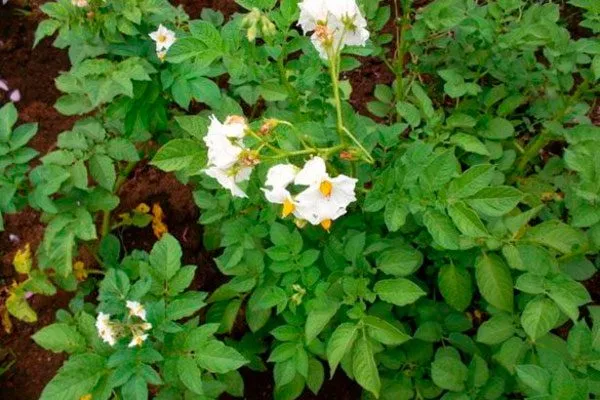
The shrub is medium-sized and heavily foliated. Its height ranges from 45 to 60 cm, with a similar diameter. The foliage has medium-sized leaves of a classic green hue. Blooms are abundant and beautiful, with large, snow-white flowers adorning the bush.
The characteristic differences of the tubers are as follows:
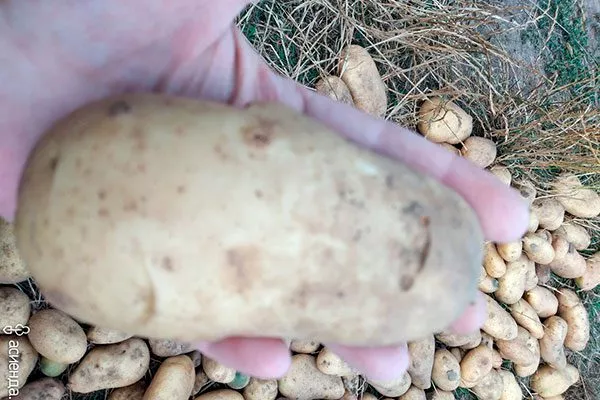
- parameters – large, the weight of each potato ranges from 100 to 160 g, but there were also giant specimens weighing 450-600 g (many claim that among the total mass of root crops in one plant there are always 1-2 tubers of the largest size);
- the number of potatoes under one bush is 6-8, sometimes 10 pieces;
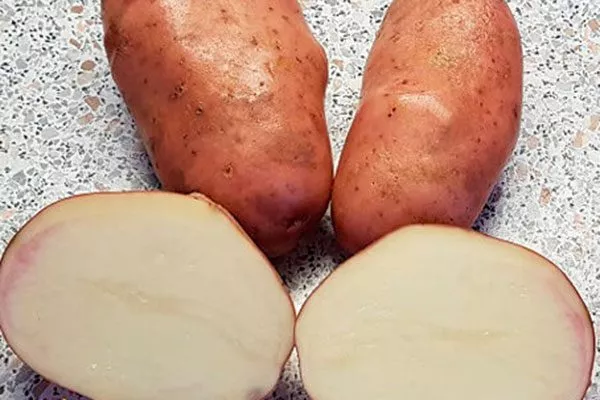
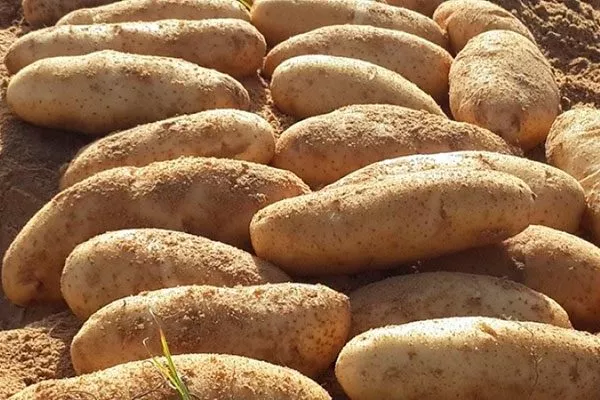
- form - very elongated and flattened (apparently, this is why the potato was nicknamed Laptem);
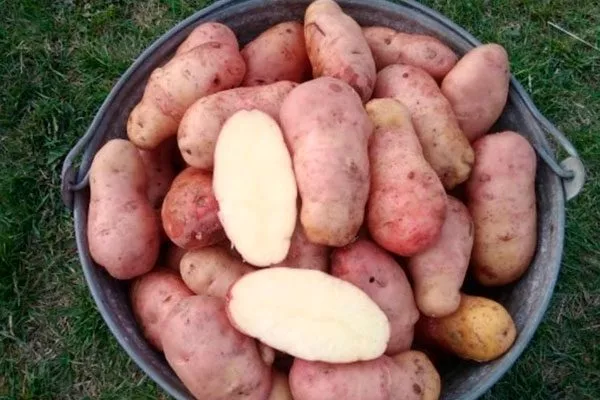
- peel – brownish-pinkish, thin;
- pulp – always creamy in color, juicy and tender, medium starchy (about 13%);
- eyes – almost invisible, but located almost on the surface, are in small numbers;
- taste qualities – at a high level;
- shelf life – excellent, since 93-94% of the harvest can easily be preserved until spring;
- application – The variety is considered universal, as it is used to prepare casseroles, first courses, mashed potatoes, salads, fried and stewed potatoes.
Ripening period
This potato variety is considered mid-early. The growing season from sowing to harvesting lasts 65-80 days, with a maximum of 85-90 days. The crop ripens simultaneously. The potatoes retain their marketable appearance when transported over long distances.
Productivity
The crop is highly productive: 430 to 500 centners are harvested per hectare. Each bush yields a minimum of 2 to 4 kg.
Disease resistance
The Lapot potato variety is resistant to many diseases and pests, but can be susceptible to late blight (on tubers and foliage) and Alternaria. Preventative spraying is recommended to prevent these diseases.
Climate sensitivity
Lapot is a frost-resistant variety that tolerates both drought and difficult climatic conditions well, however, young plantings are sensitive to severe recurrent frosts.
Advantages and disadvantages
Potatoes have many positive qualities, including:
What is special about Laptya?
Its key advantages distinguish it from other varieties. A notable feature is its exceptional tolerance to adverse conditions, allowing it to be grown even in Siberian weather conditions.
Planting and care features
The variety's description indicates its low maintenance. Many gardeners who have grown Lapot confirm its ease of care and recommend it for beginning gardeners.
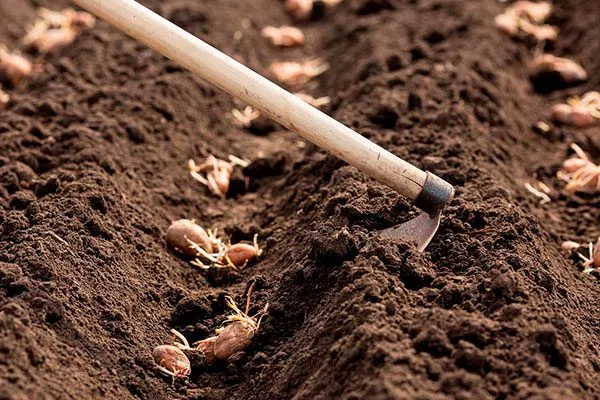
Planting is done in stages. Be sure to follow these recommendations and guidelines:
- Preparatory work. Three to four weeks before planting, select tubers weighing no more than 100 g, carefully inspecting them for spoilage. Unsuitable roots are removed, and the remaining ones are laid out in a lighted area at a temperature of at least 15-17 degrees Celsius to allow the sprouts to develop.
During the sprouting process, the skin turns light green due to the accumulation of solanine, a toxic substance that repels rodents. This facilitates the preservation of the material. - Potatoes are ready. The tubers are planted deeper when the eyes reach 2-3 cm. At normal temperatures, they will develop healthy growth and the potatoes will sprout quickly. Any sprouts that appear while the potatoes are still intact should be removed.
- Processing. Immediately before planting, the tubers are soaked in any growth stimulant and Fitosporin to protect against fungal diseases.
- Soil requirements. The variety adapts well to any soil type. Before planting, the soil is tilled twice: the first time in the fall after harvest, and the second time before spring work. This cultivation promotes loosening and accelerates germination.
- Subtleties of planting. In temperate climates, planting should take place in late April; in Siberia, it should be done before May 15th, after the soil has warmed to 7-10°C. Plant on a sunny day, adding 150-200g of charcoal to each hole.
The holes are 8-12 cm deep. The planting pattern provides for a distance of 35-45 cm between seedlings and 65-75 cm between rows, which makes plant care easier.
To obtain a bountiful harvest, a standard set of measures is necessary: watering, weeding, and hilling. Regular fertilizing is also important, as it not only stimulates fruiting but also strengthens the plants' immune system.
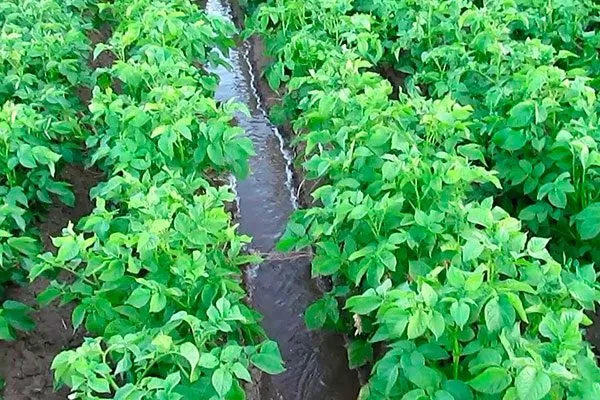
- ✓ Watering should be abundant, so that water penetrates to a depth of at least 20 cm, where the bulk of the roots are located.
- ✓ The interval between waterings should take into account the type of soil: for sandy soils - more often, for clay soils - less often.
Nuances:
- Water at least three times per season: during budding, flowering, and after flowering. Increase the frequency of watering on hot, dry days. If wilted leaves are noticed, water thoroughly immediately.
The best method is sprinkler irrigation, which distributes water evenly across the plant, simulating natural rainfall. Starting in early August, water in the morning so the foliage has time to dry by evening, preventing fungal growth. - After watering, the soil should be loosened and weeds removed, as they can serve as a haven for many pests and fungal spores, posing a threat to the health of the plants.
- To prevent weed growth, it is recommended to mulch the cleared beds with sawdust or straw.
- A week after the sprouts emerge above ground, the seedlings are given their first feeding with ammonium nitrate, as young plants especially need nitrogen. This element accelerates growth and promotes active foliage formation.
- During root formation, plants require increased amounts of phosphorus and potassium, so superphosphate mixtures are used.
- Additionally, foliar spraying is required, mainly using magnesium compounds.
- Hilling is performed three times per season. This process involves raking soil from the paths leading to the trunks only along the edges, without burying the central part of the bush. The height of the ridge should be no more than 20 cm.
This procedure not only protects the tubers from pests, but also prevents the potato skin from turning green by protecting it from direct sunlight.
Pest and disease control
Features of prevention and control:
- One common problem is late blight, a fungal disease that causes dark spots on potato tops or potatoes. Preventative measures include using only high-quality planting material and practicing crop rotation.
Seeds should not be planted in beds where tomatoes, peppers or eggplants were previously grown to avoid contamination. - Alternaria infestation manifests as dry spots on leaves and dark bruises on tubers. Prevention is important, using specialized chemical treatments for planting material.
- Wireworms are pests that attack tubers, creating numerous tunnels in them, leading to rot. To prevent this, remove weeds, especially couch grass, and regularly till the soil.
- The Colorado potato beetle and its larvae feed on potato foliage; for protection, you can plant beans or marigolds near the potatoes.
Harvesting and storage
Two weeks before digging up the potatoes, remove all foliage, leaving stems 5-12 cm tall. Damaged or diseased plant parts should be destroyed by burning. Dig up the tubers carefully using a pitchfork or shovel.
After this, leave them in the air to dry for 2-4 hours in dry, sunny weather. Then, carefully inspect the fruits, discard any damaged ones, and store them in wooden boxes in a cool, dry place.
Are there any difficulties in cultivation?
Growing Laptya doesn't present any particular problems, but without preventative treatments, it's impossible to avoid diseases and pest infestations. Another important consideration is choosing the right site; otherwise, yields will be reduced and the roots won't have time to fully ripen.
Tips from experienced gardeners
Some additional recommendations from gardeners:
- When storing potatoes, store them away from other varieties and vegetables, but give preference to beets – they absorb excess moisture.
- When planting, take into account the required distance between plants (at least 35 cm) to form large tubers.
Reviews
The Lapot potato is a high-yielding member of its genus, suitable for cultivation in absolutely all Russian climate zones, especially Siberia (according to legend, it originates there). Due to the lack of a precise origin story, the variety is not listed in the state registry, so planting material is only available from private gardeners.