
The Krasa Meshchery potato is a high-yielding variety that has gained popularity among gardeners due to its unique characteristics and excellent taste. It is disease-resistant, drought-tolerant, and can withstand climate change. Proper care is essential to ensure high-quality tubers.
Who developed the variety and when?
A team of experienced agronomists worked on developing this variety. In 2020, Krasa Meshchery was approved for cultivation.
Features of the variety
This variety attracts attention with its excellent taste and high marketability of tubers. It boasts stable yields and is suitable for table use. It tolerates mechanical damage well and exhibits good resistance to most known diseases.
- ✓ Highly drought tolerant, but watering during flowering is critical for maximum yield.
- ✓ The variety requires a minimal amount of nitrogen fertilizers; excess can lead to the growth of tops to the detriment of the tubers.
Description of the plant and tubers
The bush has no particular external distinguishing features. It's a low plant, reaching 50-60 cm in height. It has other distinctive features:
- Characterized by strong, semi-erect stems and medium foliage.
- The leaves are large, intermediate, rich dark green.
- During flowering, the bushes produce medium-sized white flowers with a very weak anthocyanin coloration on the inner side of the corolla, which is often absent.
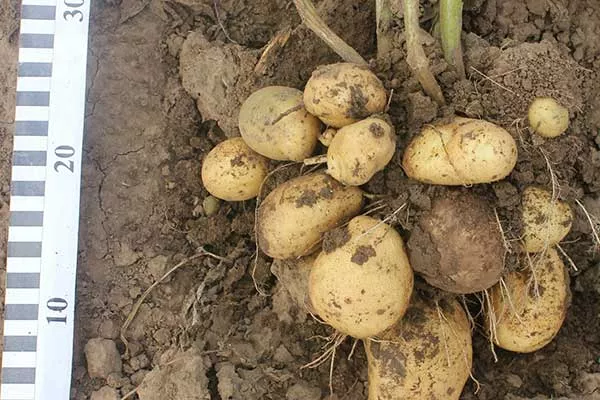
- The root system is well developed, forming 10-18 tubers with an average weight of about 100 g.
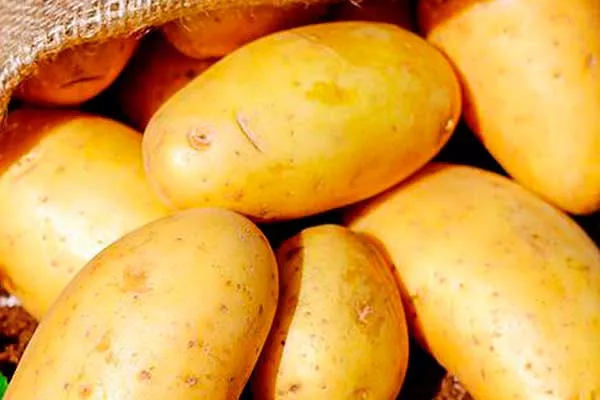
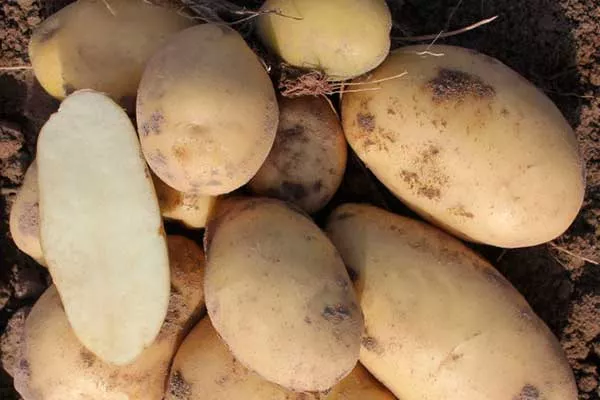
- The tubers have a smooth oval shape, a smooth, dense yellow skin with small, barely noticeable and slightly recessed eyes.
Taste characteristics and purpose
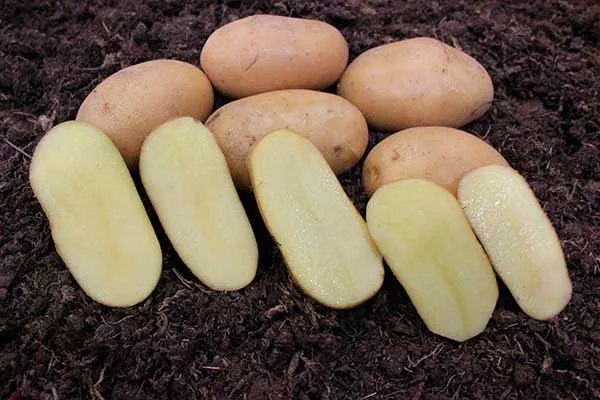
The Krasa Meshchera potato has a very pleasant flavor. Whether peeled, sliced, or cooked, whether boiled or fried in sunflower oil, the flesh does not darken, and the slices retain their shape.
The starch content is 14-16.5%. Experts classify this variety as culinary grade B. It can be used to prepare a variety of dishes, from mashed potatoes to multi-ingredient casseroles. It is suitable for the industrial production of ready-to-eat and semi-finished foods.
Ripening and yield
The ripening period is 75-100 days, with the first tubers ready to be harvested 2-2.5 months after emergence. Yields vary depending on growing conditions, climate, weather, plant density, proper care, and other factors.
Soil requirements
This variety grows best in light, well-drained soil. The soil should be loose and slightly acidic. Requirements:
- Dig up your garden in the fall to allow weed seeds to freeze.
- At the same time, you can apply fertilizers.
- Water should not accumulate in the planting area.
- Do not plant potatoes in areas where groundwater is closer than 150 cm to the surface.
Growing regions
After conducting all the necessary tests, the Krasa Meshchery variety was included in the State Register of Breeding Achievements of the Russian Federation for the Central, Central Black Earth, and Far Eastern regions.
Resistance to diseases and pests
The crop is resistant to most common diseases, but is susceptible to late blight. Colorado potato beetles appear during flowering. In the early stages of infestation and in small planting areas, insects can be removed by hand. In other cases, use a systemic insecticide.
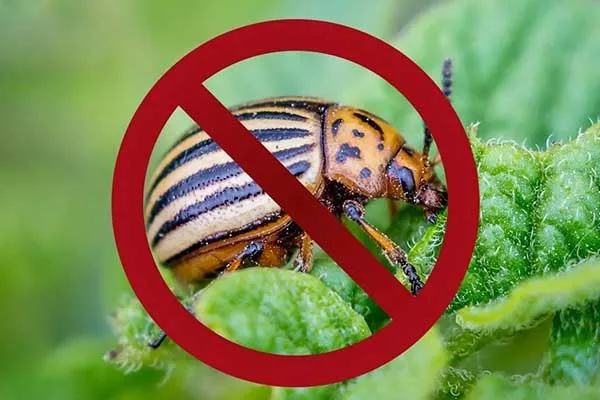
Apply Colorado potato beetle treatment on a dry, windless day, and avoid precipitation for the next two days. The treatment can be repeated after 7 days.
Use fungicides at the green growth stage of shoots. They help prevent certain diseases. Pre-treatment of root crops before planting is very effective.
Landing features
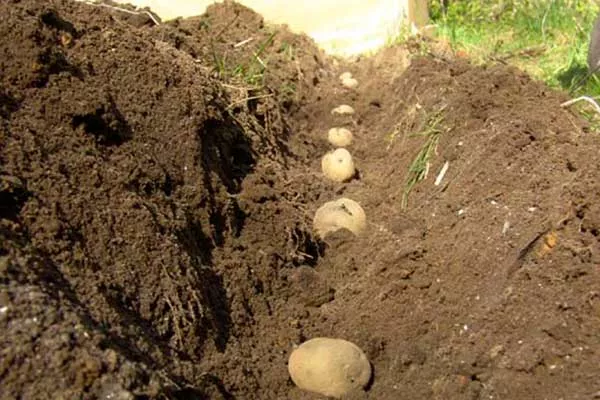
For cultivation, select medium-sized, even tubers with distinct, healthy eyes. A week before the planned cultivation, remove the potatoes from the cellar and place them in a humid, bright room. As soon as sprouts 1.5-2 cm long appear, you can begin planting.
Follow the recommendations:
- Add approximately 150-200 g of ash to each hole. This is the best fertilizer for this variety at the initial stage and also protects the tubers from most diseases.
- To ensure large potato growth, pluck 3-5 buds from each bush during flowering, which will direct all the growth force to the tubers, not the flowers.
- If all these rules are followed, potatoes can be dug up as early as mid-June. Early planting is only possible in warmer climates. It's important that the soil temperature at a depth of 10 cm does not drop below 7°C.
Rapid germination occurs if the crop is planted in a sunny area with air temperatures of 18-20°C for the first two weeks and 10-12°C in the following days. Plant potatoes at intervals of approximately 30 cm, at a depth of approximately 10 cm, and space rows 50 cm apart.
Subtleties of agricultural technology
During the first few weeks after planting, the plant doesn't require watering, as this is when the roots are forming. Once the shoots emerge during periods of intense heat, 2 liters of water per bush is sufficient. When the bush reaches a height of 15 cm, weeding can begin, and after 15-18 days, hilling can begin. Increased watering is necessary during flowering.
Advantages and disadvantages
Potatoes are an integral part of many culinary recipes around the world, and choosing the right variety can significantly impact quality and yield. In this regard, Krasa Meshchery is one of the most attractive options for farmers. It offers numerous advantages:
Reviews of the variety
The Krasa Meshchery potato is early maturing, culinary versatility, excellent flavor, and resistance to various pathogens. This variety has received many positive reviews due to its numerous varietal characteristics. Proper cultivation practices guarantee a high-quality and abundant harvest of large tubers.