
Kolobok is a yellow-fruited potato variety characterized by a mid-season ripening period. It is intended for table use. It is renowned for its vigorous tuber formation, excellent quality, and resistance to vegetable diseases.
The origin of the Kolobok potato variety
The variety owes its origins to the A.G. Lorkh potato farm (Moscow region). In 2005, it was added to the Russian Federation state register as a vegetable variety intended for cultivation in home gardens and on large farms in the central region of the country.
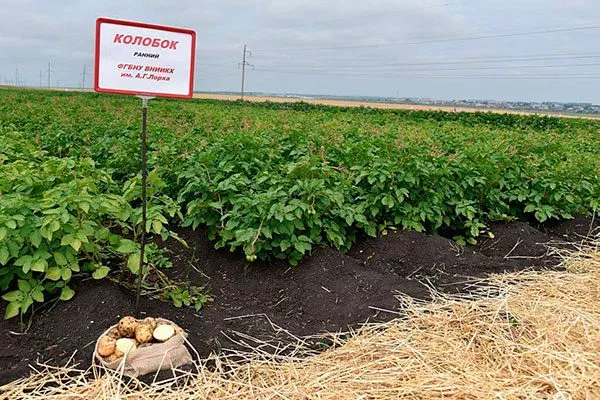
The breeders' goal was to develop a variety suitable for potato product production, mechanical harvesting, and long-distance transportation. Kolobok meets all these requirements, making it suitable for industrial-scale cultivation.
Distinctive features, appearance
Plants of this varietal variety are distinguished by the following features:
- intermediate type;
- medium height;
- semi-erect structure;
- foliage: medium or large in size, light green, with a slightly wavy edge;
- flowers of white color, very large.
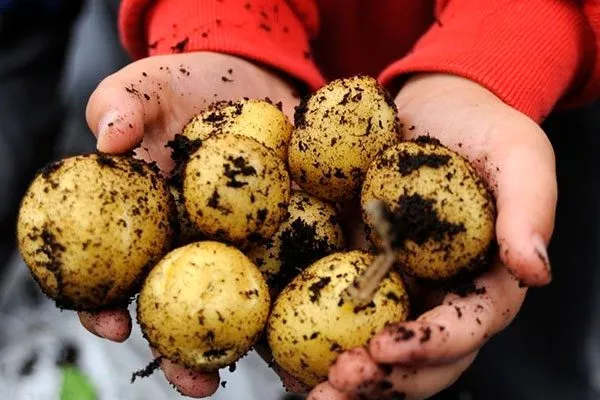
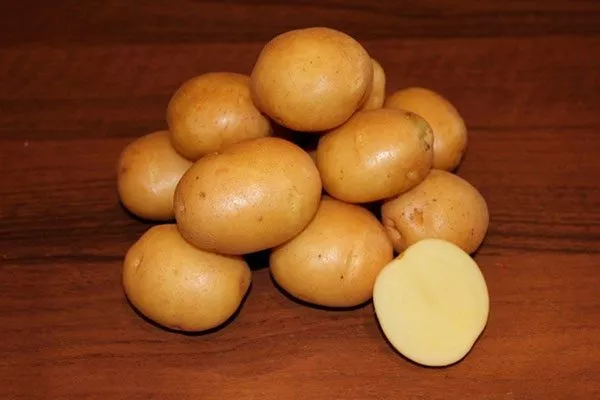
Kolobok tubers have the following characteristics:
- weight - from 93 g to 118 g;
- rounded-elongated shape;
- yellow, rough skin;
- a few small eyes located superficially;
- with light yellow flesh.
After cooking, the Kolobok's flesh retains its yellow color and does not darken. It is tasty, medium-boiled, not watery, and slightly floury. When boiled, the tubers of this variety tend to crack but retain their shape.
Housewives use this vegetable in cooking as follows:
- prepare mashed potatoes;
- boiled in their skins;
- baked in the oven;
- used for frying, including deep-frying;
- added to soups.
Description and characteristics of the variety
This vegetable variety is prized for its excellent characteristics: good yield, strong immunity, bush tolerance to waterlogged soil, and shelf life and transportability. Unlike many varieties, Kolobok is not prone to degeneration or reduced productivity.
Productivity
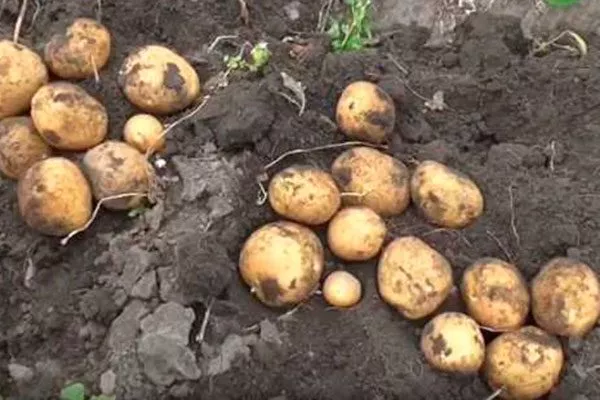
Gardeners harvest 15 to 17 tubers from each bush of this variety. Its yield figures are as follows:
- from 12400 kg to 22700 kg per 1 ha;
- 25,600 kg per 1 ha is the maximum yield obtained when cultivating this variety in the Moscow region.
Maturation
This variety is a mid-season vegetable crop. Its harvest matures 80-100 days after planting. Harvesting of Kolobok tubers typically occurs in late August or early September.
Resistance to diseases and pests
Bushes of this variety show good resistance to many infections, such as:
- potato cancer;
- late blight of tops;
- Rhizoctonia;
- scab;
- viruses X, Y, L, M, S.
However, they are susceptible to tuber blight, golden nematode and cyst nematode.
Which regions is it best suited for?
The Kolobok potato was developed specifically for cultivation in the climate of the Central Russian Federation. It is successfully grown in home gardens and on farms in the following regions of the country:
- Moscow;
- Tula;
- Ryazan;
- Kaluga;
- Bryansk;
- Smolensk;
- Vladimirskaya;
- Voronezh;
- Lipetsk;
- Orlovskaya;
- Ivanovskaya.
How to grow this variety?
Getting a bountiful, high-quality harvest of Kolobok potatoes won't be difficult if you follow the planting schedule and guidelines. This variety is undemanding in terms of growing conditions, including soil conditions.
Timing, scheme and rules of planting
Plant seed potatoes of this variety in your garden when the soil warms to +8°C. Planting times for Kolobok vary in different regions of the Russian Federation:
- Middle zone - first days of May;
- southern regions - 14-20 days earlier;
- in the northern regions - at the end of May.
This variety adapts well to a variety of soil types. For cultivation, use only high-quality, healthy seed. Choose medium-sized potatoes (3.5-6 cm) for planting. Their optimal weight is 50-80 g.
Germinate the planting material as follows:
- Bring it into a bright and warm room in early April.
- Spread in a single layer on the floor or in boxes.
- Water periodically until strong sprouts emerge (they shouldn't be more than 2-3 cm long). You can also sprout potatoes in damp sawdust.
- ✓ The temperature of the germination room should be no lower than +15°C and no higher than +20°C.
- ✓ The humidity in the room should be maintained at 85-90%.
This variety is susceptible to tuber blight. It's a good idea to treat the Kolobok potato with special preparations before planting:
- Albite;
- Kurzatom.
To get a good harvest, plant this vegetable variety where you previously grew crops such as:
- cereals;
- legumes;
- melons;
- Luke;
- garlic;
- salad;
- cruciferous.
Prepare the area for planting potatoes in advance. In the fall, do the following:
- carry out deep digging of the soil;
- apply fertilizers (organic or potassium and phosphorus-containing mineral compounds).
In spring, perform a shallow tillage of the plot, removing weeds and plant debris. Place the potato rows from north to south to ensure optimal light exposure and accelerate harvesting.
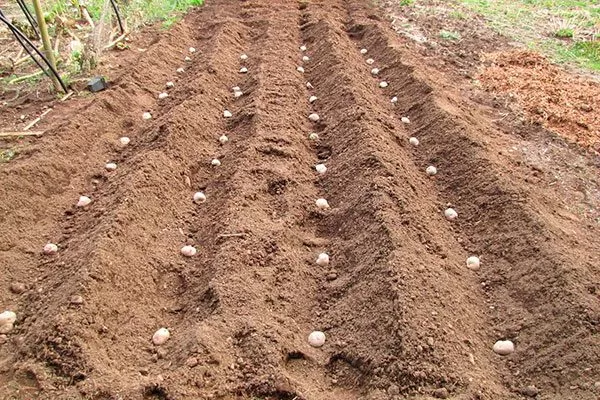
If the site is in a lowland with shallow groundwater, plant the tubers on raised beds. Kolobok does not respond well to excess moisture, but the soil will need to be well-moistened at planting time to ensure proper development of the bushes during the initial growing season.
Plant potatoes of this variety according to the following scheme:
- distance between rows - 60 cm;
- between planting holes - 25-35 cm;
- seeding depth - up to 15 cm.
Add wood ash (1 handful per hole) and rotted manure (0.5 kg) to the holes at planting time. Organomineral compounds with a prolonged release (such as Potato) can also be used. Apply 20 g per tuber.
Care
Kolobok requires proper care, which includes the following activities:
- Watering. Water potato plants 2-3 times per season. Check soil moisture at a depth of 8-10 cm. Apply the first watering 10 days after germination. Apply 1-2 liters of water per plant. Apply the second watering when the plants are flowering. Apply 40-45 liters of water per square meter.
After the bushes have finished flowering, stop watering. This will only increase the risk of late blight.
For best results, use a sprinkler or drip irrigation system to irrigate your potato bed. - LooseningPerform the procedure at least once every 7-10 days.
- WeedingRemove weeds from the area promptly so that they do not interfere with the normal development of potato bushes.
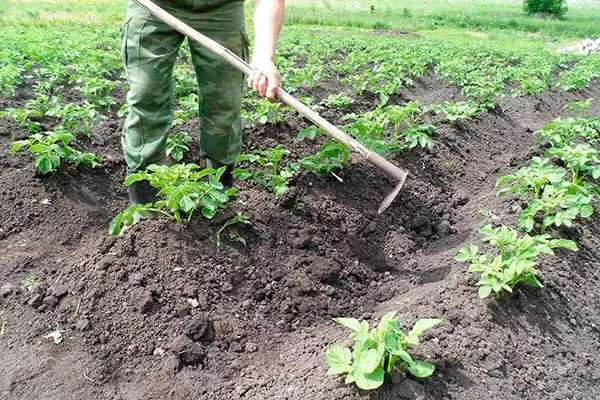
- HillingThe first time, carry out the procedure when the plants reach a height of 20-25 cm. The second time - 2 weeks after the first.
- Application of fertilizersThe nutrients added in the fall and at planting are sufficient for normal growth and fruiting of the vegetable crop. If desired, you can additionally feed the Kolobok potato plants with mineral fertilizers such as azofoska or Fertika Potato.
Harvesting, storage and use of crops
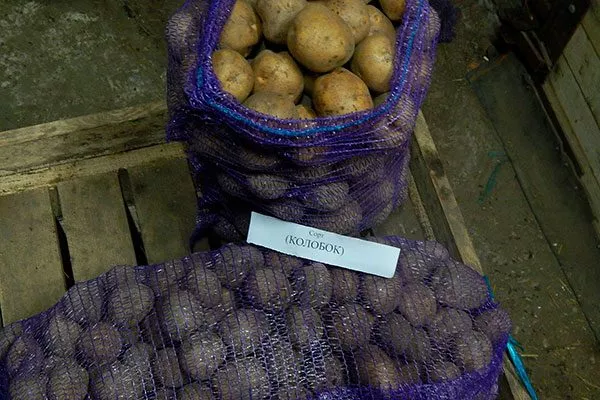
Begin harvesting 10-12 days after the stems have dried (approximately the first ten days of September). Do this in dry weather. Dig the tubers by hand. Mechanical harvesting is also possible due to their thick skin.
Before storing potatoes, prepare them:
- dry the tubers in the air;
- Reject damaged and spoiled specimens.
To ensure long-term storage of the Kolobok harvest, provide it with the following conditions in the vegetable storage facility:
- temperature range - +1-3°С;
- humidity - 90-93%;
- good air circulation;
- protection from light.
- ✓ Before storing, the tubers must be completely dried for 2-3 days.
- ✓ Lighting in the storage area should be minimal to prevent the tubers from turning green.
Kolobok is widely used for industrial production of potato products, such as:
- chips;
- frozen semi-finished products;
- vegetable assortment;
- freeze-dried puree;
- starch;
- potato flour and flakes.
Pest and disease control
This variety is resistant to many potato diseases. However, its bushes are susceptible to late blight and nematode infestations. Spraying the plants with products such as Kurzat or Ordan will help solve this problem. Apply these products to the beds once or twice, but no later than 21 days before harvest.

Kolobok potato plants are vulnerable to attacks by the Colorado potato beetle. You can control the pest by manually removing the larvae and beetles from the tops. If the infestation is severe, use Colorado. You can also treat the tops with Bitiplex.
Advantages and disadvantages of the variety
Kolobok is popular with many domestic gardeners for its following advantages:
This variety has few disadvantages:
Farmers' reviews
The Kolobok potato variety, with its smooth, rounded yellow tubers, is a favorite among Russian gardeners and homemakers. Not only does it have excellent flavor, but it's also highly productive.