
The Carmen potato is one of the most popular and sought-after varieties due to its versatility and nutritional value. Possessing a number of unique characteristics, it has become a favorite among many gardeners in our country. Proper care is essential to ensure a good harvest and high-quality tubers.
Origin of the variety
Carmen is a table potato variety developed by experts at Dokagen Technologies and approved for use in 2019. The authors of this variety are E. M. Klyukina, E. P. Shanina, S. A. Banadysev, and A. M. Chuenko.
Characteristics of potatoes
Scientists have invested considerable effort in conducting extensive crossbreeding experiments between various potato varieties to create this new, high-yielding variety. It possesses numerous varietal traits.
- ✓ High drought resistance due to deep root system.
- ✓ The ability of tubers to quickly recover from damage.
Description of the plant and tubers
A tall plant with semi-erect stems reaching a height of up to 80 cm. Other distinctive features:
- The leaves are medium-sized and dark green in color.
- Each bush can grow from 7 to 11 tubers.
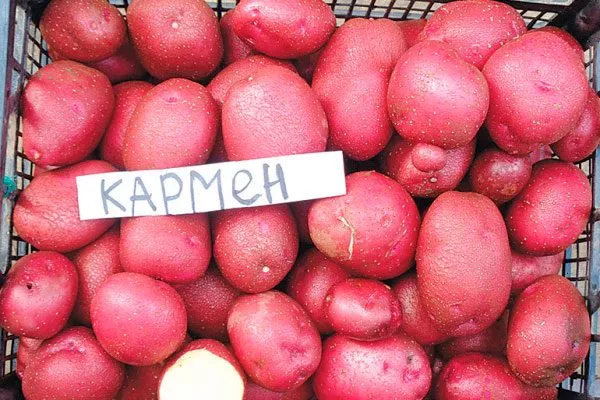
- The weight of each tuber varies from 101 to 116 g.
- The shape of the tubers is oval-round, which makes them convenient to use when cooking.
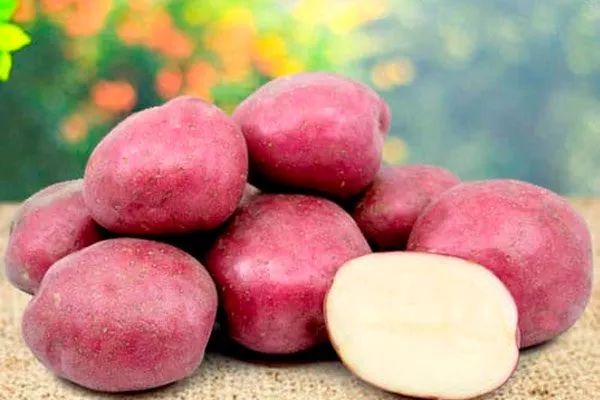
Taste characteristics and purpose
This table variety boasts a pleasant flavor and light-yellow flesh. It's considered an excellent choice for mashed potatoes and other dishes. It's also suitable for frying and preparing various potato dishes, imparting a unique flavor and aroma.
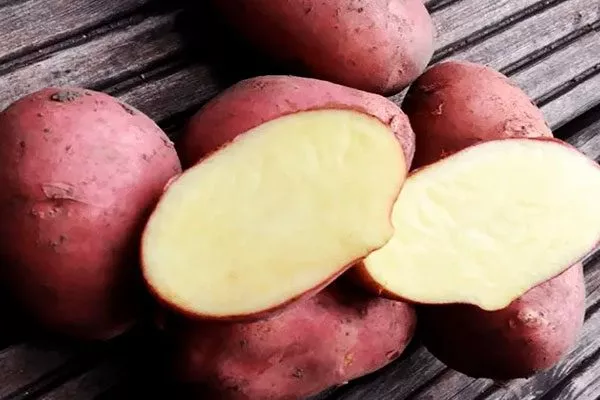
Productivity, timing of tuber harvesting
This early-ripening variety matures 65-70 days after planting. New potatoes can be harvested as early as 45-46 days after planting. Yields range from 2-5 kg per square meter with careful care. It boasts high marketability (84-96%) and excellent shelf life (95%).
Resistance to various factors
It has complete immunity to dangerous diseases and pests such as potato cancer, golden nematode, striped mosaic, and leaf curl. It also exhibits moderate resistance to late blight, Colorado potato beetle, and wireworm.
Regions suitable for cultivation
The Carmen potato variety is recommended for cultivation in the Central region of the Russian Federation.
Advantages and disadvantages of the variety
Before planting this variety, study its positive and negative qualities to avoid potential growing difficulties. It has the following advantages:
- rapid ripening;
- high level of protection against major diseases and pests;
- resistance to temperature changes and bad weather conditions;
- low maintenance requirements;
- Excellent preservation, marketable appearance and ability of tubers to withstand transportation.
Landing
Plant when the soil temperature is at least 10°C, at a depth of 12 to 16 cm. In the central region of Russia, this usually occurs in early May. For successful planting, select a suitable site and prepare it properly. Germinate the planting material beforehand.
- ✓ Soil pH should be between 5.0-6.0 for optimal potato growth.
- ✓ Humus content of at least 2% to provide nutrients.
Plant potatoes in a sunny, open area. It's best to choose a location with good drainage, as waterlogging at the roots can kill the plants. The site shouldn't be in a low-lying area or close to groundwater.
Follow crop rotation rules and avoid planting potatoes in the same area two years in a row. A site previously used for growing tomatoes, peppers, or eggplants is not recommended for planting potatoes. Cucumbers, cabbage, carrots, or onions are considered the best predecessors.
Preparation algorithm:
- Dig the soil to a depth of 35-40 cm.
- Add 5-7 kg of compost or humus per square meter of the plot. Instead of organic matter, you can use superphosphate at a rate of 30 g per square meter.
- After 2-3 weeks, dig up the area again.
- If you have heavy clay soil, improve its looseness by adding 500 g of sand or rotted sawdust per square meter of the plot.
It's best to plant already sprouted potatoes, which will promote faster growth and ripening of the crop. Begin preparing the tubers for planting 3-4 weeks before planting.
The procedure for sprouting tubers is simple:
- Transfer the tubers to a place with a temperature of +14 to +16°C and distribute them evenly over the surface.
- Spray the tubers with warm water daily.
- Remove rotten or softened tubers regularly.
Before planting, you can soak the tubers in a growth stimulant solution, such as Epin or Zircon, for 2-3 hours. This will improve survival and increase the quality and quantity of the harvest. Before planting, treat each potato with Fitosporin, which will increase the tubers' resistance to late blight.
The process of planting Carmen includes the following steps:
- Dig parallel furrows up to 10 cm deep and 70 to 80 cm apart. Place the rows from south to north so that the plants do not shade each other.
- Add water to the furrows at a rate of approximately 4-5 liters per square meter. This will help ensure sufficient moisture for planting.
- Wait until the water has soaked into the soil, then place the sprouted tubers in the holes, arranging them so that the sprouts point upward. Leave a distance of about 30-40 cm between the tubers.
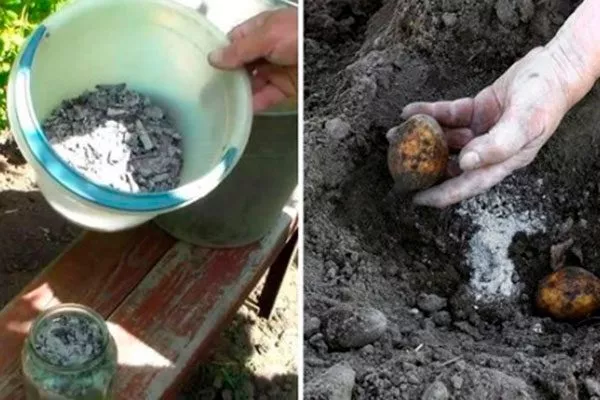
- Sprinkle each tuber with sifted wood ash, using approximately 20 g per tuber. Then cover the planting material with soil.
Features of cultivation
The crop is characterized by low maintenance requirements. To ensure a good tuber harvest, minimal agronomic measures are sufficient:
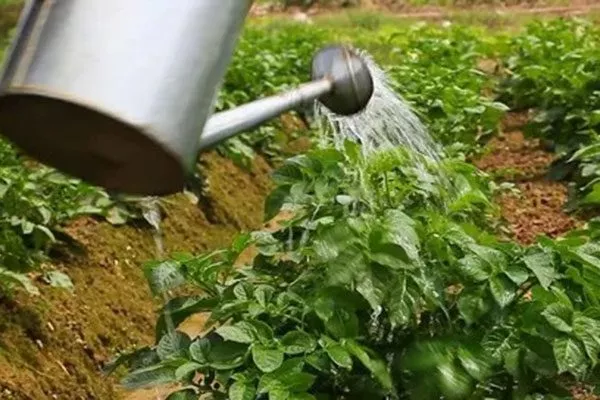
- Watering. Water the plants during prolonged drought. Water for the first time when the bushes reach 10-12 cm in height. During flowering, increase the frequency of watering to once every 5-7 days if there is no rain.
After flowering, water 1-2 times a month. Stop watering 10-12 days before harvest. - Top dressing. When the bushes reach a height of 13-15 cm, apply a liquid solution of ammonium nitrate (10 g per 10 liters of water) at a rate of 4-5 liters per 1 square meter. During bud formation, use a complex fertilizer containing humic acids, such as Fasco Potato Fertilizer or Energen Aqua.
After flowering, fertilize with a solution of fermented chicken manure or slurry. Instead of organic fertilizer, use a complex fertilizer consisting of superphosphate, potassium sulfate, and nitrophoska in a 2:2:1 ratio, diluted with water (20 g per 10 liters of water) at a rate of 500 ml per plant. - Loosening and weeding. Loosen the soil 3-4 hours after moistening to improve aeration at the roots. Perform the first weeding when the bushes reach a height of 4 cm, then repeat as needed, along with loosening.
Pest and disease control
Despite its relative resilience, the crop is susceptible to various diseases and pests under unfavorable conditions. Potential problems:
- Late blight. It manifests itself as dark brown spots on leaves and stems, and gray mold on tubers. For treatment, use copper-containing products such as Ordan or Abiga-Peak. Treat the bushes at 10-day intervals until symptoms disappear completely.
- Scab. A fungal disease characterized by dry or wet rot spots on tubers. Preventative measures include treating planting material with fungicides such as Celeste, Maxim, or Fitosporin. Treat the soil with Trichodermin after harvest.
- Alternaria. A fungal disease that appears in hot and rainy weather as round, dark brown spots on leaves. Treat the plantings with fungicides: Skor, Revus, or Ridomil Gold.
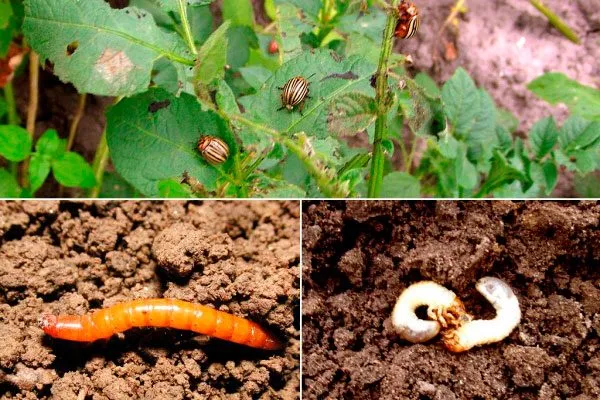
- Aphid. It causes leaf curl and usually attracts ants. To control aphids, use Actellic or Confidor insecticides, repeating sprays at 7-10 day intervals.
Collection and storage
Store the harvest in a basement or cellar at a temperature of 2°C to 5°C and a humidity of 70-80%. Before storing, sort the tubers, removing any damaged or rotten ones. Distribute them into boxes or bags and store at 12°C to 15°C for a week. Afterwards, re-sort the tubers, discarding any that have softened.
Possible difficulties
Pests can seriously damage potato crops, and using insecticides may not be the safest or most effective way to control them. Instead, you can resort to preventative measures and folk remedies:
- Dusting potato bushes with sifted wood ash every 15-20 days.
- Periodic watering of the soil between rows with a weak tar solution.
- Periodically spray the tops with garlic infusion or mustard powder.
- Planting pest-repellent plants around the perimeter of the potato plot: marigolds, coriander, sweet tobacco, calendula.
Reviews
The Carmen potato is an early-ripening variety with a high yield and excellent flavor. It adapts well to a variety of climates. By following simple care recommendations, you can grow disease-resistant plants and enjoy a bountiful harvest.