
The Innovator potato is considered a high-yielding table potato variety. It easily tolerates any weather conditions and adapts to various climate zones. With excellent shelf life and marketability, it is used by farmers as a staple vegetable for large-scale cultivation.
Origin
The variety was developed by agronomists at the Dutch company HZPC Holland BV, which is the inventor, patent holder, and largest exporter of this variety's seeds to the international market. HZPC Holland BV occupies a rising position in the global potato industry and supplies its products to various regions around the world.
In Russia, the company distributes elite seed material, produced using the work of a large seed production unit in the Leningrad Region. It is labeled as elite (Group E) or first reproduction (Group A). Its introduction dates back to 1997, but official registration in the State Register of our country only occurred in 2005.
Features of potatoes
The Innovator potato is resistant to any damage thanks to its strong skin, making it ideal for transportation.
Description of the plant and tubers
This variety is diverse—its bushes can be tall or medium-sized, with upright or semi-upright shoots. But in all cases, the potato also exhibits other varietal characteristics:
- the height of the bush varies from 60 to 90 cm;
- the stems are quite strong, so they do not bend towards the ground;
- the leaf blades are large and light green, open type, with wavy edges;
- the flowers are also large and snow-white;
- the foliage is average, and there are many flowers;
- berries are extremely rarely formed in the ovaries;
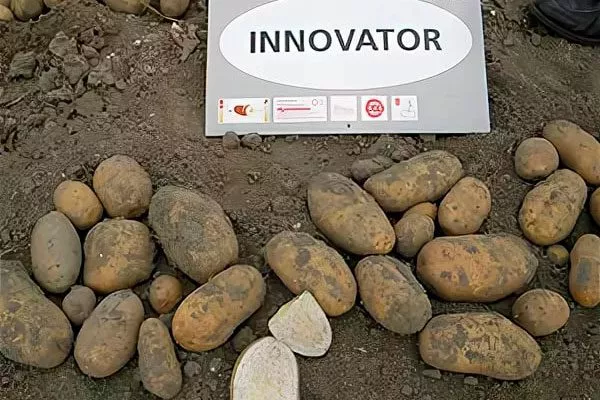
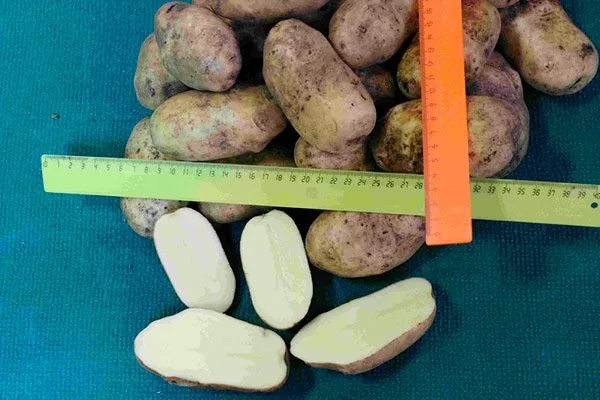
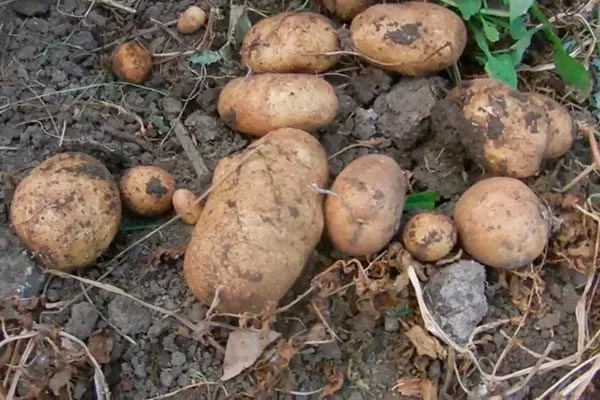
- the shape of the tubers is mostly oval-elongated, but there are also very elongated specimens;
- from 6 to 10-12 potatoes of the same size are formed under one bush (there are no small root crops at all);
- the weight of one tuber varies from 80 to 150 g;%
- the skin is slightly rough, light yellow and dense;
- the eyes are located superficially, their type is flattened;
- The pulp is creamy (closer to light) and dense, so it does not boil over.
Taste characteristics and purpose
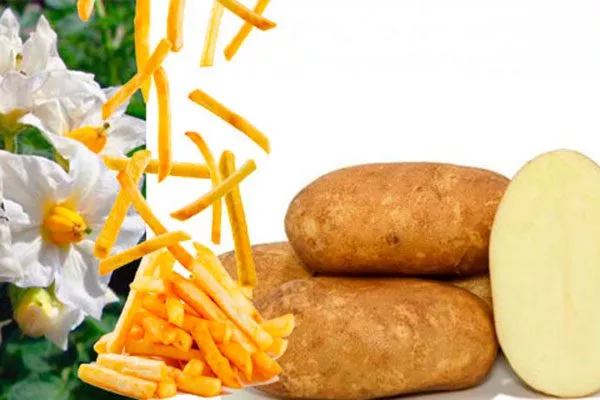
This innovative potato has gained popularity among gardening enthusiasts, becoming one of the most sought-after varieties due to its versatility and suitability for a variety of dishes and salads. Its tubers are widely used in the food industry for the production of chips and mashed potato powder.
Chemical composition
A set of useful substances, including elements and vitamins, is present in 100 g of the product:
- boron – 164%;
- vanadium – 373%;
- vitamin K – 13.3%;
- iron – 15.5%;
- potassium – 23%;
- cobalt – 50%;
- silicon – 167%;
- lithium – 77%;
- manganese – 16%;
- copper – 14%;
- molybdenum – 11%;
- pyridoxine – 15%;
- rubidium – 500%;
- ascorbic acid – 24%;
- folic and nicotine - 10.5% each;
- oxalic – 7.8%.
Potatoes contain various amino acids and purine compounds. The purine concentration in 100 g of potatoes is 4.5-5% of the recommended daily intake, which is important for those with kidney problems and gout.
When does it ripen?
Potatoes are a medium-season variety, reaching full maturity 75-85 days after planting. The first harvest occurs 70 days after sowing.
Productivity level
If technological norms and planting rules are observed, the potato harvest can reach the following indicators:
- on farmland – from 320 to 330 centners per hectare;
- on private farm plots – from 15 to 30 kg per 1 sq. m.
Disease resistance
Potatoes are highly resistant to common diseases and pests. The plant can withstand attacks from:
- white-winged nematode;
- potato cancer;
- late blight;
- mold fungi.
However, despite this strong defense, potatoes are susceptible to cyst nematodes, which begin to parasitize the plants, as well as rhizoctonia. If damaged branches are detected, they should be removed and treated with specialized products.
Climate/soil requirements, recommended regions
This variety is ideal for growing in the Central, Volga-Vyatka, and Central Black Earth zones. It is highly resistant to short-term drought, making it suitable for cultivation in the southern steppe regions. It also has good cold tolerance, making it suitable for cultivation in Siberia.
- ✓ Optimum soil acidity: pH 5.0-6.0.
- ✓ The depth of the fertile layer should be at least 30 cm.
Innovator doesn't require any special growing conditions and can be grown in a variety of soils. However, for the highest yields, it prefers rich sandy loams. It's important to consider the soil's acidity; a neutral or slightly acidic soil is preferred.
The main pros and cons of the variety
The positive qualities of this variety include its high resistance to drought and ease of cultivation in a variety of soil types.
Other advantages worth highlighting include:
The disadvantages include a tendency to certain diseases, but this problem is easily solved with preventive measures.
How is it different from other varieties?
This table potato is considered the most resistant to surface damage. This allows farmers to easily transport large quantities over hundreds and even thousands of kilometers. This success is also due to its increased marketability—96% when stored properly, compared to 82% when stored improperly.
- ✓ Resistance to surface damage due to the dense peel.
- ✓ High marketability when stored properly.
Landing features
To ensure a good harvest, preparatory work begins six weeks before planting. The process is simple:
- potatoes for sowing are placed in boxes in a layer of 2-3 cm;
- twice a day, carry out surface irrigation of root crops;
- during the first 7-8 days, maintain the temperature within the range of +18-20°C;
- then lower the thermometer readings to +15-17°C;
- After three weeks, a selection is made: tubers with skin and sprouted eyes are suitable for planting.
The potatoes are again distributed among the boxes, adding humus to a depth of 3-4 cm, raising the sprouts. The surface is covered with peat, after which a new layer is created. There should be no more than four layers in a single container. A mineral fertilizer solution is used for watering.
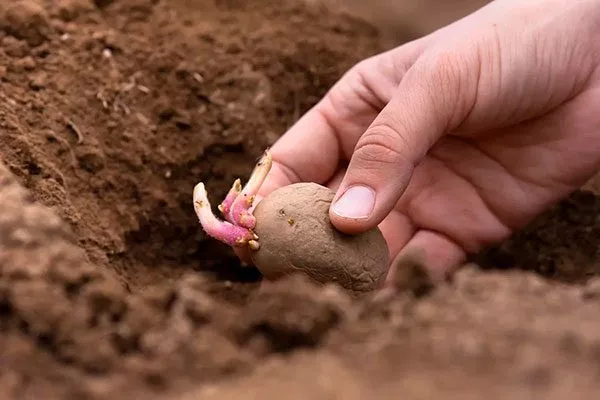
Specific conditions for the Russian climate:
- Potatoes are planted in early May, when the soil temperature reaches 7°C;
- the distance between rows of potato bushes should be from 65 to 75 cm;
- Before planting seeds, it is necessary to add organic matter or complex mineral fertilizers to each hole;
- The seed planting depth on heavy soils is from 7 to 10 cm, on light soils – up to 14-15 cm.
The distance between holes should be 35 cm. Before planting potatoes, it's important to check the soil moisture. In winter, add compost and superphosphate to the soil, and thoroughly till the soil.
Care nuances
To achieve a good harvest, it is necessary to pay attention to some aspects:
- Watering. Sprinkle the soil with water when buds appear and repeat after flowering. Watering should be moderate, taking into account weather conditions. Excess moisture can cause the tubers to rot.
- Top dressing. It is applied between rows. Mineral fertilizers are applied in the spring, following the recommended dosage on the packaging. Exceeding the dosage can negatively impact the yield and lead to plant death. The main types of fertilizers include:
- bird droppings – mix with water in a ratio of 1:10, but not less, to avoid burns;
- urea – Add 1-1.5 tablespoons of the preparation to 10 liters of water and pour it under the roots, after slightly digging up the soil;
- mullein – For 500 ml of fresh manure take 5-6 liters of water.
- Fluffing. During the growing season, it's essential to loosen the soil at least three times. Too frequent loosening can lead to a reduction in yield due to overheating of the root shoots. In this situation, the plant becomes more vulnerable to scab.
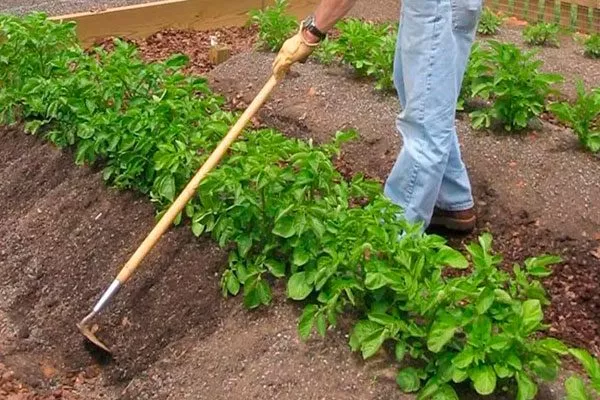
- Hilling. After rain or irrigation, it is necessary to carry out hilling:
- for the first time – 15-20 days after planting;
- the second time - after the same period after the initial treatment;
- third time - a week before flowering begins.
- Weed removal. The frequency of weeding depends on the planting method: for tuber crops planted from sprouted tubers, the procedure is carried out 20 days after planting and before flowering.
If the seed method is used, weeding is carried out as needed to remove weeds; sometimes the first weeding occurs even before the first potato shoots appear.
How to combat diseases and pests?
Treatment depends on the type of disease. Late blight is controlled by applying copper sulfate. To prevent rhizoctonia, seeds are treated with a 1% boric acid solution before planting. For powdery rust, the tubers are sprayed with a 5% copper sulfate solution.
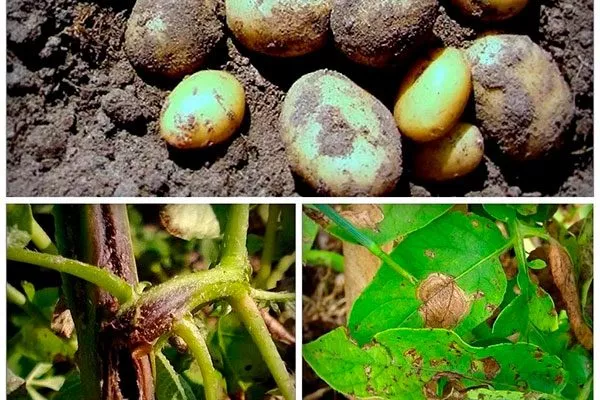
In cases of golden potato cyst nematode infestation, all plants and debris are burned, and replanting potatoes in the same area is permitted only after four years. Colorado potato beetles are controlled by insecticide treatments.
How to harvest and store crops?
Before harvesting, it is important to ensure that the potatoes have reached technical maturity, which is indicated by the formation of a dense skin on the tubers, which facilitates their long-term storage.
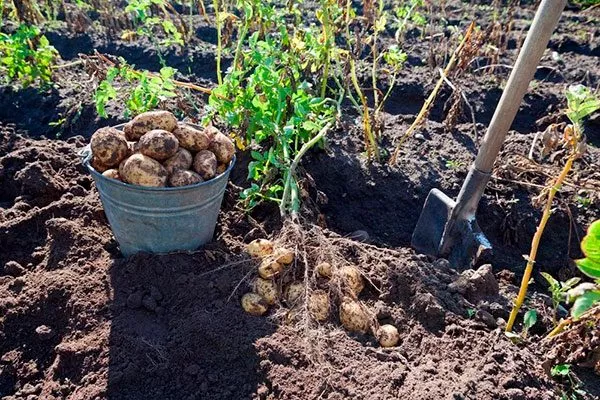
Harvest potatoes in dry, sunny weather, leaving them in the beds until evening. Then allow the tubers to air-dry in the shade for 2-4 days.
Key aspects of preserving the harvest until late spring:
- Before placing potatoes in the basement, they are treated with protective agents against fungal infections.
- To ensure the best condition, it is recommended to use a dark room that is not subject to freezing and is characterized by a stable temperature within the range of +2°C to +3°C and humidity from 70% to 85%.
- When storing in boxes, stands are required, which should be placed at a distance of 15 cm from the floor and wall.
What difficulties might arise when growing?
The key to caring for potatoes is maintaining proper soil moisture. Watering too frequently can lead to overwatering and, consequently, rot.
Excessive use of fertilizers can stop the development of bushes and lead to their death, and poorly treated corms will become prey to pests and diseases.
Reviews
The Innovator potato is a favorite among both gardeners and large agricultural enterprises – the variety has proven itself to be exceptionally successful. The key is to follow simple farming practices and harvest the crop on time.