
The Gourmet potato belongs to a group of exotic varieties with an unusual flesh color that can change during cooking. However, this isn't the variety's key advantage—it has many positive characteristics. It's easy to grow, mid-early, and quite beneficial for the body. However, it doesn't boast high yields.
History of selection
The origin of the purple potato remains a scientific mystery. Biology experts speculate that this unusual variety has its roots in South America, possibly in countries such as Bolivia or Peru. However, there is no information yet on how the Gourmet potato variety was bred, and it is not listed in the Russian State Register. Information about the producer is also missing.
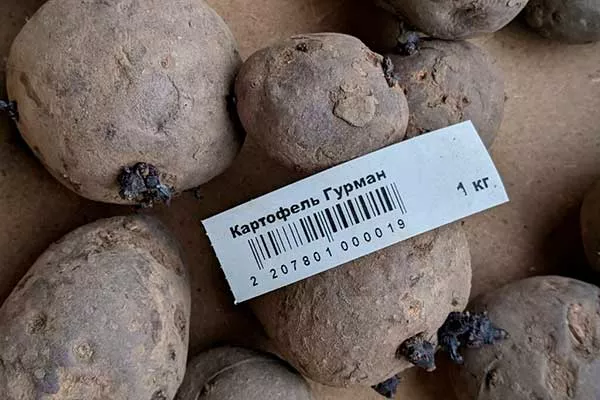
What does the most unusual potato look like?
Looking at the Gourmand bush, you might not immediately realize that beneath it grow potatoes of a distinctive color. However, the plant does have its own distinctive features.
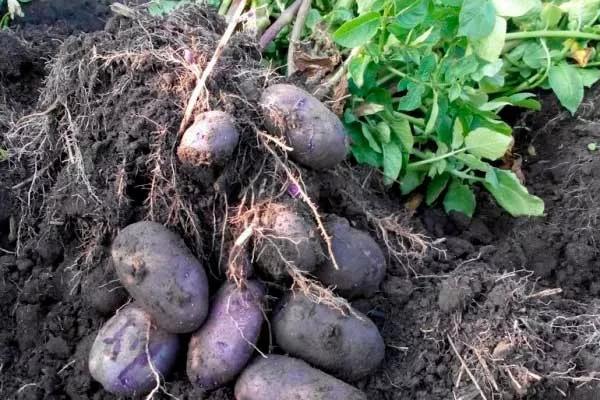
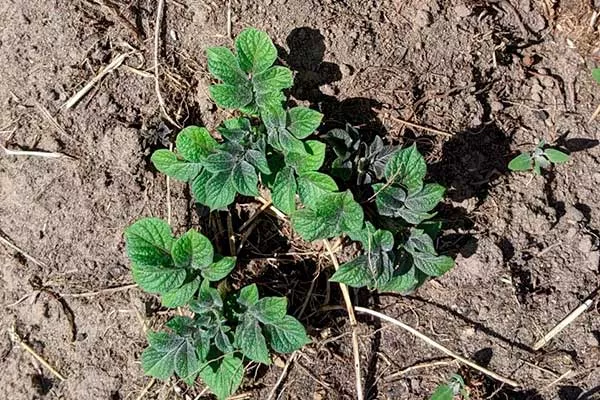
Bush
This variety is medium-sized, so the bush grows to a maximum height of 65-70 cm. It is characterized by a robust root system, strong, upright shoots, and medium foliage. The leaf blades are unusually small and green with an emerald sheen. Another distinctive feature is that the snow-white flowers contain completely black stamens.
Tubers
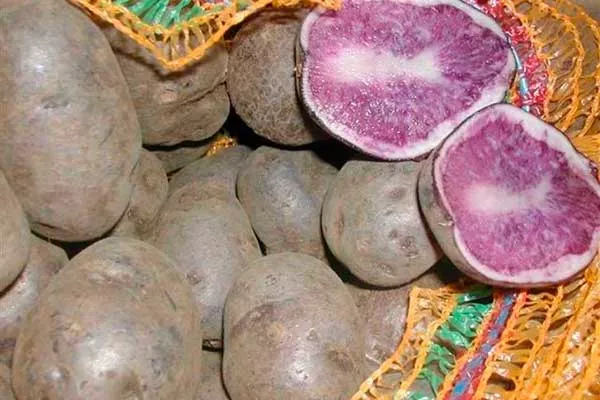
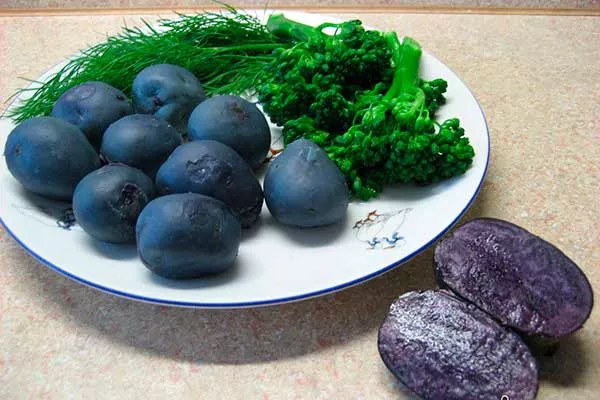
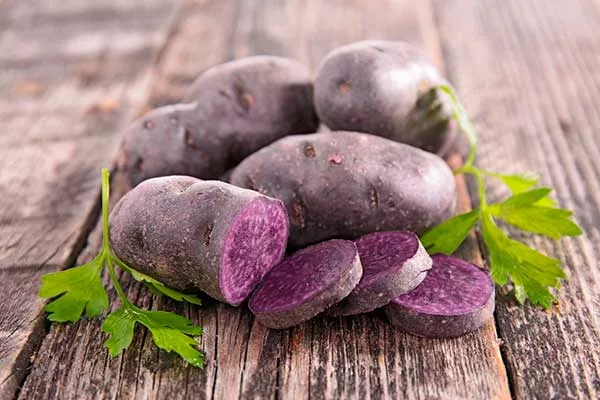
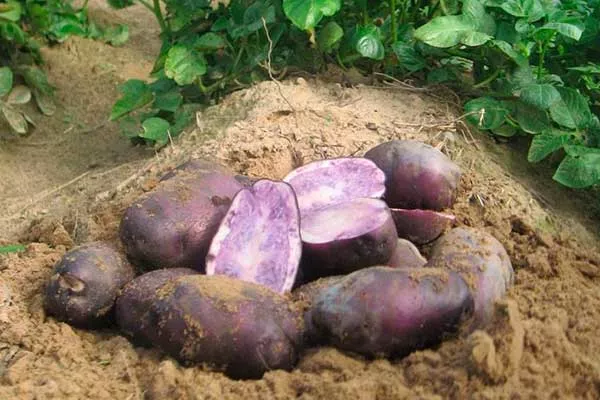
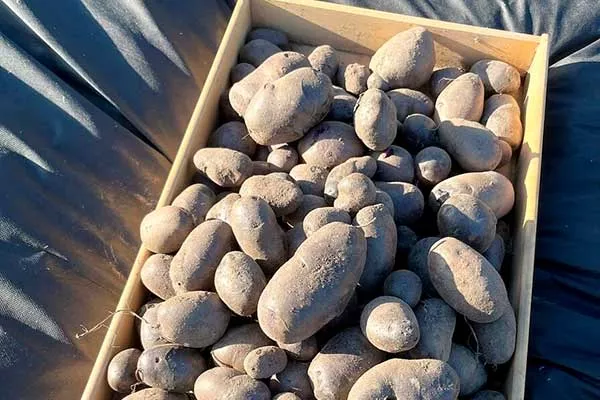
The most unusual thing about the Gourmand is the color of the flesh, which is characterized by a violet-blue hue with whitish veins. During cooking or frying, it changes color and becomes almost black, but may also exhibit a lilac-violet hue of varying tones.
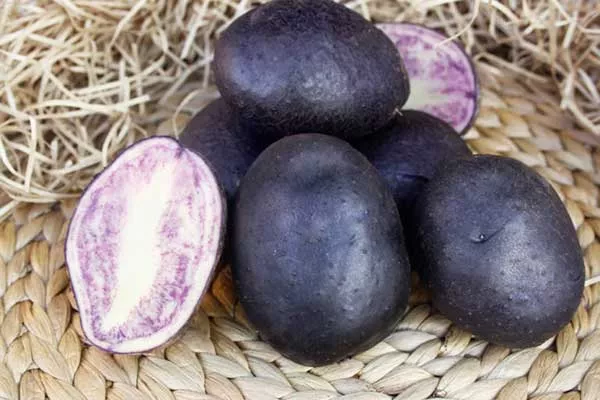
Description of root vegetables:
- pulp structure – dense and oily (no wateriness at all);
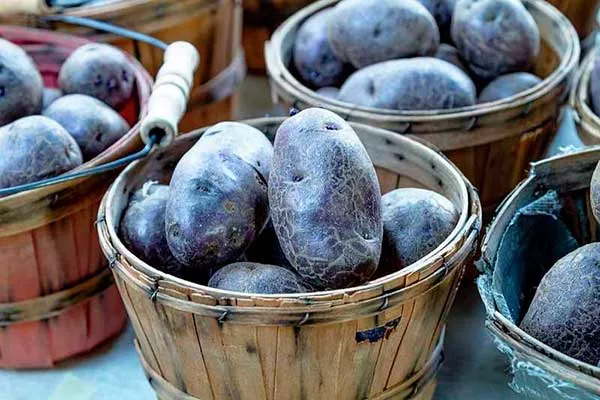
- form - round-oval;
- surface – slightly glossy;
- weight - 80-100 g or a little more;
- skin – dense, with a light mesh;
- eyes – small size, medium occurrence;
- peel color – dark purple.
Characteristics of potatoes
Potatoes are highly marketable—90% of their shelf life is retained until spring. Potato tubers contain over 16% starch.
Taste qualities and chemical composition of the variety
Gourmet potatoes are rich in antioxidants, which have a profound beneficial effect on health. This unique product not only promotes overall health but also has rejuvenating properties.
No less important are the following properties of purple-fleshed potatoes:
- has a beneficial effect on the cardiovascular system in arterial hypertension and atherosclerosis;
- improves visual acuity;
- inhibits the development of malignant neoplasms;
- normalizes metabolism;
- does not cause an increase in blood sugar levels in patients with diabetes.
Purple-hued potatoes have a unique aroma and retain their integrity when cooked. This variety has a distinctive flavor that develops a slightly nutty aroma when cooked, giving the potato an almost black color.
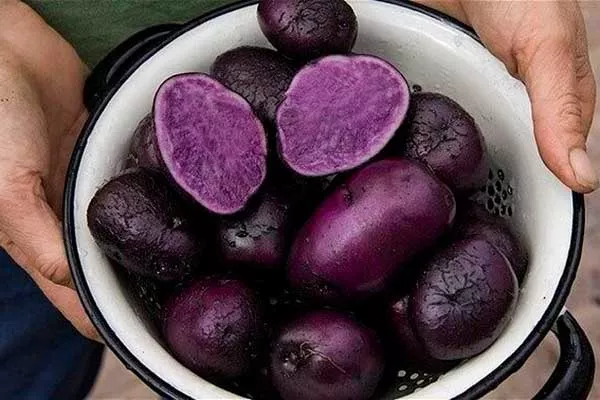
Perfect for boiling and baking, purple potato puree, rich in this vibrant color, is sure to attract the attention of family and guests.
Ripening time
The Gourmet variety is classified as a mid-early potato. The period from germination to harvest is 90-100 days. The tubers reach maturity simultaneously, simplifying harvesting. The first potatoes can be dug up six weeks after the seeds have fully sprouted. The main harvest occurs in August.
Productivity
The Gourmet potato yield is not high. Up to 3.5-4 kg of tubers can be harvested per square meter. In commercial plantings, 35-40 tons of potatoes are harvested per hectare.
Cultivation regions
Gourmand is best grown in areas with plenty of sunlight, but protected from cold winds, as the variety does not tolerate even the slightest drafts.
Potatoes can grow in partial shade. This variety is suitable for cultivation throughout almost all of our country, but is best suited for cultivation in the central and southern regions.
Disease resistance
Gourmand has excellent immunity to various diseases. It is resistant to scab and canker. Potatoes are less resistant to fungal diseases and late blight.
To protect plants, it's important to follow crop rotation rules. Among potato pests, the Colorado potato beetle, mole crickets, and wireworms are particularly dangerous.
Marketability, transportability and shelf life
Gourmand tubers can be stored for approximately five months without losing their marketable appearance or medicinal properties. Thanks to their dense skin, the tubers are easy to transport over long distances without the risk of mechanical damage.
Frost and drought resistance
This variety grows easily in the south and in moderate climates, but is susceptible to recurrent frosts and does not fully ripen during the short summer. The potato does not tolerate excessive waterlogging, but drought is also undesirable.
Pros and cons
The variety has many positive qualities, but there are also negative ones.
Landing features
It's best to start planting seeds in late spring, preferably in the first half of May. It's recommended to pre-germinate the roots so that they produce at least 2-3 shoots approximately 2-3 cm long. Purchase seeds only from reputable sellers.
- ✓ Make sure the seeds have at least 2-3 shoots that are 2-3 cm long.
- ✓ Check the seeds for damage and signs of rot.
The tubers should be free of any signs of damage, such as cracks, cuts, or rot. It's best to plant the tubers whole, without cutting them.
This crop is characterized by a short growing season and high temperature requirements. Tubers should be planted when the air temperature does not drop below 10-12°C.
The Gourmet variety prefers moderately acidic and well-aerated soils. If necessary, adjust the soil to optimal conditions by following these recommendations:
- This variety especially appreciates peaty, loamy, or sandy loam soils. If sand is present, the soil should be enriched with organic fertilizers such as manure or humus.
- To erode heavy loams, use peat, river sand, rotted hay, or sawdust. To ensure aeration of the top layer of the substrate, mulch is applied throughout the growing season.
- The best conditions for planting potatoes are sunny areas. However, in southern regions, netting is used to protect them from overheating, or the beds are placed in the shade of shrubs.
- Potatoes do not tolerate excessive humidity. In areas with frequent and heavy rainfall, it is recommended to plant potatoes on slopes with good drainage.
Instructions for preparing tubers:
- First, the seeds are selected;
- Then disinfection is carried out using Fitosporin or Bordeaux mixture for 40-60 minutes;
- then the seeds are germinated in a well-lit place at a temperature of at least +14-17 °C and with periodic irrigation with clean water every 3-4 days.
- when the sprouts reach a length of 10 mm, this indicates that the tubers are ready for planting;
- sprouts that exceed this length should be shortened, and weak ones should be removed;
- Before planting the seeds in the ground, it is recommended to soak them in a solution of Zircon or Epin;
- Two to three days before planting, the corms are taken out into the open air and placed in partial shade to adapt to the new conditions.
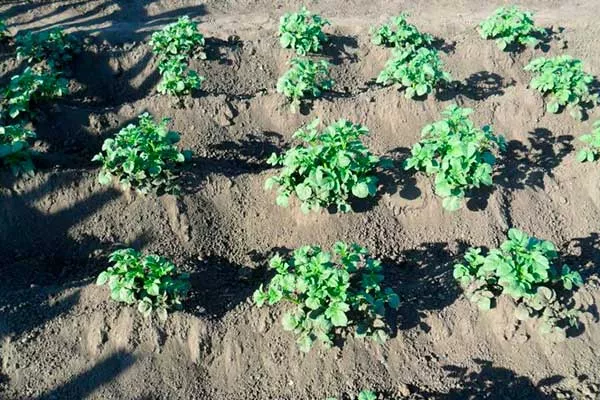
In the selected area, make holes 7-10 cm deep with a distance of 35-45 cm between them, and the distance between rows is 55-65 cm. Small corms are planted at intervals of 25-35 cm.
Agricultural experts suggest trying a unique approach to growing potatoes using home-grown open-air cages made of wooden planks or bricks. Their dimensions are:
- height - 20-25 cm;
- width - 90-100 cm.
Straw, hay or freshly cut grass are used as a base for the sadaqah, covering them with a layer of compost and soil.
Peculiarities:
- When planting potato tubers, the soil is not stirred, as it retains organic matter at the bottom and is best left undisturbed. Only a shallow tillage of the surface is performed.
- In the cage, two rows are created, placing holes.
- Potatoes are planted in a checkerboard pattern.
- Ash and fine powder from chicken eggshells are placed on top of the seeds and covered again with soil.
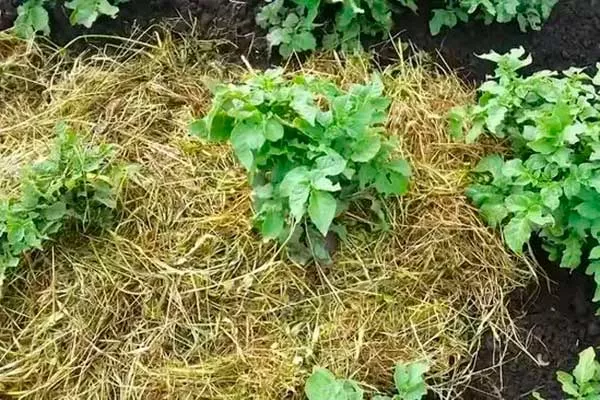
- After the sprouts appear, the plantings are covered with straw or hay to protect from the sun and maintain moisture.
Care instructions
Gourmand requires careful attention to moisture: too much or too little water can be harmful. During periods of insufficient rainfall, supplemental watering is necessary at least twice during the growing season.
Potato moistening should be done as follows:
- at the beginning of the growing season, before the emergence of seedlings, water is not needed;
- The first watering is recommended to be done when the sprouts begin to appear;
- During flowering, special attention must be paid to hydration;
- If there is a lack of rainfall during the period of tuber mass accumulation, additional watering is necessary.
Other care measures:
- It's convenient to combine watering with fertilizing. First, moisten the soil, then apply fertilizer according to the instructions to avoid burning the tubers. The best fertilizers for Gurman potatoes include superphosphate, saltpeter, urea, potassium chloride, and nitrophoska.
- After each irrigation or heavy rain, carefully loosen the soil. Work should be limited to the top layer to avoid damaging the roots and new potatoes.
- Mulching not only helps prevent the topsoil from drying out but also promotes moisture retention, inhibiting weed growth. This reduces the need for weeding in these beds, and once the tops have matured, it's unnecessary altogether. Grass clippings or seedless weeds can be used for mulching.
- Hilling is key for potatoes, stimulating additional root growth, preventing the soil and stems from drying out, and increasing yield. Early hilling of Gurmand potatoes can protect them from unexpected cold snaps in unstable climates.
Harvesting and storage
In southern regions, the harvest is completed when it reaches full maturity, approximately 100 days after planting. The tubers are laid out in a single layer on a flat surface and kept in a bright, but out of direct sunlight, location for 10-15 days. After this, they are placed in wooden boxes or mesh bags and stored in a room maintained at a temperature of approximately 4-5°C.
Methods of control and prevention of diseases/pests
This potato variety has a strong immune system; however, viral infections pose a serious threat to this plant. It's best to follow preventative measures, which include simple steps:
- remove and destroy weeds and plant debris in a timely manner;
- The main carriers of viral diseases are insects, so treating potatoes with insecticides is the most effective method of protection;
- It is important to follow crop rotation rules.
Gardeners' reviews of the Gourmet potato
The Gourmand potato is a unique variety with a number of advantages. Despite this, it hasn't yet gained popularity. This is due to the prejudice against multicolored potato varieties, which is often associated with genetically modified foods or other artificial methods of production. However, these concerns are unfounded—the Gourmand was developed using traditional breeding methods.