
The Blue Danube potato has appeared on the market relatively recently, but has already received numerous positive reviews from potato growers. This variety is popular for its beautiful tubers with excellent flavor. With proper care and a little attention, even small plots can yield bountiful harvests.
Who developed the variety and when?
Discovered by the UK-based Sarvar Research Foundation in the early 21st century, it was added to the Russian State Register in 2005.
Description of the plant and tubers
The bushes reach a medium height, not exceeding 1.2 m, with abundant dark green foliage. Distinguishing characteristics of the species:
- The stems are quite strong and straight.
- The leaves often have slight ribbing and waviness along the edges, which adds to their decorative appeal.
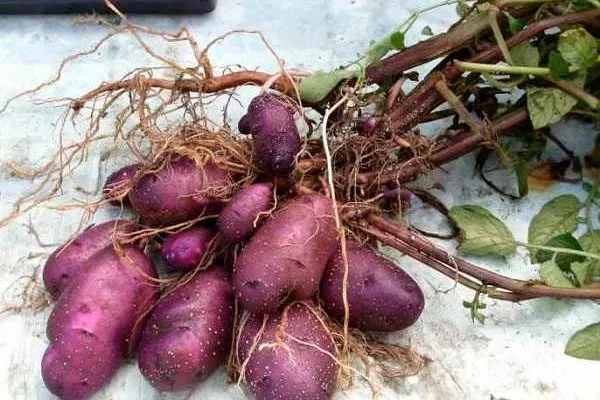
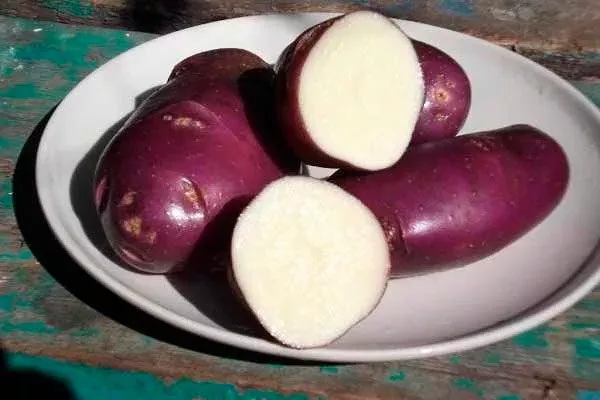
- The tubers are elongated, oval and slightly flattened, with a total number of fruits per bush from 8 to 12 pieces.
- The average weight of each tuber is from 100 to 250 g.
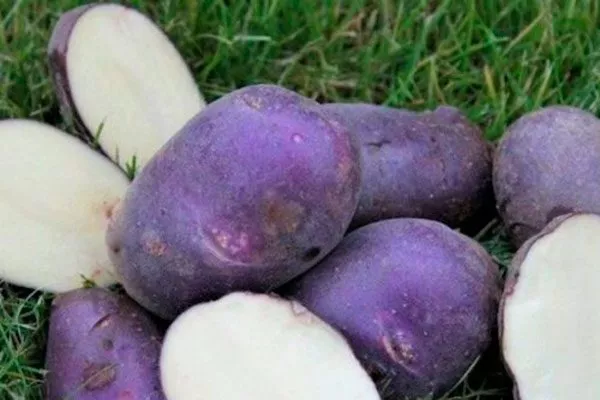
- The peel has a purple hue and is characterized by a strong and smooth texture.
- ✓ The purple hue of the tuber skin is a genetic characteristic of the variety and does not change depending on growing conditions.
- ✓ Resistance to minor droughts allows for reduced watering without harming the crop.
Taste characteristics and purpose
Blue Danube potatoes are classified as culinary type B, meaning they have a moderately firm, yet slightly overcooked texture and are versatile. They have a medium flour content and starch content of about 15%. The flavor is good, rich, and not watery.
This variety is suitable for a variety of cooking methods. It can be boiled, stewed, fried, stuffed, or used in soups and salads. Its versatility makes it an excellent choice for a variety of culinary dishes.
Ripening and yield
This is a mid-early variety. The time from the first shoots to harvest is approximately 65-80 days.

Characterized by high yields. On average, approximately 350 centners of root crops can be harvested from 1 hectare of land, but under optimal conditions, the yield can reach up to 400 centners per hectare.
Landing features
To prepare for planting, germinate the tubers in a warm room in the spring. The germination process takes about 3-4 weeks. When choosing planting material, choose medium-sized tubers without damage or signs of disease on the surface. Treat the tubers with a growth stimulant.
- ✓ The room temperature should be maintained at +18°C to +22°C for optimal germination.
- ✓ Lighting should be diffused, but sufficient to prevent the sprouts from stretching.
Begin preparing the site in the fall to allow moisture to accumulate. Digging the soil in early spring is also acceptable. Fertilize the soil with compost or humus, and loosen it with peat and sand during plowing. Once the soil warms to 10°C, begin planting.
The optimal planting pattern for this variety includes the following parameters: row spacing of 60 cm, distance between bushes of 25-30 cm, and planting depth of 10 cm. Add a small amount of wood ash to each hole before planting, as it contains over 70 beneficial components for plant development.
Subtleties of agricultural technology
Care consists of a number of simple steps, including watering with warm water, fertilizing, weeding, hilling, and loosening the soil. Combine irrigation with fertilizing. This variety is tolerant of short periods of drought, but requires additional watering during prolonged hot periods.
Moisture should penetrate the soil to a depth of 50 cm. Water and fertilize at least three times during the season:
- During the period of bush development (immediately after emergence) water young plants less abundantly than adult plants and add a solution of mullein or chicken manure at a concentration of 10%.
- During budding Add a solution of 20 g of superphosphate and 5 g of potassium sulfate, diluted in 10 liters of water.
- After flowering Dissolve 250 ml of mullein and 20 g of superphosphate in 10 liters of water.
Resistance to diseases and pests
The Blue Danube potato variety is resistant to some diseases and pests, although it can be affected by some types of nematodes, anthracnose, black leg, dry rot, leaf curl and various types of scab.
To protect plants, follow these steps:
- Maintain proper rotational cultivation. Don't plant potatoes in the same spot two or more years in a row, and avoid growing them after other nightshade crops (such as tomatoes, peppers, and eggplants).
- Monitor moisture levels. In rainy regions, mulch the soil and change it frequently.
- Treat the soil before planting, seed tubers and bushes after germination with solutions of copper-containing fungicides.
- Eliminate pests that spread diseases. The Colorado potato beetle is particularly dangerous. To combat it, use insecticides such as Confidor, Tabu, Regent, Aktara, and others.
Advantages and disadvantages
The crop is prized for its high yield and excellent flavor. Gardeners note the following advantages of Blue Danube:
No significant disadvantages have been identified for this variety, which makes it very attractive for cultivation.
Reviews
The Blue Danube potato has unique characteristics, including high yield, excellent flavor, and resistance to diseases and pests. This makes it a favorite choice for both beginner and experienced gardeners. After planting, it's important to provide the plants with proper care to ensure abundant harvests and high-quality, large tubers.