
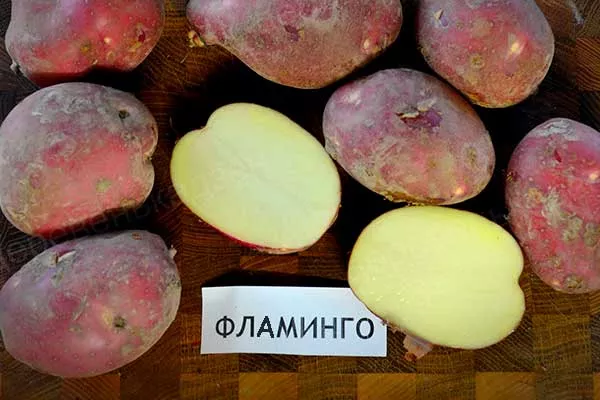
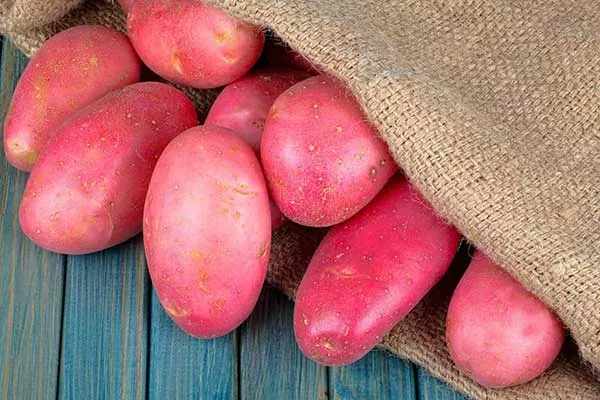
The Flamingo potato is a beautiful pink table potato variety and a worthy representative of domestic selection. This tasty and productive potato is suitable for both amateur and commercial cultivation.
Who bred the Flamingo variety?
The Flamingo variety was developed in Russia by a group of breeders. The authors of this tasty and productive variety are: E. M. Klyukina, E. P. Shanina, S. A. Banadysev, and A. M. Chuenko. The variety was approved for cultivation in 2020.
The variety is recommended for cultivation in the Central, West Siberian, East Siberian, Far Eastern, Northern, Northwestern, Volga-Vyatka, Central Black Earth, North Caucasian, Middle Volga, Lower Volga and Ural regions.
Description of the variety
The bushes are low, semi-erect, and leaf-bearing. Maximum height is 80 cm. The intermediate leaves are medium-sized and dark green. The inflorescences are compact.
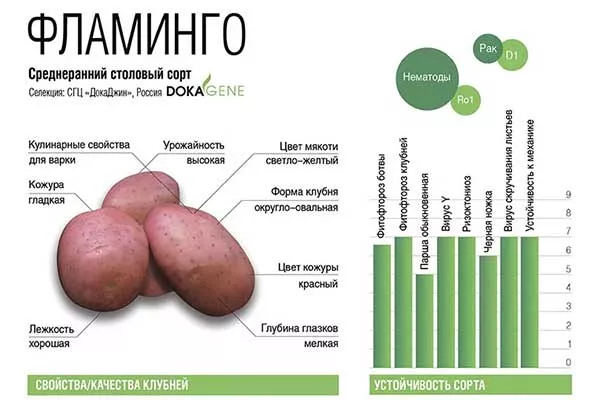
- ✓ The eyes of the tubers are located superficially, which makes cleaning easier.
- ✓ Tubers have high resistance to mechanical damage.
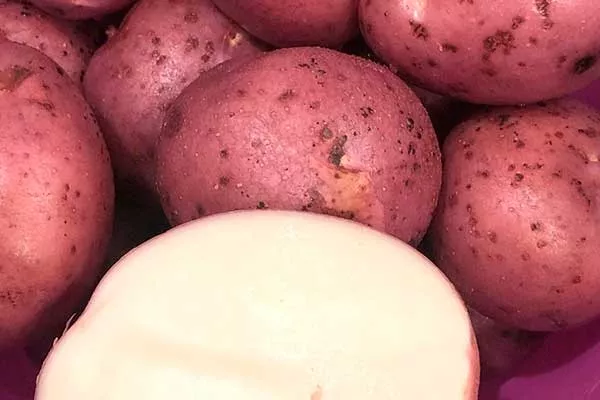
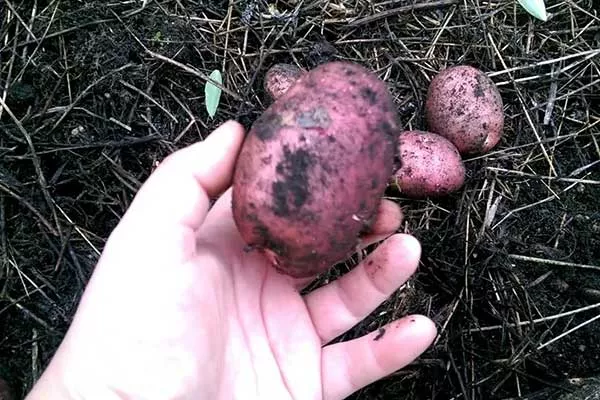
The tubers are large, elongated-oval, with pink skin and white or slightly cream-colored flesh. The eyes are small. The skin is firm, smooth, and shiny. Each tuber weighs 100-140 g.
The taste of root vegetables and their purpose
The tubers have excellent flavor. This table variety is suitable for a wide variety of dishes, including frying and baking, and is also suitable for mashing. The starch content of the pulp is 14.4%.
Productivity
Flamingo potatoes are a high-yielding variety. A single plant produces 10 to 12 tubers. The average yield of these pink potatoes reaches 200 c/ha, with a maximum yield of 520 c/ha. The tuber marketability is 86%.
Ripening time
This variety belongs to the mid-early group. It matures quickly, allowing for harvesting at the earliest stages of the growing season. Flamingo potatoes reach technical maturity approximately 70 days after germination.
Pros and cons
Before planting Flamingo potatoes in your garden, it's worth evaluating their advantages and finding out if they have any disadvantages.
No shortcomings were found in the Flamingo variety.
Features of agricultural technology
To obtain a bountiful and high-quality harvest, certain conditions are necessary. It's important to plant the tubers correctly and then care for the growing potato plants.
- ✓ Soil pH should be between 5.0-6.0 for optimal growth.
- ✓ The soil should be well drained to avoid water stagnation.
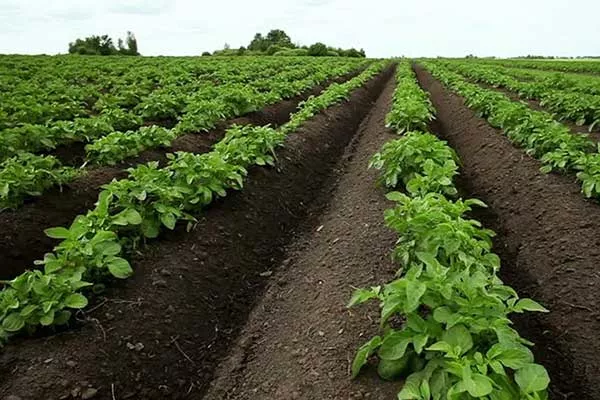
Growing features:
- The site chosen for planting is one where potatoes were not grown the previous season. The soil is dug in the fall, removing all plant debris. The soil can be dug manually with a shovel or mechanically tilled.
- Dig holes 10-15 cm deep for planting. Space adjacent holes 60-70 cm apart. When planting, it is recommended to add wood ash, bone meal, urea, and a complex nitrogen-phosphorus-potassium fertilizer to the holes. Place only one tuber per hole.
- Planting begins no earlier than the soil temperature at a depth of 10 cm reaches +6….+8°C.
- If the soil is low in moisture, potatoes are planted on a flat surface at a depth of 5-6 cm. If the soil is wet and heavy, the tubers are planted on ridges, 6-8 cm deep.
- The bushes are watered regularly, as the soil dries out. The potatoes are hilled three times per season and fertilized two to three times. Organic and mineral fertilizers are applied, either in combination or as a single-component fertilizer.
During the active growing season, nitrogen fertilizers are applied to potatoes. During the budding stage, plants require potassium, which can be replenished with wood ash or potassium sulfate. During flowering, phosphorus is added in the form of superphosphate or another complex phosphorus-containing fertilizer.
Diseases and pests
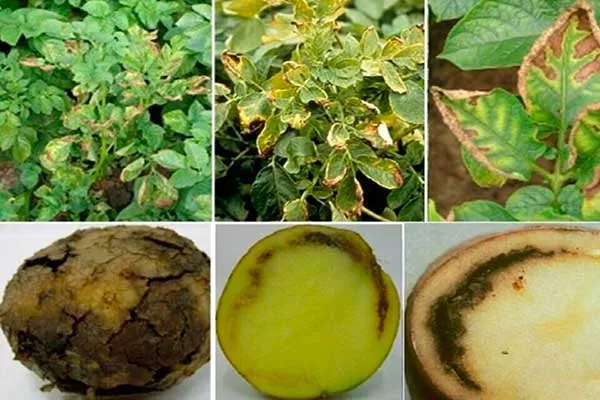
The Flamingo variety is resistant to most common potato diseases, including blackleg, late blight, and leaf curl. Moderate resistance is observed to common scab and silver scab. The variety exhibits increased resistance to golden nematode.
To repel the Colorado potato beetle and other potato pests, it is recommended to plant black Russian beans between rows. For minor infestations, use bioactive products such as Fitoverm.
How to harvest?
Potatoes are dug in dry, clear weather. Before harvesting, make sure the tubers are fully ripe. Potatoes dug prematurely don't store well, while overripe ones lose some of their flavor and sprout excessively during storage.
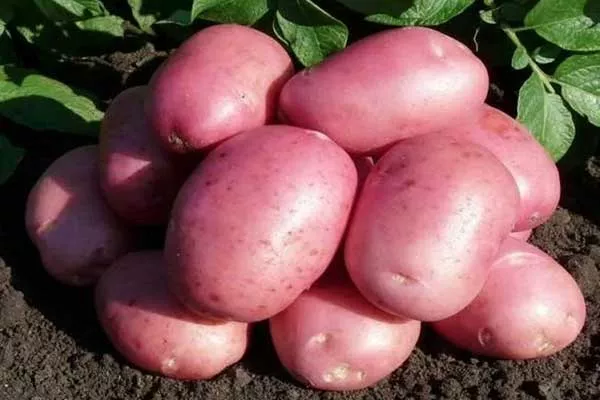
The tubers are carefully dug up using a pitchfork or shovel, sorted, washed, dried in the fresh air, and then stored in a cellar or basement.
Reviews
Flamingo potatoes will appeal to lovers of pink varieties, mashed potatoes, and fried potatoes. Their pink tubers are beautiful and delicious, making them a consistent market favorite. This versatile potato is easy for any gardener to grow; it's easy to cultivate.