
The Favorite potato truly lives up to its name – it's considered a leader among our gardeners and large farmers. This variety was developed with the challenging climatic conditions of many regions in mind, making it easily adaptable. It's characterized by productivity, shelf life, and other positive qualities, but to achieve a bountiful harvest, attention to moisture and fertilizing is essential.
Who developed the variety and when?
The variety was bred by several specialists at the A. Lorkh Federal Potato Research Center. The following specialists participated in the development:
- N. Gaitova;
- G. Sitnik;
- S. Ovechkin;
- A. Zhuravlev;
- S. Salyukov;
- A. Mityushkin;
- G. Grigoriev;
- E. Simakov.
During breeding research, the Udacha and Romantse potato varieties were crossed. Favorit is a relatively new hybrid that became widely popular in 2014, when it was added to the State Register.
Characteristics of the Favorite potato
A key feature of the Favorit variety is the marketability of its tubers, which ranges from 80 to 96%. The starch content in the pulp ranges from 12.5% to 16.5%, making it a popular choice for a variety of culinary dishes.
Description of the plant and tubers
The shrub is considered medium-sized, reaching a height of 50-60 cm. The foliage has upright shoots, so the plant doesn't take up much space due to its lack of spreading. Other characteristic features of the variety include:
- foliage – dark green, with light pubescence on the surface and medium size;
- stems – reinforced;
- bush type – intermediate;
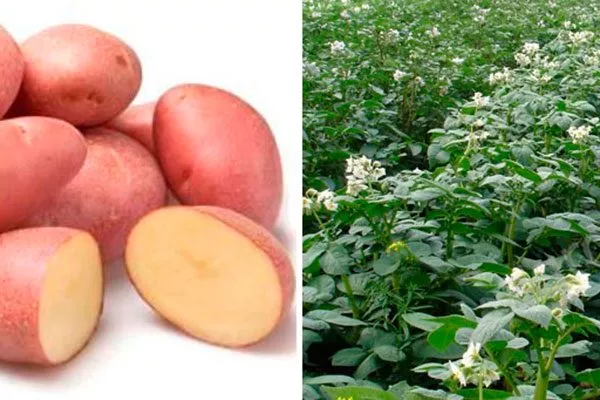
- inflorescences – snow-white, their corolla is high;
- root system – well developed both in depth and laterally, powerful;
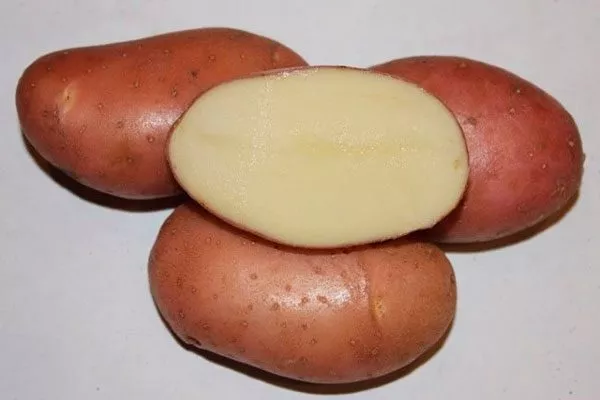
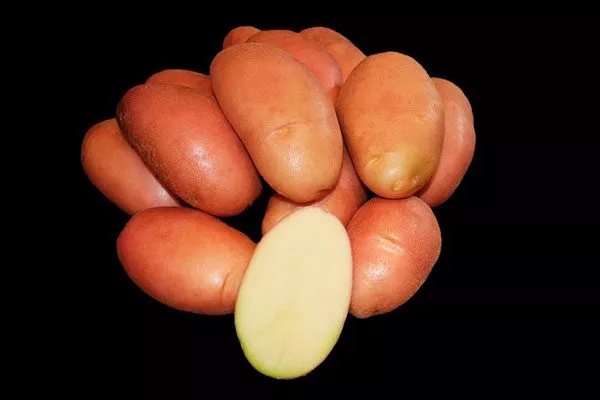
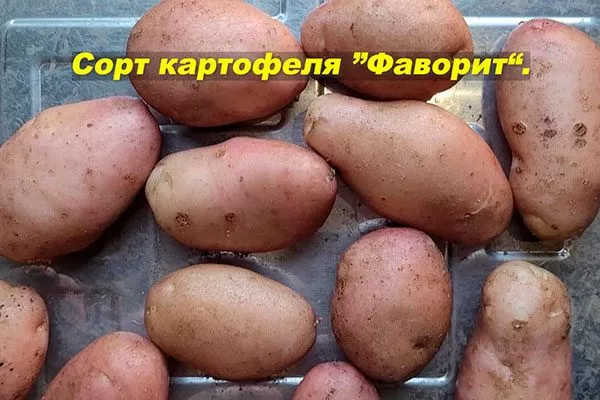
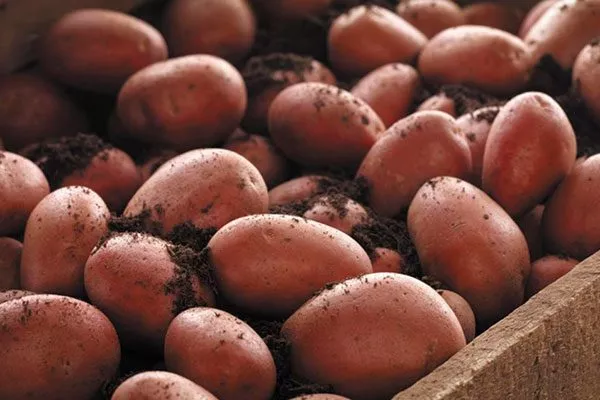
- tubers – weigh from 90 to 140 g and are distinguished by their elongated shape;
- color - the skin is reddish and the flesh is cream-colored;
- surface – with slight roughness and small eyes that do not go very deep;
- number of root crops under one plant – from 7 to 11-12 pcs.
- ✓ Resistance to short-term frosts down to -2°C due to genetic characteristics.
- ✓ High rate of regeneration after damage to tops by hail or wind.
Taste characteristics and purpose
Favorit has a delicate flavor, free of off-flavors. Its taste is good, as the variety was awarded a 44-4.6 rating after tasting tests.
Potatoes cook moderately, making them a versatile vegetable. They're best used for baking, boiling, stewing, and frying.
Maturation and productivity
Favorit is classified as a mid-season variety, but the time it takes to fully ripen depends on the region. In the southern regions of the country, tubers are dug up after 80 days, in the central part of the country - after 3 months, and in cooler conditions you will have to wait 100-110 days.
The yield is quite good – an average of 300 centners are harvested from 1 hectare, a minimum of 170-200 and a maximum of 420.
Climate and recommended regions
Breeders recommend cultivating this variety in the central part of Russia, but this doesn't mean Favorit isn't suitable for other regions. It's quite frost-hardy, so it's not affected by sudden frosts and similar climatic shocks.
Advantages and disadvantages of the variety
The favorite has both positive and negative characteristics, but mostly the pros:
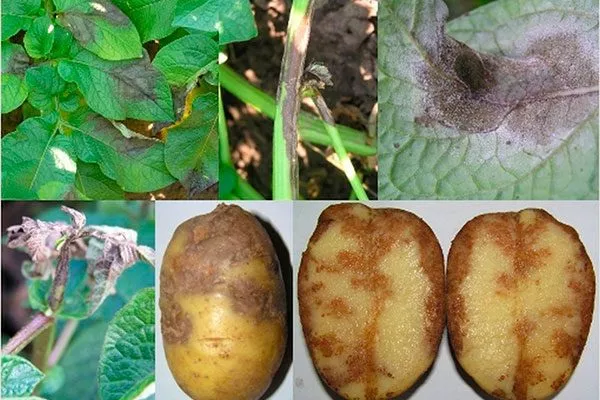
There are minimal disadvantages: if the trunk area is over-watered, late blight will occur.
Landing rules
For growing potatoes, select beds with fertile soil containing sufficient nutrients. Low-lying areas with stagnant water are unsuitable. Although the variety can adapt to various soil types, loamy and sandy loam soils are most suitable. The optimal soil pH for potatoes is moderately acidic.
- ✓ Soil pH should be between 5.5-6.5 for optimal nutrient absorption.
- ✓ The depth of the fertile layer is at least 30 cm to provide sufficient space for the development of tubers.
Site preparation should begin in advance:
- During autumn digging, add 4-7 kg of humus or compost per square meter to the soil. If the soil is heavy, increase the amount of organic matter to 10 kg.
- It is advisable to add mineral compositions based on potassium and phosphorus, following the manufacturer's instructions.
- In the spring, dig up the soil again and add ammonium sulfate or ammonium nitrate at a rate of 15-25 g per 1 sq. m, depending on the depletion of the soil.
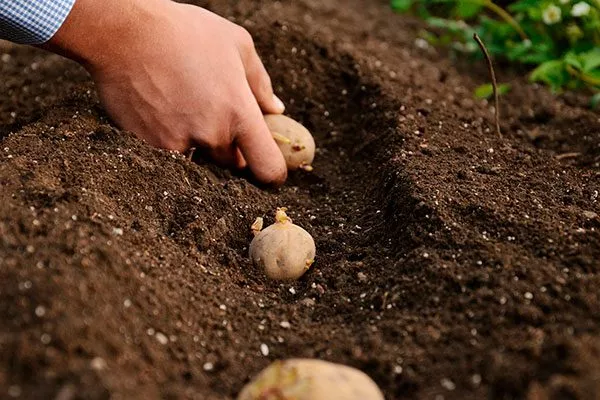
Potatoes are planted in late April or early May, when soil temperatures stabilize at 10–14 degrees Celsius. There are some guidelines to follow:
- First, the planting material is germinated and disinfected using fungicides (Fitosporin, Acrobat, Cuproxat or a solution of potassium permanganate).
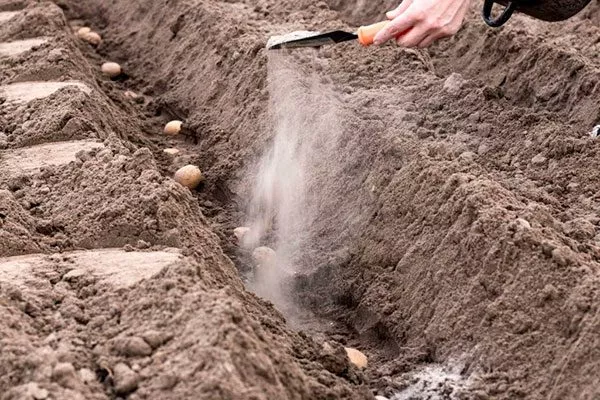
- Planting is carried out according to the following scheme: distance between plants is 30-35 cm, between rows – 60-70 cm, planting depth is 8-13 cm, depending on the size of the tuber.
- If the soil is poor, add a handful of any organic fertilizer to each hole to speed up the growth of young plants.
The rest of the landing procedures are standard.
Growing nuances and possible difficulties
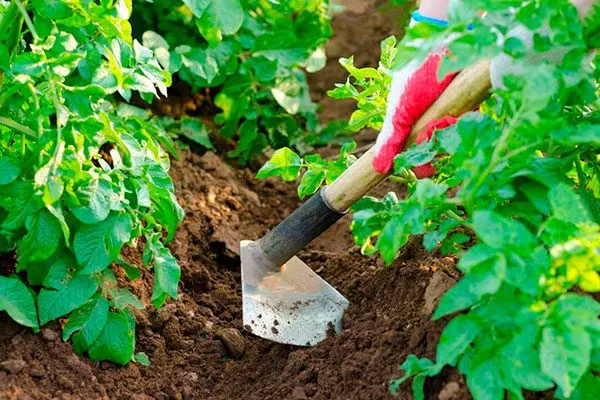
Growing potatoes involves regularly loosening the soil both between rows and around each plant. This procedure is especially useful after rain or watering. Be careful not to cover the young sprouts with soil.
Other important events:
- Hilling. This procedure is repeated at least twice. Sometimes the need arises for earthing up the plants a third time. This variety requires a special approach. Young plants are covered with soil up to the level of the first leaves, including the exposed tubers.

Unhilled root vegetables tend to turn green, while hilled ones begin to actively form creeping shoots, or stolons, that bear new potatoes. This leads to increased yield. The ideal time for hilling is damp weather or the day after rain. Key steps:- The first is accompanied by digging in the lower part of the bush and simultaneously loosening the soil when the plant reaches a height of 20 cm.
- The second time, hilling occurs during the budding period of the plant.
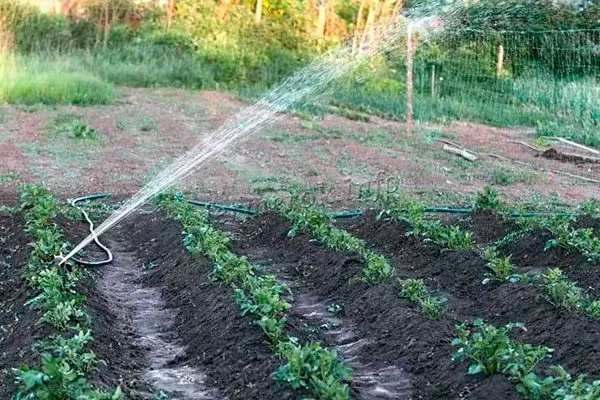
- Watering. In regions with high humidity, additional watering is not necessary. However, in moderate climates, the plant requires regular irrigation. The first irrigation is done 10 days after planting the tubers. Subsequently, depending on weather conditions, one to two irrigations throughout the growing season are sufficient. The recommended water consumption is 25-50 liters per square meter.
It's important to avoid getting water on the leaves to prevent sunburn. Drip irrigation is considered the best method. The last watering, if required, should be done one month before harvest. - Top dressing. After the initial hilling and the emergence of the first shoots, nitrophoska is added. During the budding period, phosphorus and potassium compounds are added, as well as crushed wood charcoal. Organic mixtures (cow manure or bird droppings) are also beneficial.
- Loosening and weeding. These two operations are essential for successful potato cultivation. Weeds infesting the field deplete the crop of nutrients. The first loosening should be done a week after planting to stimulate germination.
Diseases and parasites
Despite good resistance to diseases and pests, the following is sometimes noted:
- Late blight. The most common disease of Favorit. The fungus initially appears on the green foliage, then affects the potatoes. Symptoms include the formation of brownish spots on top and whitish underneath. The tops and roots then rot. Treatment involves the use of Arcerid, Oxychom, and Ridomil Gold.
- Alternaria. It manifests itself as dark brown or black spots on the leaf blades, which grow rapidly as the disease progresses. The chemical Arcerid is used to kill the infection.
- Fusarium wilt. It's more common in the south of the country, as drought and heat are necessary for the disease to develop. Symptoms include light-colored spots on the tops of the leaves, and brown spots with a pinkish tint underneath. Treatment is with fungicides.
- Colorado potato beetle. To destroy insects, manual collection and treatment of plants with Prestige, Actellic, Aktara or Spinosad is used.
- Wireworm. Decis, Karate and similar products are prescribed against beetles and their larvae.
Harvesting and storing tubers
It's recommended to dig up Favorit potatoes only when they reach technical maturity, not biological maturity. This ensures a longer shelf life for the harvest. Harvesting and storage considerations:
- After digging, the potatoes should be laid out in a shaded and ventilated place to dry;
- the drying time depends on the condition of the root vegetables - if they are dry (there was no rain before), then 3 hours is enough;
- unsuitable specimens are rejected before being stored;
- the optimal temperature for preservation is 3-4 degrees, humidity – from 70 to 80%;
- the best place is a glazed loggia, cellar, basement;
- Containers – mesh bags, wooden boxes with ventilation holes.
Reviews
The Favorite lives up to its name, with the exception of one drawback: weak immunity of the tops to late blight. However, to avoid this negative factor, it's enough to adhere to the proper cultivation practices and treat both the tubers and the bushes with fungicides in the spring. Otherwise, the variety has proven itself to be exceptionally good.