
The Jewel potato is characterized by very early maturity and rapid development of both above-ground and underground parts. This modern variety boasts high yields and excellent resistance to many diseases and pests. It has a unique feature: it quickly adapts to any climate and weather conditions.
Authors of the variety
The Juwel variety was developed by breeders at the German company Bavaria-Saat GbR, which unites several seed companies. In 2003, Bavaria-Saat Vertriebs GmbH was established, specializing in seed sales in Germany and neighboring countries. Thanks to the agricultural company's active work, this potato variety has become popular in the EU, Russia, Belarus, and Ukraine.
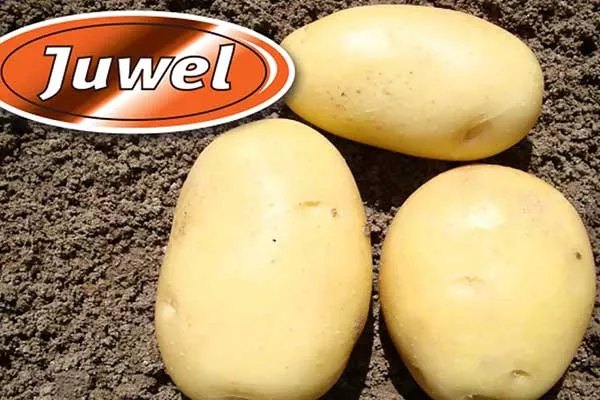
Characteristics of potatoes
The technical qualities of a variety are based on the data provided by the originator. Numerous opinions from domestic farmers and gardeners are always taken into account.
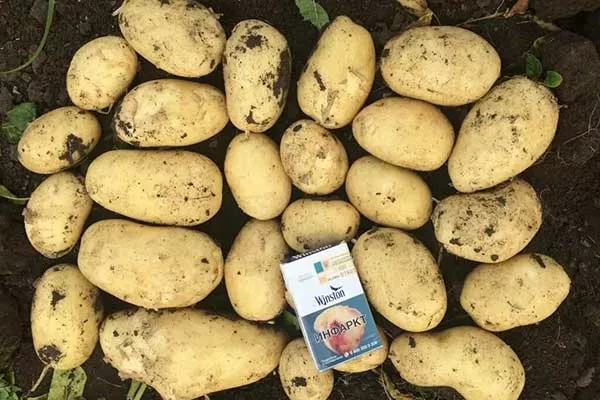
Description of the plant and tubers
The bush is considered short, but the shoots can be either upright or semi-upright, resulting in a slight spreading habit. The plant's foliage is dense, with medium-sized, dark green leaves. Other characteristics of the variety include:
- the leaf blade has slightly wavy edges;
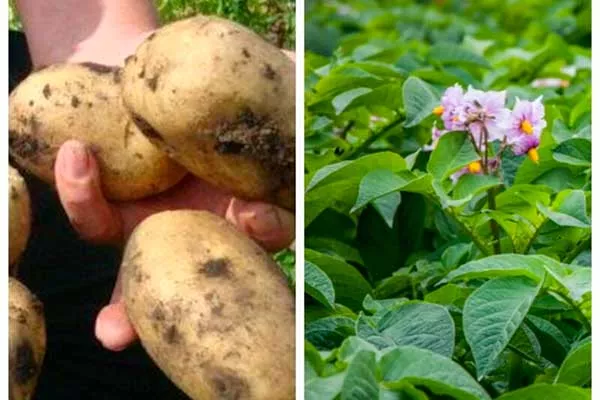
- the flowers are purple in color and large in size, but the inflorescences look neat (between the purple buds you can also find lilac-scarlet ones);

- the root system is branched;
- intermediate type of shrub;
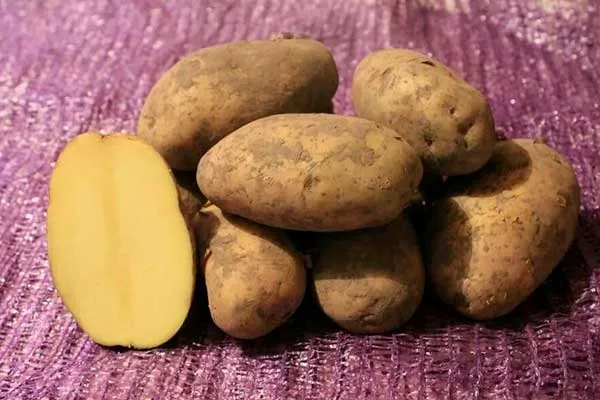
- the shape of the potatoes is oval and slightly elongated;
- the skin is creamy and the flesh is yellow;
- the surface of the potato has no bumps, it is completely smooth;
- tubers weigh from 80 to 150 g;
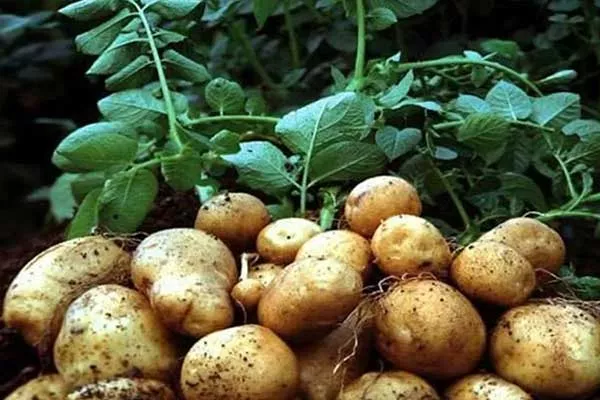
- 18 to 20 root crops are formed under one bush;
- the eyes are very small, so they are not noticeable from afar, but they are located mainly on the surface;
- starchiness is average, it varies from 10 to 15%;
- shelf life indicators reach up to 92-94%.
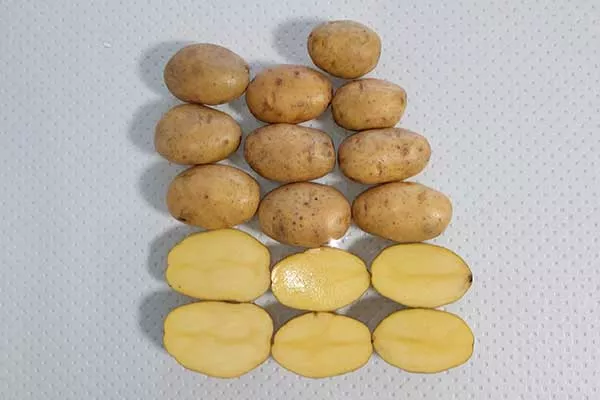
Purpose and taste of tubers
This potato variety has universal properties and is ideal for long-term storage and the preparation of various dishes, including soups, salads, fried, boiled and baked side dishes.
Although there is a lack of specialized taste studies, gardeners note a delicate texture with light aromatic undertones, while other sources indicate an average taste.
Ripening period
Jewel is considered an early-ripening variety. If planted in late April, a harvest can be expected by the end of June. However, it takes longer to develop large tubers. Initial digging can begin as early as the 50th day, and the tubers are dug up for storage after two months.
Productivity
Jewel's yield is high: up to 445,450 centners can be harvested from one hectare in the first harvest and up to 750 centners in the second (it can be planted twice per season), which makes it one of the leaders among early varieties.
Growing regions
Despite the lack of complete and official information on potato growing zones, gardeners' feedback indicates the possibility of obtaining high yields in various regions of Russia.
Soil and climate have virtually no impact on the success of this variety's cultivation, as it is drought- and temperature-tolerant and easily adapts to various climatic conditions, producing rich harvests of high-quality tubers.
- ✓ The optimal soil pH should be in the range of 5.0-6.0 to prevent scab development.
- ✓ The soil must be well drained to avoid water stagnation and rotting of the tubers.
Site and soil requirements
This vegetable variety produces a high yield in various soil types, but for its best development, it is preferable to use light and nutrient-rich areas.
It is recommended to begin preparing the soil in the pre-winter periods:
- carry out loosening;
- add compost;
- sow mustard.
In the spring, repeat the loosening procedure. Adding green manure improves the soil composition, which favorably impacts subsequent planting.
Specific requirements:
- This vegetable can withstand drought, but prefers moist conditions.
- It is necessary to avoid replanting root crops in the same place – the soil must regain its productivity by remaining dormant for at least three years.
- Optimal predecessors are zucchini, beans and cucumbers.
- After nightshade crops, you should avoid planting this vegetable, as this can lead to a decrease in yield.
Important nuances of growing and care
Planting is done in early spring, before the soil has fully warmed up. The tubers of this variety are resistant to weather changes and can easily withstand cold snaps.
- 20-30 days before planting, remove the seeds from storage to warm up.
- Sort the tubers, removing damaged and diseased ones.
- Treat the tubers with a solution of copper sulfate (5 g per 10 l of water) for disinfection.
20-30 days before planting, potatoes must be prepared for germination:
- the seed material is removed from the cellar;
- sort;
- treated with a disinfectant solution based on copper sulfate.
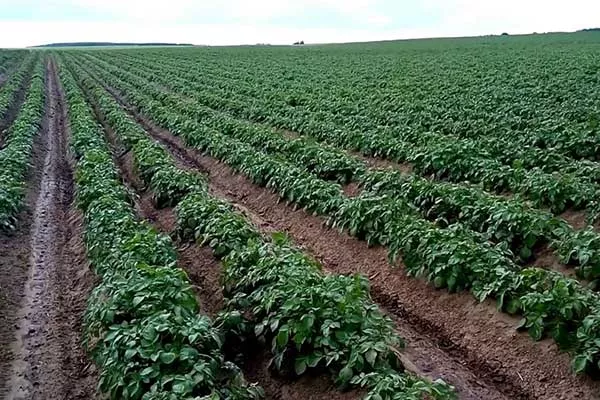
In the beds, dig holes 20-25 cm deep with intervals of 30-35 cm. The spaces between rows should be 55-65 cm. Add 170-200 g of charcoal to each hole. Small tubers are buried whole, while larger ones are cut in half and the cut ends are dusted with wood ash.
The method is called natural, since potatoes develop not from seeds, but through stolons (quickly dying lateral shoots with defective leaf blades that have elongated internodes and axillary buds).
Caring for potato plantings:
- Water approximately once a week. During prolonged hot weather, increase the frequency to two or three times a week. To control the moisture level in the trunk area, install a drip system, which makes this process much easier.
- After the soil has been moistened, be sure to loosen it to prevent crusting and provide air access to the roots.
- Cover the bushes with soil when they reach a height of 15-18 cm, and repeat this after flowering to stimulate root formation. Don't forget to weed them regularly.
- For plant nutrition, use organic and mineral fertilizers containing potassium, phosphorus, and magnesium. Potato grower Jewel recommends limiting nitrogen fertilizer use, as too much can slow root development, impair flavor, and stimulate only top growth.
Fertilizer dosages recommended by the originator:
- Potassium-phosphorus mixtures are applied at a rate of 200-300 kg and 100-120 kg per hectare, respectively.
- For magnesium the figure is 60-80 kg.
Prevention of diseases and pest infestations
Thanks to its rapid ripening, the vegetable has time to ripen and develop tubers before the widespread spread of late blight fungus spores and Colorado potato beetle larvae, which can damage the harvest in mid-summer.
To prevent diseases that affect young corms, treat them with potassium permanganate, boric acid, or Fitosporin before planting. Potato plants should be washed with a 1% Bordeaux mixture solution. You can also use Silk and Krezacin pesticides.
The only serious threat to future harvests is wireworm larvae. Therefore, it's important to carry out preventative spraying and follow these recommendations:
- organize proper crop rotation;
- reduce soil acidity;
- Attract pollinating insects such as click beetles and ground beetles, as well as birds such as starlings, crows, thrushes, turtle doves, rooks, wagtails and tits to the area to destroy pests;
- Carry out deratization, remove weeds.
Methods of control:
- sprinkle the surface of the beds with crushed chicken eggshells;
- make a solution of 450 ml of liquid nettle extract and 10 liters of water, fill the holes with it before planting and treat the beds 2-3 more times over 10 days;
- distribute 25-30 g of ammonium nitrate over each square meter;
- irrigate the bushes with a weak solution of water and potassium permanganate, carefully at the roots;
- Treat plants with preparations such as Decis, Actellik, Barguzin.
Harvesting and storage
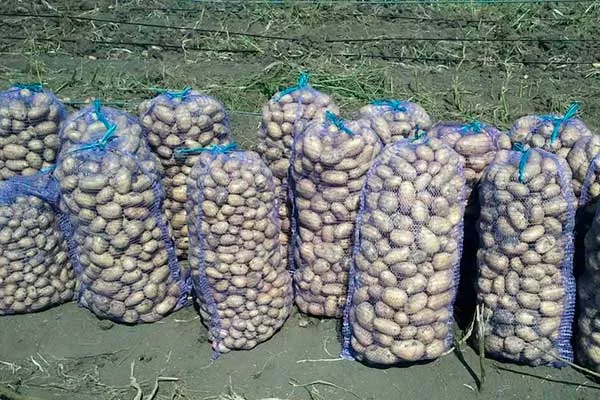
The potato harvesting process should be carried out in dry weather. After the potatoes have air-dried, they are placed in bags (must be breathable, preferably mesh) and stored in a room with low light and a temperature no higher than 12-15°C. After two weeks, the room temperature should be lowered to 2-4°C.
Advantages and disadvantages
Jewel is a highly sought-after variety, as domestic gardeners note its positive qualities, among which the following are particularly highlighted:
Reviews
Growing the Jewel variety is easy, even for novice gardeners. Potatoes can be planted in soil that hasn't yet warmed up completely, as the plant is resistant to light frosts. When watering, keep in mind that overwatering will negatively impact the potato's flavor.