
Azhur is the name of a mid-early potato variety. It is a table variety of vegetable crop, distinguished by its impeccable flavor and high starch content in its tubers. It has earned the love of Russian gardeners for its high yield, shelf life, and strong immunity.
The origin of the Azhur potato
This potato variety is a product of Russian breeding. It was developed by specialists from the A.G. Lorkh All-Russian Research Institute of Potato Farming with the assistance of the Sedek agricultural firm. The following scientists are credited with the development:
- Shanina E.P.;
- Seregina N.I.;
- Dubinin S.V.
Azhur was developed in 2017. This variety is designed for cultivation in the temperate climate of the Moscow region and the central part of the country. It is successfully grown throughout the country and beyond.
Plant characteristics
This potato variety is renowned for its marketable tubers and high yields. The plants themselves also deserve special attention. They stand out from other potato varieties with their robustness and attractive appearance.
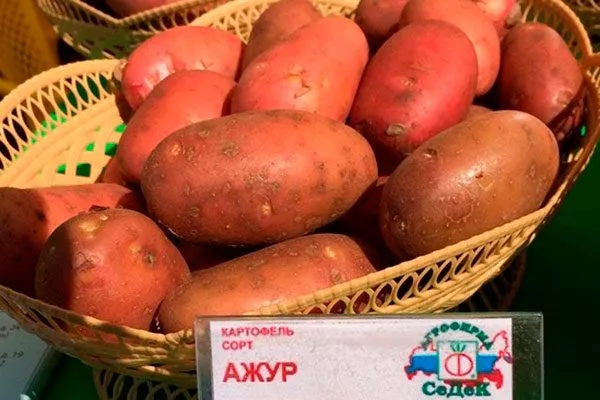
Ajour bushes have the following characteristics:
- tall (their “height” reaches 55 cm);
- spreading;
- tall and strong stems with red veins;
- large, dark green leaves growing unevenly on the bush, wrinkled, with a wavy edge;
- red-lilac flowers, large, located in the upper part of the bush.
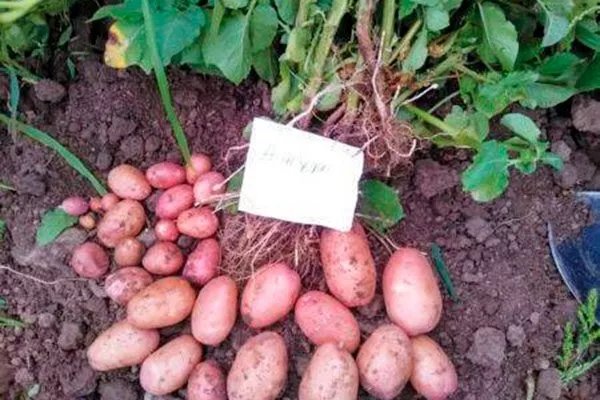
Characteristics of tubers
In appearance, Azhur potatoes are similar to European varieties. They have a marketable appearance and excellent taste.
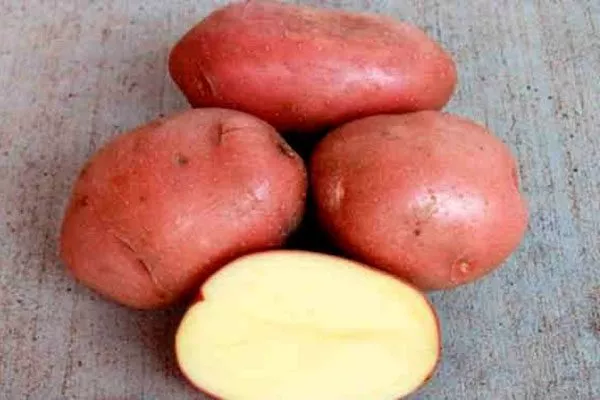
The tubers of this variety have the following characteristics:
- oblong (oval) shape;
- medium size (the tuber reaches 9 cm in length);
- weight - 90-120 g;
- dense, smooth, dark crimson skin;
- small eyes;
- yellow flesh (this color is due to the high content of carotene in the vegetable).
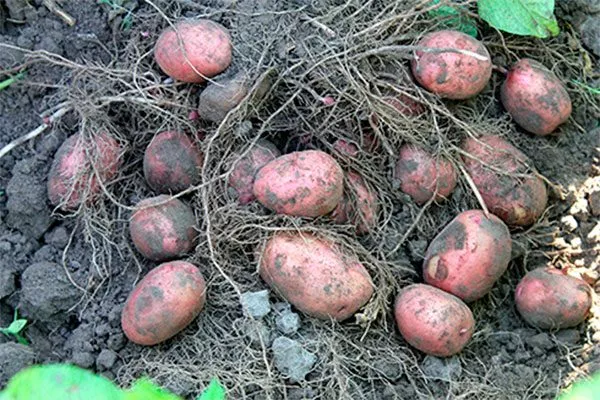
The tubers of this variety are starchy, with a starch content of 16%. These potatoes are suitable for boiling, frying, baking, and stuffing. They are easy to peel, wash, and cut. They don't overcook. They have a tender texture and are delicious. They retain their beautiful yellow color after cooking.
Productivity and disease resistance
The Azhur vegetable crop consistently produces a bountiful harvest. Gardeners harvest up to 410 kg per 100 square meters of planting. The variety's marketability is 78-98%. The shelf life of the tubers is 94%.
The bushes of this varietal variety are resistant to fungal and viral diseases and some crop pests:
- common and powdery scab - 8 points each;
- late blight of leaves and tubers - 6 points each.
Maturation
From the moment the sprouts emerge until the harvest is fully ripened, this variety takes 70-85 days. Gardeners begin digging up the tubers as early as 45 days into the growing season. Azhur yields its maximum at the end of the growing season.
Advantages and disadvantages
This vegetable crop has become popular among domestic gardeners due to its following advantages:
Azhur has virtually no drawbacks. The only drawback of this potato variety is that, if not properly cared for, the plants are susceptible to golden nematode infestation (the variety has low resistance to the pest).
Landing
To improve germination, reduce the ripening period of the crop, and protect potatoes from diseases, take the time to properly prepare the planting material:
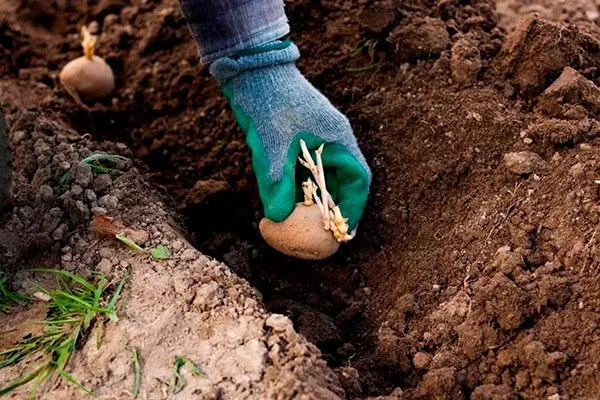
- Sprout the tubersLeave them in a bright room at a temperature of 14-16°C. Moisten them periodically by spraying with water. After 14 days, sprouts will appear. When they reach 1 cm in length, the potatoes are ready for planting.
- Treat with Fitosporin to protect against diseases.
Prepare the area in your garden for growing Azhur potatoes in advance:
- clear away weeds;
- dig up;
- fertilize with organic matter or purchased mineral compounds;
- If the soil is clayey, add sand or rotted wood sawdust to it (consumption: 0.5 kg per 1 sq. m).
- ✓ The optimal soil acidity level for Azhur potatoes is pH 5.0-6.0. Check and adjust if necessary.
- ✓ The soil digging depth should be at least 25-30 cm to ensure good aeration and water permeability.
Plant potatoes of this variety as follows:
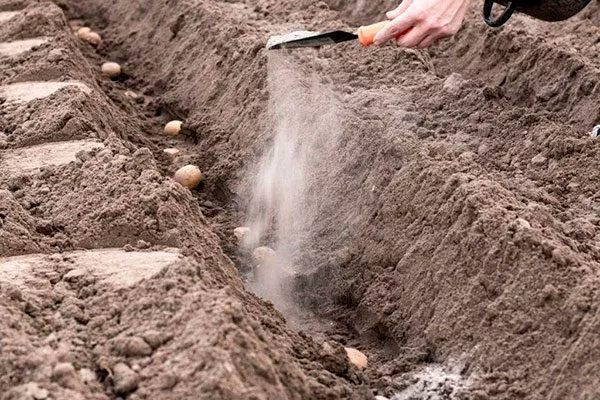
- Form furrows, keeping a distance of 60 cm between them. If possible, orient them from south to north.
- Plant the tubers at a depth of 10 cm, leaving a distance of 25 cm between them. When planting potatoes in furrows, be careful not to break off their sprouts.
- Cover the planting with soil. Water.
Care
The Azhur vegetable variety requires standard care. To obtain a bountiful harvest, it requires the following:
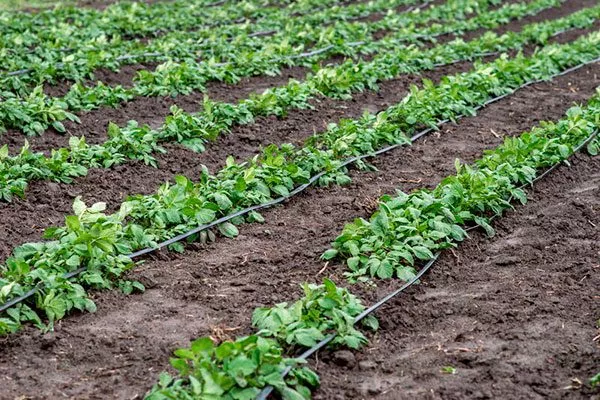
- Proper wateringBushes of this species tolerate drought well, but lack of moisture negatively affects their yield and the quality of the tubers. Pour at least 5 liters of settled, warm water under each plant. Water the plantings early in the morning or in the evening.

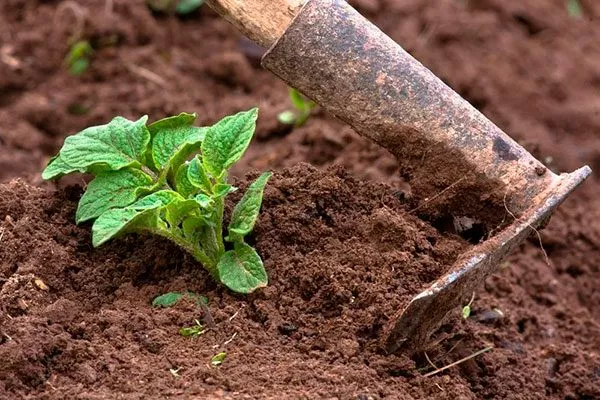
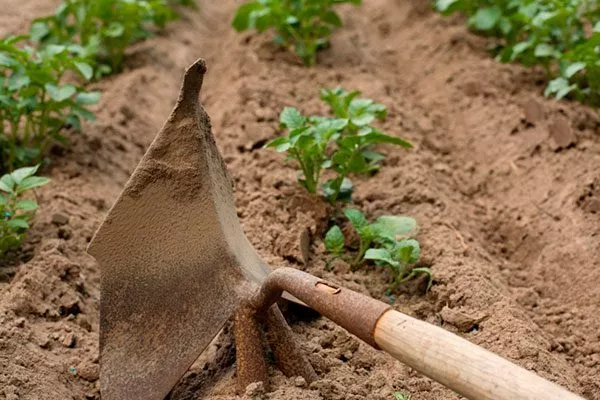
- HillingRepeat this process twice per season. Hill up the bushes the first time when they reach 10 cm in height. Hill up the second time 21 days later. Repeat this process again if necessary.
- WeedingRemove weeds from potato beds periodically to ensure proper development of this vegetable crop.
- Loosening the soilCombine this manipulation with watering to prevent a hard crust from forming on the soil surface. This prevents air from reaching the roots.
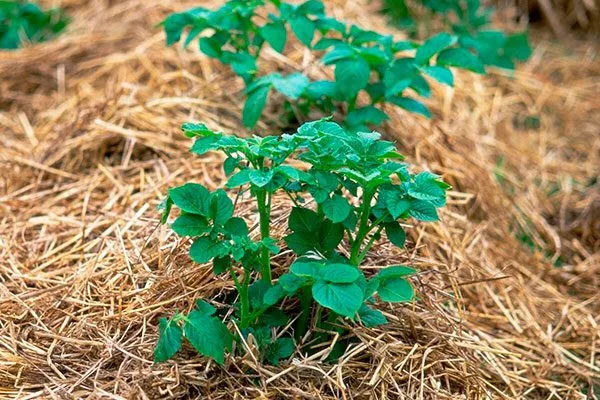
- MulchingCover the soil under potato bushes with dried grass, peat, sawdust, or straw to retain moisture and prevent weeds from appearing.
- FertilizerApply fertilizer at different stages of the growing season. After the seedlings emerge, use bird droppings diluted in water (1:10) and soaked for 2 days. Water the spaces between the rows with the resulting solution.
During the budding period, apply a solution of wood ash with added potassium sulfate (36 g per 10 liters of water). Spray the planting with it.
During the flowering period, apply superphosphate (30 g) dissolved in water (10 l) or mullein. Water each plant with the nutrient solution.

Diseases and pests
Ajour potato plants are resistant to many diseases and pests. If not properly cared for or exposed to adverse weather conditions, they are susceptible to the following pests:
- golden nematode;
- Colorado potato beetle.
This potato variety is also at risk of late blight, to which it exhibits moderate resistance (6 points). Prevention, particularly crop rotation, can help avoid this problem.
Late blight
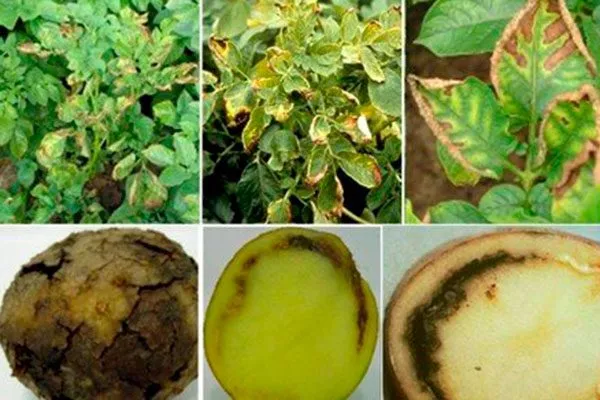
The Azhur variety is susceptible to this dangerous fungal infection if proper vegetable cultivation practices are not followed. Late blight attacks both the green parts of the plant and the tubers. The disease occurs in conditions of high air and soil humidity. Infection is possible at any stage of potato growth.
Symptoms of late blight are:
- On the foliage you can see rapidly spreading brown spots;
- it appears on the stems and then moves to the tubers;
- the leaves curl up and dry out;
- the tubers are rotting.
The disease is treatable only in its early stages. Use fungicides to control it:
- Thanos;
- Acrobat.
In case of severe damage to the bushes, they will need to be removed from the garden bed and burned as far away from the garden plot as possible.
Golden nematode
This is the name of a microscopic worm that lives on the root system of potatoes. It is a dangerous pest that attacks this vegetable crop. The parasite penetrates the stems and tubers, slowing the development and growth of the plant. If measures are not taken to save the crop, there is a risk of losing most of it.
To destroy the pest, do the following:
- treat the potato planting with Karbofos or Karbation;
- Plant marigolds or calendula in the area (next to the potatoes).
Colorado beetle
The most dangerous potato pest is the Colorado potato beetle. Its larvae feed on the green parts of the plant.
To combat harmful insects, follow these steps:
- collect the parasite manually and then destroy it outside the garden if the potato planting is small;
- Use special preparations (Aktara, Zhukoed, Tabu, Prestige, Colorado) if you grow vegetables on a large plot or on an industrial scale.
Harvesting and storage
Gardeners growing the Azhur potato variety begin harvesting 100-110 days after planting. This typically occurs in mid-July (or early August). Experienced gardeners rely on the condition of the tops. If they are dry, wilted, and lying on the ground, it's time to dig up the tubers.
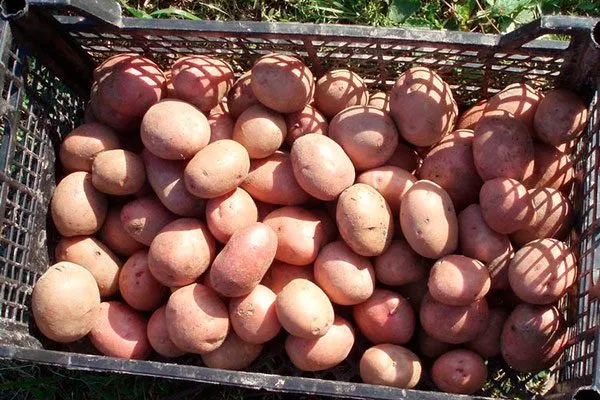
Before storing, dry the potatoes in the sun and sort them to remove any damaged ones. Store them in a cellar that meets the following requirements:
- temperature conditions in the vegetable storage facility: up to +4°C;
- humidity - 80-90%;
- lack of light (the room should be dark).
To better preserve the harvest, cover the potato boxes with a blanket. This will prevent light from reaching the tubers.
Reviews of the variety
Azhur is a promising domestic potato variety with many advantages. Gardeners value it for its consistently high yields, undemanding growing conditions, strong immunity, marketable tubers, and excellent taste.