
The Sadon potato boasts numerous advantages, making it a favorite among many gardeners in our country. The plant is drought-resistant, has a strong immune system, and is rarely attacked by pests. With proper and timely care, it will reward you with generous harvests and large, high-quality tubers.
Originators
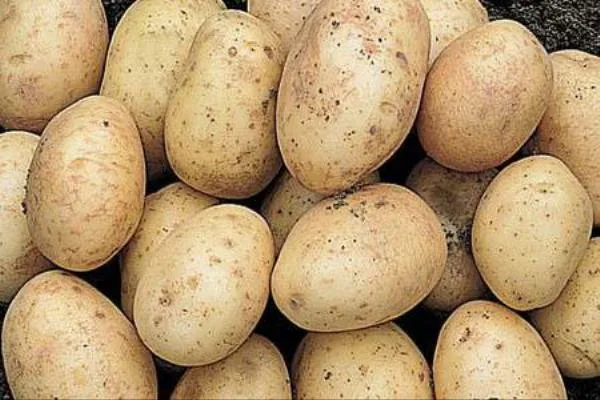
The variety was created and presented by a group of authors consisting of Marzoev Z. A., Kardanova I. S., Etdzaeva K. T., Zhevora S. V., Simakov E. A., Anisimov B. V., Mityushkin A. V., Zhuravlev A. A., Gaitova N. A. It was approved for use in agriculture in 2020.
Description of the bush's appearance
The Sadon potato variety is attractive for growing due to its positive characteristics. It is characterized by a low growth habit and semi-erect stems, covered with medium-sized leaves colored green.
Characteristics of fruits and their taste
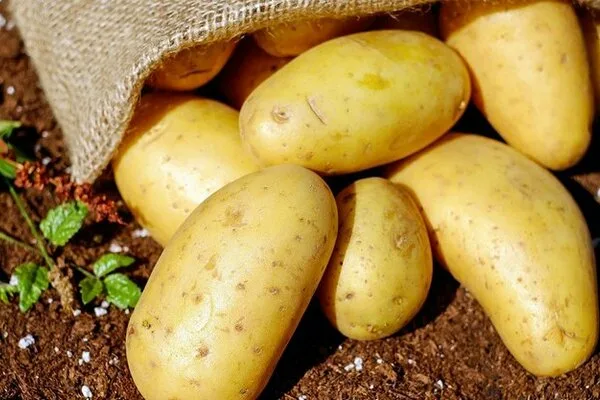
The tubers are oval in shape, weighing between 104 and 152 g. The flesh is light yellow and does not darken. The eyes are small and few in number, with medium depth. The starch content is 14.4%. They have a pleasant flavor and aroma.
Fruiting period and yield
Sadon is a table variety that ripens mid-early, 80-100 days after germination. Its yield is 6.5-7 kg per square meter. The crop can achieve high yields – up to 533 centners per hectare, which is quite impressive.
Sustainability
Resistant to potato wart and golden cyst nematode. Rarely affected by scab, rhizoctonia, and late blight. The crop is stored for a long time without loss of quality.
Subtleties of planting and cultivation techniques
Before choosing a planting method, ensure the site is suitable for growing crops. Preparation involves a number of factors:
- Chernozem soils are ideal for potatoes, as they provide the plant with all the necessary nutrients and are characterized by good water and air permeability. The variety can be grown in clay and sandy soils, which can be improved by adding sand, peat, or lime.
- Neutralize acidic soils by adding chalk, ash or lime.
- Potatoes are best planted in areas previously occupied by sunflowers, beets, corn, cucumbers, or pumpkins. Avoid planting them in the same area for 4-5 years.
- The area should be well lit, accessible for watering and not subject to stagnant water or other causes.
- Prepare the soil using one of two convenient methods: a blanket fertilizer application or a row fertilizer application. Both methods involve weeding, applying fertilizer, and mixing the soil.
- When preparing planting material, ensure the potato tubers are healthy and undamaged. This includes checking for rot and disease, and treating them before planting to ensure pest resistance.
- ✓ Check the soil pH level before planting, the optimal range for Sadon potatoes is 5.0-6.0.
- ✓ Ensure the area has good drainage to prevent standing water.
Plant potatoes in mid-April, provided that nighttime temperatures don't drop below 10°C. There are several planting schemes:
- Square-nested. Divide the bed into squares and dig a hole in the center of each. Space the holes 50 to 70 cm apart.
- Chess. Place the holes like a honeycomb, shifting each subsequent row by half the distance between the bushes.
- Two-line (according to Mittlider). Dig two rows close together. Dig holes about 30 cm apart in each row. Leave a gap of up to 1 m between the rows for access.
Proceed to planting the planting material:
- Drive stakes into the ground and stretch a rope between them to dig even rows.
- Dig holes 10-15 cm deep and plant the potato tubers with sprouts in them. You can add a portion of compost or bean seeds to improve the soil and increase yield.
- Fill the holes with soil from the next row and level the surface of the soil with a rake.
To successfully grow potatoes, it's important to properly care for the plant. Follow these simple care steps:
- Watering. Water the plant during the growing season. When the first shoots appear, usually a week after planting, the soil should be sufficiently moist for the tubers. Water the plant regularly during the budding stage and after flowering.
Water the plants once a week, or twice a week during dry periods. If there is sufficient rainfall, watering is not necessary. Stop watering two weeks before harvest. Avoid overwatering the soil; it should remain slightly moist and loose. - Loosening. Ten days after planting, perform the first tillage. This procedure helps remove excess moisture and prevent tuber rot. Remove weeds and their roots, as they can thicken the soil, impair its aeration, and promote disease development. Till the soil regularly.
- Hilling. During the season, carry out one or two hillings to ensure proper conditions for tuber formation, remove any soil crust, and aerate the soil. The first hilling is carried out when the tops reach a height of about 10 cm, and the second one a week later, when they reach 40 cm.
- Fertilizer. During the growing season, the plant should be fertilized twice: one month after planting and one month after flowering begins, at double the amount. Water the plants before fertilizing to avoid burning the roots. Use natural ingredients such as humus and wood ash.
- ✓ Water plants early in the morning or late in the evening to minimize water evaporation.
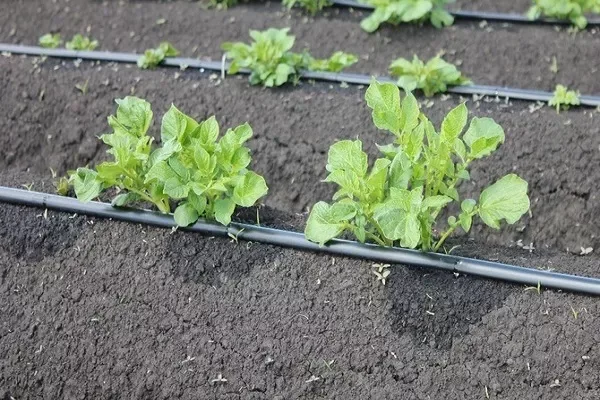
- ✓ Use drip irrigation to evenly moisten the soil and save water.
Gardeners' reviews
The Sadon potato is an excellent choice for both beginner and experienced growers. It boasts high yields and excellent tuber flavor. It is suitable for growing in a variety of climates and soils, but requires timely care for optimal performance.