
The Prime potato is a popular domestic variety, primarily intended for frying. It boasts attractive and tasty tubers, excellent yields, and good resistance to most potato diseases.
Description of the bush and root crops
Prime potato plants grow quite tall, with semi-erect stems. The leaves are medium-sized and dark green. The flowers are medium-sized. The tubers are round-oval, weighing 90-150 g. The skin is rich yellow and smooth. The flesh is yellowish, with small, shallow eyes.
Breeding history
The Prime variety is a representative of domestic table potato varieties. This potato was developed and approved for use relatively recently, in 2019. Originator: Doka-Gen Technologies LLC (Moscow Region, Rogachevo village). Prime potatoes are recommended for cultivation in the Central, Northwestern, and Volga-Vyatka regions.
Purpose and taste of tubers
This variety has excellent flavor. It can be used in a variety of dishes, but is best suited for frying. The tubers are easy to boil. Their marketability is 85-97%. This potato has minimal starch content—11-13.4%.
Ripening time and yield
The Prime variety is a mid-season variety and is ideal for farmers selling washed potatoes. Its tubers have a shelf life of 96%. The period from germination to harvest is 100-110 days. The average yield is 170-340 c/ha, with a maximum of 415 c/ha.
Pros and cons
The Prime variety has many advantages, making it popular with both home gardeners and large agricultural producers. Advantages:
Potatoes have one drawback: they are not suitable for mashed potatoes.
Landing features
The potato planting site is prepared in the fall by digging the soil deeply and evenly distributing organic matter. Mineral fertilizers are applied in the spring, followed by harrowing, and gardeners simply rake the area.
- ✓ Select tubers weighing at least 50 g, without signs of disease or damage.
- ✓ Give preference to tubers with the largest number of eyes.
The best tubers from vigorous and productive plants are selected for planting. The potatoes are sprouted before planting and then planted in holes 8-10 cm deep, dug at intervals of 30 cm.
Care
To obtain the highest quality and most abundant harvest, Prime potatoes require certain care.
How to care for Prime potatoes:
- In normal weather, watering is done approximately once a week. The recommended watering rate is 5-7 liters per plant. During prolonged droughts, watering frequency increases. During the growing season, potatoes are watered three times. The recommended watering rate per plant is 2-3 liters.
- Bird droppings are best for fertilizer; wood ash and complex mineral fertilizers can also be scattered over the beds. Fertilizers are applied when the seedlings reach 15 cm in height, with a second application 2-3 weeks after the first application.
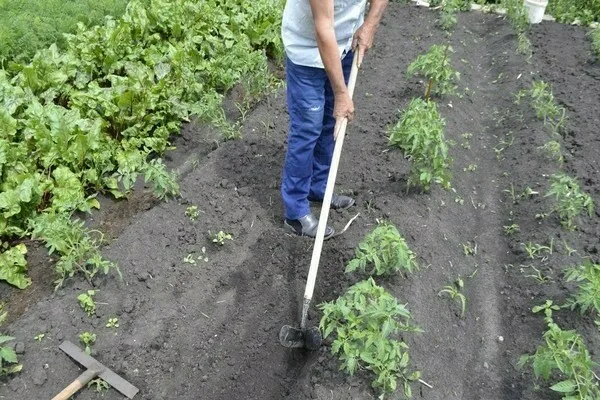
- Potato beds are periodically loosened and hilled, and weeded. After watering and moisture absorption, the beds are mulched.
Diseases and pests
Since this variety has very high immunity to common diseases and pests, it requires no preventative treatments; the main thing is to follow proper cultivation practices. It has very high resistance to diseases and pests, including potato wart, golden nematode, and rugose mosaic. However, its susceptibility to late blight and scab is moderate.
The variety is susceptible to Colorado potato beetle infestation. Pre-planting treatment of the tubers with special protective agents can help prevent this. Potatoes are also susceptible to wireworm infestation. These can be controlled with insecticides, such as Prestige or Aktara.
Cleaning and storage
Potatoes are dug in dry weather. The dug-up tubers are cleaned of soil, sorted, washed, dried, and stored in a dry, dark cellar. The optimal storage temperature is 4°C. These conditions ensure minimal sprouting.
Reviews
The Prime potato has proven itself to be a reliable and promising variety. It's suitable for both home and commercial cultivation, and its beautiful and tasty tubers are consistently popular in the consumer market.