
The Kumach potato is a wonderful variety with beautiful and tasty pink tubers. Gardeners appreciate this table variety for its high marketability, excellent flavor, and high yield. The Kumach variety was developed specifically for cultivation in the central regions of Russia, specifically on black soil.
Description of the bush
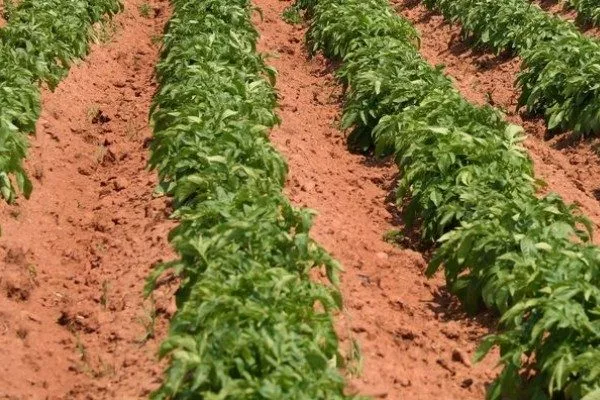
The bushes are strong, semi-erect, tall or very tall, reaching 60-70 cm in height. The leaves are large and dark green. The flowers are reddish or bluish-purple. Each bush produces approximately 13-17 large and medium-sized tubers.
Description of root vegetables
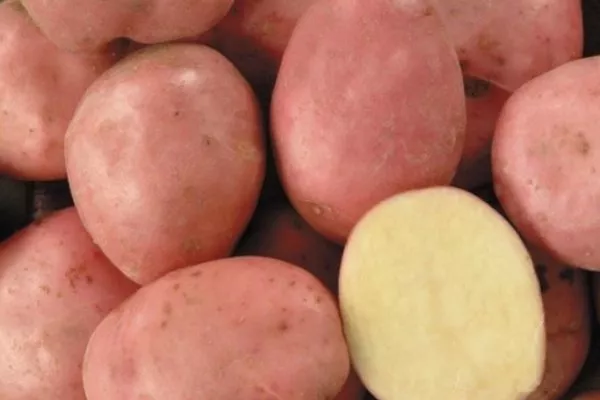
A single potato weighs 100-220 g. The tubers are oval-shaped, neat, uniform, with a smooth surface and pink skin with small eyes. The flesh is creamy and does not change color when cooked.
Breeding history
The Kumach variety was developed at the A.G. Lorkh Federal Potato Research Center in the early 21st century and was quickly added to the State Register. This variety was presented to the public at the "Golden Autumn 2014" agricultural exhibition as a variety suitable for frying and baking. Today, this domestic variety has spread far beyond Russia's borders.
Purpose and taste
Kumach potatoes are popular with domestic and international gardeners for their unique, slightly sweet flavor. This variety makes excellent fried potatoes and French fries—it was bred specifically for frying and baking. Pink potatoes also make excellent mashed potatoes.
Kumach potatoes overcook fairly quickly, so they're not recommended for soups. Pink potatoes are high in starch—12-18%. Because of this characteristic, this variety is widely used in the food industry for starch production.

Pros and cons
The Kumach variety is deservedly popular among large farmers, gardeners, and ordinary consumers. This potato has many advantages, making it preferred over many other varieties. However, the Kumach variety also has some disadvantages, which are worth knowing about in advance.
Pros:
Cons:
Varietal characteristics
The Kumach potato is a high-yielding variety. Its maximum yield is 700-720 centners per hectare, or a maximum of 1 ton per hectare. This variety produces stable yields that are little affected by drought or flowering intensity.
How are tubers prepared for planting?
Before planting, tubers are disinfected in a potassium permanganate solution (1 g of powder diluted in 10 liters of water). The seed potatoes are soaked in the pink solution for 30-40 minutes. Immediately before planting, the tubers are sprinkled with wood ash.
- ✓ Use only healthy tubers without signs of disease for planting.
- ✓ The optimal tuber size for planting is 50-60 g, which ensures better yield.
It's recommended to make several transverse cuts on each tuber—this encourages the growth of more eyes. Before planting, potatoes can be heated to 25°C to 27°C or sprouted at 12°C to 15°C. The first process takes a week, the second, a month.
Landing features
Proper planting is half the battle when growing Kumach potatoes. It's important to choose and prepare not only the planting site but also the planting material:
Features of planting the Kumach variety:
- The area should be well-lit; it is recommended to plant potatoes from the north side of the area to the south, then each bush will receive the necessary amount of sunlight.
- The best predecessors for red potatoes are grains, legumes, and flax. Areas previously occupied by dioecious plants (sorrel, spinach, asparagus, and others) are absolutely unsuitable.
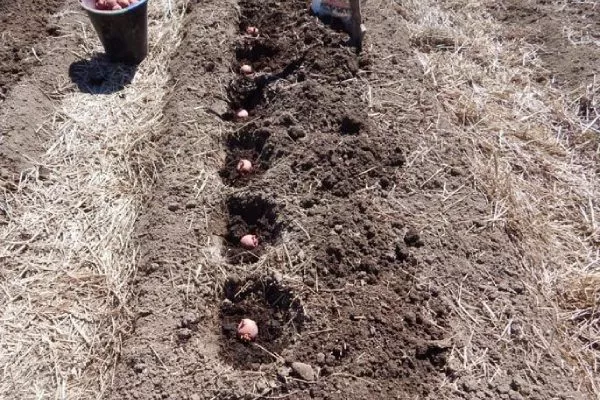
- The intervals between planting holes are 60 cm, and between rows – from 40 cm. The maximum depth of tubers is 15 cm. It is recommended to place a small amount of bird droppings on the bottom of the holes.
Care nuances
The quantity and quality of the Kumach potato harvest largely depends on care, its regularity, and compliance with agricultural technology requirements.
Features of caring for Kumach potatoes:
- The variety responds well to watering, with minimal risk of overwatering. During dry periods, the plants require increased watering. In a moderate climate, three waterings per season are sufficient. Water at the roots or in rows. The recommended watering rate for each potato plant is 3 liters.
- To achieve high yields, fertilizer is necessary. The amount depends on the soil quality and the gardener's personal preferences. A typical fertilizer schedule is as follows:
- The first feeding is done during the green growth phase. The best option is compost mixed with urea.
- The second feeding is aimed at stimulating flowering; potassium sulfate mixed with ash is suitable for application.
- The third feeding is carried out during the root formation stage; at this stage, it is recommended to add potassium superphosphate. Many gardeners believe that a single feeding of the Kumach variety is sufficient to ensure a good harvest. The recommended rate of organic fertilizer is 2 liters per potato plant. Avoid using organic fertilizer during the flowering stage, as it increases weed growth and can cause tuber diseases.
Fertilizing plan for maximum yield- The first feeding should be carried out 2 weeks after germination, using a solution of mullein (1:10).
- The second feeding is at the beginning of budding, using complex mineral fertilizer.
- The third feeding is during the period of active tuber formation, using phosphorus-potassium fertilizers.
- Potatoes take a long time to germinate, so within a week, even before the potatoes sprout, weeds appear. The soil is loosened to ensure oxygen reaches the roots, while weeds are removed. Loosening is done in warm, dry weather. This agricultural practice promotes the formation of large potatoes.
- To increase yield, hill up potato plants twice. The first time, rake the soil up to the stems when they reach 14-15 cm in height, and the second time, just before flowering. Hill up the soil carefully to avoid damaging the young stems.
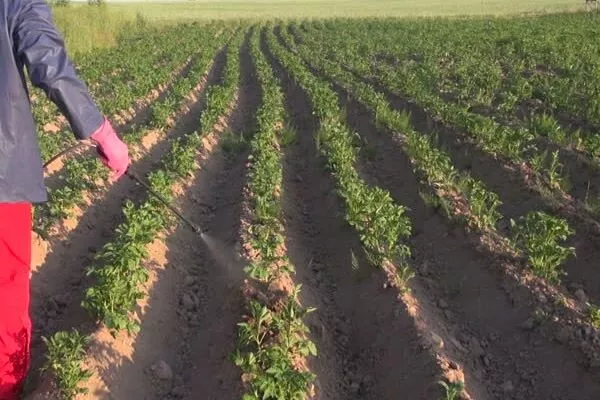
- To prevent nematode infestation, potatoes are sprayed with Tiazon. The presence of the pest can be detected by leaf curling and spotting, as well as stem curvature and delayed flowering. Tiazon is toxic, so the tubers should be treated well before planting, 3-4 weeks beforehand. Cow or bird droppings can also be used to control nematodes.
How to harvest and where to store it?
New potatoes can be dug up as soon as the plants begin to bloom. For storage, digging is done later—the exact timing depends on specific climate conditions.
The dug-up tubers are sorted, discarding any damaged specimens. Potatoes prepared for storage are treated with copper sulfate (2 g diluted in 10 liters). Potatoes should be stored in dark, dry places at temperatures between 2° and 4°C.
Reviews
The Kumach potato is a truly interesting variety, suitable for both gardeners and agricultural producers. This variety is not only tasty but also beautiful, and the marketability of its tubers encourages its commercial cultivation.