
The Izyuminka potato variety is considered a relatively recent creation of domestic breeding (developed at the Lorkh All-Russian Research Institute of Vegetable Crops). The variety is currently undergoing trials, so it is not yet included in the national registry. Despite this, it has already established a positive reputation thanks to its excellent characteristics.
Description of the Izuminka potato variety
One of the key reasons for this variety's popularity is its excellent commercial quality. This percentage ranges from 85 to 93%, making it particularly important for large agricultural enterprises. This table potato variety stands out not only for its taste but also for its high yield.
What do the plants and tubers look like?
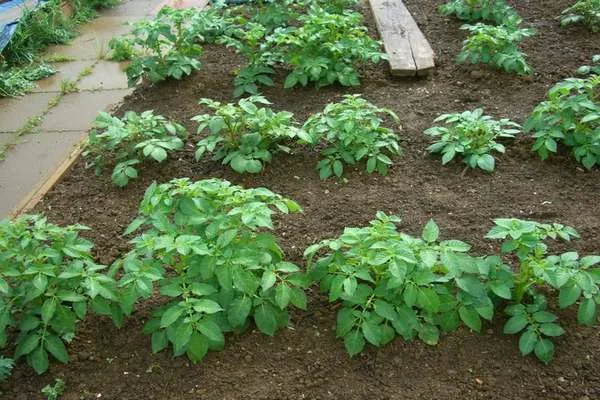
Potato bushes are characterized by upright shoots and a compact crown, but they reach a maximum height of 70 cm. The average height is 50-55 cm. Other varietal characteristics:
- leaves - medium in size, with a glossy, hairless plate, bright green in color;
- peduncles – consist of large purple flowers with a reddish tint;
- beginning of flowering – occurs one month after the formation of primary shoots;
- the number of potatoes under one bush is 10-15 pieces, and sometimes more, depending on growing conditions;
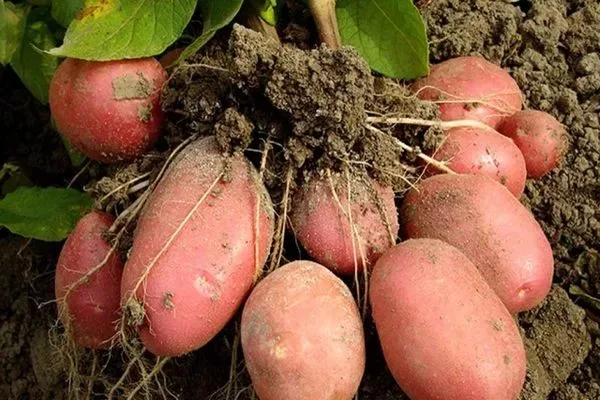
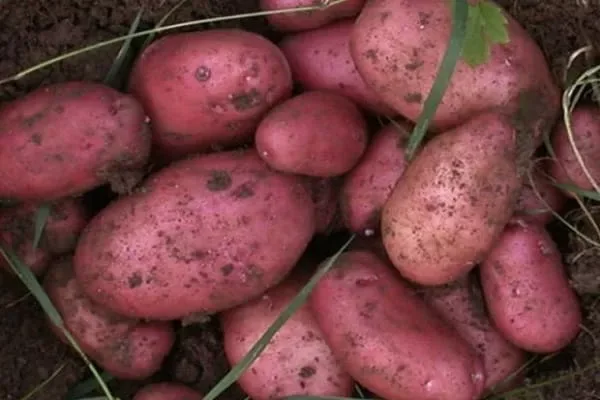
- tubers – oval-oblong in shape, large in size (100-120 g), with reddish skin;
- surface – smooth when technical maturity is reached and rough after biological maturity;
- eyes – located superficially;
- pulp – yellow.
Taste characteristics and purpose
The potato's flavor is determined by its starchy properties. This variety has a starch content of 15-19% maximum, indicating a high level of starch. This variety is ideal for frying, boiling, and mashing, and is an excellent ingredient for soups, casseroles, and side dishes, while the flesh does not darken during cooking. The potatoes do not fall apart and are rated 4.5 out of 5 for flavor.
Potato yield and ripening time
It belongs to the group of mid-season varieties, as the time from germination to full maturity takes approximately 110 days. However, after 80-90 days, the tubers can be dug up for consumption while still young.
The yield of this variety is directly related to the quality of the seeds and adherence to agricultural practices. Based on feedback from vegetable growers during variety trials, each plant can yield approximately 15 potatoes of varying sizes, with a minimum yield of approximately 50 centners per hectare.
Pros and cons of the variety
How to plant potatoes?
To increase potato yields, it's important to understand and apply the specifics of potato cultivation. Potatoes reach maturity in about three months, so choose a location with adequate sunlight. The soil should be rich in vermicompost, but not waterlogged, as this can lead to fungal growth.
- ✓ Soil pH should be between 5.5-6.5 for optimal potato growth.
- ✓ The organic matter content in the soil should be at least 3% to ensure sufficient nutrition for plants.
It's recommended to plant tubers only after the soil temperature reaches 10-13 degrees Celsius. Before planting, the tubers are sprouted and treated with various preparations:
- To accelerate sprout development, use products like Poteytin. To spray 25 kg, 500 ml of water and half an ampoule are sufficient.
- Products that include microelements critical for normal plant growth. For example, Mikom, used for irrigating root crops, contains boron, zinc, copper, manganese, and molybdenum.
- To protect potatoes from pests and diseases that may be present in the soil, insectofungicides such as Prestige and Maxim are used.
The planting depth of potatoes also depends on the type of soil:
- on light soils the depth is up to 10-12 cm;
- on loamy soils – up to 8-10 cm;
- In clay soils it is recommended not to go deeper than 5 cm.
Caring for the Izuminka variety
Caring for this variety doesn't require much effort, but without following some basic rules, you won't be able to achieve a significant harvest:
- It's best to water plants in the evening. Water should be added only when the soil begins to dry out to prevent rot. Each plant requires approximately 205-305 liters of water.
- To prevent the formation of a dry crust and provide the roots with sufficient oxygen, it is necessary to loosen the soil after the water has been completely absorbed.
- It is recommended to remove weeds so that they do not interfere with normal potato growth.
- Fertilizing should be done several times throughout the growing season. In early spring, it's advisable to apply a urea solution, applying about 500 ml under each bush. During flowering, a solution of mullein or fermented bird droppings can be used.
Mineral fertilizers will also help; they should be applied according to the instructions, but no more than three times per season.

Diseases and pests
The variety's distinctive feature is its resistance to various diseases and harmful insects. However, even resilient plants are sometimes susceptible to these (due to inclement weather, poor agricultural practices, etc.).
Disease prevention begins with treating the corms before planting. To protect potatoes from pests, chemical insecticides are used. Strict crop rotation and autumn plowing are recommended.
Harvesting and storage
It's best to dig up the root vegetables in sunny, dry weather. Each plant is carefully removed using a pitchfork or shovel. Before long-term storage, the potatoes are placed out of the sun to air. They are then selected and sorted.
Optimal storage conditions include a basement with a temperature of 2-4°C, in a dark and dry place. To extend shelf life, treat the roots with a copper sulfate solution. 4 g of dry matter is required for every 20 liters of water. The solution is sprayed on the roots.
Reviews of the Izuminka potato
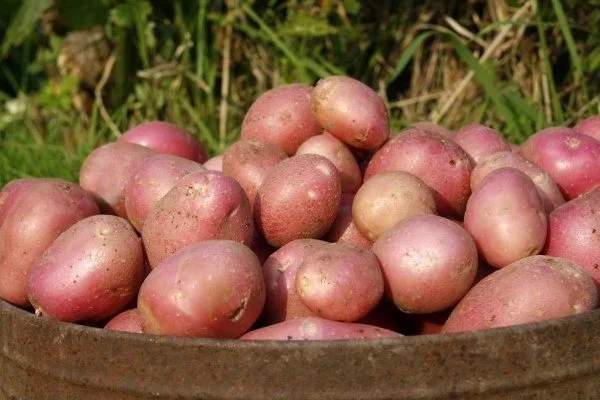
The Izyuminka potato boasts excellent drought tolerance, making it easy to grow in even the hottest regions. This starchy variety boasts uniform, attractive tubers that are versatile in use. The harvested crop has a long shelf life and is easily transported over long distances.