
Ivan-da-Marya is the name of a late potato variety. It was very popular among Russian gardeners in the 1990s due to its unusual tuber shape and relatively high yield. Interest in it remains strong among gardeners to this day.
History of origin
This variety of vegetable was bred by Soviet amateur breeders between 1990 and 1995. It is believed that the source material for its production was the Picasso variety (Netherlands), popular at that time.
This potato was cultivated in many parts of the USSR, particularly in garden plots in the western regions of Russia and southeastern Ukraine. Today, however, it is considered obsolete.
Due to the unusual variegated coloring of its tubers, this variety has acquired many other names. Popular names include:
- Little Red Riding Hood;
- Matryoshka;
- Ryabukha;
- Drunkard.
Description and characteristics
Ivan-da-Marya bushes are characterized by intensive tuber formation. This variety is distinguished by its high marketability (90%) and excellent shelf life. It also possesses other characteristics:
- the possibility of its cultivation in different climates on many types of soil;
- average frost resistance (when the temperature drops to -1°C, this potato becomes wilted, flabby, and its taste quality deteriorates);
- drought intolerance (plants tolerate heat well, but in dry summers they require regular watering to maintain productivity);
- moderate resistance to diseases such as late blight, leaf curl and increased susceptibility to scab.
Distinctive features and appearance of tubers
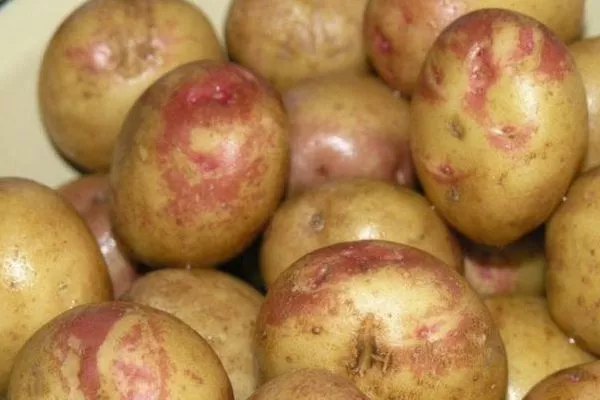
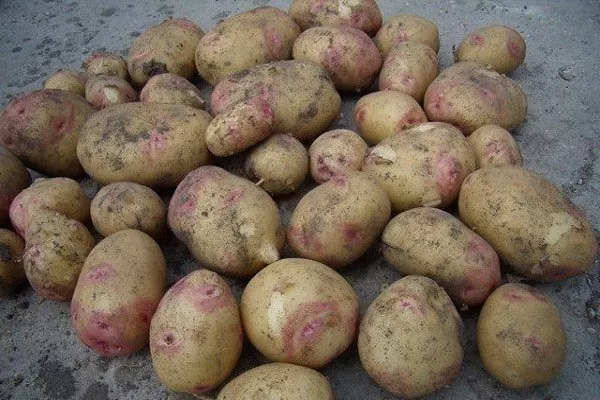
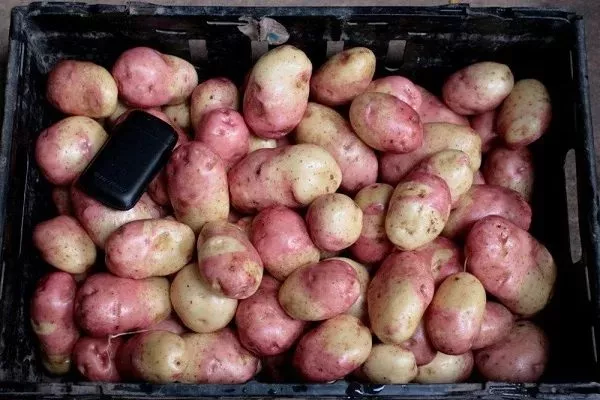
The tubers of this variety deserve special attention. Their unusual variegated coloring is the signature feature of Ivan da Marya. The skin of this potato is yellow with red spots. Its top is adorned with a "cap" of the same color as the spots.
The tubers of this species also have other distinctive characteristics:
- medium size (small specimens are almost never found in the nest);
- their weight varies from 60 g to 150 g;
- round oval shape;
- the presence of small red eyes on the surface of the peel, surrounded by halos of the same color;
- Light-colored flesh with a creamy tint, distinguished by its high content of vitamin C.
Description and characteristics of the plant
Ivan-da-Mar'i bushes have a well-developed root system. Each produces 12 to 25 tubers. These plants also possess other characteristics:
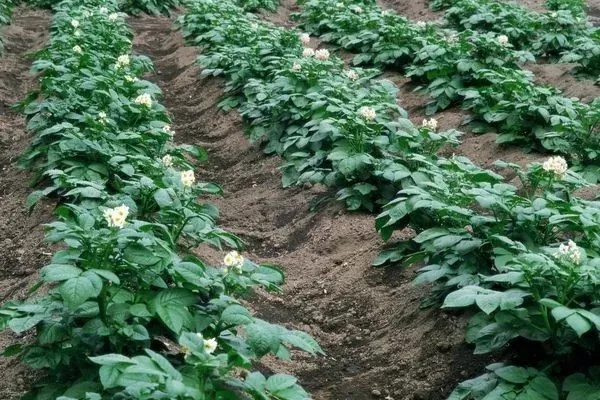
- upright structure;
- tall;
- compactness (despite the fact that these bushes are tall, they are not spreading);
- strong branches that, under conditions of abundant watering, begin to bend towards the ground;
- dense foliage;
- large leaves, dark green in color.
The blooms appear sparse. These bushes produce very few buds. They are distinguished by their small size and color, which ranges from cream to pale lilac. The flowers are not clustered and tend to fall off.
Regions for cultivation
This vegetable variety thrives best when grown in the following regions of the country:
- Central Black Earth;
- Central.
Taste characteristics and purpose
The Ivan da Marya potato variety has a satisfactory flavor. However, it cannot be called rich or full-bodied. This potato has a low starch content (7.9% to 13.5%). It does not become overcooked or fall apart during cooking.

Ripening and yield
This vegetable variety is considered a late-ripening crop. Its harvest matures within 120-150 days. This period largely depends on weather conditions.
The yield of Ivan da Marya varies within the following limits:
- from 190 kg per 1 sq. m of planting - Central Black Earth Region;
- up to 320 kg per 1 sq. m of planting - Central.
Comparative characteristics of the Ivan-da-Marya and Ivan-da-Shura varieties
Nurseries sell seed potatoes with a similar name—Ivan-da-Shura. This is a completely different variety. Table 1 lists the main characteristics of both varieties.
Table 1
| Name of the variety | Ripening period | Yield, kg per 1 sq. m | Tuber weight, g/its color | Flavor/starch, % |
| Ivan da Marya | late | up to 320 | 60-150/yellow with red spots | average/up to 13.9 |
| Ivan da Shura | mid-early | up to 750 | 100-130/white with purple spots and streaks | excellent/up to 17 |
Advantages and disadvantages
According to domestic gardeners, the Ivan-da-Marya potato has many advantages:
This variety is not without the following disadvantages:
Landing
This variety shows the best yield indicators when grown in areas with soil that meets the following requirements:
- light loamy or sandy loam;
- loose;
- fertile;
- with neutral acidity or slightly acidified.
Buy medium-sized Ivan-da-Mar'i seeds. Don't be lazy and germinate them before planting. This is essential for this late-ripening variety. By doing so, you'll shorten the growing season and get an earlier harvest.
Sprout potatoes like this:
- Place the tubers selected for planting in 1-2 layers on the floor in a bright and warm room (temperature - not less than +20°C);
- Moisturize them periodically. Do this for 10 days.
- Reduce the room temperature to 15°C and keep the seeds there for another 20 days. Turn the tubers periodically.
Begin planting this vegetable when the soil warms to 10°C, to the depth of a spade. Follow this procedure:
- distance between rows - 70 cm;
- the distance between bushes is 30-35 cm;
- seeding depth - 10 cm.
Try to arrange the rows from north to south to ensure maximum daylight. When planting, add fertilizer to the holes. Partially fill them with the following nutrients:
- compost or humus (consumption - 1 kg per 1 hole);
- ash (6 g);
- mineral fertilizer (5-6 g).
Care
To ensure a bountiful harvest of high-quality tubers, remember to properly and timely care for your potato plantings. This includes the following:
- WateringWater the beds during dry weather. Remember that this variety is drought-intolerant and requires adequate irrigation during tuber formation. If the summer is not dry, water the plantings once every 10 days. Use 2-3 liters of water per plant.
- Weeding and looseningCombine these procedures. Perform them after rain and watering.
- HillingThis procedure helps retain moisture and improve aeration in the soil, prevents the tubers from turning green, and increases the yield. Perform it twice: once the tops reach 14 cm in height and 14-21 days after the initial hilling.
Carry out the manipulation in the morning or evening, after irrigation or rain, carefully raking the soil from between the rows and forming a mound of it at the base of the bush. - Introduction of nutrient compoundsApply three root dressings. Fertilize the potatoes for the first time 30 days after planting with the following preparations dissolved in water (10 l): potassium sulfate (10 g), superphosphate (20 g), and urea (10 g).
Fertilize the bed a second time when it's flowering. Add wood ash (40 g per bush) and mineral fertilizer.
During tuber formation, apply superphosphate and potassium sulfide. Prepare a nutrient solution based on these substances, following the instructions. Apply 0.5 liters per plant.

Pest and disease control
Potato plantings of this variety are susceptible to diseases due to insufficient care and unfavorable weather conditions:
- Viral infectionsThey negatively impact crop yields, reducing them by 10-80%. Signs of the disease include spots or stripes on the tops and their deformation. Infected plants cannot be saved. Perform a biological cleansing of the bed: dig up and burn diseased plants, and disinfect the soil.
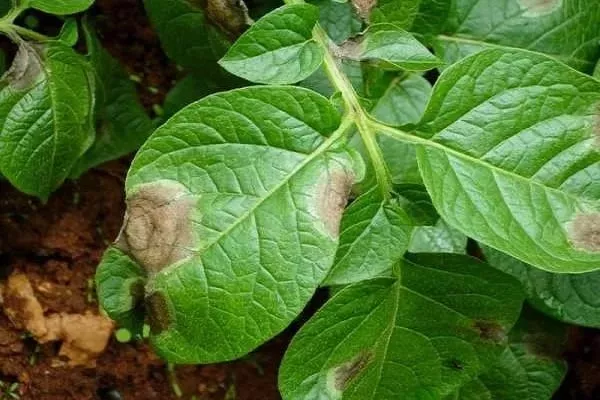
- Fungal diseasesPotatoes of this variety are most often affected by late blight, which affects all parts of the plant. It manifests itself as diffuse, wet spots on the foliage, a white coating on the underside, and brown spots on the tubers.
Treating the plantings with a copper-containing preparation or Fitosporin-M will help solve this problem. Start treating the plants starting from the budding stage. Stop spraying 10 days before harvest. Perform at least 5 treatments.
Phoma, scab, and ring rot are other fungal infections that Ivan-da-Mar'i bushes are susceptible to. To prevent these diseases, practice crop rotation, avoid using fresh manure as fertilizer, weed out weeds, and hill up the bushes regularly.
This variety exhibits good resistance to potato cancer, which is also caused by a fungus.
The following pests also affect potato beds:
- Colorado beetleThis insect eats leaves and can ruin your harvest. Control it by hand picking, using folk remedies, and chemical insecticides like Colorado.
- WirewormThis is the name for click beetle larvae. To get rid of them, use Prestige. Also, loosen and lime the soil.
Harvesting and storage rules
Fourteen days before digging up the potatoes, completely mow down the tops. This significantly reduces the risk of late blight. During this time, the potato skin will thicken and be less susceptible to damage when digging. This also helps improve the shelf life of the potato.
Begin harvesting the Ivan da Marya potato crop on a dry, sunny day. Dig the potatoes by hand or use a machine.
Prepare the harvested tubers for long-term storage:
- leave them to dry in the fresh air for 2-4 hours;
- send them to lie in piles in the barn for 14 days;
- Sort out the tubers, discarding rotten and damaged ones;
- Send the potatoes to the cellar.
The shelf life of this variety's harvest is 90%. It will keep until spring if provided with favorable storage conditions:
- the temperature in the cellar is +3-5°C;
- humidity - 80%.
Reviews from gardeners
Ivan-da-Marya is a late-ripening, variegated potato variety that remains popular among Russian gardeners. It boasts attractive tubers and excellent shelf life.