
Herbicides are specialized products that protect crops from weeds and various diseases. These modern weed control methods save time and effort that would otherwise be spent on mechanical weed control. There are many types of herbicides that will ensure a healthy harvest.
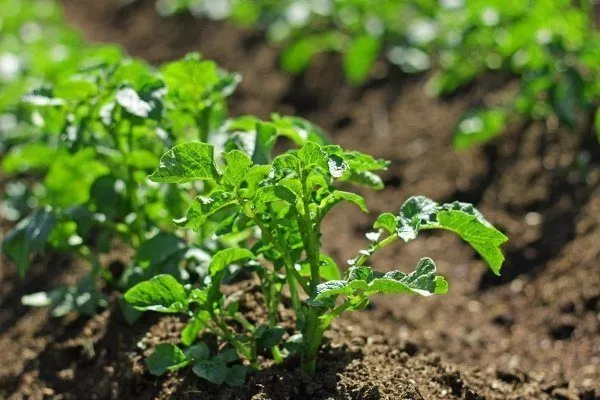
Mechanism of action of herbicides
Herbicides are chemicals that kill weeds that interfere with the normal growth of nightshade crops. The word herbicide derives from two Latin words meaning "to kill" and "herb."
Using such products is advisable because some weeds carry diseases that attack potatoes and can destroy the entire planting. The advantage of using chemicals is that they allow weed control to be achieved very quickly and without much effort.
The mode of action of herbicides depends on the type of product. For example, some products destroy absolutely all plants, while others only target unwanted weeds and grasses in a specific area.
By using herbicides, the following effects are achieved:
- suppression of growth and reproduction of perennial weeds in the post-harvest period;
- suppression of early weeds during the period of preparation for planting potatoes;
- acceleration of tuber ripening.
Modern chemical preparations combat weeds such as:
- ambrosia;
- field bindweed;
- pig;
- garden sow thistle;
- creeping couch grass;
- shepherd's purse;
- field thistle.
Mechanical removal of weeds does not produce the same effect as using chemicals.
| Type of weed | Efficiency of mechanical cleaning | Herbicide effectiveness |
|---|---|---|
| Annuals | 70-80% | 95-100% |
| Perennials | 30-40% | 85-95% |
| Rhizomes | 10-15% | 75-90% |
| Parasitic | 5-10% | 60-80% |
Most modern herbicides are harmless to humans, mammals, and insects. They lack renal activity and work at any temperature.
Such products are often used in fields where large quantities of potatoes are planted. In private gardens, they are used only when manual treatment is insufficient to control weeds. In smaller areas, such products are also used to treat established nettle and hemp growth, as well as weeds with strong roots and aggressive growth, such as creeping wheatgrass.
Types of herbicides
There are several types of herbicides that destroy harmful vegetation.
By appointment
According to this criterion, the following types of chemical preparations for processing potatoes are distinguished:
- Non-stop action. These chemicals are aggressive towards all weeds and pose a risk to crops as well. Therefore, they should be used with extreme caution, only after harvesting or in the spring before planting.
- Selective action. These pesticides kill only certain types of unwanted plants. They do not harm potatoes, so they can be used even after the potatoes have emerged.
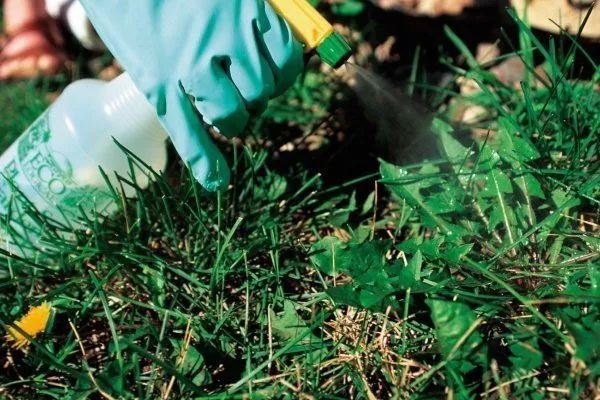
By mechanism of action
According to this criterion, the following types of herbicides are distinguished:
- Contact herbicides. The effect of these products extends to the area of the plant where they are sprayed. Contact herbicides kill the above-ground portions of weeds but do not reach the roots. This is because their structure prevents the product from moving through the plant's vascular system. Although the weed roots do not die, they die due to a lack of photosynthesis products. These types of herbicides are used to control annual and biennial weeds.
- Systemic pesticides. These pesticides travel throughout the plant. The particles penetrate the plant's vascular system, inhibiting growth and disrupting cell division. This causes weeds to wither and die. Systemic pesticides for potatoes are effective against perennial plants, even those with extensive root systems.
By method of application
Depending on this criterion, herbicides are classified as:
- Pre-emergent, or soil-applied, herbicides are applied directly to the soil. In most cases, this is done a few days before planting potatoes at a depth of 5-10 cm. Soil-applied herbicides prevent weed seeds from germinating. These products provide long-term protection for potatoes from weeds throughout the season.
- Post-emergence, or foliar, pesticides are sprayed on the parts of weeds that are above ground.
There are many varieties of all the listed types of herbicides available in specialized stores.
Popular herbicides for potatoes
Roundup
This weed killer is characterized by a non-specific action. It destroys both the above-ground and underground parts of harmful plants. The active ingredient in Roundup is glyphosate.
After spraying, the product penetrates the plant through shoots and leaves. The substances then travel through the tissues to the active growth zones.
Roundup destroys chloroplasts and impairs weed respiration. This slows growth and eventually leads to plant death.
Weeds are completely killed within 5-10 days after treatment. The maximum duration of action is one month.
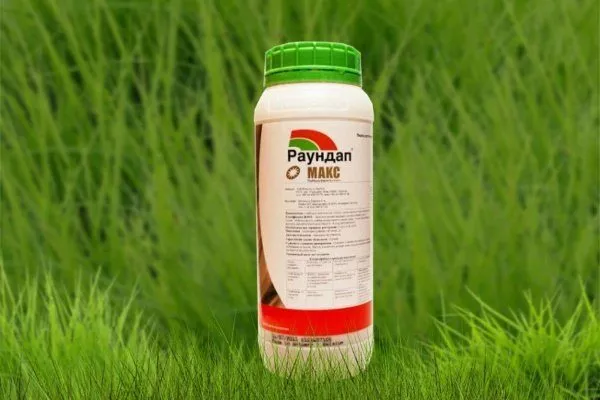
Roundup herbicide is used before sowing or before crop emergence. The concentrate is diluted with water and sprayed onto weeds, ensuring the product thoroughly and evenly wets the leaf surfaces.
The cost of this chemical (140 ml) is about 800 rubles.
Centurion
Centurion belongs to a group of pre-emergent herbicides. It is characterized by selective action. When sprayed, the active ingredients penetrate the weeds through the stems and leaves.
Centurion causes the death of weeds 1-2 weeks after treatment.
The advantages of this product are the ability to be used on any soil and in any weather conditions, good adhesion to plants, environmental friendliness and safety.
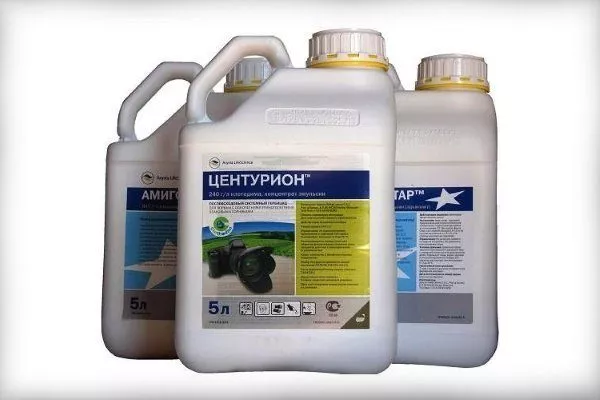
To achieve a pronounced effect, it is recommended to use this herbicide with the surfactant Amigo.
The cost of the drug is about 2000 rubles per liter.
Gezagard
The weed killer is selective, meaning it doesn't affect crops. Once applied to weed shoots, Gezagard is quickly absorbed.
The advantage of the drug is its release form: the product is a suspension, which is much more convenient to use than herbicides in powder form.
When using Gezagard on light soils, it can be applied at lower rates. However, when applied to high-humus soils, the maximum rate is required.
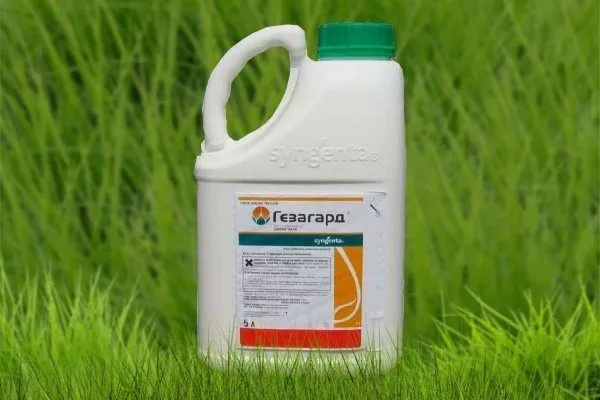
After treating plants with Gezagard, do not cultivate between rows, as this will reduce the protective effect of the product. Both manual and mechanized work can only begin one month after treatment.
The cost of this herbicide is about 1200 rubles per liter.
Zenkor
Zenkor is a weed suppressant for potato plots with a broad-spectrum action. It comes in granular form and is dissolved in water. The chemical not only kills harmful plants but also the roots in the soil, preventing them from growing.
Treatment with this drug occurs in 2 stages:
- Initially, small weed sprouts are treated two days before potato germination. To preserve the thin protective film formed on the soil surface for as long as possible, it is recommended to refrain from watering with a hose or loosening the soil after treatment.
- Two weeks after the second treatment, the weeds are treated again.
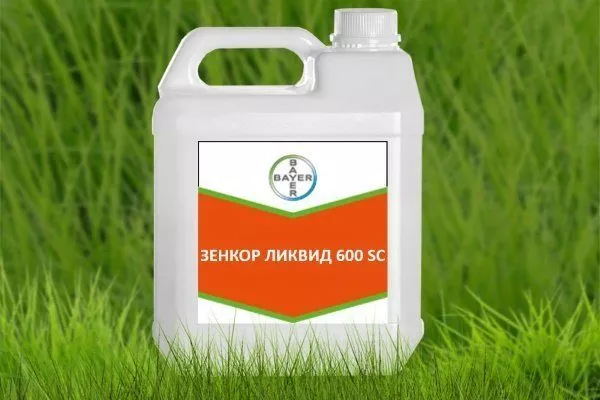
Zenkor cannot be used during the day while the sun is at its zenith.
The price is about 2200 rubles per liter.
Zellek Super
This weed control product is active against a variety of annual and perennial weeds, including those with a strong root system.
Zellek Super is the only product of its kind capable of turning couch grass roots into dust. It is non-toxic to cultivated plants.
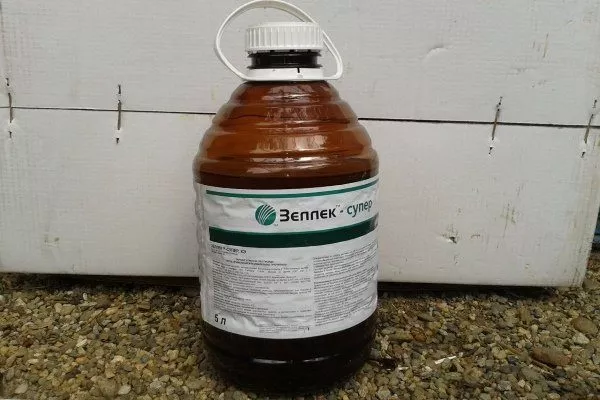
The herbicide is used during the period when annual cereal weeds are in the stage from the second leaf to tillering, and perennial weeds have reached a height of 10-15 cm.
14 days after crop treatment, the active ingredients of the preparation reach the root system of the weeds: the process of its destruction begins.
The cost of Zellek Super is about 850 rubles per liter.
Titus
This herbicide controls both annual and perennial plants. Titus also effectively suppresses the growth of climbing perennials.
This herbicide quickly penetrates the plant through the leaf surface and subsequently inhibits weed cell reproduction. Complete absorption by the plant occurs within 3 hours.
Titus is active regardless of the soil moisture content.
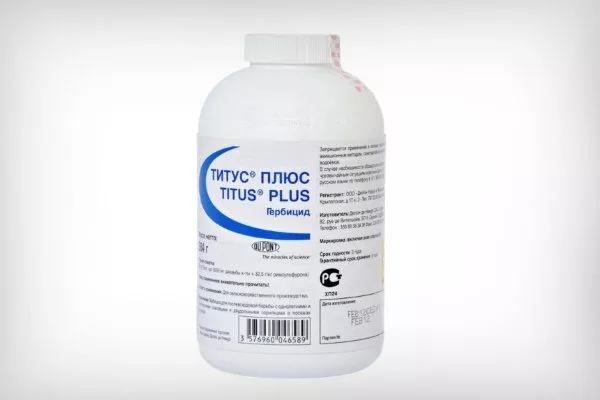
For potatoes, the preparation is applied once. It is dissolved in water and the resulting solution is sprayed on weeds. Post-emergence treatment after hilling is necessary.
For 2 weeks after treatment, it is not recommended to carry out mechanical removal of weeds or loosening between rows.
Cost: about 4000 rubles per 100 g.
Shogun
Shogun is a selective herbicide that controls annual and perennial grass weeds. When sprayed, the product is quickly absorbed by the leaves and then transported within the plant directly to the roots.
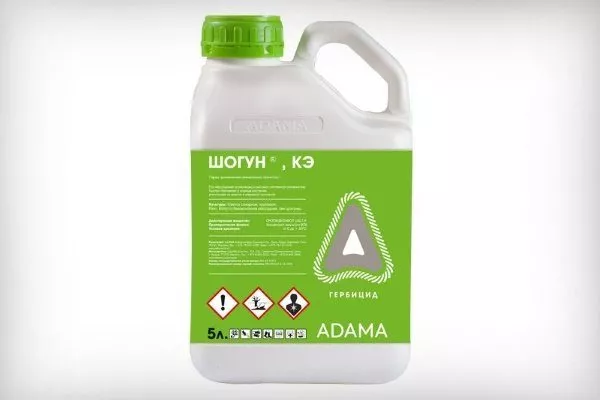
Shogun is used during the growing season of cultivated plants.
The cost of the herbicide is about 1200 rubles per liter.
Quickstep
This herbicide belongs to a group of complex systemic chemicals. It effectively kills monocotyledonous and dicotyledonous weeds in potatoes. Quickstep combats both the root and aboveground parts of weeds.
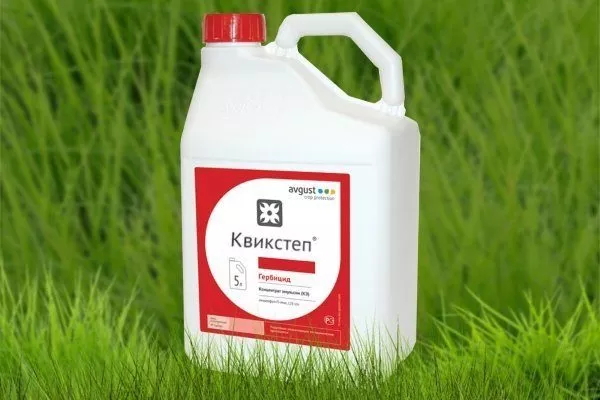
The product acts very quickly and can be used at any stage of potato growth.
Treated weeds begin to wilt within 2 days of herbicide application. Complete eradication is observed within 7 days. This herbicide is not active in soil.
The cost of the weed killer Quickstep is about 2900 rubles per liter.
Boxer
This is a selective herbicide used for pre-emergence and early post-emergence control of harmful plants and grasses, including those with strong root systems. It is used to control numerous weeds in solanaceous crops.
The pesticide does not affect crops and can be applied to all soil types. Boxer is compatible with most other herbicides.
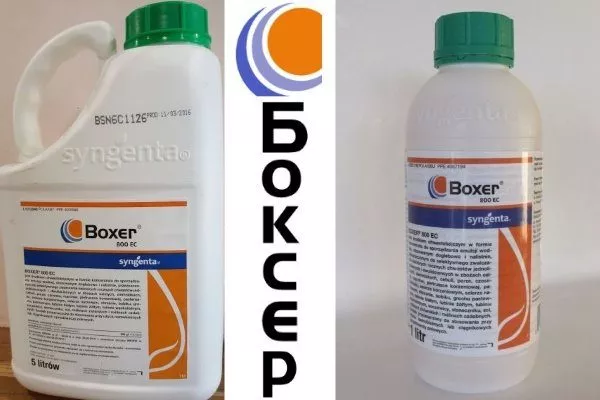
The working solution based on this preparation is prepared immediately before spraying.
The cost of this herbicide is from 1100 rubles per liter.
| Preparation | Validity period (days) | Consumption rate (l/ha) | Temperature range (°C) |
|---|---|---|---|
| Roundup | 20-30 | 2-4 | +15…+25 |
| Centurion | 14-21 | 1-2 | +10…+30 |
| Gezagard | 30-60 | 3-5 | +12…+25 |
| Zenkor | 40-60 | 0.5-1 | +10…+25 |
| Titus | 21-28 | 0.04-0.05 | +8…+30 |
Antiburyan
This weed killer has a broad-spectrum action. It is toxic to 300 species of annual and perennial weeds. The main components do not accumulate in the soil and do not affect potatoes when used correctly.
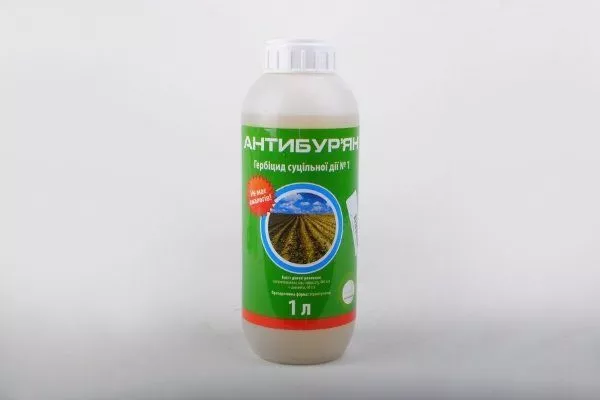
Weed control is used after harvest and before planting. Application should be done during the period of active weed growth, provided the weather is favorable. Weed control is diluted with water.
The cost of this Ukrainian drug is 270 UAH (about 635 rubles) per 1 liter.
Lapis lazuli
This product has high penetrating properties. The chemical particles penetrate the root system or leaf blade quite quickly.
Lazurit herbicide is active against over 50 types of weeds that damage crop growth. The product protects crops for 30 to 60 days, with the final duration dependent on weather conditions.
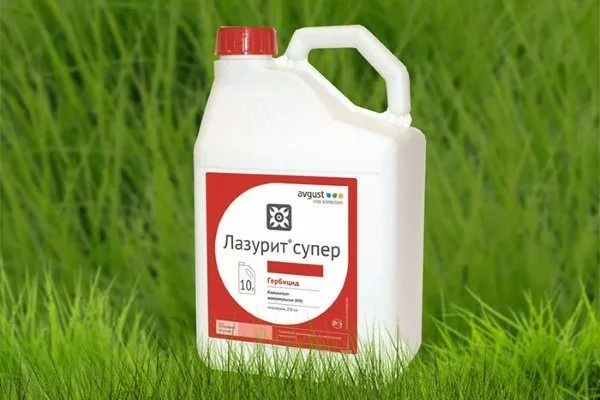
To treat the soil, pesticides must be diluted with water. Before the grass seedlings emerge, the soil should be treated once. To prevent the herbicide from affecting the potatoes, the tubers should be planted deeply.
The cost of the pesticide Lazurit is about 2,500 rubles per liter.
General rules for using herbicides in potato fields
When cultivating a plot of land where potatoes are planted, the following rules must be observed:
- dilute the chemical in a plastic or glass container, but never in a metal one;
- choose herbicides that do not accumulate in the soil and do not affect crops;
- prepare the solution only before spraying, not in advance;
- change herbicides periodically so that they do not adapt to a specific pesticide;
- follow the instructions for the drug before using it;
- the amount of herbicide applied to the soil depends on the soil type;
- It is advisable to apply pesticides against weeds to the soil at a temperature of 15-25 degrees, since at lower temperatures herbicides lose their effectiveness;
- When spraying, do not eat, drink or smoke;
- Spraying must be carried out in protective clothing, gloves, a respirator and glasses;
- After completing the procedure, you must take a shower and change clothes.
Watering the area can only be done 5 days after using pesticides.
Processing calendar
- 7-10 days before planting: pre-emergent herbicides
- Weeds at 2-4 leaf stage: first post-emergence treatment
- After 14 days: repeat treatment if necessary
- After harvest: autumn treatment of perennials
Herbicides are chemicals that kill annual and perennial weeds. These harmful plants are difficult to eradicate mechanically. They damage crops and can transmit diseases. Without herbicides, potato yields can decrease by 80%.