
Jelly is a popular potato variety among gardeners, characterized by its medium-term tuber maturity, productive plants, and robustness. It is cultivated by both private and private farms. It is grown on an industrial scale to produce high-quality raw materials for the production of chips, French fries, and processed foods.
History of selection
The Jelly potato is the brainchild of foreign breeders. It was developed in the early 2000s by German scientist Bohm Heinrich, representing the company Europlant. It was approved for commercial use in 2005.
Appearance of the bush
Plants of this cultivar are tall and spreading. They are distinguished by their appearance:
- belonging to an intermediate type;
- semi-erect position of stems, strong and well developed, few in number;
- medium degree of foliage;
- Foliage: large or medium-sized, dark green, open, wavy at the edges;
- Flowers: large, with white petals collected in a compact corolla.
Root vegetables and their taste characteristics
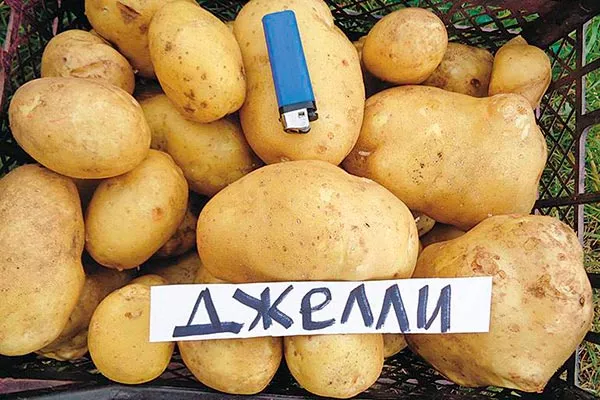
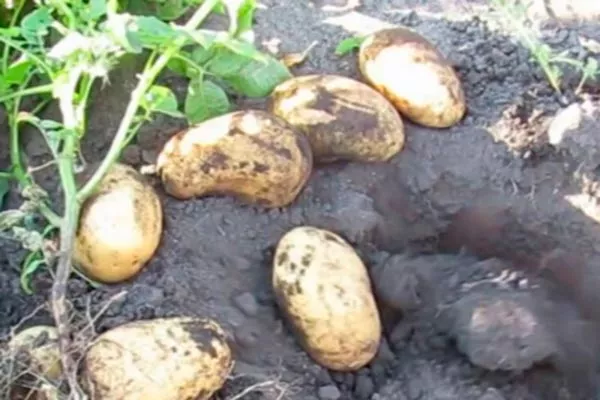
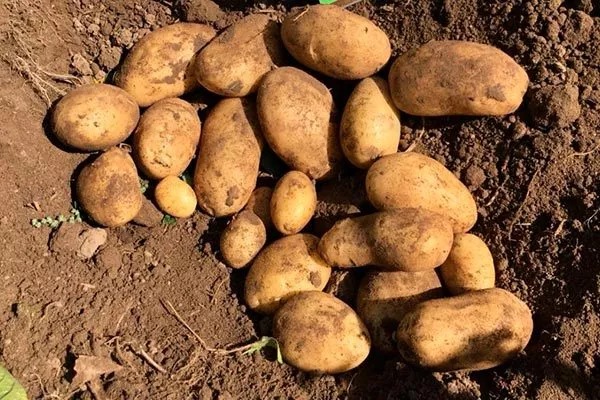
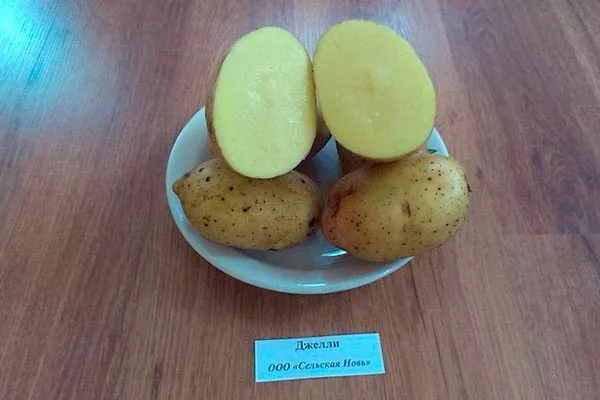
Jelly's harvest is beautiful, consisting of uniform tubers of large to large sizes. They are distinguished by the following characteristics:
- oval shape;
- weight - 84-150 g (in the general mass, sometimes there are giant tubers that weigh 300 g);
- peel: light yellow, with a smooth and slightly rough surface;
- eyes: small, barely noticeable, shallowly set (superficial);
- pulp: dense, beautiful yellow color, which does not tend to darken during heat treatment.

Characteristics
The Jelly vegetable variety is renowned for its many excellent characteristics. Check them out if you're planning to grow it in your garden.
Ripening time
This imported variety is classified as a mid-season potato. The harvest matures in 95-105 days after the first sprouts emerge in the garden. The first harvest of tubers (for sampling) is possible as early as the 70th day.
Productivity
Jelly is considered a high-yielding potato variety. By strictly following the proper agricultural practices, you'll harvest 11 to 17 large tubers per plant. Productivity figures are as follows:
- 15600-29200 kg per 1 ha of planting during industrial cultivation of the variety;
- 33,500 kg/ha is the maximum possible yield obtained by farmers with intensive application of fertilizers and regular watering of potato beds;
- marketability is high, amounting to 88-97%.
Climate sensitivity, drought resistance
This varietal variety of vegetable is undemanding to climatic conditions. It is highly tolerant of drought, short-term heat waves, and temperature fluctuations. It is also relatively stress-resistant. Thanks to its hardiness, it grows and bears fruit almost everywhere in Russia.
The Jelly potato shows the best results when grown in the following regions of the country:
- Central Black Earth;
- Central;
- Volga-Vyatka.
Resistance to diseases and pests
This German potato variety is renowned for its robust immunity. Its plants are resistant to the following infections and pests:
- common scab;
- black leg;
- wet and ring rot;
- potato cancer;
- PLRV (leaf roll virus);
- mosaic virus PVY;
- golden nematode.
- ✓ Resistance to golden nematode, which is rare among other varieties.
- ✓ The ability of tubers to retain color after heat treatment, which is important for industrial processing.
The crop is moderately susceptible to late blight. Both tubers and tops are moderately susceptible to the disease.
Areas of application of the crop
Jelly tubers belong to the culinary grade B. They are medium-boiled. Their starch content ranges from 13.5% to 21.5% (with an average of 18%). The crop is used for both table and industrial processing.
In home cooking, this potato is used to prepare dishes by heat treatment:
- frying;
- boiling;
- baking.
It's especially good for soups, salads, and stuffing. The potato slices don't fall apart, hold their shape well, and don't brown. Deep-frying brings out the best flavor.
Jelly is a type of vegetable ideal for industrial-scale potato product production. It is used to make the following culinary products:
- chips;
- frozen semi-finished products.
This variety is also popular in catering establishments. Professional chefs use it to prepare a favorite delicacy: French fries.
Transportability, shelf life
The shelf life of Jelly's harvest is 86%. It doesn't store as well as more shelf-stable varieties, which have 95-97%. It's best to process the tubers within a few months or even weeks after harvesting. Their transportability is average.
Growing
If you're planning to plant a German vegetable variety in your garden, research all the intricacies of its cultivation in advance. Adherence to proper agricultural practices is the key to a bountiful and high-quality harvest.
Necessary equipment
To plant potatoes in large quantities, use tools that will help make the process easier and faster:
- markers - to determine the location of planting holes relative to each other in a row (to maintain the same distance between them);
- with a plow - to make a furrow (the tool allows you to make an even row, you will need it later for hilling potato bushes).
Preparing the site for planting
Carefully select a location for potato beds in your garden. It should have the following characteristics:
- be located in the southern part of the garden;
- be well lit by the sun;
- be windless and protected from drafts;
- be located away from outbuildings, residential buildings, tall trees and other objects that cast a thick shadow on it.
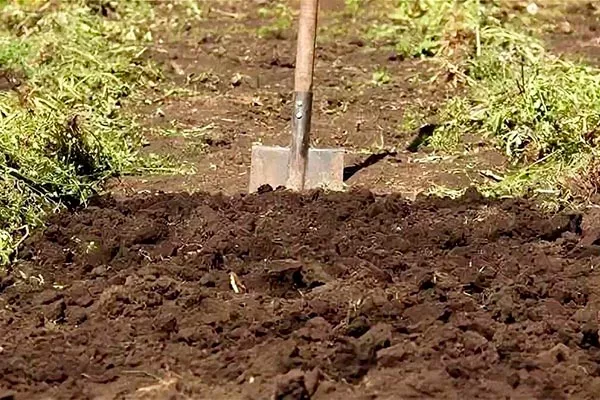
The Jelly potato isn't very demanding when it comes to garden soil. It produces its maximum yield when grown in soil that meets the following requirements:
- loamy or sandy loam;
- loose;
- fertile;
- neutral or slightly acidic.
- ✓ Soil pH should be between 5.5-6.5 for optimal growth.
- ✓ The soil should be well drained to avoid water stagnation.
Prepare the area you've chosen for planting your vegetable crop in the fall. Carry out the following activities:
- digging the soil;
- destruction of weeds along with their roots;
- removal of plant debris;
- application of fertilizers.
Use well-rotted manure to improve the fertility of garden soil. Apply 3-5 kg per square meter of plot. Do not add fresh cow manure, as it contains too much nitrogen and may harbor pest larvae. Also, add mineral fertilizers such as superphosphate and potassium salt (10-20 g/sq. m).
What to do with planting material?
Seeds also require preparation for planting. Two to three weeks before the planned planting date, remove the potatoes from storage and leave them to germinate in a bright, warm room (at 15°C), spreading them out in a single layer on a flat surface.
Planting tubers must meet the following requirements:
- be green;
- small in size;
- without signs of damage or disease;
- with the presence of several strong shoots that have not yet managed to stretch out much.
Treating Jelly seed potatoes with fungicides is not necessary. They have a fairly strong immune system and are resistant to most vegetable diseases. You can simply dust them with powdered wood ash.
Landing times in different regions
Begin planting the Jelly vegetable variety after the garden soil has warmed to 8-10°C, to a depth of 10 cm. Don't plant until the second half of April. Planting too early will cause the potatoes to rot in the damp, cold soil. Delaying planting can result in soil drying out and a 20% reduction in yield.
The timing of planting work varies depending on the growing region:
- April - in the southern regions, in particular in the Krasnodar Territory;
- first days of May – central regions of the Russian Federation;
- After May 10 – the north of the country, including Siberia and the Urals.
Classic scheme
Plant Jelly potatoes in your garden according to the seed manufacturer's recommended planting plan:
- the distance between holes is 40 cm (if you plant tubers in furrows, reduce it to 28-30 cm);
- the row spacing is 70-80 cm;
- The seeding rate is 6 potatoes per 1 sq. m or 420 tubers per 100 sq. m.
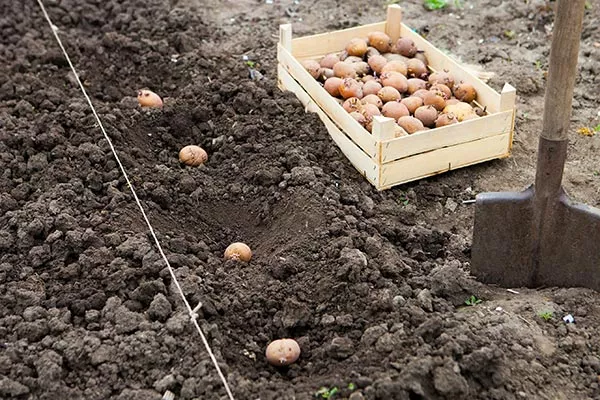
Plant the vegetable crop in rows, oriented north to south. Dig furrows or holes half a spade deep. Add a handful of wood ash and a little ammonium nitrate to each hole. Use onion peels as an additive, too. They will repel pests.
About unusual ways of growing Jelly
There are other ways to grow this German vegetable variety, saving space and labor. All of these methods ensure better root development and higher yields.
Grow potatoes using one of the following methods:
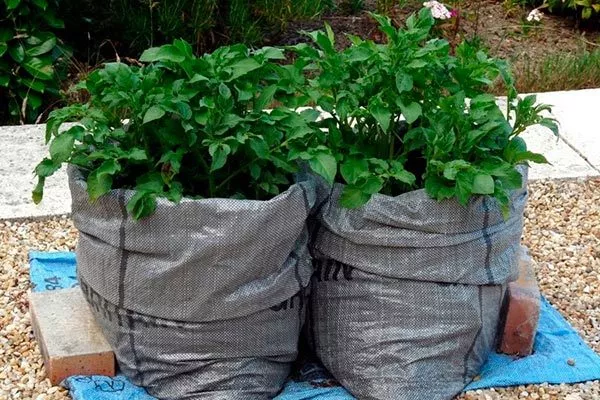
- Planting in a plastic bagFill it with fertile soil. Poke holes in the sides. Plant the tubers in the bag after they sprout. Leave them in a well-lit area. To harvest, simply shake the soil and tubers out of the bag.
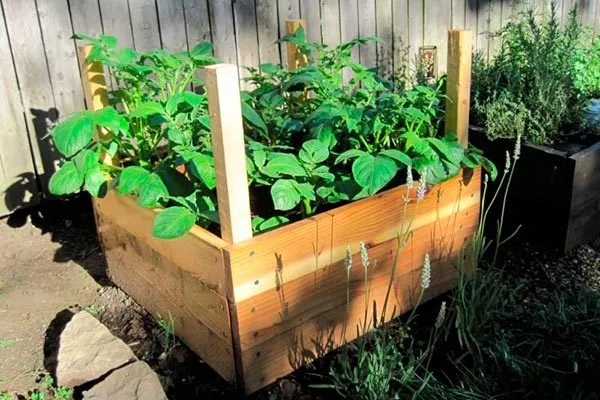
- Growing in a box or barrelPlace fertile soil at the bottom of the container. Place the sprouted tubers on top. Cover them with soil. As the potato plants grow, add soil frequently.
- Arrangement of a circular garden bedPlant the potatoes in a hole dug in the shape of a circular trench. Hill up the potatoes with soil taken from the center and outer edges.
- Cultivation under a cover of black spunbondCover the area in your garden prepared for planting potatoes with opaque material. Make slits in the material. Place the tubers in the slits. The plants will grow under the film throughout the summer. Water and fertilize them through the slits. Remove the covering before harvesting.
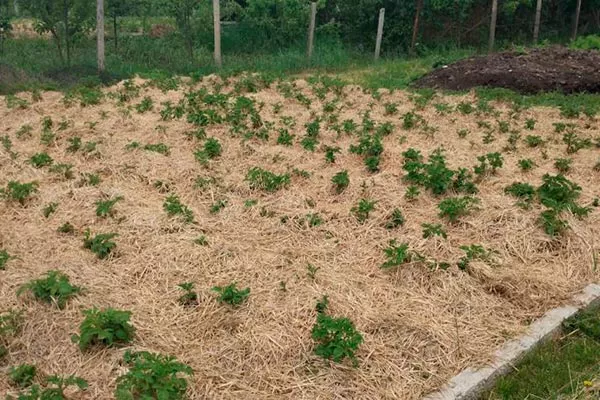
- Growing under hay. For planting, use potatoes with 3-4 cm long shoots. Place them in a untapped area. Lightly loosen the soil under each tuber. Cover the seed with a layer of dry grass.
As the bushes grow, add hay, providing the tubers with protection from sunlight. They will receive maximum nutrition from the decomposing organic matter.
Care
To obtain a bountiful harvest of high-quality Jelly tubers, follow the essential planting care procedures. These include hilling, watering, weeding, fertilizing, disease prevention, and pest control.
Hilling
The crop forms numerous tubers on lateral roots. To increase their number, hill up the potato plants several times per season. Follow the schedule:
- When the bushes reach a height of 10–12 cm, hill them for the first time. Cover them with soil taken from the space between the rows, leaving 4–5 cm of stem above the ground. Tubers will begin to form in the ridges on the lateral roots.
- Carry out the second hilling after the tubers have formed. They all need to be covered with a layer of soil. Otherwise, they will turn green when exposed to sunlight and become inedible.
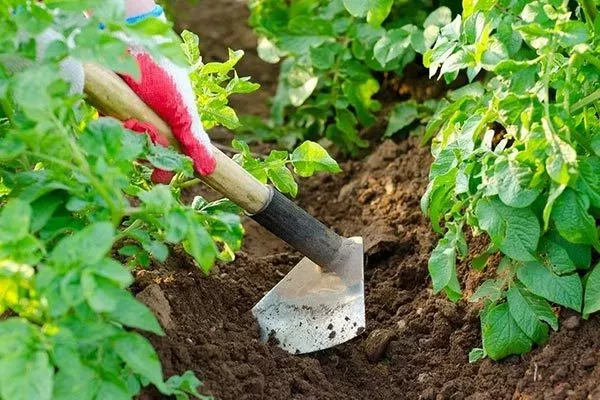
When performing this procedure, make furrows near each stem. This helps the plant's roots absorb rainwater better and prevents it from running off into the rows.
Watering
The German variety requires moderate watering. It is fairly drought-resistant, but to ensure abundant harvests, the bushes in the beds should be provided with sufficient moisture.
Be sure to water your potato planting during these periods:
- during the flowering period of plants;
- in the tuber formation phase.
Plants require weekly watering during prolonged droughts. Apply settled water under the bush and between the rows. The recommended rate is 3-4 liters per plant.
Loosening and weeding
While hilling up the potatoes, loosen the soil between the rows and remove weeds. This technique improves moisture and air exchange in the soil and helps retain nutrients.
Weed the Jelly planting several times during the season. The first time, remove the grass from the bed while the potato sprouts are still small. Repeat the process after a couple of weeks. As the bushes grow, their spreading foliage will begin to shade the soil beneath them, preventing weeds from appearing.
Top dressing
For the German vegetable variety, one application of fertilizer per season using the following nutrients will be sufficient:
- potassium sulfate;
- magnesium sulfate;
- Superphosphate.
Fertilizing the potato bed with mineral fertilizer is necessary when the bushes are flowering. This will promote tuber formation.
To increase vegetable yields, it's helpful to irrigate the space between rows with an ash infusion. To prepare the fertilizer, combine 200 g of wood ash and 10 liters of water. Let the infusion steep for several days. Strain it before use.
Some gardeners use nitrogen-based fertilizers for potatoes. Applying them in small quantities is acceptable only at the beginning of the crop's growing season. They should not be used later. They can cause excessive foliage growth and reduce the yield of the plants.
Diseases
The Jelly variety is resistant to most potato diseases:
- fungal (scab, cancer);
- bacterial (black leg, ring rot);
- viral (PLRV and PVY viruses).
It is moderately susceptible to late blight of foliage and tubers. This infection attacks potato plants during unfavorable weather and poor agricultural practices.
Start treating the disease as soon as you notice the first symptoms (small brown spots on the leaves) on your plants in the garden. Spray the potato plantings with:
- copper oxychloride;
- Oxyhom.
Repeat the treatment 2-3 times during the season. Remember that Jelly potatoes are more sensitive to late treatment.
To protect tubers from late blight, mow down diseased tubers along with the stems and then burn them outside the garden plot. Leave the tubers in the ground for 14 days to ripen and develop a thick skin.
To prevent potato bed diseases, take preventative measures:
- Follow crop rotation rules. Don't plant potatoes where nightshades were previously grown. Don't grow them near tomatoes.
- Get rid of old tops, weeds, and plant debris in a timely manner.
- Disinfect the soil and seed tubers before planting. Use a potassium permanganate solution or treat with fungicides.
- Control pests that carry diseases.
- Spray the potato planting with solutions of copper-containing preparations.
Pests
Gardeners consider the following parasites to be the most dangerous enemies of potatoes:
- wireworm;
- nematode;
- aphid;
- spider mite;
- Colorado beetle;
- nematode.
Jelly bushes are resistant to potato nematodes. They need protection from other harmful insects. Treat the tops with a soapy solution to prevent aphids and spider mites. Use insecticides such as Cruiser, Prestige, and Force to combat wireworms. Apply these to the planting hole when planting the tubers.
Under unfavorable growing conditions, potato crops are threatened by the Colorado potato beetle. The insect eats the leaves and stems, causing significant damage to the crop. To combat this insect, treat the plants with specialized pesticides after the larvae appear, such as:
- Beetle eater;
- Taboo;
- Tanrek;
- Colorado.
Combine the use of insecticides in the fight against Colorado potato beetles with other measures aimed at getting rid of the Colorado potato beetle:
- manual collection of the insect and its larvae, carried out every few days;
- hilling up potato bushes;
- using onion peels (they are placed in the hole during planting or dug into the ground in the garden bed);
- planting aromatic plants such as mint, catnip, and calendula next to the potato planting.
Following proper agricultural practices is the best way to prevent pests from appearing on potato plants. Regularly hill, weed, and loosen the soil to avoid or minimize this problem.
Harvesting and storage
Gardeners dig up Jelly potatoes in dry weather. They handle the harvested tubers as follows:
- They leave it in the field to dry for several days or move it to a well-ventilated place such as an open terrace.
- Then they are transferred to a dark, ventilated room with a temperature of +12-18°C and left there to dry for 14-20 days.
- They sort through them, rejecting any damaged ones.
- Place tubers in bags, boxes, crates, baskets, or nets. Avoid using plastic bags for storing the harvest, as they can cause condensation. Such containers encourage fungus growth and potato rot.
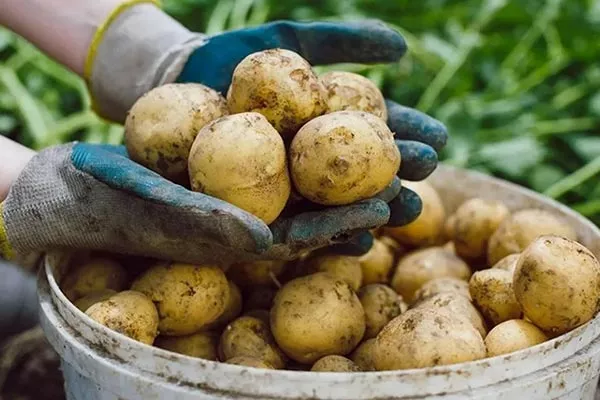
Before storing, the selected tubers should have time to heal any wounds from shovels or plows (the variety is suitable for mechanized harvesting), and their skin should harden.
For long-term storage, the harvest will need to be moved to a cellar, providing it with the following conditions:
- the temperature regime in the vegetable storage is +2-4°C;
- humidity level - 80%.
Positive and negative qualities
The German potato variety Jelly has become popular with domestic gardeners thanks to its high and consistent yield. It also boasts other advantages:
This variety of vegetable crop also has its disadvantages:
Reviews
Alexandra, 38 years old, summer resident, TverI really regret that last spring I only ordered 2 kg of the Jelly variety from an online seller for planting. It's an amazing variety! I got a bountiful harvest. The yield from the plants is fantastic. There are no small tubers in the nest; they are all large. Some reached 315 g, and one was a real giant – 325 g. I will now grow Jelly regularly.
Peter, 46 years old, gardener, UdmurtiaIn August, Colorado beetles attacked my Jelly potato plants. I barely fought them off. The tops on the plants have grown vigorously, especially in areas where I've kept them well watered. I haven't dug up the tubers yet, as the tops are just starting to turn yellow. All signs indicate a good harvest.
Jelly is a high-yielding potato variety bred in Germany. Reviews from Russian gardeners are positive. This vegetable variety is loved for its attractive appearance and excellent flavor, as well as its resistance to disease and drought. It is often grown on an industrial scale to produce high-quality potato chips.