
The Chugunka potato has become widely popular among gardeners. Although the variety is not listed in the State Register, it has been successfully grown in our country for many years. This crop is characterized by its rich flavor, disease resistance, and good yields. It is important to ensure proper care, including a number of standard measures.
Story origin
There's no information about the cultivar's creation; it's unknown who bred Chugunka or what varieties were used. Experienced researchers are convinced that Vasilek and Sineglazka were used in its development.
Botanical description of the variety
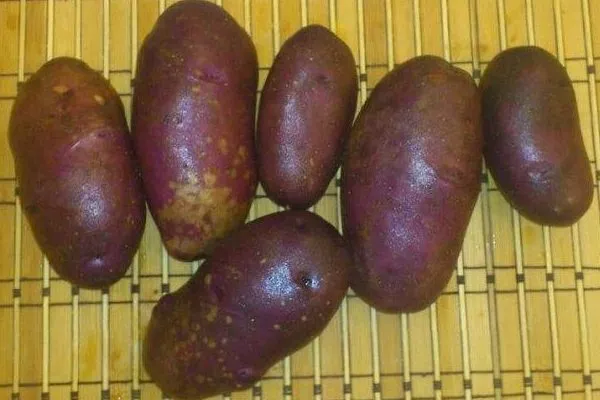
The variety's name derives from its appearance. The tubers have a distinctive, eye-catching hue. The cultivar is distinguished by large, bright lilac flowers that cover the plants during flowering.
Bush
The bushes reach a height of 0.5 to 1 m. They have a powerful root system and upright, sturdy stems, which are abundantly covered with medium-sized leaves. The foliage is a rich green hue and has distinct veins.
Tubers
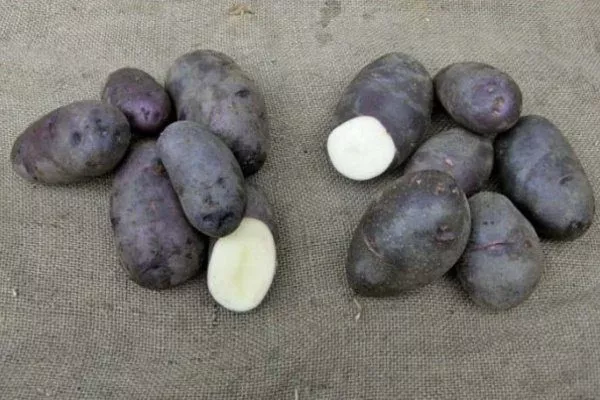
Characterized by large, uniform tubers weighing between 100 and 130 g. The "nests" are virtually free of fine particles. Other distinctive qualities:
- The shape of the tubers is round-oval or elongated-oval.
- The skin is dense but not thick, ensuring good transportability and durability.
- The skin is dark blue, almost purple.
Characteristic Potatoes in a Chugunka
The Chugunka potato boasts excellent varietal characteristics, making it a popular choice among gardeners. These characteristics should be carefully examined before planting.
Flavoring quality and chemical composition of the variety
Chugunka potatoes are considered highly flavorful. Many gardeners note that the tubers make delicious mashed potatoes. They are recommended for frying, boiling, stewing, and baking. They are used not only in soups and mashed potatoes, but also in salads, appetizers, and more.
The crop is distinguished by its increased content of useful substances: anthocyanins, iodine, iron, potassium, magnesium, proteins and amino acids, vitamins B, PP, C and K. The vegetable has a positive effect on the endocrine system and the general condition of the body.
Deadlines maturation and productivity
An early-ripening variety, ripening 70-75 days after the first shoots emerge. One bush produces 6 to 11 tubers. A single plant yields 1 to 1.5 kg.
Regions cultivation
Chugunka tolerates frost well, but is recommended for cultivation in temperate regions. With proper care, it performs well in warm southern regions. It is not recommended for cultivation in northern Russia.
Sustainability to diseases
This variety is characterized by high resistance to fungal and other viral diseases. It is resistant to pests, but is rarely affected by the Colorado potato beetle. It is also resistant to wireworms.
The most dangerous disease for Chugunka potatoes is late blight, which affects both the above-ground part of the plant and the tubers.
Marketability, transportability and shelf life
Chugunka potatoes are renowned for their excellent marketability, transportability, and shelf-life. They boast high marketability thanks to their large, uniform tubers with a minimum number of unmarketable specimens.
It stands out among other varieties for its excellent transportability thanks to the tuber's dense and durable skin. This ensures the product remains intact and safe during long-distance transportation.
The tubers' good shelf life allows for long-term storage without significant loss of quality. This allows for efficient inventory management and prevents losses during storage.
Frost and drought resistance
The Chugunka potato exhibits frost and drought resistance, making it ideal for growing in a variety of climates. Its roots and tubers are able to effectively absorb and retain moisture from the soil. This helps conserve water resources and ensure stable harvests.
Pros and Cons cons
Before planting a new variety in your garden, study its positive and negative qualities. This crop has the following advantages:
Disadvantages of the variety include:
Peculiarities landings
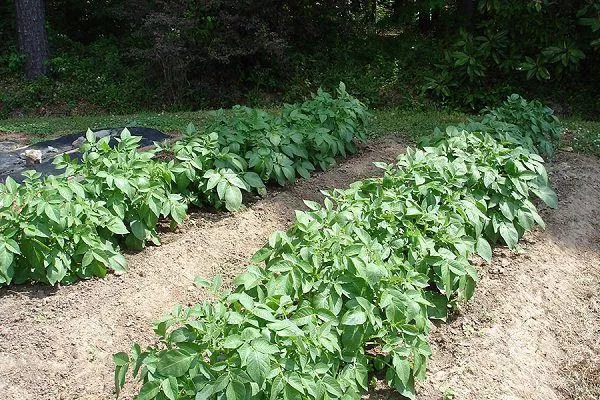
In the central and southern regions, planting begins in April. By this time, the soil at a depth of 15 cm has already warmed to +10°C. In cities with colder climates, tubers are planted in early May.
Follow the recommendations:
- Start preparing planting material 1-1.5 months before planting.
- Treat the tubers, which accelerates sprouting, reduces the risk of disease, and increases resistance to adverse environmental factors.
- After treatment, sprout the tubers, selecting large, attractive specimens with strong sprouts. Before planting, move them to a location with a temperature of 10 to 12°C.
- Make the beds in a well-lit area, as light-loving crops usually produce higher yields with good lighting.
- The soil should be light and fertile, as heavy soil may reduce crop yields.
- Prepare the beds in the fall, digging them over and clearing away plant debris. In the spring, dig the beds again and apply the necessary fertilizer to each square meter of the plot.
- Place the holes 30 cm apart, and leave at least 60 cm between rows. The depth of the holes is from 6 to 10 cm.
Before planting, add ash or granular, slow-release fertilizer to each hole. Place the potatoes in the hole, water with warm water, and cover with soil.
Recommendations for care

This variety is easy to care for, making it suitable even for inexperienced gardeners. Follow these gardening guidelines:
- Watering. Potatoes prefer moist soil, especially while the tubers are growing. Therefore, water them regularly, especially during dry weather. Try to avoid over-drying or over-watering the soil.
- Fertilizers. Feed your potatoes with potassium- and phosphorus-rich fertilizers. These promote the development of strong plants and productive tubers. Use organic fertilizers or specialized mineral fertilizers for the crop.
- Loosening. Regularly loosen the soil around the plants. This helps improve root zone aeration, increases oxygen availability, and improves water permeability.
- Mulching. Covering the soil with a layer of mulch will help retain moisture, reduce weed growth, and protect the tubers from light, preventing green growth.
- Thinning. Once the plants reach a certain height, thin them out, leaving gaps. This will improve air circulation and light availability, which promotes healthier growth and crop formation.
Hilling is an important agricultural technique in potato crop care. Its main goal is to encourage new tubers to form at the top of the potato stems. Begin hilling 2-3 weeks after germination and repeat every 2-3 weeks until flowering.
Collection and storage harvest
The harvest is ready for harvest as early as mid-July. Dig the tubers with a pitchfork to reduce the risk of damage. Harvest readiness is determined by the appearance of the plants: when the tubers reach maturity, the bushes begin to turn yellow and wilt.
After digging, dry the potatoes and clean off any soil with a dry cloth. Store any damaged ones separately and use them first. Place the potatoes in clean boxes and store them in a dry place, after fumigating them with sulfur.
Methods struggle and prevention of diseases/pests
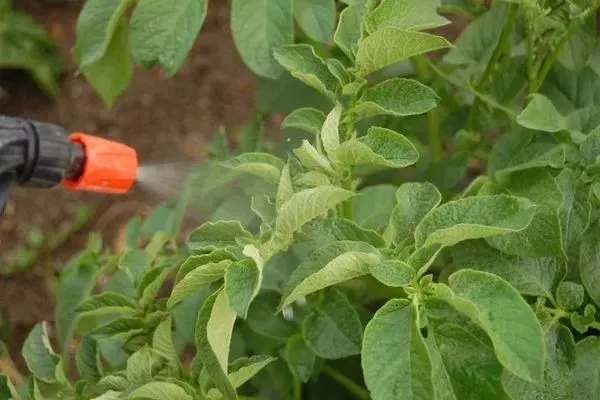
Chugunka is resistant to most diseases common to nightshade crops. During epidemic periods, it is sometimes susceptible to late blight. For prevention, spray the bushes with a copper sulfate solution (20 g per 10 liters of water) twice a week in late summer.
To prevent potato contamination it is important:
- Observe crop rotation.
- Disinfect tubers, soil and garden tools.
- Follow the rules of watering and fertilizing.
- Regularly loosen the soil and remove weeds.
Although pests rarely attack the crop, this problem is not excluded. To combat the Colorado potato beetle, use a decoction of bitter herbs (wormwood, celandine, yarrow, dandelion) or sprinkle ashes between rows and on bushes.
Controlling wireworms and mole crickets is more challenging, as these pests attack tubers rather than leaves and stems. Preventative measures include digging the soil before planting and removing the larvae. These pests dislike slightly acidic soil.
Reviews gardeners about Chugunka potatoes
The Chugunka potato has received many positive reviews from gardeners who have been growing it in their plots for years. Its excellent varietal characteristics and numerous advantages make it a sought-after variety. With proper care, it produces good yields and large tubers for long-term storage.