
Charoite potatoes mature in mid-season, are grown exclusively in open beds, and have a unique feature: harvested tubers can be stored for planting for the next 5-7 years. This will allow you to grow even tastier root vegetables and achieve the highest yields. The key is to learn how to store the tubers properly.
Authors of the variety
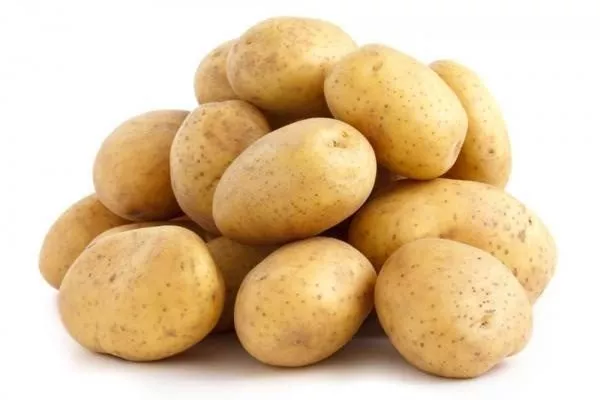
The Charoit potato variety, nicknamed "Skorospelki Pitera," was created by a team of Russian breeders. Among the developers are Vera Aleksandrovna Lebedeva, Nadim Makhish Ogly Gadzhiev, Tamara Alekseyevna Shelabina, Taleh Balaga Ogly Nagiyev, and Svetlana Vitalyevna Balakina.
This potato variety was officially approved for agricultural use in 2014. An application for variety testing was submitted three years earlier.
Characteristics of the Charoite potato
The early-ripening Pitera variety is intended for table use and is distinguished by its high-quality flavor, abundant fruit production, and varying degrees of disease and pest resistance. It is classified as a Super Elite variety.
What do the tubers and bushes look like?
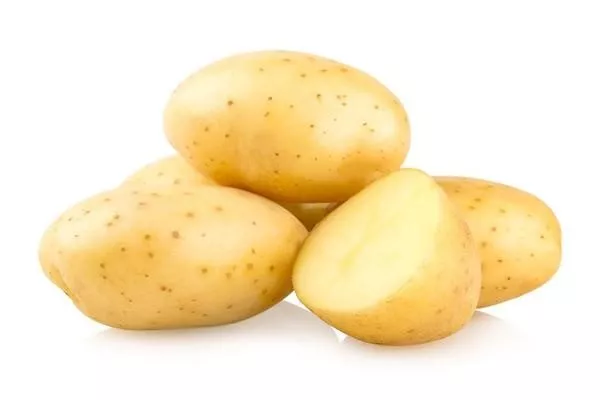
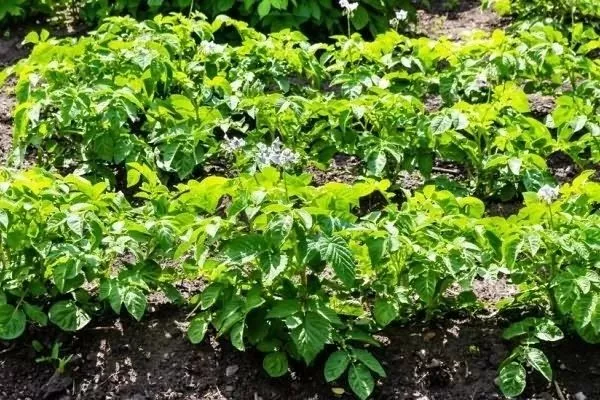
Charoite is a spreading shrub, with stems that are semi-erect. It is medium-height, with an intermediate growth habit and moderate foliage. Other characteristic features include:
- leaf blades – large in size, dark green in color, with significant waviness along the edges;
- weight of tubers – 100-145 g;
- flowers – with lilac-violet petals;
- eyes – quite small, located superficially;
- form - oval-elongated;
- skin and pulp color – yellow;
- the number of potatoes under one bush is from 8 to 15 pcs.
Purpose and taste of tubers
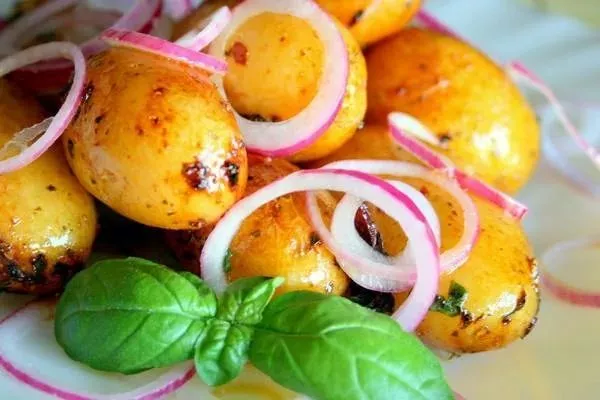
The Charoite potato variety is renowned for its excellent taste, making it indispensable for preparing a variety of culinary delights.
The starch concentration in its nodules varies from 14.5 to 17%, making it versatile for frying, boiling, baking, and use as a main or secondary ingredient in cooking.
When does it ripen?
This potato variety ripens early: it is considered early maturing and reaches full maturity in just 50-65 days after sprouts emerge above the ground, with young potatoes ready to harvest by the 45-50th day.
Productivity
Charoite's yield is impressive: if you follow all the recommendations for growing and caring for it, you can expect a result of 230-320 centners per hectare, and with a favorable combination of conditions and experience, the maximum yield can increase to 380-450 centners per hectare.
Important nuances of growing and care
When planting potatoes, select suitable dates based on climate conditions and the current weather. This is most often the last days of April or the first days of May. However, in the fall, it's necessary to prepare the soil:
- Dig holes to a depth of 30-40 cm.
- Clear the ground of any remaining weeds.
- Add organic matter in the amount of 8-10 kg (fresh or rotted manure, compost, humus are acceptable).
- Check the soil acidity and, if it is high, add slaked lime.
- It is useful to add sand to clay soils in the amount of 10 kg per 1 sq.m (to improve aeration).
For planting, select medium-sized tubers with no signs of rot. Place the seedlings in a cool, bright place to germinate for a month. Before planting, soak them in a warm growth stimulant and then dry. Water them or soak them in a fungicide solution the day before planting.
Subtleties of planting:
- potatoes are planted in holes 9-12 cm deep;
- 30-45 cm are left between plants in one row;
- the row spacing is 70-75 cm;
- Onion peels are added to the holes to protect against the Colorado potato beetle.
The care procedures are standard:
- Potatoes usually do not require watering, but during dry periods they are moistened several times per season using warm water, pouring the soil to a depth of 25 cm:
- the first time - a couple of weeks after emergence, to promote the growth of tops;
- the second time - during flowering, while watering is carried out as abundantly as possible;
- third time - after flowering has finished, when the bush has shed its flowers.
- Top dressing is carried out twice:
- initially after the initial moistening, during the period of active growth of tops, using solutions of chicken manure or humus (fresh manure cannot be used);
- The second feeding is carried out after the next irrigation, during the flowering period, using solutions of mineral potassium-phosphorus mixtures.
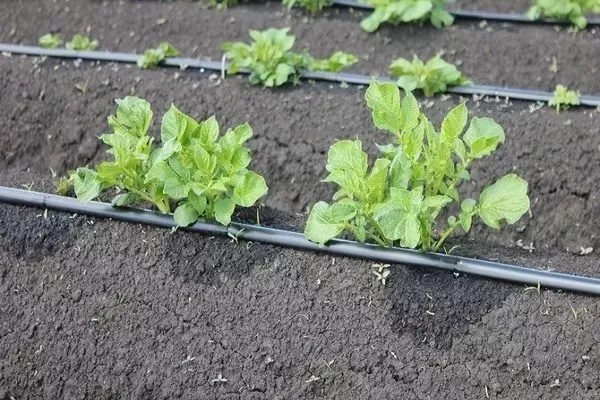
- Hilling is done twice a season before flowering. The first time, when the plants reach a height of 5-7 cm, the procedure is repeated after two weeks. The soil should be filled to 2/3 of the plant's height. The soil should be moist; if the soil is dry, hilling is not necessary.
Diseases and pests
The variety is susceptible to nematode damage and has moderate resistance to late blight and mosaic. To protect against nematodes, the soil is sprayed with boiling water and enriched with nitrogen fertilizer.
To prevent late blight and mosaic, you must follow these rules:
- plant bushes at a sufficient distance from each other;
- avoid over-watering the soil;
- protect plants from excess moisture (do not allow liquid to come into contact with the above-ground part);
- ensure proper crop rotation, avoiding growing potatoes after other nightshade crops, especially tomatoes;
- treat potatoes and planting holes with fungicides;
- Spray the plantings two to three times per season with copper-containing preparations.
The Colorado potato beetle is a serious enemy of potatoes. To prevent pesticides from contaminating the potato pulp, it is recommended to remove the insects manually. In case of large beetle infestations, insecticides such as Confidor, Regent, and Prestige are used.
Preventive measures include:
- growing plants with a strong aroma next to potatoes, such as mint, marigolds, onions, garlic, and calendula;
- regular hilling of bushes;
- placing peas or onion peels into holes for planting potatoes;
- releasing chickens into the area to eat beetle larvae.
Harvesting and storage
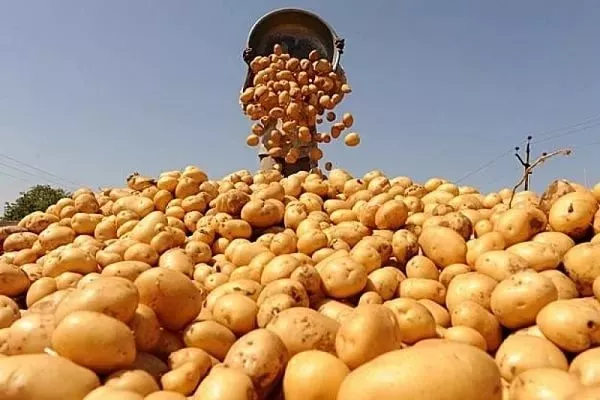
Potatoes are dug up using the standard method and then laid out in a ventilated area to dry thoroughly. They are stored at a temperature of 4-5 degrees Celsius and an air humidity of 80-90%.
Advantages and disadvantages
The early-ripening variety 'Pitera' is versatile in use and has excellent characteristics, with the following highlighting its positive aspects:
There are also some downsides:
Reviews
Despite some shortcomings, the Charoite variety has many advantages. It is popular among gardeners and farmers across various regions due to its high commercial value and versatility, making it valuable for culinary and processing purposes.