
The Charodey potato appeared in our gardens at the beginning of the century, but has already established itself as a leader in high yield, marketability, shelf life, and transportability. This variety is moderately susceptible to potato diseases and insect pests. It can be grown even in harsh climates.
History of origin
The Charodey potato variety was developed by a team of scientists from the Leningrad Research Institute of Agriculture (Belogorka) and the Vavilov Institute of General Genetics. Nadim Gadzhiev Makhish-ogly, V. A. Lebedeva, M. V. Ivanov, Z. Z. Evdokimova, and T. A. Shelabina contributed to the variety's creation.
The work was completed by 1996, after which the variety underwent varietal testing. In 2000, the Charodey potato was included in the state register and approved for cultivation in Russia.
General description of the variety
The variety is characterized by drought tolerance and a preference for warmth and light. However, this doesn't mean the bushes need to be restricted in moisture—without it, it's impossible to achieve decent yields.
What does the bush look like?
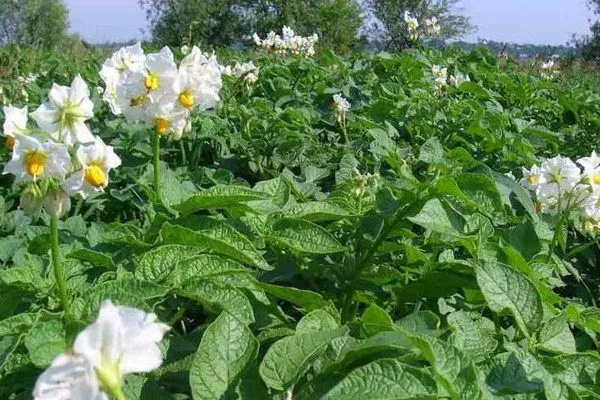
Charodey is a medium-sized intermediate shrub with upright shoots. It has the following distinctive features:
- foliage – strong;
- leaf blades – elongated (about 12-15 cm) and quite large, but there are also medium-sized ones, light green in color;
- leaf edges – slightly wavy;
- shoots – the central one is considered upright, and the lateral branches are spreading;
- flowers – snow-white and lush, delicately fragrant;
- root system – quite powerful and durable;
- inflorescences – compact type.
Characteristics of root crops
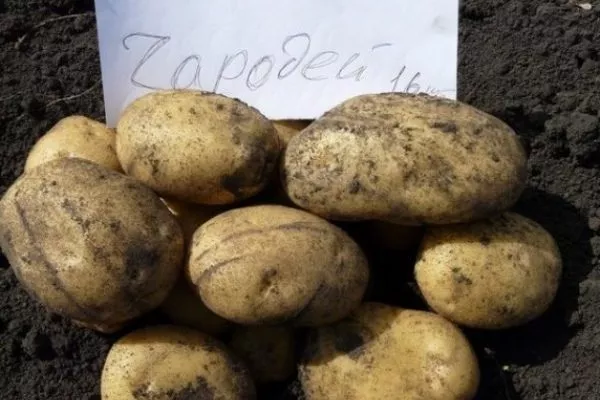
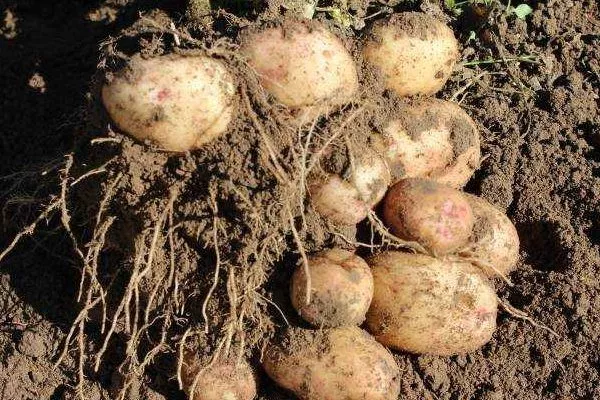
The tubers of this variety are quite large, but their size largely depends on proper agricultural practices. Potato characteristics:
- weight - 75-150 g;
- surface – smooth and light cream:
- eyes – small, almost invisible;
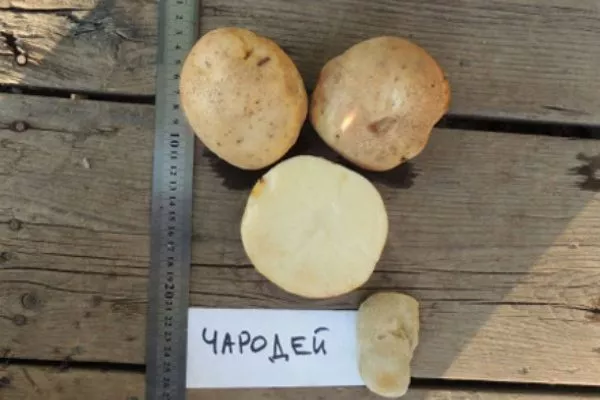
- pulp – milky in color, quite juicy and tender, has a slight sweetness and sugar content;
- form - elliptical or oval with slight flattening;
- peel – thin, elastic type;
- the number of potatoes under one bush is 10-14 pieces, but sometimes 20-30 pieces.
Taste and purpose
This potato variety is characterized by a low starch content (12-15%), which allows the fruit to retain its shape during cooking. The creamy white flesh has a delicate texture. A distinctive feature is its slightly sweet flavor when cooked. This variety is versatile – suitable for a variety of cooking methods, including mashed potatoes.
Productivity, storage
Charodey is characterized by high shelf life and yield. The roots retain their flavor and appearance until spring, indicating a shelf life of 95-96%. Yields per hectare range from 270 to 355 centners, with each bush yielding up to 2 kg, and 1 square meter yielding up to 3.5 kg.
Harvest timing
This variety is mid-early, with a maturation time of 90-105 days from germination to harvest. It is characterized by uniform germination and ripening. The first harvest of new potatoes can be done in early July, with the main crop being harvested throughout August.
Advantages and disadvantages
The Charodey variety has many advantages, among which the following stand out:
Agricultural technology
The variety prefers light, well-drained soils with neutral pH. Planting potatoes in heavy clay soils is not recommended due to the risk of disease development or growth retardation.
- ✓ Check the soil acidity level, it should be neutral (pH 6.0-7.0).
- ✓ Make sure the soil is well drained to avoid waterlogging.
Landing
The Charodey variety is typically planted in areas where cucumbers, cabbage, beets, or green manure were grown the previous season. Avoid areas where tomatoes, eggplants, peppers, or other potato varieties were grown the previous season.
Features of planting operations:
- For planting, use healthy tubers weighing from 70 to 100 g.
- It is important to carefully inspect the root vegetables, excluding specimens with signs of rot, cracks and other defects.
- During the winter, potatoes are stored in a basement or cellar. However, a month before planting, they should be brought into the light and kept at a temperature of about 15 degrees Celsius.
- By the time of planting, the sprouts should reach a length of 12-16 mm.
- Before planting, root crops are treated with a solution of growth stimulants such as Epin, Heteroauxin, etc.
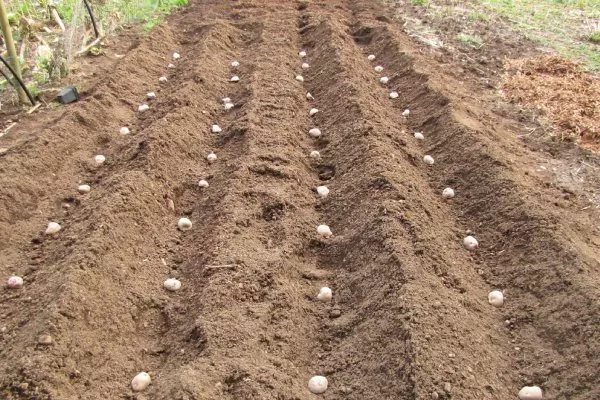
- Potatoes are planted deep into furrows or holes.
- In sandy soil, tubers are planted 10-12 cm deep, in clay soil – 5-7 cm.
- The distance between plantings should be 30-50 cm, and the width between rows should be 70-90 cm.
Growing and care
To obtain a good harvest, the Sorcerer requires careful care. This includes the following:
- Loosening. Before germination, the soil is regularly loosened to improve oxygen access to the tubers, and weeds are removed. After sprouts emerge, loosen the soil between the rows, especially after precipitation to prevent crust formation.
- Moisturizing. Watering begins when buds form, keeping the soil constantly moist. Water in the evening, using warm water, applying 2-4 liters per young plant and 5-7 liters per mature plant.
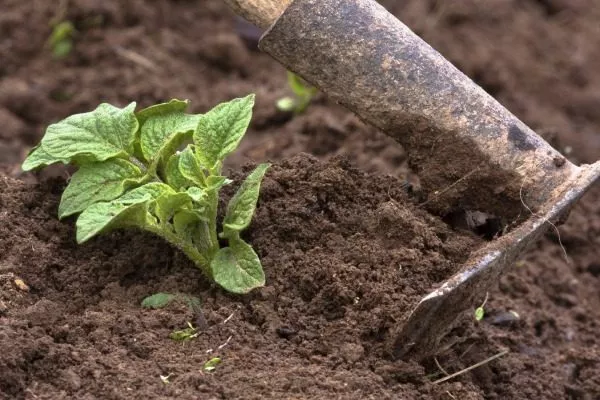
- Hilling. The procedure is performed twice per season: when the bushes reach 15-18 cm in height and before budding begins. Hilling promotes the growth of new root suckers and eliminates weeds.
- Nutrition. For top dressing, use liquid manure or a urea solution to stimulate foliage growth. The latter is made with wood ash and potassium sulfate to improve flavor and promote abundant flowering. A third is made with superphosphate to stimulate root development.
Harvesting
It is not recommended to leave potatoes in the ground longer than the time specified by the originators, this will prevent them from rotting and deteriorating both their appearance and taste.
Other features:
- Two weeks before harvesting potatoes, cut off the tops completely, which will help redistribute the plant's energy to ripening the tubers.
- Dig up the tubers in dry and clear weather, which creates ideal conditions for further drying of the roots by laying them out on burlap.
- Before harvesting, the storage area must be thoroughly prepared by treating it with slaked lime or bleaching powder. Fumigation can be carried out if necessary.
- The optimal temperature for storing vegetables is between 2 and 5 degrees Celsius. At higher temperatures, the tubers will begin to sprout, while at lower temperatures, the starch will convert to sugar.
- ✓ The tops begin to turn yellow and wither, which indicates that the tubers have stopped growing.
- ✓ The skin of the tubers becomes dense and does not come off with light friction.
Diseases and pests
The variety is resistant to diseases such as potato cancer, root blight, and common scab, although it is moderately resistant to rhizoctonia and leaf blight. However, the main threats to the plant are the golden nematode and the Colorado potato beetle, which can be controlled with specialized pesticides.
Active disease prevention is essential. This includes the following:
- treatment of seedlings and seeds with Bordeaux mixture to prevent late blight;
- removal of affected leaves and stems;
- planting plants with a strong smell around the area, such as calendula, garlic, horseradish, which repel pests;
- in dry weather, it is recommended to spray the bushes with ash liquid to protect against the Colorado potato beetle;
- A decoction of hot pepper and laundry soap is effective.
Reviews
The Charodey potato variety boasts excellent yield, shelf life, and transportability. With proper care, it resists diseases and pests. Harvesting is ready in just 2.5-3 months. It is suitable for cultivation in all regions of our country.