
The Bryansky Delikates potato is a mid-season table variety suitable for both small private gardens and large-scale industrial production. Farmers particularly appreciate its excellent marketability and shelf life, which are key factors when growing this vegetable commercially. A special feature is that the tubers do not degenerate.
History of origin
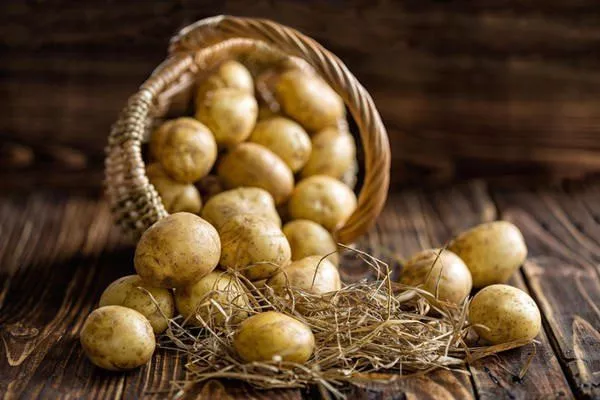
The name of this potato variety derives from the research center where the development of this plant was carried out. A unique variety was created at the Bryansk Experimental Station, part of the A.G. Lorkh All-Russian Research Institute. In 2002, it was registered in the State Register of Breeding Achievements.
The following Russian breeders took part in the creation of the Bryansk delicacy: I.M. Yashina, A.I. Kustarev, L.T. Shpakov, L.A. Erenkova, A.V. Kovalev, E.A. Simakov, A.A. Molyavko and A.M. Atroshenko.
Features of potatoes
"Delicacy from Bryansk," as the variety is popularly known, is characterized by a robust root system, producing approximately 13-16 root crops. The potatoes have excellent marketability—minimum 89%, maximum 98%.
Description of the plant and tubers
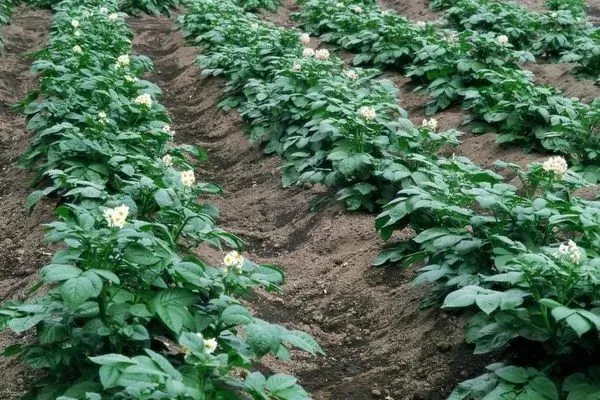
Bryansk delicacy bushes are medium in height, reaching a maximum of 60 cm. However, the crown is quite spreading, so maintaining a certain distance between plantings is necessary.
Other characteristic features of the variety:
- the leaf blades are quite large, with slightly wavy edges and light green in color, closed type;
- corolla-shaped peduncles contain small snow-white flowers;
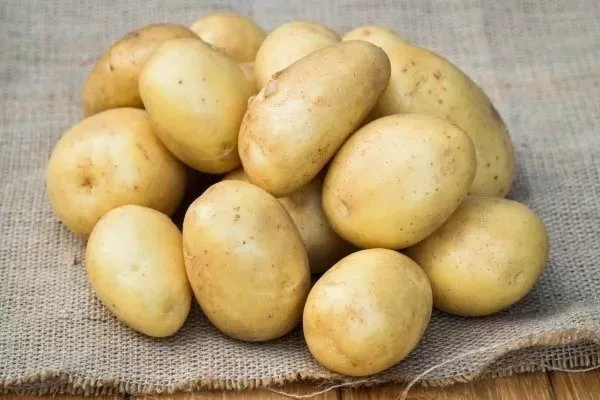
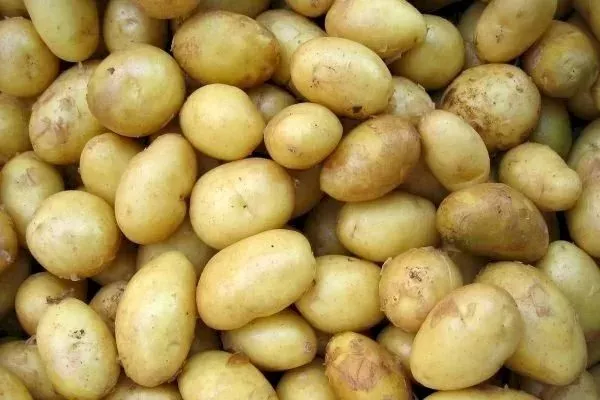
- the shape of the potatoes is oval;
- the sizes of root vegetables vary from medium to large, so their weight is 75-125 g;
- the skin is yellowish in color and its surface is perfectly smooth;
- the pulp is identical to the skin in shade, but slightly lighter;
- The eyes are few in number and very small, located superficially.
Taste characteristics and purpose
This variety offers a wide range of uses: it's ideal for making potato chips and French fries, as well as frying, baking, boiling, and other culinary applications. Its flavor is praiseworthy—one of its key advantages over other potato varieties.
Chemical composition, trace elements and vitamins
This variety is considered nutritious and healthy. The tubers are rich in:
- fiber;
- proteins;
- vitamins C, E, PP, H and group B;
- potassium;
- calcium;
- copper;
- iodine;
- magnesium;
- sodium;
- sulfur;
- phosphorus;
- gland;
- selenium;
- chromium;
- manganese;
- beta-carotene.
Ripening period
This variety is characterized by a mid-early ripening period, with a vegetation period of 75-80 days.
Productivity
The yield per hectare ranges from 160 to 290 centners, with a record high of 299 centners recorded in the Smolensk region.
Disease resistance
The variety has high resistance to a wide range of diseases and pests, including:
- potato cancer;
- leaf striping;
- change in leaf shape;
- cyst-forming nematode;
- Rhizoctonia;
- scab.
Regionality and climate
This variety is recommended for cultivation in central Russia. However, it is also successfully grown in other regions and countries with temperate or subtropical climates.
What are the pros and cons of the variety?
The positive aspects of this Bryansk delicacy are noted not only by gardeners and summer residents, but also by large farmers. These include the following:
Disadvantages mentioned include the need for regular watering and susceptibility to late blight.
What is the difference from other varieties?
Only whole tubers should be used for planting this potato variety. Using halved tubers will reduce yield and increase the risk of rotting before the first green shoots emerge.
It is also not recommended to plant small tubers, as they are not capable of providing sufficient growth and development.
Landing features
Before you start planting tubers, you need to do some preliminary treatment. What experienced gardeners do:
- The quality of the planting material is checked. Particular attention is paid to signs of disease or pests, mechanical damage, and rot. Small tubers are set aside. The ideal weight of potatoes for planting is approximately 80-110 g.
- Allow the buds to germinate. Twenty-five to 35 days before the expected planting time, place the potato seeds in a single layer in low boxes or on a flat surface. The room should be bright and warm enough. Lightly mist the tubers with a spray bottle to stimulate the buds. Once the sprouts appear, it's important to monitor their growth to ensure they don't exceed 0.8-1.1 cm in length.
- Prepare the soil. It is loosened first, and any remaining vegetation that could harbor pathogens is removed. Fully decomposed humus (25-30 kg), wood dust (500 g), and superphosphate (35-45 g) are added to the beds per square meter.
The potato planting scheme looks like this:
- Prepare the beds on the site.
- Dig holes in them for planting.
- Place the corms in the holes and cover them with soil.
- Mulch the space between the rows to retain moisture.
When growing the Bryansky Delikates variety, certain recommendations should be followed:
- Potato holes are staggered, following a pattern of 35-45 cm by 65-75 cm, where the first value indicates the spacing between plants and the second - between rows.
- To stimulate rapid seed germination and protect them from infections, potatoes are treated with fungicides and root formation stimulants.
- Potatoes should be planted in the spring, when the soil temperature stabilizes at +7…+9°C.
- A plot for growing potatoes should not be used for more than three years in a row.
- The best predecessors are legumes and green manure.
Subtleties of caring for the variety
This Bryansk delicacy requires little care. To ensure a bountiful, high-quality harvest, simply plant potatoes at the right time, provide well-aerated, light soil, and follow basic agricultural practices:
- For irrigation, use moderate volumes of water, taking into account weather conditions, air temperature and soil moisture, which should be slightly damp.
- It is necessary to avoid drought during budding and after the growth of foliage has stopped, since a lack of moisture at these critical moments can significantly reduce the yield.
- If you're growing Bryansk Delicacy in areas where it's recommended for sowing, then under normal rainfall conditions, watering can be replaced by loosening and mulching the soil, which will help maintain its moisture.
- Potatoes from Bryansk respond particularly well to nutritional supplements applied through both the roots and foliage. A combination of organic and mineral fertilizers is preferred. A minimum of three applications are necessary during the growing season:
- after the first stems appear;
- during the period of the beginning of bud formation;
- during active flowering.
- Weeding the soil regularly is essential, as weeds compete with potatoes for water and nutrients, which negatively impacts the growth of tubers and promotes the spread of diseases.
- Hilling of potatoes occurs twice: when the plant reaches 14-17 cm in height and a couple of weeks later. This task is performed in the morning or evening.
How to combat diseases and pests?
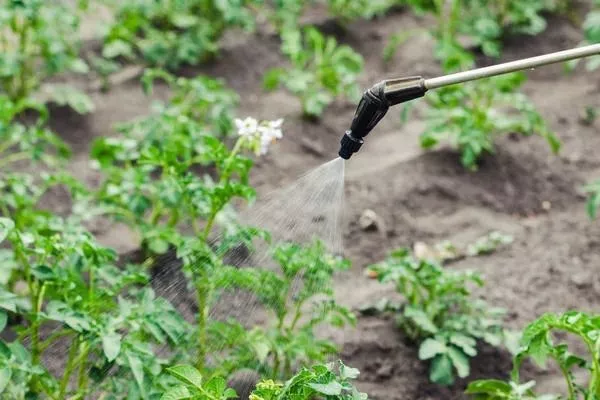
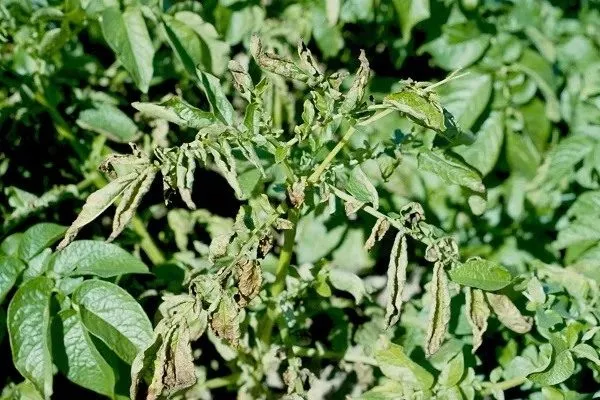
The Bryansky Delikates variety is susceptible to diseases and pests only under poor growing conditions, which can lead to late blight. To prevent such problems, treat the corms with Maxim fungicide before planting, according to the manufacturer's recommendations.
The Colorado potato beetle is a serious pest for this variety. The use of strong chemicals is not recommended, but if necessary, the final treatment should be carried out at least one month before harvest.
Gardeners prefer to remove beetles from their plants manually or use home remedies. In industrial farming environments, avoiding chemical treatments is virtually impossible. To prevent wireworm infestations, it's important to regularly rotate potato planting locations (every 2-3 years).
Harvesting and storage
To successfully grow potatoes, it's important not only to plant them correctly and provide proper care, but also to dig up the tubers in a timely manner and create the right storage conditions:
- Just six weeks after planting, you can begin digging up the first tubers. These potatoes are intended for quick consumption, as they are not suitable for long-term storage.
- Potatoes can be harvested manually using a shovel or using a mechanized method.
- Fully ripe potatoes are subject to careful selection: damaged tubers are discarded, after which they are scattered in an open space or under a canopy to dry.
- They are placed in boxes and stored in a room characterized by darkness, good ventilation and a temperature of +2 to +4-5 degrees.
What problems might arise?
During the cultivation of the Bryansk delicacy, the following unpleasant moments may arise:
- development of late blight as a result of improper agricultural practices;
- wireworm infestation due to non-compliance with crop rotation rules and lack of preventive measures;
- rotting of seed material when using half tubers for planting.
Reviews
The Bryansky Delikates variety is a mid-early variety that thrives in temperate and subtropical climates. It is highly disease-resistant, impresses consumers with its delicious flavor, has excellent marketability, and requires little special care. The key is to avoid excessive drying of the root zone.