
Bernina is a mid-season table potato variety. It is characterized by high yields and marketable tubers with excellent flavor. It has its own specific care requirements, which, if understood, help domestic gardeners maximize their yields.
Who developed the variety and when?
Bernina is a German-bred variety developed by Bohm Heinrich (Europlant Pflanzenzucht GMBH). It was approved for use in Russia in 2017. It is intended for cultivation in home gardens in the Volga-Vyatka region.
Plant characteristics
Experienced gardeners can recognize Bernina by its plants' appearance. These are bushes of the stem-type, characterized by rapid foliage development early in the growing season.
Description of the plant and tubers
The Bernina potato variety has the following characteristic features:
- average height;
- belonging to the erect or semi-erect type;
- medium to large sized foliage, light green and green in color;
- Flowers: large in size, lacking anthocyanin coloration on the inner side of the corolla.
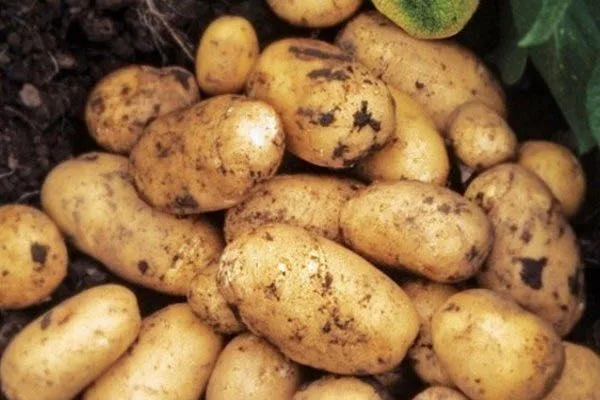
Experienced gardeners highlight the following characteristics of tubers:
- weight - 112-142 g;
- elongated oval shape;
- eyes set at medium depth;
- yellow color of the peel;
- dark yellow flesh.
Taste characteristics and purpose
Bernina tubers have a good flavor. 100 grams of raw pulp contains the following nutrients and beneficial substances:
- starch - from 11.1 to 14 g;
- protein - 1.7 g;
- dry matter - 17.4 g;
- sugars - 0.6 g;
- ascorbic acid - 24.6 mg.

Ripening and yield
Bernina is a mid-season potato variety. Its tubers mature in 90 days. The yield figures for this vegetable variety are as follows:
- from 221 to 44900 kg per 1 hectare of planting (this is higher than that of standard varieties such as Aurora, Petersburg);
- 70400 kg per 1 ha (maximum yield obtained during state testing of the variety).
Commercial and consumer qualities of tubers
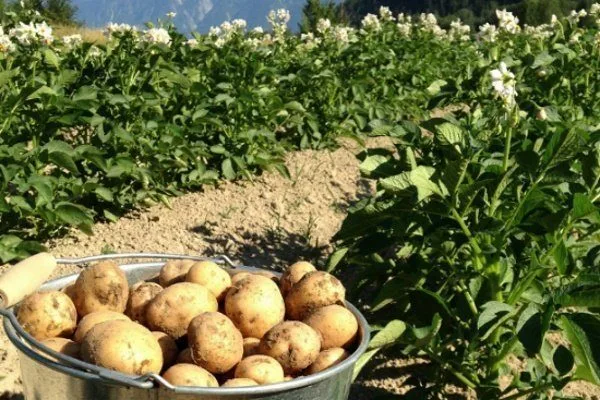
The Bernina potato is distinguished by its large fruit. Its tubers are uniform in size, smooth, and easy to handle when peeling.
They also have the following characteristics:
- marketability - 77-95%;
- shelf life - 96%.
Disease resistance
This variety is distinguished by its resistance to common and dangerous vegetable diseases, which has earned it recognition among domestic gardeners.
Bernina plants are resistant to the following infections and parasites:
- nematode (resistance - 9 points out of 10);
- potato cancer;
- curling of leaves;
- wrinkled and striped mosaic;
- tuber rot.
They are moderately resistant to Alternaria blight, scab, and late blight of the tops. According to the All-Russian Research Institute, this vegetable variety is susceptible to tuber blight. Preventative treatment of the bushes can help prevent partial yield loss due to infection.
Landing features
Bernina is very demanding when it comes to soil structure and fertility. Gardeners achieve maximum yields by growing this potato in the following soil types:
- black soil;
- sod-podzolic soil;
- drained peatlands;
- gray forest soils;
- sandy loams;
- light and medium loams.
Prepare the area for potatoes in the fall:
- remove plant debris;
- dig up the soil;
- add manure, peat, compost;
- add sand to heavy soil;
- Apply lime if the soil is acidic.
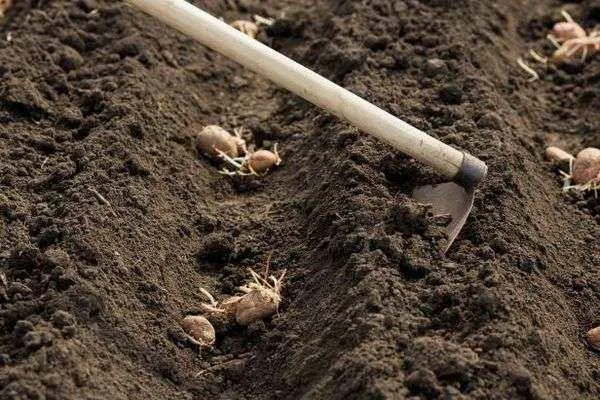
In the spring, re-dig the area. Prepare the seed for planting by sprouting the tubers in advance. Follow these steps:
- a month before planting, bring them into a warm room with a temperature of +15-18℃ and diffused light;
- Water the potatoes periodically until strong sprouts appear (1.5-2 cm long).
Treat the seed with copper sulfate, potassium permanganate, or boric acid solution to prevent late blight. Treatment with Fitosporin-M is also acceptable.
Plant potatoes 10 cm deep when the soil temperature warms to +8℃. Follow this pattern:
- row spacing - 75 cm;
- distance between bushes - 40 cm;
- seeding depth - up to 17 cm.
Care instructions
To ensure abundant fruiting, bushes of this variety require the following procedures:
- regular watering;
- weeding;
- loosening;
- hilling;
- treatments for diseases;
- application of fertilizers.
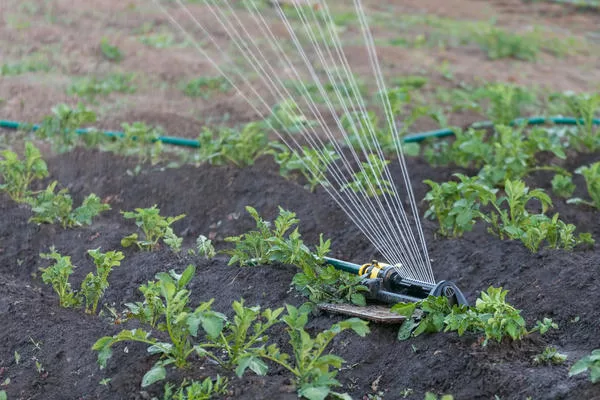
Bernina is sensitive to moisture deficiency. During flowering and dry periods, water the potato planting twice a week. To prevent moisture evaporation, remember to mulch with sawdust.
- Carry out the first watering 10-14 days after planting, if there is no natural precipitation.
- Increase the frequency of watering to 3 times a week during the flowering and tuber formation period.
- Reduce watering 2 weeks before harvesting to improve the shelf life of tubers.
An important maintenance procedure when growing this potato variety is hilling the plants. This should be done three times per season:
- when the sprouts reach a height of 10-15 cm;
- 14-20 days after the first hilling;
- before the tops close.
Inspect your Bernina plantings for pests and signs of disease. If problems are detected, treat the bushes with biofungicides such as Fitosporin-M. If severe infestations occur, use chemical treatments (Bordeaux mixture, Acrobat).
Potato crops are also susceptible to attacks by the Colorado potato beetle. Hand-picking the pests can help eliminate the problem. If the infestation is severe, use a commercial pesticide such as Colorado.
To ensure a bountiful harvest of tubers, don't neglect fertilizing. Fertilize your Bernina potato planting several times throughout the season:
- at an early stage of bush growth — nitrogen compounds, chicken manure solution (1:20), urea;
- at the stage of tuber formation — phosphorus-containing and potassium mixtures (for example, potassium sulfate or double superphosphate, dissolving 15 g of the preparation in 10 liters of water).
Harvest the tubers immediately after the tops have lodged and dried out. Mow them down a week beforehand to prevent late blight. Spread the dug potatoes under a shelter to dry. After 2-3 days, move them to a well-ventilated area. After another 2 weeks, transfer the tubers to a cellar for long-term storage.
Advantages and disadvantages
Bernina has become a favorite among domestic gardeners and commercial potato farmers for its many advantages. However, this vegetable variety does have a few drawbacks:
Gardeners' reviews
Bernina is a high-yielding, large-fruited potato variety. Reviews from Russian gardeners and farmers are positive. They love this potato for its excellent flavor, disease resistance, and productive plants.