
Cabbage can become infected with a fungal disease called clubroot during its growth. To combat it successfully, it's important to understand its causes. The causes, early signs of the disease, control methods, and preventative measures are discussed below.
Description of the disease and the pathogen
Clubroot is one of the most dangerous and widespread diseases. Almost every farmer is familiar with the "mutilated" roots of plants. It is caused by the lower fungus Plasmodiophora brassicae.
It develops only within living plants, surviving the winter as spores in the soil. In the spring, these spores form zoospores—a life cycle stage of algae and some lower fungi. Using flagella, the zoospores migrate through the plant's hair roots in a liquid medium. The infected cells rapidly expand and proliferate.
A plant can become infected with clubroot at any time during the growing season.
Signs of the disease
In some cases, the disease doesn't affect the cabbage's appearance in the initial stages. Gardeners tending their crops may not even realize they're infected. However, an inspection of the root system reveals the obvious.
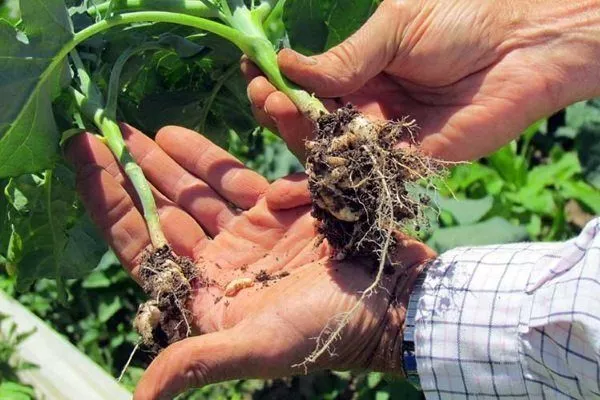
On the roots of young bushes, various growths and swellings are visible to the naked eye. These growths block the roots' absorption capacity, preventing the plants from absorbing water and minerals. On the roots of healthy seedlings, growths appear on the lateral roots in the form of icicles and small beads.
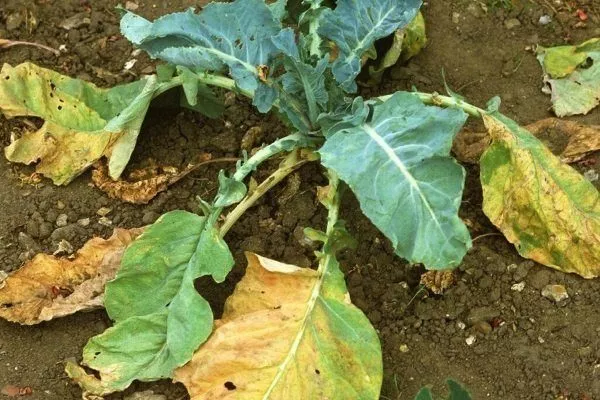
With severe and early clubroot infestation, cabbage seedlings become stunted and their leaves turn yellow. Diseased plants are unsuitable for further cultivation because they root poorly, and heads fail to form completely or do not form at all, making it impossible to obtain a good harvest suitable for long-term storage.
One of the main signs of clubroot in cabbage is the wilting of the lower leaves in hot weather.
Factors that provoke the disease
The source of infection is usually the soil, where the fungal spores live. These spores can remain viable for a very long time—six years or more. Furthermore, spores survive well in compost, so placing plants infected with the parasitic fungus in compost is strictly prohibited.
The pathogen, which enters the soil from decaying plants, can be spread throughout the entire plot by water, soil insects, and earthworms. Clubroot is primarily introduced to uninfected areas by diseased seedlings. Weeds can also be a source of infection.
The following climatic conditions contribute to the development of clubroot:
- air temperature 18-25°C;
- ambient humidity 75-90%;
- soil acidity is 5.6-6.5, that is, acidic and slightly acidic soils; in a neutral environment, the pathogen's activity decreases, and in an alkaline environment (pH greater than 7.0), it dies.
This disease is most often recorded in the Non-Black Earth Region, where soils are characterized by high humidity and acidity. It is also a frequent visitor to heavy and wet soils.
However, overdried soil also promotes the awakening of microorganisms, as does depleted soil, which lacks calcium and potassium, as well as microelements such as boron, zinc, chlorine, and humus.
As soon as the soil is infected with clubroot, the area is “sent” into quarantine, which can last for several years.
Methods of control
Dormant spores of the parasitic fungus survive in the soil for up to 7 years, but if host plants are not planted in the area, their viability declines each year. Therefore, one effective method of combating this disease is crop rotation, but they also use folk remedies and chemical preparations.
Crop rotation
Plants that are not only resistant to clubroot but also accelerate the death of the fungus are planted in areas affected by clubroot.
| Culture | Soil cleanup period, years | Efficiency, % |
|---|---|---|
| Nightshade | 3 | 85 |
| Marsh marigolds | 2 | 90 |
| Liliaceae | 2 | 95 |
The "pills" for clubroot are:
- All plants in the nightshade family—tomatoes, potatoes, eggplant, peppers, sweet tobacco, hybrid petunias, and others—will rid the soil of the pathogen within three years.
- Crops from the chenopodiaceae family include beets, spinach, and Swiss chard. The latter two families will help clear the soil of spores even faster—within two years.
- Representatives of the lily family include onions, garlic, lilies, hyacinths, and others.
Mixed plantings of tomatoes and spring garlic have shown the best healing effect. In this case, the soil is restored within one season. To be on the safe side, beets are planted in this bed the following spring.
Folk remedies
If the cabbage becomes infected at a later stage, you can try to save the crop with folk remedies. However, it's important to remember that it won't be possible to completely cure clubroot this season. The following methods are used:
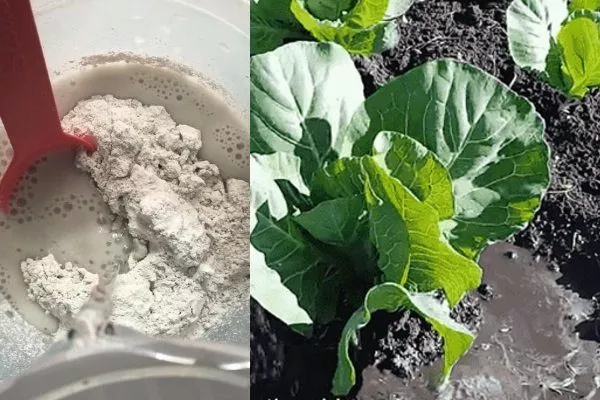
- Infusion of wood ash. At the first sign of trouble, remove all wilted, yellowed leaves, and water the bush with a wood ash infusion: 10 cups of the mixture are poured into 10 liters of water and left for two days. Then, pour 1 liter of the infusion into a bucket of water, stir, and pour 500 ml under each bush.
Water the plants after the main watering. Next, hill up the cabbage to encourage additional root growth at the top of the stem. - Organic. Organic fertilizers—cow manure, vermicompost, compost, and yeast—are added to the plants every seven days. These help inhibit the fungus's activity and spread.
- Tops. After harvesting, chopped beet and quinoa tops are spread around the plot, a large amount of organic matter is added, and the soil is dug up.
- Mortar. Infected beds are also watered with a lime solution: 150 g of lime is dissolved in 5 liters of water. 500 ml of the prepared solution is poured under each bush. After this treatment, the soil pH will increase, making it alkaline.
- ✓ Use only hardwood ash, excluding oak and walnut, due to their high tannin content.
- ✓ Ash must be sifted through a sieve with cells no larger than 1 mm for uniform distribution.
If clubroot manifests itself at the last stage of development, then all heads of cabbage are removed, and the soil is immediately treated.
Chemical and biological preparations
This pathogen is resistant to most antifungal drugs. However, several drugs have been experimentally identified that effectively inhibit the growth and development of the fungus. These include:
- Trichodermin;
- Previcur;
- Gliocladin;
- Topaz;
- Fitosporin-M;
- Alirin B;
- Fundazol.
However, no drug can destroy the parasitic fungus and cure the cabbage; they only inhibit the development of the fungus and prevent its reproduction.
Clubroot spore test
Experts recommend testing for fungal spores before returning cabbage to the garden. To do this, sow the fast-growing Chinese cabbage in the spring. Throughout the growing season, dig it up little by little, along with the root system, and carefully inspect all the roots.
Dig up young plants, beginning with the first true leaves, and before heads form. If there are no thickenings or growths on any roots, the soil has been successfully treated and can be safely planted with cruciferous vegetables.
The appearance of even one “icicle” on the roots indicates the presence of spores in the soil; treatment should be extended for another year.
Preventive measures
To avoid wasting time and effort on treating this dangerous disease, follow some preventative rules.
Salt-resistant varieties of white cabbage
Cabbage varieties resistant to the disease are presented in the table:
| Name | Ripening period | Growing region | Weight of head of cabbage, kg |
| Kilagerb | mid-season | Northwest, Central | 2.4-3.0 |
| Kilagreg | early ripening | Northwestern, Central, Volga-Vyatka, Central Black Earth, Ural, West Siberian | 1.7-2.5 |
| Kilaton | late-ripening | North-West, Central, Volga-Vyatka | 1.9-3.0 |
| Hope | mid-season | all except the Northern and North Caucasian districts | 2.4-3.4 |
| Ramkila | late-ripening | Central | 2.0-2.7 |
| Tequila | mid-season | Northern, Central, Volga-Vyatka, North Caucasian, Ural, West Siberian, Far Eastern | 2.3-3.0 |
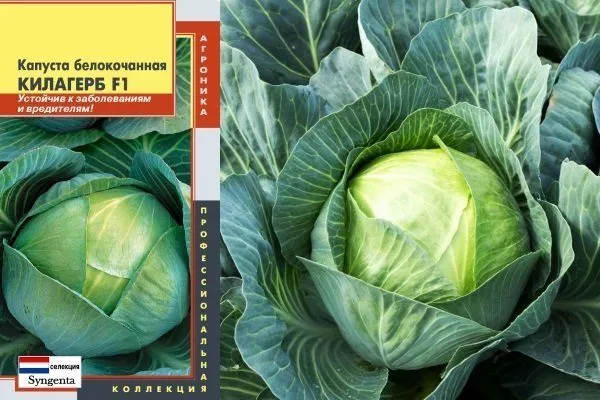
Cabbage Kilagerb
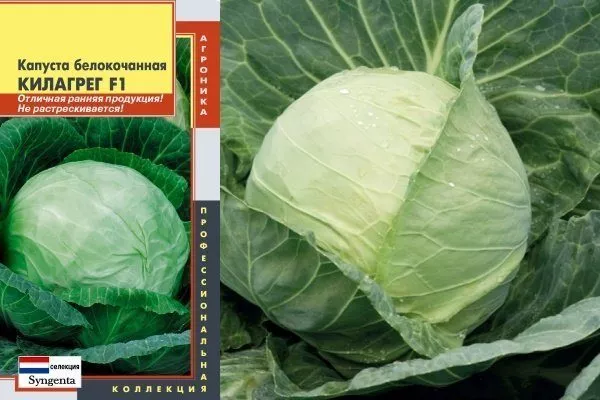
Cabbage Kilagreg
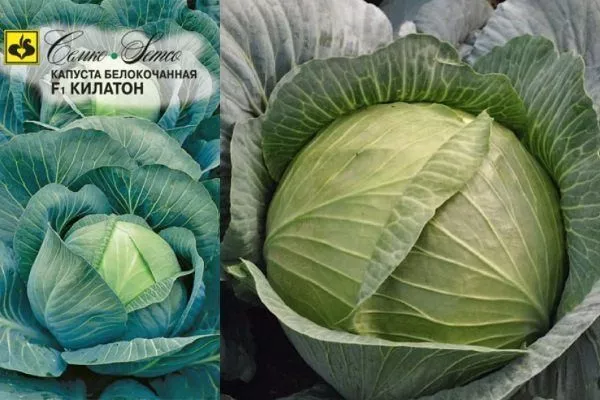
Cabbage Kilaton
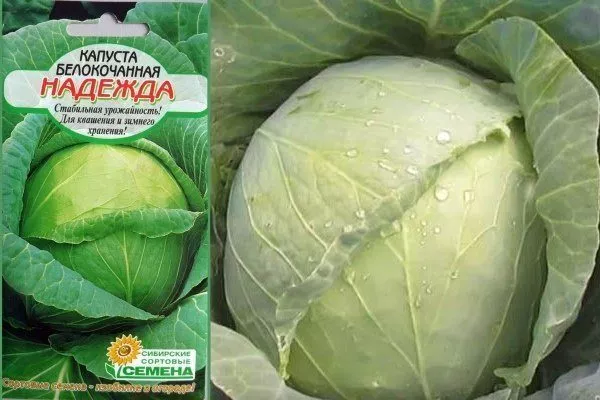
Cabbage Hope
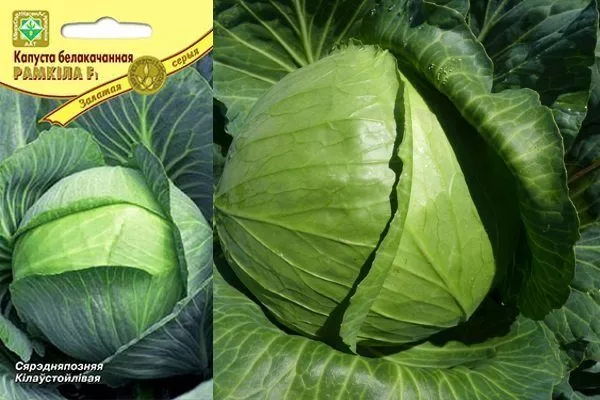
Ramkila Cabbage

Tequila Cabbage
Pre-sowing preparation of seeds and soil and what to add to the hole before planting
Before sowing, seeds are treated in several ways:
- soak them in hot water (50°C) for 20 minutes, the water should not cool down; then the seed material is cooled and dried well;
- or leave the seeds in a 1.5% mustard solution for 6 hours.
A week before planting the seedlings in a permanent location, the soil is treated with a solution prepared from 300 g of copper sulfate, 300 g of slaked lime and 8 liters of water, or treated with a 0.1% solution of Fundazol.
Before transplanting to a permanent location, the roots of seedlings are kept in a solution of Fitosporin-M for 2 hours or treated with a suspension of sulfur-containing preparations - colloidal sulfur, Thiovit Jet, Cumulus DF.
When planting without a root ball, seedling roots are rolled in lime flour or dipped in a lime-clay slurry. The latter option is preferable, as the lime adheres well to the roots.
Weeds are removed promptly, especially those from the cruciferous family, such as shepherd's purse, rapeseed, field mustard, and field mustard. The roots of these plants provide excellent shelter for spores during the winter.
It is recommended to add 1 handful of wood ash or ashes to the hole before planting cabbage.
Gardeners' Tips
Experienced gardeners know how to combat fungal diseases and protect their crops from them forever:
- for preventative purposes, marigolds, spinach and calendula are planted next to cabbage;
- water the seedlings with lime milk (80 g of the substance is mixed in 1 liter of water) 2-3 days before transplanting them into open ground;
- Before planting the seedlings, add 1 dessert spoon of calcium nitrate to each hole and mix it with the soil;
- Cabbage is grown in narrow beds, which allows for the disease to be localized if necessary and the pathogen to be quickly cleared from the soil.
Clubroot is a dangerous fungal disease that can leave a gardener without a vegetable harvest. Prompt treatment and preventative measures can help overcome it and eliminate it forever.