
Cabbage is one of the most popular and sought-after vegetable crops, found in almost every garden. However, not all gardeners can achieve not only a high-quality but also a large harvest. To achieve this, it's important to understand some of the subtleties and peculiarities of planting and growing cabbage outdoors.
Botanical description
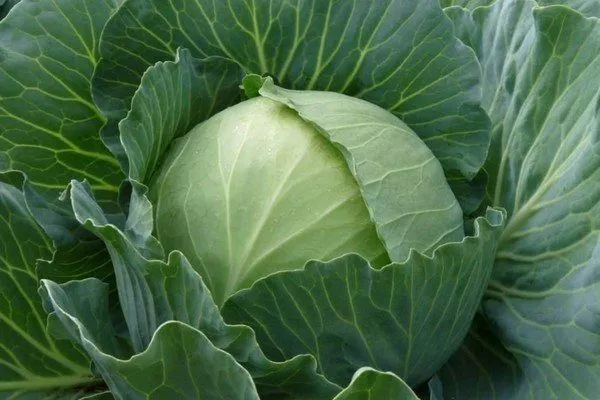
Cabbage is a biennial vegetable crop belonging to the cruciferous family. It has thick, slightly green leaves that are closely packed together, resulting in a spherical head.
White cabbage contains many useful and valuable substances, which is why it is so popular.
The plant has a low, branched stem bearing numerous leaves. During the first year, the leaves are closely packed together, forming a head. In the second year, flowering shoots emerge, which can reach a height of about 1.5 meters. It is on these shoots that the fruit, pod-shaped and containing seeds, develops.
White cabbage is a sun-loving and cold-hardy plant. For full flowering and subsequent fruit ripening, it requires at least 13 hours of daylight.
Depending on the region where the cabbage will be grown, it's important to select early or mid-season varieties. In this case, the heads will ripen no sooner than 70-75 days or longer.
Common varieties and hybrids
When choosing a specific cabbage variety, pay attention to its ripening time. This will determine the quality of the fruit and its shelf life.
Beginning gardeners don't know whether to choose a single variety or a hybrid. It's important to keep in mind that the harvest from single-variety plants will ripen unevenly. The main characteristic of hybrids is that the fruits ripen almost simultaneously.
Taking into account the length of the growing season, cabbage is divided into:
- Early ripening. It takes about 3-4 months from germination to harvest. The fruits are suitable for fresh salads or long-term storage.
- Mid-season. The growing season lasts approximately four months. The fruits are recommended for fresh salads and cabbage soup; they can be stored for a short time. You can ferment the cabbage, but it's recommended to consume the finished product immediately rather than storing it.
- Late. It takes about 5-6 months from germination to fruit ripening. The fruits are ideal for long-term storage.
Today, a wide variety of cabbage varieties are known. When choosing a variety, consider your region and its characteristics:
- Gribovsky 147. The heads are not too large, with a medium density. If cool weather persists for a long time, the plant will produce flower stalks in the spring. The greatest danger to the variety is a disease called "cabbage clubroot".
- Transfer. This high-yielding hybrid variety is resistant to cracking during ripening. The head is medium-dense, weighing approximately 1.5 kg. The plant prefers moist soil, so frequent watering and fertile soil are required.
- Parel. This hybrid distinguishes itself from similar varieties by its high and consistent yield. The fruits are not suitable for long-term storage. It is recommended to eat them first and not store them. It has high resistance to Fusarium wilt.
- Glory 1305. A mid-season variety, the fruits have excellent flavor. Each head weighs approximately 3-4 kg. The fruits have a medium shelf life and are suitable for salads and pickling.
- Hope. This variety has excellent resistance to fruit cracking. The heads are flat and round, and can be stored for approximately 4-4.5 months. The fruits are suitable for pickling and making fresh salads.
- Gift 2500. This mid-late variety is characterized by good yields and excellent resistance to pests and diseases. The fruits have excellent flavor, are flat-round, and weigh approximately 3.5-4 kg.
- Moscow late 15. This variety is ideal for pickling, but does not store well. The fruits are large, weighing approximately 6 kg. It requires nutrient-rich soil and does not tolerate excessive waterlogging.
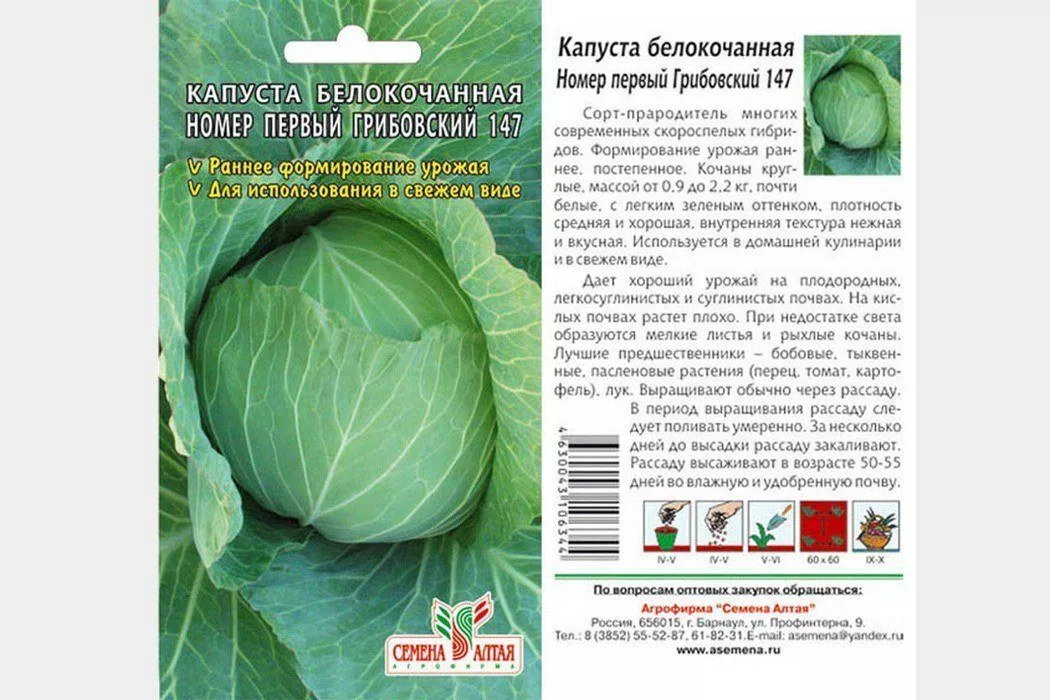
Seeds of the Gribovsky 147 variety
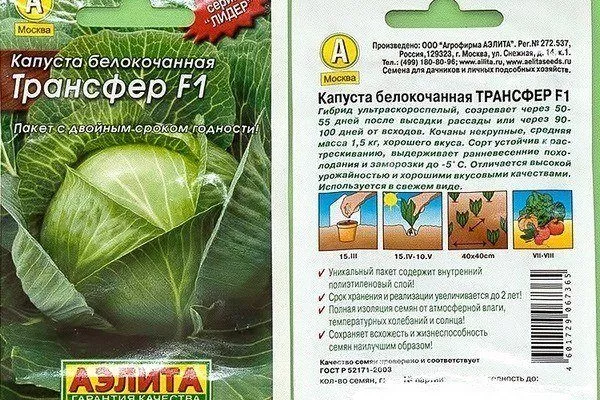
Seeds of the Transfer hybrid
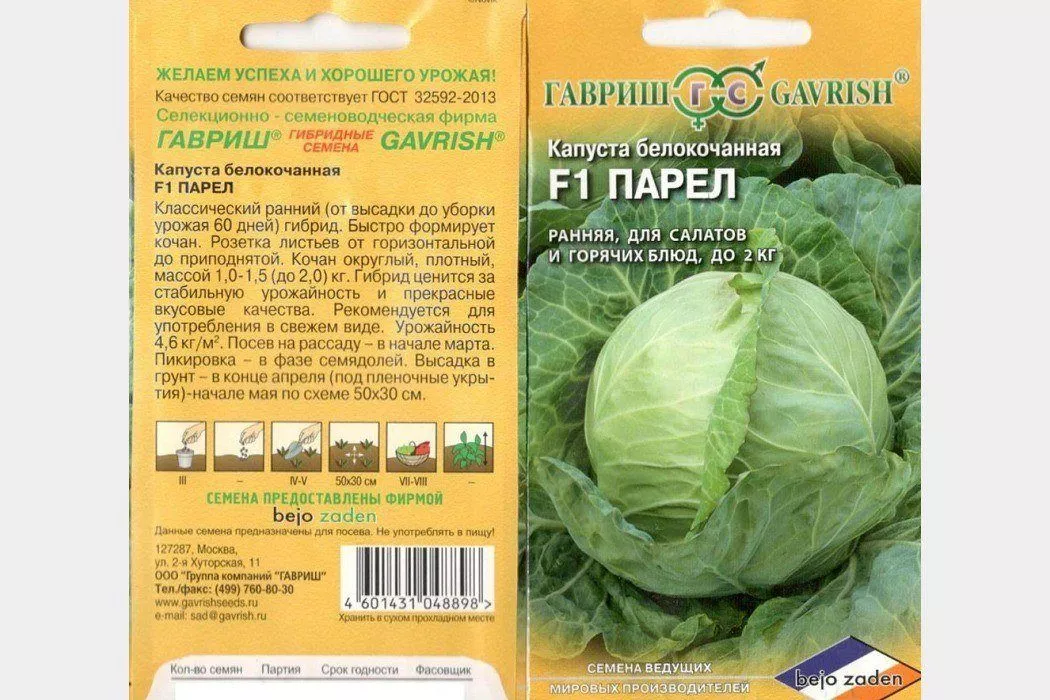
Cabbage seeds, variety Parel
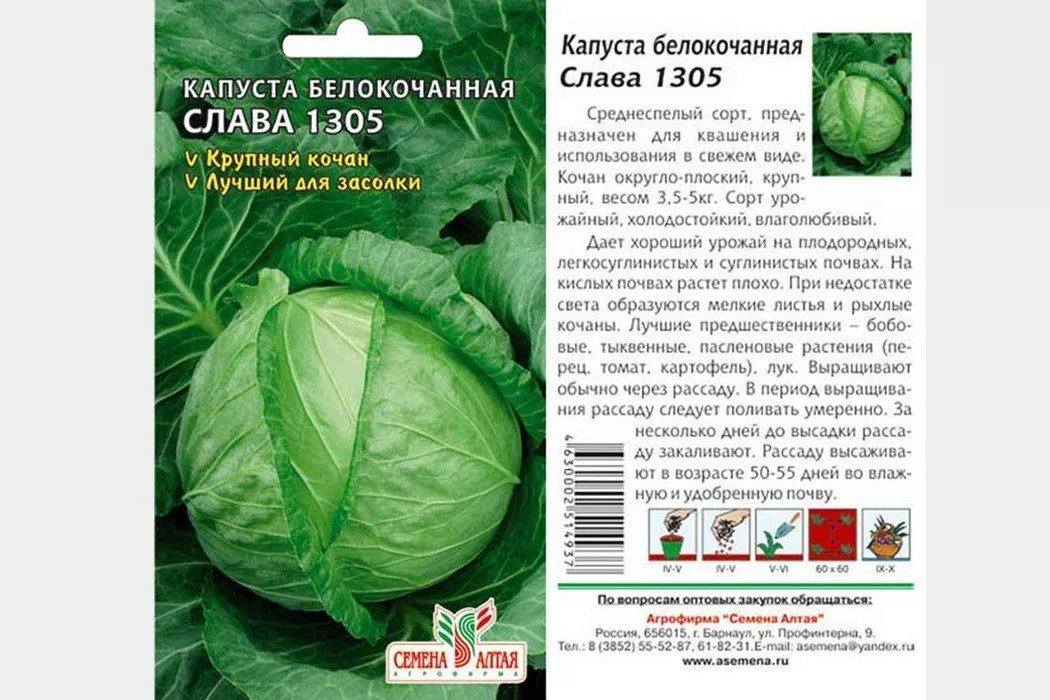
Cabbage seeds, variety Slava-1305
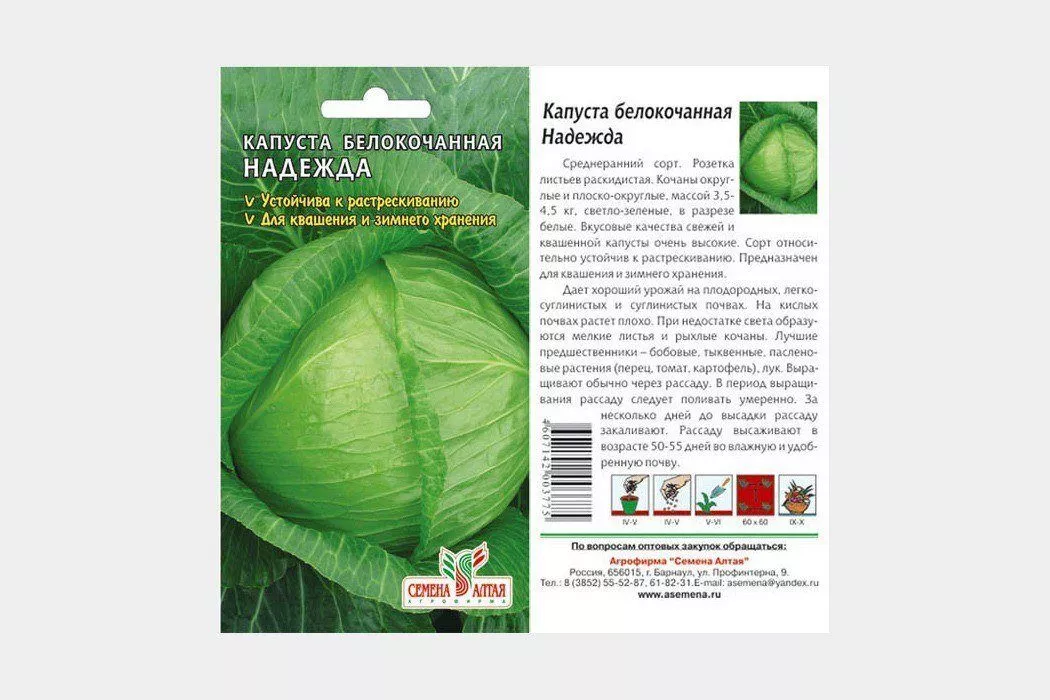
Cabbage seeds, variety Nadezhda

Cabbage seeds, variety Gift 2500
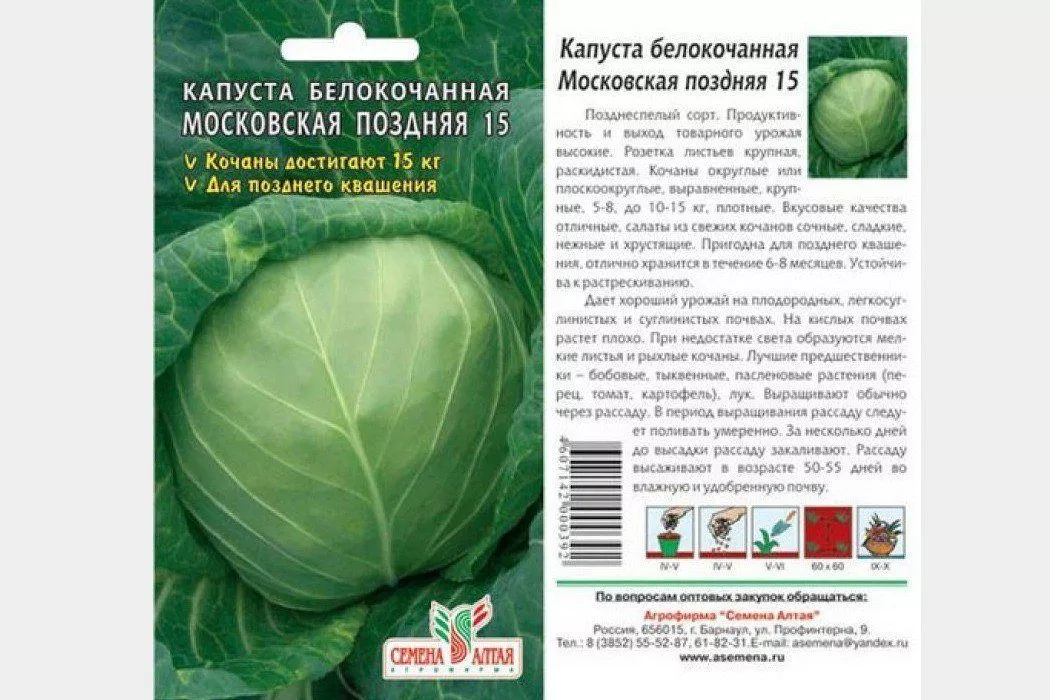
Cabbage seeds, Moscow late variety
Features of cultivation
To grow cabbage and reap a bountiful harvest, you need to follow a few simple guidelines. It's important to ensure proper and timely watering, maintain a suitable temperature, and remember to fertilize it regularly.
If the seedlings are planted in boxes, picking is essential.
Soil and crop rotation requirements
Cabbage can be grown easily in a variety of soil types. The exceptions are gravel and light sandy soils, which don't retain valuable moisture well. Ideal soils for cabbage include fertile, light-textured loams and lowland peatlands. These soils retain moisture well while allowing excellent aeration.
- ✓ The optimal depth of the fertile layer should be at least 30 cm.
- ✓ The soil must have good drainage to avoid water stagnation.
The optimal pH is 6.5-7.0. If the site has acidic soils, liming is required every 4-6 years. To do this, add dolomite flour during autumn tilling at the following rate: 5 kg per 10 square meters (slaked lime is ideal).
It is not recommended to replant white cabbage in the same area or grow it in areas where cruciferous vegetables were grown last season. This should be done no sooner than after three years. Failure to properly rotate the crops or to plant related crops nearby can lead to the rapid spread of diseases specific to this plant species.
It is recommended to plant cabbage in areas where legumes, lilies and nightshade crops grew last season.
Lighting and temperature conditions
Cabbage has high light requirements and cannot tolerate even slight shade. Choose a completely open site for it, free of tall plants, bushes, or trees. If the plant experiences insufficient light, the foliage will begin to grow vigorously, but the heads may remain completely unformed.
To get a large harvest, provide cabbage with about 17 hours of daylight.
This type of garden crop is considered cold-hardy. However, the level of tolerance to low temperatures depends on the specific variety and the stage of development of the crop. Seed growth begins at temperatures of +2 to +3 degrees Celsius. For rapid and vigorous germination, a constant temperature of +18 degrees Celsius is required.
Young seedlings grow well at temperatures of 12-14 degrees Celsius. If the seedlings successfully undergo the hardening-off period and take root, after transplanting into open ground, they can withstand temperatures of around -7 degrees Celsius. They also tolerate short frosts.
To ensure the successful development of a mature plant, a temperature of 15-25 degrees Celsius is considered ideal. In southern Russia, when cabbage is planted, the plants begin to wilt at high temperatures. Mature heads of cabbage can easily withstand light frosts of -3 to -7 degrees Celsius. However, this will depend directly on the specific variety.
Select the variety taking into account the region in which it will be grown.
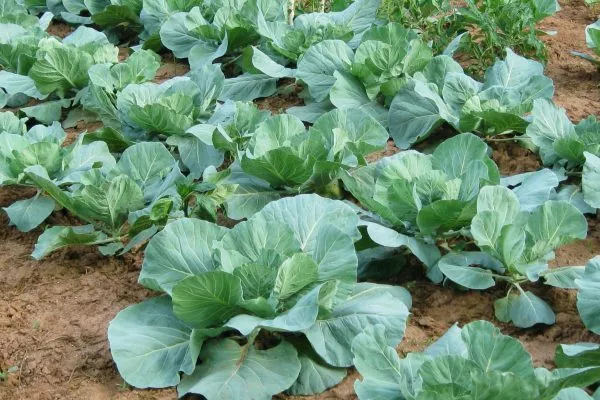
Humidity requirements
For growing cabbage, the optimal soil moisture level is approximately 80%, and the air moisture level is 55-75%. If you plan to store cabbage for a long time over winter, ensure that the soil moisture level remains approximately 70-75% at the beginning of the second growing season. If the plant experiences a lack of moisture, development will be impaired, and heads will not form.
Other features:
- The rate and frequency of watering are adjusted based on rainfall. It's important to maintain the soil consistently at this level, so that a small lump of soil can be rolled between your palms to form a ball. When the soil begins to crumble, it's time to water.
- Cabbage is very sensitive to moisture levels, but overwatering should be avoided. Excessive water can lead to the rapid spread of fungal diseases and cause the heads to crack.
- After watering, loosen the soil, which is very important when planting in heavy soils.
- Combine loosening and hilling. Perform the first hilling 14 days after planting. If you're planting late varieties, perform this procedure a little later—approximately 20-25 days after transplanting into the open ground. Then, hill the soil every 14-16 days until the leaves close.
Site preparation
The success of the harvest depends directly on the proper preparation of the transplanting site. You can purchase a ready-made universal substrate at any gardening store or make your own. In the latter case, mix equal parts humus and turf soil, then add ash using the following ratio: 1 cup of ash per 10 kg of soil.
Ash is an excellent source of valuable elements and becomes an effective preventative measure against black leg.
When preparing the substrate, do not use soil from an area where cabbage or other types of cruciferous plants have previously been grown.
Seeds and seedlings
The future harvest directly depends on the seeds you choose. First, you need to decide whether you need juicy, early white cabbage for fresh salads or late cabbage that will keep well through the winter. This is the most important selection criterion.
Before planting seeds, they need to be properly prepared. Regular care of the seedlings will ensure strong and healthy plants.
Seed preparation
Before planting seeds, prepare them properly. Disinfect the seed material to prevent viral or bacterial infections.
The disinfection procedure is very simple and follows the following scheme:
- warm the seeds in hot water (approximately +55 degrees) for 20-25 minutes;
- cool in boiled and cold water - about 4-6 minutes;
- Treat the seeds with a growth stimulator and leave them in the solution for several hours.
Sowing seeds for seedlings
Before planting, it's recommended to harden the seeds, which will increase their resistance to various diseases. However, it's important to keep in mind that some varieties don't tolerate soaking. Therefore, be sure to read the information provided on the packaging beforehand.
Once all preparatory procedures are completed, you can begin the planting process:
- place the seed in the soil, deepen it a little, but no more than 2 cm;
- Water well, when sprouts appear, moisten the soil again;
- cover the soil with film to retain moisture;
- Until seedlings appear, store the seeds at a temperature of approximately +18… +22 degrees.
Watch a video on how to grow strong, healthy cabbage seedlings:
Picking seedlings
After 15-20 days from the emergence of the first shoots, when the leaves are fully formed, the cabbage can be pricked out. This involves transplanting the seedlings into separate, larger containers.
If possible, transplant seedlings into individual trays or pots, especially if growing early and late varieties. Cardboard juice cartons are also ideal, but make a few holes in the bottom first.
Picking cabbage seedlings proceeds approximately according to the following scheme:
- 40-50 minutes before picking, water the seedlings well;
- take the sprout together with the old soil;
- shorten the root by a third;
- Place the seedlings 2 cm deep and compact them lightly, but not too hard, so as not to damage the roots.
Transplanting seedlings into the ground
You can transplant seedlings when the plants have:
- the early variety has 4-6 full leaves, the plant height should be approximately 14-22 cm;
- mid-season or late varieties have 4-5 full leaves, the height of the cabbage is about 16-20 cm.
- ✓ The presence of 4-6 true leaves for early varieties.
- ✓ The plant height should be between 14-22 cm.
In central Russia, try to transplant seedlings as early as possible, once the threat of frost has completely passed. The ideal time is considered to be late April and early May. Late-season varieties should be transplanted from mid- to late May. Mid-season varieties should be transplanted a little later, from late May until June.
Planting of seedlings is carried out according to the following scheme:
- prepare the area in advance;
- stick to this planting pattern – 50x40 cm;
- Do not plant too densely, as cabbage is a large plant and requires space and sufficient light;
- plant seedlings at a depth no deeper than the first full leaf;
- When planting, make sure that young leaves, which are the growth point of plants, do not end up underground;
- Plant seedlings in the evening or during cloudy weather;
- After planting, water the plants, but not too much.
Non-seedling method of cultivation: sowing cabbage seeds in open ground
Using this method, you can harvest approximately 11-15 days earlier. The planting technique is very simple and doesn't require any special skills. Simply follow these steps:
- thoroughly prepare the area for planting in advance;
- Choose the area where you plan to plant cabbage with particular care, as ensuring protection from diseases and pests will be much more difficult than when planting in a greenhouse;
- First, thoroughly clear the soil of weeds and various roots;
- process the seeds and harden them;
- Place 3-4 seeds in one hole - it is important that the soil is soft, moist and sprinkled with peat;
- When the first shoots appear, thin out the plants and leave the strongest ones.
Cabbage grown according to this scheme grows hardened and produces a large harvest.
Caring for white cabbage
After planting the sprouts in open ground, monitor their development and repair any seedlings that were damaged during transplantation. If a persistent drought occurs, shade the cabbage with agrofibre or newspaper for the first few days.
During the first 1-2 weeks, plants require increased watering, which helps improve the survival rate of seedlings in a new location.
When warm weather sets in, remove the non-woven covering material. Further care consists of regularly moistening the soil, loosening it, adding nutrients, and treating it against pests and various diseases.
Loosening and hilling
Regular hilling and loosening of the soil is necessary. This simple procedure improves soil aeration and facilitates the penetration of oxygen and moisture to the cabbage root system. After heavy rains or watering, cultivate the spaces between the rows.
Loosening the soil helps break up the dense soil crust, allowing the cabbage roots to receive the oxygen they need.
Watering
Until the seedlings are fully established, they need plenty of moisture. Water every two days, especially in hot and dry weather. If the weather is cloudy, water the cabbage once every seven days.
Moisten the soil in the evening, using warm water, after leaving it in the sun to warm up during the day. Then, be sure to loosen the soil between the rows and simultaneously hill up the bushes.
Watering the cabbage plant will be significantly easier if you apply a 5 cm layer of peat and humus mulch. These materials help prevent moisture evaporation and prevent new weeds from growing.
Fertilizers
Approximately 7-8 days after transplanting the seedlings to their permanent location, apply the first fertilizer. To prepare the nutrient mixture, dissolve ammonium nitrate (20 g) in water (10 l), add superphosphate (40 g). You can use any potassium fertilizer. The resulting mixture is enough to treat approximately 100 plants.
Apply the second feeding 12-14 days after the first. Use organic fertilizers—for example, mullein infusion works well. Take 1 liter of mullein and add 10 liters of water. Let the mixture sit for 5-6 days to allow it to infuse. Before fertilizing, dilute the infusion with water at a ratio of 1:10.
In this video, you can learn about caring for white cabbage during the growing season – how to water, feed, and control pests:
How does cabbage reproduce?
Cabbage can be propagated in several ways, including sowing seeds for seedlings or growing them from cabbage stalks. Each method has its own advantages and disadvantages, which are worth knowing before using.
How to collect seeds?
When collecting seeds, avoid using material from the first sprouting cabbage stalk, especially if this is the first growing season. Such seeds will not produce good seedlings and do not retain the characteristics of the specific species. When growing seedlings from this type of seed, don't expect heads to form.
To obtain high-quality seeds, it is worth following several rules:
- in the second year of plant growth, you can collect high-quality seeds;
- choose strong specimens without symptoms of disease - these are queen cells;
- Before the first frost, remove them from the soil along with the roots, do not shake off the soil;
- Before storing, leave 3-4 outer leaves on the heads of cabbage;
- dust the plant with ash, dip the roots in a clay slurry;
- store at a temperature of about 1-2 degrees;
- in March or April, cut out the stalk (it should have a cone-shaped form) so that the top bud remains intact; the length of the petioles should be 3-4 cm;
- transfer into humus (must be moist), you can also use peat;
- At the end of April, plant the mother plant in the ground - place the stalks at a slight angle and deepen them to the very head of cabbage;
- leave a distance of at least 0.5 m between seed plants of different varieties, otherwise there is a risk of cross-pollination;
- the beds require simple care - watering, weeding, loosening, and fertilizing with nitrogen fertilizers twice a day;
- When the pods are ripe and begin to dry, collect the seeds.
Growing cabbage from a stalk
Some gardeners can get several harvests from a single plant in a single season. However, this is only possible in warm climates and when using early-ripening cabbage combs.
After harvesting the cabbage (for example, in June), do not pull out the stalks after the head has been cut. Over time, small heads of cabbage will begin to form in the leaf axils. Thin them out, leaving no more than two small heads per stalk.
Don't remove the lower leaves remaining from old heads of cabbage, as this helps retain moisture better. After that, standard care is required: watering, weeding, loosening the soil, and fertilizing. A new harvest will be ready in early fall. The average fruit weighs about 0.5 kg.
Harvesting and storing cabbage
When the temperature drops to -2 degrees Celsius, begin harvesting. Don't delay harvesting too long, as severe frosts will reduce the storage quality of the cabbage heads.
Dig up the cabbage with the roots still attached, then sort the heads. Set aside any damaged cabbage, as they should be consumed as soon as possible. Leave all good heads under cover for 24 hours, then trim the heads, leaving about 2 cm of stalk. Then store the cabbage for long-term storage.
A basement or cellar is ideal for storing the harvest. Such a room maintains constant humidity and a temperature of approximately 5 degrees Celsius. The ideal temperature for long-term cabbage storage is considered to be -1 to +1 degrees Celsius, with humidity levels around 95%.
Before storing the produce for the long term, tidy up the basement by whitewashing the walls and installing an exhaust vent. Store the vegetables in pre-prepared wooden boxes or other containers. It's crucial that the cabbage not be left on the floor, as this will cause it to spoil quickly.
Other growing methods
Not only gardeners but also specialists are searching for new cabbage growing methods and actively implementing them. Some of these methods significantly simplify cabbage care. They also make it possible to obtain an excellent harvest with limited watering.
Care and cultivation in a greenhouse
You can use bulk or natural soil in greenhouses. The topsoil should be at least 30 cm thick. Add 12 kg of humus per square meter. It's important that the soil has a light texture. To make the soil more loose, you can add chopped straw or sawdust.
If the greenhouse doesn't receive enough sunlight, install additional lamps. When the first shoots appear, provide the seedlings with light for a week, then supplement with 7-9 hours of light.
When watering, ensure the soil neither dries out nor becomes too wet. In greenhouses, humidity levels should be between 80-82%. Keep the soil moisture around 75%; to increase this level, use sprinkler irrigation. Ventilation will help lower the humidity levels.
Timely application of fertilizers is essential. Try to adhere to the following schedule (the amount of fertilizer is calculated per square meter):
- 7-10 days after planting the seedlings, fertilize with ammonium nitrate (12 g), superphosphate (24 g), potassium sulfate (14 g), dissolved in plain water (10 l);
- When the heads of cabbage begin to form, use ammonium nitrate (22 g), superphosphate (35 g), and potassium sulfate (18 g) as fertilizer, dissolved in plain water (10 l).
You can also apply complex mineral fertilizers, such as azophoska or nitroammophoska. Biostimulants will accelerate root development and growth and improve nutrient uptake.
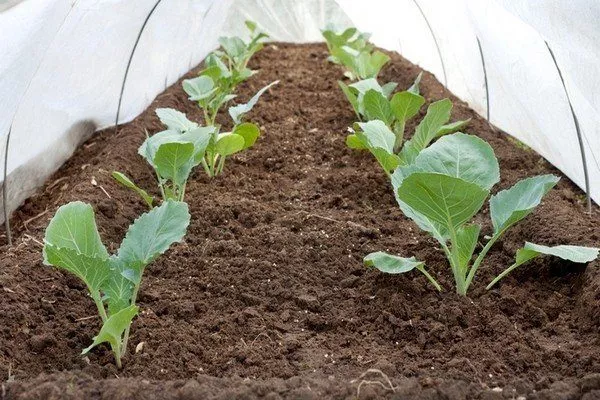
Growing under plastic bottles
Plastic bottles can be used as a personalized shelter for seedlings when growing outdoors. This method accelerates the emergence of the first shoots, provides protection from pests, and helps retain heat and valuable moisture.
If you plan to grow cabbage using this method, follow these steps:
- cut off the bottom of a plastic bottle, leaving the lid on top;
- sow the seeds, then cover them with a bottle, deepening it into the ground by about 3-3.5 cm;
- sprinkle some soil around the bottle;
- To water, unscrew the lid and pour in water;
- periodically ventilate the seedlings by opening the lid;
- When the plants grow and the leaves touch the bottle, remove it.
Growing cabbage without watering
Growing cabbage without any irrigation is simply impossible. However, certain agricultural practices can be used to maintain optimal soil moisture levels and reduce water use.
To this end, it is worth following the following recommendations:
- In autumn, carry out deep soil cultivation, leaving large mounds, which will create conditions for snow retention;
- Perform surface loosening of the soil in early spring, which will prevent moisture from being drawn in by capillaries and subsequently evaporating;
- Do not carry out deep soil cultivation to prevent the formation of a soil crust, resort to surface loosening;
- Use the non-seedling method of growing cabbage, which allows the plants to develop a stronger root system that will absorb moisture much better.
In addition to the tips above, consider selecting cabbage varieties that are highly drought-resistant, such as Bronko, Mozharskaya, and others.
Growing under mulching film
One of the most effective and simple methods for protecting cabbage is the use of plastic film. Black or transparent film can be used for mulching, depending on the season.
Black film ensures faster soil warming and moisture retention, while simultaneously killing any weeds underneath. In this case, follow these steps:
- Prepare the beds for planting cabbage in advance - approximately 2-3 weeks before the planned planting of seedlings, this time is enough for the soil to warm up well;
- Place a film on top of the bed, in which, taking into account the planting pattern, make cross-shaped or round slits (the seedlings will be planted in these holes);
- After transplantation, plants require simple care - watering at the roots, fertilizing, and treatment against pests and diseases.
In summer, it's best to use transparent film. Be sure to perforate the film beforehand, then lay it on the pre-watered beds, carefully securing it between the cabbage rows. This type of mulch helps protect the plants from weeds and retain valuable moisture in the soil.
Diseases and pests of white cabbage, prevention
Like any other garden crop, cabbage is susceptible to insect pests and various diseases. To avoid the need for hazardous chemical and toxic treatments, periodic preventative measures are necessary.
It is enough to provide the plant with proper and regular care, and to carry out timely treatment using safe biological preparations.
What can bother cabbage:
- The most common diseases of cabbage are blackleg and root rot. To prevent this problem, treat the seedlings with products such as Rizoplanoma or Trichodermina. Follow the instructions on the packaging carefully. These products reliably protect the plant roots from the bacteria that cause the disease.
- Another common problem is slugs and cruciferous flea beetlesTo prevent pest attacks, sprinkle plants with a product such as Intavir.
- The cabbage bug poses a major threat to cabbage. To prevent it, keep weeds such as shepherd's purse, field pennycress, and scaly-leaved grass out of your garden.
Subtleties of growing in different regions
Depending on the region where you plan to grow this vegetable crop, there are specific rules and recommendations for planting and subsequent care. It's crucial to choose the right variety to ensure a large, high-quality harvest.
In the Moscow region
The Moscow region's climate is characterized by predominantly cloudy weather and few sunny days. Cabbage is a cold-hardy crop, but unstable spring weather can cause certain problems during its early stages of growth.
In this region, the seedling method is recommended. Directly planting seeds in open ground is also possible, but additional shelter will be required until stable warm weather sets in. Heated bed technology can also be used. Particular attention should be paid to watering, as the Moscow region receives little rainfall in the summer.
Choose early, mid-season, and mid-late varieties. Late varieties are not suitable, as the fruit may not fully ripen. Hybrids that have proven successful in the region are also excellent choices.
In Siberia
Siberia's harsh climate makes sowing seeds directly into the ground unsuitable. Seedlings are a more successful method.
Summer is very short, so avoid varieties with a long growing season. Mid-season and mid-late varieties are ideal, as they produce excellent harvests in this region.
In the Urals
The Urals have an unstable climate, with frequent sudden temperature fluctuations. Even in May, there can be significant temperature fluctuations, with very hot days and freezing temperatures at night. Snow can fall as early as October.
Seedlings are grown only indoors, in warm beds or greenhouses. After transplanting the seedlings into open ground, the beds must be covered with a thick spunbond to protect the plants from pests and frost.
Growing white cabbage isn't particularly difficult. The key is to choose the right variety based on your region and follow proper agricultural practices. Proper and regular care will ensure a bountiful harvest of delicious and nutritious cabbage.