
Valentina F1 cabbage is a white cabbage variety suitable for winter storage and the preparation of a variety of winter preserves. This late-ripening variety is characterized by heavy, dense heads that can be stored for a long time, maintaining their marketability and flavor.
History of creation
The Valentina hybrid cabbage was developed by breeders at the Timofeev Experimental Station (Timiryazev University). The variety was approved for use in 2004. It was developed specifically for the central part of Russia and Siberia, but today the Valentina winter cabbage is grown throughout virtually the entire country.
Detailed description of the variety
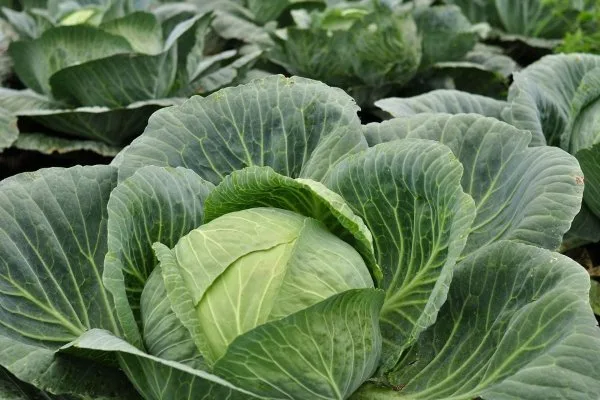
Valentina cabbage has a raised rosette of medium-sized leaves. The leaf blades are gray-green, covered with a dense waxy coating, and have slightly wavy edges. The outer stalk is medium-length, while the inner stalk is short.
The heads are medium or large, white when cut, juicy and dense, 50-60 cm in diameter. The taste is sweetish, without bitterness. The average weight is 3.2-3.8 kg.
Productivity
Valentina cabbage is considered a high-yielding variety. When grown on a large scale, 800-1000 centners are harvested per hectare. However, the average yield is 680 centners per hectare. Gardeners harvest 16-18 kg of cabbage per square meter. In terms of heads, this translates to 5-6 heads per square meter.
Resistance of the variety to diseases and pests
Valentina cabbage is fairly resistant to fungal diseases. Under favorable growing conditions, it is virtually immune to blackleg, early blight, white and gray mold, vascular bacteriosis, and fusarium. However, like other cabbage varieties, it requires preventative measures.
After transplanting the seedlings into the soil, dust them with wood ash or tobacco dust. You can also use a garlic solution by pouring it over the soil. All this helps get rid of cabbage flea beetles, which attack seedlings in the spring.
Advantages and disadvantages
Valentina cabbage is a domestic variety, making it well-adapted to challenging growing conditions. However, before planting this variety in your garden, it's helpful to familiarize yourself with all its advantages and disadvantages.
Landing features
The yield and quality of the cabbage heads depend on proper planting. It's important to plant cabbage at the right time, and it's important to choose a growing method that's optimal for your region. There are two types of planting: seedlings and direct seedlings.
- ✓ The optimal soil temperature for sowing seeds should not be below +6°C.
- ✓ To prevent diseases, it is necessary to observe crop rotation, not planting cabbage after cruciferous crops for at least 4 years.
Seedlings
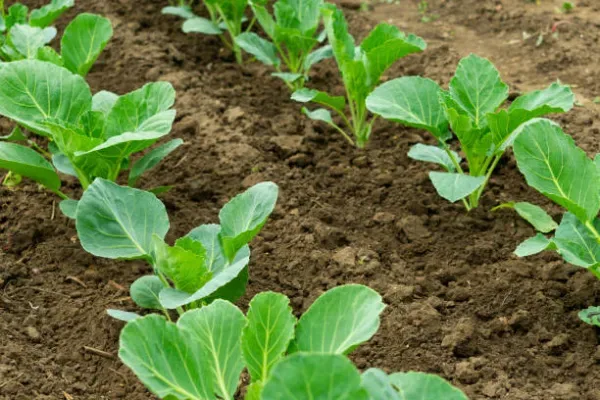
Most gardeners prefer to grow cabbage using seedlings, including in southern regions. Since the period from germination to one month is safer for the plant, it's safer to grow it in a seedling pot than in the open ground, where there's a risk of pests, frost, and other damage.
Furthermore, the seedling method allows for a harvest several weeks earlier than when sowing cabbage outdoors. Seeds are sown for seedlings so that they are approximately 35 days old by the time they are transplanted into the ground.
Features of the seedling method:
- Only healthy seeds are used for sowing. To do this, the planting material is placed in cold water. Any seeds that float to the surface are discarded as they are not viable. The remaining seeds are treated with a humate solution and then calcined at 1°C.
- Containers, trays, or cups are filled with store-bought seedling substrate. You can also make your own soil mixture, for example, by mixing peat and humus in a 3:1 ratio, adding river sand. Another option is to use humus and turf soil in a 1:1 ratio, and add river sand.
- The substrate is scattered among the planting containers and moistened. The seeds are evenly distributed over the surface, covered with soil (no more than 1 cm), and moistened again with a spray bottle. The crops are covered with transparent film or glass.
Cabbage requires 12 hours of daylight per day. Therefore, the seedlings need supplemental lighting, including artificial lighting. Without this, the seedlings will stretch, weaken, and become diseased.
Seedlings emerge approximately five days after sowing. Once this occurs, the covering is removed and the seedlings are moved closer to the light.
Further cultivation and planting of seedlings:
- When the seedlings have two leaves, about two weeks later, they are pricked out. The seedlings are transplanted from the container into individual pots—plastic or peat. When pricking out, remove a third of the root and plant them deep down to the cotyledons.
- The transplanted seedlings are watered after 5-6 days.
- Planting in the ground takes place at the beginning of May.
- The optimal soil for cabbage is loam.
- Hole size: 30 x 30 cm. Optimal planting pattern: 50 x 70 cm.
By sowing in the ground
This growing method is more complex and painstaking, requiring increased care. Only experienced gardeners should choose this option.
Tips for planting cabbage without seedlings:
- seeds are sown in moist, fertile soil, neutral or slightly alkaline;
- heavy and acidic soils are deoxidized and loosened by adding lime and coarse river sand, respectively;
- It is recommended to add 10 liters of humus or compost per 1 sq. m of area;
- the area is dug up to a depth of 25-30 cm, removing weeds and debris, and covered with dark film;
- The best predecessors are potatoes, cucumbers, tomatoes, and onions. Cabbage should not be planted after cruciferous vegetables. It is also contraindicated to plant cabbage where radishes, horseradish, turnips, rutabagas, and carrots were grown. Also, zucchini and pumpkins are also recommended. Cabbage can be planted in such areas after four years.
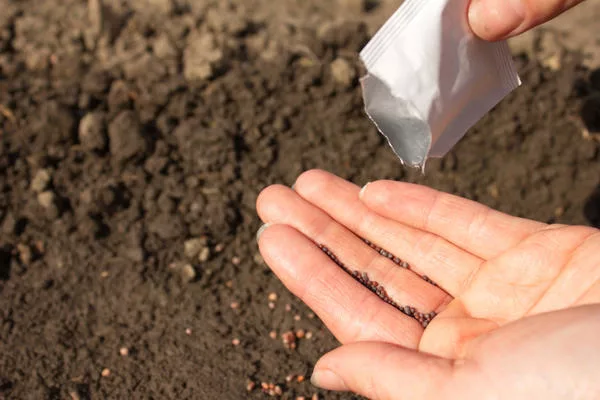
- Seed sowing occurs between mid-April and mid-May. The exact timing depends on the climate and weather conditions in the specific region. The air and soil temperatures should reach 10°C and 6°C, respectively.
- Sow seeds in rows. Space adjacent seeds 1.5-2 cm apart, rows 2 cm apart, and plant them at a depth of 1-1.5 cm. If sowing in pits, place 2-3 seeds per pit. Once seedlings emerge, remove the weaker sprouts, leaving only the strongest one.
- At first, the seedlings are covered with film, opening it slightly in warm weather to ventilate the plantings.
Caring for Valentina cabbage
The methods and rules for caring for cabbage planted using both seedlings and direct-seeded methods are the same. The key is to perform all agricultural procedures promptly; this will help avoid most of the difficulties that may arise when growing this variety.
How to care for cabbage:
- Watering. In hot weather, young cabbage is watered twice a day. In rainy weather, watering is not necessary. Water in the morning or evening. Use only settled, sun-warmed water. The recommended watering rate in sunny weather is 20 liters per square meter, and in cloudy weather, 15 liters.
- Loosening. After each watering or rain, the soil around the cabbage and between the rows is loosened. The crop is hilled twice per season. The first time is a week after planting the seedlings, and the second time is when the heads begin to form.
- Top dressing. Fertilizers are applied to cabbage 4 times per season:
- Two weeks after planting, water the cabbage with bird droppings or mullein—0.5 liters diluted in 10 liters of water. Apply 0.5 liters of solution per plant. Alternatively, apply urea (10 g), superphosphate (10 g), and potassium monophosphate, diluted in 10 liters of water.
- After another half a month, add a solution of bird droppings - 1 liter per plant.
- After three weeks, apply 15 g of potassium monophosphate and manure diluted in 10 liters of water. Add 1.5 liters of the solution per cabbage plant. Repeat the application after three weeks.
Collection rules
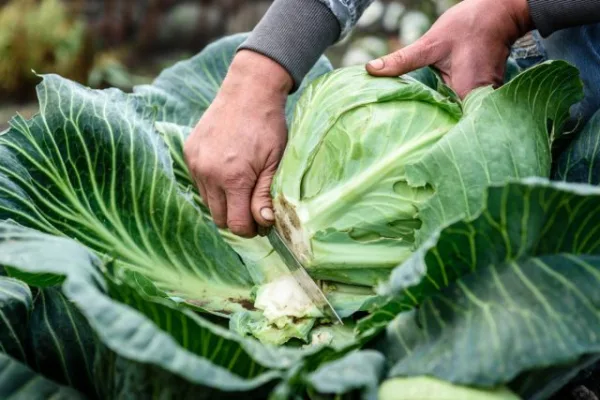
Cabbage is harvested in mid-autumn. The weather should be dry and sunny. The cutting is done with a knife or by pulling out the heads by the roots. The lower leaves and 5 cm of the stalk are left.
- ✓ Heads of cabbage must be fully ripe, without signs of disease or pest damage.
- ✓ Before storing, heads of cabbage must be dried for several hours in the open air.
The heads are stored in basements or cellars. The temperature should be maintained at 0°C and the humidity at 90%. Under these conditions, Valentina cabbage can be stored for 7-8 months without losing its marketable appearance or flavor.
Reviews
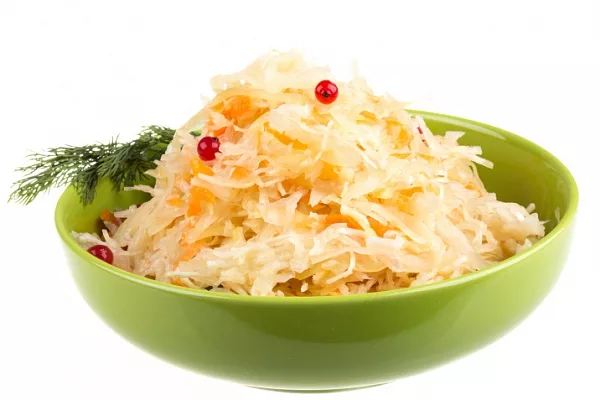
Valentina cabbage is a noteworthy late-ripening variety that even a novice gardener can grow. Its heads, as befits a late-ripening cabbage, are ideal for pickling and long-term storage.