
Aphids are dangerous parasites of the hemipteran order that feed on the sap of young plants. These pests often infest the undersides of cabbage leaves, sucking out vital fluids, causing various diseases and even death. To prevent such consequences, it's important to recognize aphids on cabbage leaves promptly and take all necessary measures to control them.
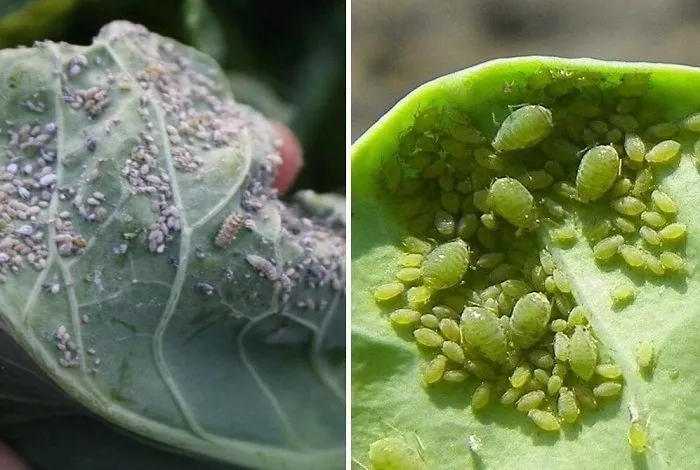
How to recognize aphids?
Aphids are inconspicuous but dangerous insects that feed on plant sap. They can be recognized by the following external characteristics:
- the body is translucent, egg-shaped and small in length – about 2.2-2.5 mm;
- the body is pale green in colour, often appearing grey due to a waxy coating, with brown transverse broken stripes that start from the first element of the abdomen;
- the head is brown with black eyes and short antennae consisting of 5-6 segments;
- the mouth apparatus is small and designed like a proboscis, piercing the integumentary tissues of the leaves and extracting juice from them;
- the tail is conical, dark green in color and without marginal tubercles;
- The legs are brown, as are the cylindrical tubes, which are slightly swollen in the middle and a little shorter than the tail.
Such pests can often be found on cruciferous plants, which include not only all types of cabbage, but also the following crops:
- daikon;
- turnip;
- radish;
- radish.
The pest reproduces rapidly, as offspring are born without fertilization, and a single female can lay up to 40-50 larvae. Furthermore, approximately 15-20 generations of this pest occur per season.
In spring and summer, only female insects emerge. Males are born in the fall, when females lay eggs on cabbage heads or other cruciferous plants left over for the winter. They overwinter well if the plants are covered with snow. In spring, when the air temperature reaches 11-12°C, the larvae hatch from the eggs, and their life cycle repeats. Wingless females emerge after several sets of eggs, approximately two weeks later. They do not require males for fertilization, and each female is capable of producing up to fifty larvae.
Causes of aphids
In most cases, aphids appear on plants after females accidentally fly into the garden in the spring and lay eggs in the weeds, which hatch into numerous larvae after the winter. This is the beginning of the insect's reproductive cycle.
Ants can also spread aphids. They coexist closely with this pest, as aphids secrete a tasty food source—sweet honeydew—for them. Ants even keep aphid eggs in their nests during the winter, and in the spring, they carry them outside and spread them among young plants.
If cabbage is infested with aphids, you can often find many black ants on it or near the plantings.
Signs of cabbage damage
Aphids reproduce very quickly, so the sooner they are detected, the better. This can be done by regularly inspecting cabbage leaves. If the pest has already infested your cabbage, the following signs will indicate this:
- the leaves become discolored, especially at the top, fade and become more brittle;
- the area between the veins on the leaf blades seems to be rotting and gradually beginning to dry out;
- the plant gradually loses its green color, becomes covered with yellow spots and dries out, as it loses chlorophyll and becomes unable to fully carry out photosynthesis;
- cabbage grows poorly because it absorbs nutrients extremely slowly and is quickly deprived of vital juices;
- a sticky, dirty coating appears on the plant, which is the waste product of parasites;
- In case of severe damage, the leaves curl into tubes and become deformed, and heads of cabbage do not form.
- ✓ The presence of ants around plants, as they protect aphids from predators.
- ✓ Sticky coating (honeydew) on leaves, which attracts other insects and promotes the development of fungal diseases.
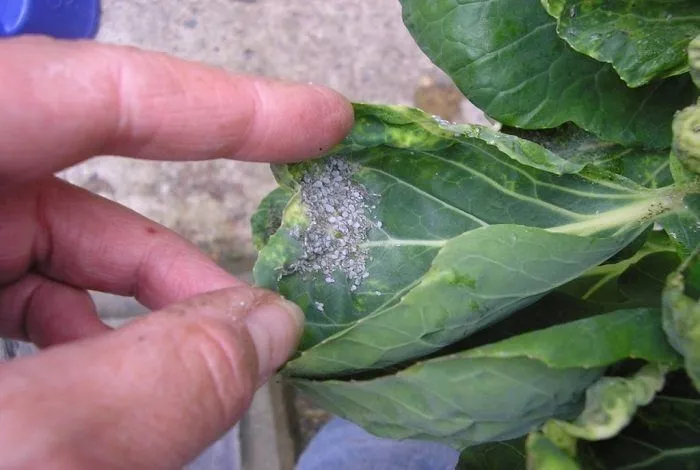
When inspecting cabbage for aphids, it is important to remember that the pest initially reproduces on the lower part of the bushes, and over time spreads to the entire plant.
If the infestation is severe, aphid swarms can be seen even with a cursory inspection of the cabbage.
Why are aphids dangerous?
The danger of aphids for cabbage lies in the fact that they reproduce quickly, sucking the vital juices out of the crop and causing disruptions in its vital functions, as a result of which the vegetable develops poorly and dies.
In addition, aphids can infect the plant. various fungal and viral diseases, including:
- mosaic;
- black ring spot;
- necrotic jaundice, etc.
The fact is that aphids can transmit various diseases from diseased plants to healthy ones. So, if there's a diseased plant in your garden, the insect colonies will quickly spread the pathogenic microflora, which will then harm other nearby garden plants.
Why are aphids difficult to control?
Getting rid of aphids isn't easy, as predatory insects refuse to peck them. This is because, by sucking cabbage juices, aphids accumulate glucosinolate in their bodies, and a fermented substance called myrosinase appears in their muscles. When a predator attacks the aphids, they begin to secrete these enzymes, which are converted into mustard oil—a true poison for birds. As a result, the predators either die or flee.
Even ladybugs that hunt aphids either die after a while from mustard oil or crawl away from the colonies.
Meanwhile, the aphid wasp larvae (Aphidius parasitoides) control aphids. They live inside the insect's body, causing it to swell into a ball, turn brown, stick to the leaf, and die. It's known that these larvae are bred in specialized laboratories, so ordinary gardeners often don't have access to them. However, there are other ways to combat this cabbage pest, which you can learn about below.
Methods of aphid control
Once aphids are discovered in your garden, you need to begin controlling them immediately. It's best to use several methods at once, each of which we'll discuss separately.
Biological and mechanical methods
They suggest breeding birds and insects on the site that can destroy this pest before it turns into an adult insect.
For these purposes, you need to attract the following birds to the cabbage patch:
- tits;
- warbler;
- linnets;
- sparrows.
To do this, you need to install special feeders filled with grain crops:
- sunflower seeds;
- millet;
- millet;
- oats.
Tits will also be delighted to receive unsalted lard, hard-boiled eggs, and cottage cheese.
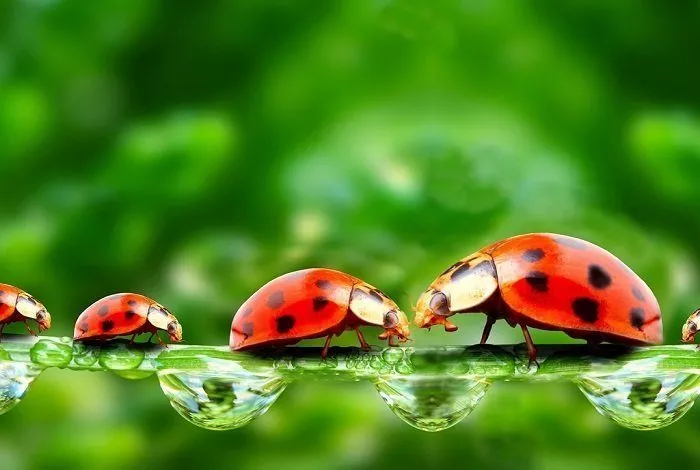
Of the insects, it's best to choose those that are capable of controlling aphid larvae. These include:
- LadybugsThey can be attracted by installing log houses with holes for wintering. This method is suitable for southern regions, where winters are mild. In other regions, the following plants are best for attracting ladybugs to your garden:
- yarrow;
- tansy;
- buckwheat;
- dill;
- angelica;
- sweet clover.
- HoverfliesTo attract hoverflies, plant daisies and fennel in your garden.
- Ground beetlesThese insects prefer nightshade crops – tomatoes, potatoes, black nightshade.
- LacewingsThey love to hide in the leaves of ferns growing in the shade of the garden.
- EarwigsThey thrive where there is sawdust, which can be placed in pots around the garden.
To repel aphids, you can also plant herbs on your property, in particular:
- basil;
- mint;
- garlic;
- onion;
- fennel;
- lavender.
Some experienced gardeners sow tobacco between the beds, as it destroys cabbage caterpillars and aphids.
These methods are suitable in the early stages of cabbage aphid infestation, when the aphids are still larval. However, with a large infestation, they are ineffective, so they must be combined with chemical treatments.
Physical method
This method is acceptable when pests in the garden are still few in number. In this case, there's no need to use chemicals. The method involves manually killing the aphids. To do this, carefully inspect the beds, and crush any pests found directly on the cabbage.
Chemical method
The most reliable and effective method of aphid control involves treating cabbage with biologically active preparations and chemical insecticides. Popular methods include:
- PyrethrumA biological product in powder form based on chamomile. Before application, it should be diluted in water at a rate of 60 g per 10 liters of liquid. Spray cabbage with it in calm weather once every two weeks throughout the growing season.
- KarbofosA toxic but highly effective broad-spectrum insecticide that helps eliminate adult pests and larvae. The insecticide should be diluted in water at a rate of 7.5 g per 5 liters. Wear protective equipment (a respirator and rubber gloves) when spraying plants. The weather should be dry and free of gusty winds. Apply the product once. After spraying cabbage, the pests will die within 2 hours, and the protective effect will last for 20 days or more, depending on weather conditions.
- SeifosLess toxic than Malathion. It's often used when seedlings weren't treated before planting in their permanent location. Spray the plant with a solution of 5 g of the product per 5 liters of water. After spraying, aphids disappear within 2-3 days.
- SparkThe insecticide is sold in several variations, so its packaging may be labeled "Golden," "Bio," or "Double Effect." It is available in powder, tablet, or liquid form. Before use, the product should be diluted in water according to the package instructions. After treatment, plant protection lasts for approximately three weeks. To maintain the effect, it can be reapplied after 15 days, and then once a month throughout the growing season. The final treatment should be carried out at least 20 days before harvest.
- DeltamethrinA broad-spectrum insecticide capable of immediately killing pests by blocking their nerve impulses, leading to paralysis and death. It is harmless to humans, as it contains only natural ingredients. Its effect begins immediately after application to cabbage and continues for the next 20 days.
Other preparations based on deltamethrin are also produced, including Decis Profi, Fas and Atom.
To prevent aphids from becoming accustomed to chemical treatments, they should be replaced annually. Although these treatments can quickly eliminate the pests, they still pose a risk to the vegetable, so after treatment, it's worth fertilizing the cabbage with natural fertilizers.
There are products that simultaneously kill aphids and feed cabbage. You can learn about one of them in the video below:
Folk methods
Not all gardeners enjoy chemical treatments. Many prefer to use non-toxic folk remedies. These include:
- Water supplied under pressureYou can get rid of aphids by using water supplied through a hose. This creates pressure, washing the insects off the plants. They can't crawl back in. If you use this shower frequently, you can gradually get rid of these insects.
- Soap solutionIt's made from laundry soap or tar soap. Use 100 grams of soap per 10 liters of water. Spray the cabbage heads and stems with the mixture using a spray bottle.
- A mixture of soap and baking sodaIn 10 liters of water, dissolve 1 tablespoon of washing soda and 1/2 a bar of laundry soap, finely grated. Spray the cabbage with the mixture.
If you use only baking soda, it will not stay on the leaves and will quickly be washed away by rain, so it is supplemented with soap.
- Ash infusionFor a 10-liter bucket of water, use 2 cups of wood ash. Mix the mixture thoroughly and apply it to the cabbage leaves. Ash can also be used in combination with cinnamon and pepper (red and black). Mix the spices in equal proportions and add 200 g of wood ash. Separately, dissolve 200 g of laundry soap in 1 liter of warm water, add the prepared powder, and 9 liters of cool water. Mix the mixture thoroughly and apply as directed twice, three days apart. For preventative measures, the cabbage can be treated once a month.
- Tobacco decoctionTo prepare a concentrated solution, grind 10 grams of dry tobacco, add 5 liters of water, and let it steep for 24 hours. Then, simmer the mixture for 2 hours over low heat, adding another 5 liters of water. Apply the decoction to the cabbage using a watering can or spray bottle.
- Orange peel decoctionTake 2 cups of crushed and dried orange peels, pour warm water over them, and let steep for 24 hours. Then boil the mixture for about 10-15 minutes, strain, and dilute with 10 liters of water. Finally, add 100 g of soap and use as directed.
- Hot infusionPrepare the garlic, horseradish (leaves or roots), and hot pepper. Chop the horseradish, fill a saucepan a third of the way with it, and add boiling water. Let it steep until the water cools. Finely chop two hot peppers and a head of garlic, and add 1 liter of boiling water. Then pour this solution into the saucepan with the horseradish. Before applying the mixture to the plants, add a small amount of liquid soap.
- Celandine infusionTake 4 kg of raw or 1 kg of dried herb, add 10 liters of hot water, and let steep for 24 hours. Strain the mixture, add a little liquid soap, and use as directed.
- Infusion of potato or tomato topsFinely chop fresh tomato or potato tops. You can use equal parts of each. Fill a saucepan halfway with the prepared ingredients and pour in boiled water. Let it steep for 24 hours, strain, and add a little soap. Apply the mixture to the cabbage.
- Sorrel infusionAphids dislike the acidic infusion of horse sorrel. To prepare it, dig up the plant roots, crush them, and pour boiling water over them at a ratio of 150 g per 5 liters of water. Let it steep for 24 hours and then use it to spray affected plants.
- Dandelion infusionDig up 200 g of dandelion roots and collect 500 g of leaves. Grind the leaves and steep them in boiling water for about 3 hours. Strain the mixture, add liquid soap, and apply it to the cabbage.
- Camomile teaTo prepare it, take 100 g of dried herbs, pour 1 liter of boiling water over them, and let steep for 12 hours. Strain the infusion, add 2 liters of water, add a little soap, and spray it on the plants.
- Infusion of onion peel and onionTake 2 onions and some onion skins. Chop the onions, combine them with the skins, and pour 2 liters of hot water over them. Let it steep for about 4 hours, add soap, and use as directed.
- Pine needle infusionPrepare for one week. Take 1 kg of pine needles and add 4 liters of boiled water. Let it steep for a week, stirring the needles daily. Before using, dilute the infusion with water in equal proportions.
- VinegarIt repels insects with its pungent odor. Take 1 tablespoon of the essence and dilute it in 10 liters of water. Applying the product twice to the cabbage is enough to completely get rid of aphids.
- MustardTo treat affected leaves, you can prepare a solution of 50 g of powder per 5 liters of water. Dry mustard should also be scattered near anthills, as ants are known to spread aphids.
- Essential oilsEssential oils such as tea tree, lavender, thyme, and cedar have shown excellent results in controlling aphids on cabbage. Dilute 10 drops of each oil in 0.5 liters of water and spray each cabbage leaf with the mixture. Apply in the evening.
- AmmoniaLike vinegar, it repels insects with its powerful aroma. It even helps get rid of adult aphids. Mix 50 ml of ammonia in 10 liters of water and pour it over the cabbage using a watering can.
The alcohol solution should be used no more than once every 14 days, otherwise excess nitrogen will lead to leaf deformation and impaired vegetable growth.
The video below explains how to treat cabbage with an effective folk remedy based on ammonia:
Prevention
There are a number of preventative measures that can help protect your garden from aphids:
- In late autumn, completely clear the area of vegetable crop remains, dry them and burn them, rather than keeping them in the garden bed;
- in the fall, thoroughly dig up the soil to a depth of at least 25 cm;
- combat weeds in a timely manner, removing them from all paths;
- use mixed planting technology, planting herbs and tobacco near the cabbage bed;
- observe crop rotation rules by planting cabbage after carrots, onions and legumes;
- Pay special attention to fertilizing cabbage, since aphids appear on weak young plants that are not sufficiently fertilized.
Mistakes of inexperienced gardeners
The most common mistakes that can lead to the spread of aphids are:
- Violation of boarding rulesIf you don't maintain optimal spacing between plants, don't apply fertilizer on time, and don't water the seedlings properly, the plants will be weakened and will attract insects.
- Chemical abuseThey kill not only aphids but also the insects that prey on them. This treatment, therefore, is harmful to plants. Chemicals should only be used when aphids are numerous and can completely destroy the entire crop.
- Preservation of aphid eggsMany gardeners don't remove cabbage stumps and weeds in the fall, so the eggs laid on them remain in the garden bed overwinter, and the larvae hatch in the spring.
Aphids are small insects that can destroy a large cabbage crop. It's important to begin pest control promptly, or better yet, prevent them from appearing by taking preventative measures. It's also important to follow proper agricultural practices for growing and caring for cabbage.