
The Vyuga cabbage variety appeared during the Soviet era and remains in high demand among gardeners. It is suitable for cultivation in all regions of Russia, including Siberia, the Urals, and other regions with harsh climates. It boasts high resistance to major cabbage diseases, excellent yields, and a very long shelf life.
Origin of the variety
Beginning in 1983, when Vyuga was first introduced, variety trials began in various regions of the country. As a result, in 1989, the variety was added to the Unified State Register with a note indicating cultivation in Siberia. The development was conducted at the Siberian Federal State Budgetary Scientific Institution.
Key Features
The shelf life of this white cabbage exceeds all expectations – 8 months, but only if the outer stalk, 10-15 cm long, remains. To transport the harvest over long distances, it is important to leave a few outer leaves.
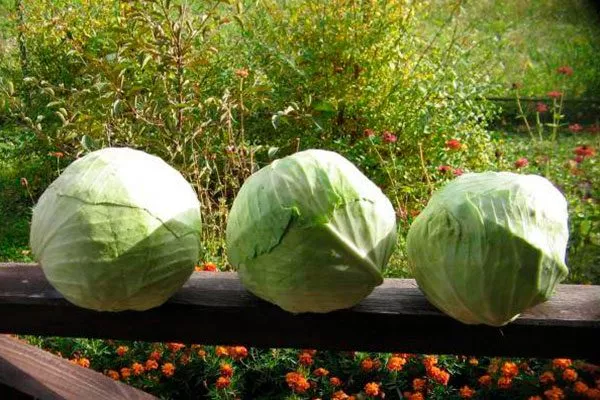
Description of the Vyuga cabbage variety – appearance of the fruits and plant
The heads are round, but may be slightly flattened. The rosette is always vertical. Other characteristics:
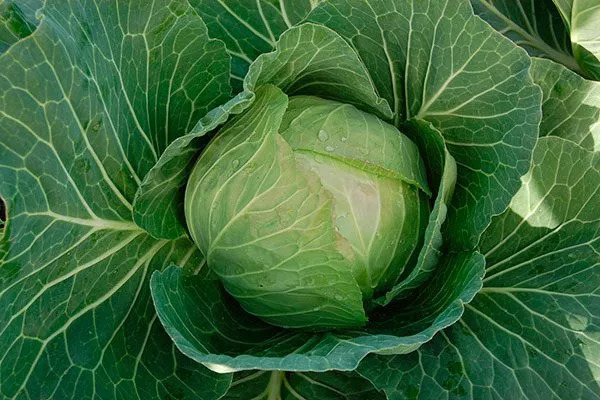
- Socket. Its height is 40-50 cm, diameter from 70 to 100 cm. It consists of 12-15 leaves.
- Covering leaf blades. They are medium-sized and dark green in color with a waxy surface. Veins are faintly visible.
- Cabbage leaves. The outer leaves are green, sometimes with a grayish tint, and the inner leaves are light green. They are 40 cm wide and long. The edges are slightly wavy, and their shape is irregularly lyrate.
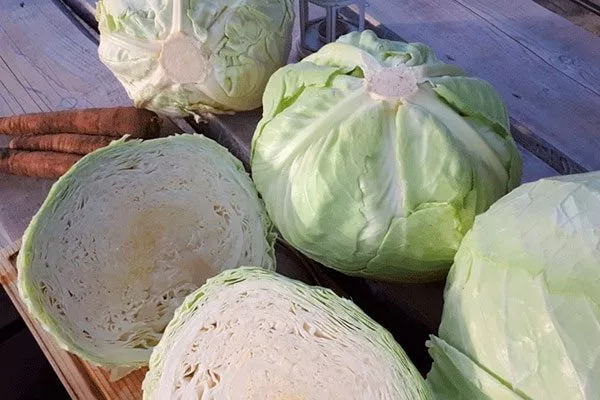
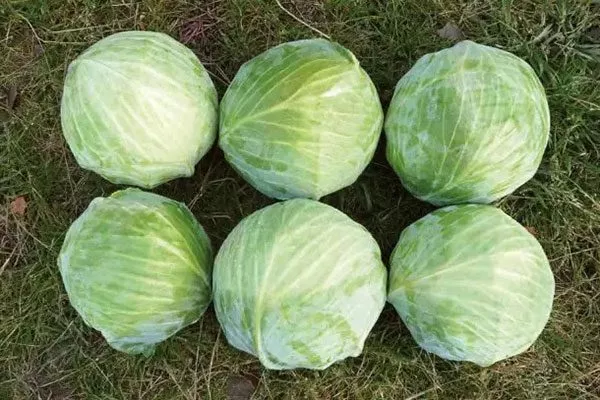
- Head of cabbage. Quite dense, with a rating of 4.6. The leaves are whitish-yellow when cut, and the weight of a single head ranges from 2.5 to 3.5 kg. The texture is especially juicy, making it ideal for pickling. Both the inner and outer stalks are shortened.
Taste and purpose
The leaves have a sweet taste and are used universally:
- pickling and marinating;
- canning for the winter;
- boiling, frying, stewing;
- preparation of fresh salads and stews.
Ripening and yield
This domestic cabbage variety, classified as mid-late, is characterized by a maturation period from germination to technical maturity of 140 to 160 days. Harvesting typically occurs in October, with the heads ripening simultaneously.
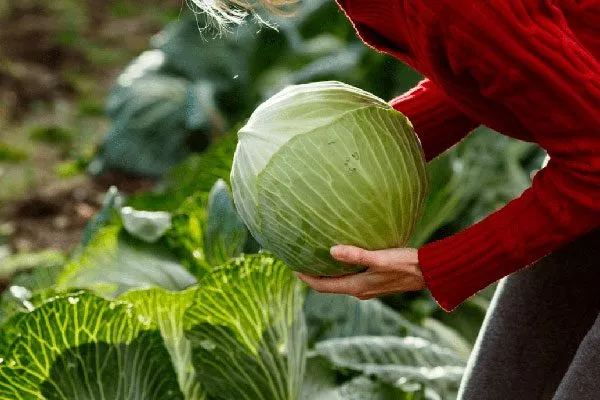
The Vyuga cabbage variety is characterized by high yields, which is why it is often grown in commercial fields. Under such conditions, one hectare can yield between 500 and 675 centners of vegetables.
Chemical composition and beneficial properties
White cabbage is rich in vitamins C and U, which have anti-inflammatory, regenerative, and antioxidant properties. It also contains:
- vitamins K, B1, B2, B3, B4, B5, B6 and B9, as well as beta-carotene;
- macroelements: potassium, calcium, silicon, magnesium, sulfur, phosphorus;
- microelements: boron, iodine, manganese, chromium, etc.
The particularly high sugar content (about 4.5-5.5 g per 100 g of leaves) makes this variety ideal for pickling.
Which regions is it best suited for?
Developed in Siberia, the Vyuga cabbage variety is cold-hardy and suitable for cool-weather regions. Greenhouse cultivation is recommended for short summers. This variety is adapted to the Northwestern, Central, Volga-Vyatka, Central Black Earth, West Siberian, East Siberian, and Far Eastern regions of Russia.
Differences from other varieties and hybrids
Vyuga has high resistance to all major diseases and can survive for up to 7-8 months, unlike other varieties and hybrids.
Advantages and disadvantages
Vyuga has stood the test of time, so over many years of cultivation, gardeners have identified a number of positive qualities:
- High yield. The variety has excellent productivity and the ability to produce abundant harvests in a variety of conditions.
- Adaptability to climate. This variety is resistant to a wide range of climatic conditions, allowing it to be grown in most regions.
- Fruit quality. The heads of cabbage are large and juicy, with excellent taste characteristics and a high content of nutrients.
- Transportability and marketability. The Vyuga cabbage has a presentable appearance and can be transported over long distances.
- Long-term storage. The variety is ideal for winter storage.
- Resistance to diseases and temperature fluctuations. Resistance to bacterial disease and temperature fluctuations increases the reliability of cultivation in open ground.
- Uniform ripening of fruits and ease of care. This variety is suitable even for novice gardeners due to its ease of care and simultaneous ripening of fruits.
Flaws:
- Late ripening. The variety is characterized by a later maturity compared to other varieties.
- Sensitivity to watering conditions. Cabbage does not tolerate either excessive waterlogging or under-watering, requiring careful monitoring of humidity levels. Overwatering can lead to mold and reduced disease resistance, while underwatering can result in smaller heads and poorer quality.
How and when to plant?
Plot preparation begins in the fall: the bed must be dug to the depth of a spade, followed by the addition of manure, compost, and crushed charcoal. Cabbage can be planted either from seeds or from seedlings.
- Check the soil pH; the optimal level for Vyuga cabbage is 6.0-7.5.
- Add organic fertilizers (compost or humus) at a rate of 5-7 kg per 1 sq.m.
- Two weeks before planting, apply mineral fertilizers: nitrogen, phosphorus and potassium in a ratio of 1:2:1.
Growing Vyuga cabbage without seedlings
In Russia, the Vyuga cabbage variety is most often grown from seedlings. However, in southern regions, direct sowing of seeds into the ground is possible. This is done during April, after the risk of night frosts has passed. The seeds germinate well at temperatures above 5 degrees Celsius.
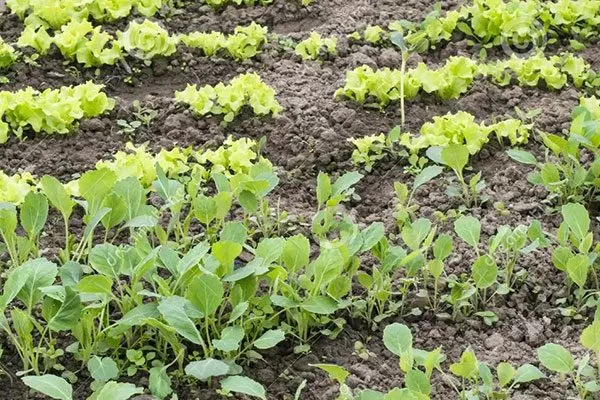
Please note some subtleties:
- Before sowing, seeds should be treated in a solution of potassium permanganate.
- The soil in the bed is thoroughly loosened and leveled, and fertilizers are added: 35-45 g of superphosphate, 10-15 g of urea, and 350-450 g of charcoal are required per 1 square meter.
- The seeds are placed in holes located at a distance of 30-35 cm from each other, leaving approximately 75-85 cm between rows.
- 2-4 seeds are placed in each hole to compensate for possible losses.
- Immediately after sowing, it is recommended to cover the bed with non-woven material to retain heat, which will promote faster formation of sprouts.
- After a week, thinning is carried out: the strongest plant is left in one hole.
Seedling method of cultivation
Most vegetable growers prefer to grow late-season cabbage varieties from seedlings due to their long growing season. Seeds are sown in late March or before April 10th. Transplanting into open ground occurs two months later.
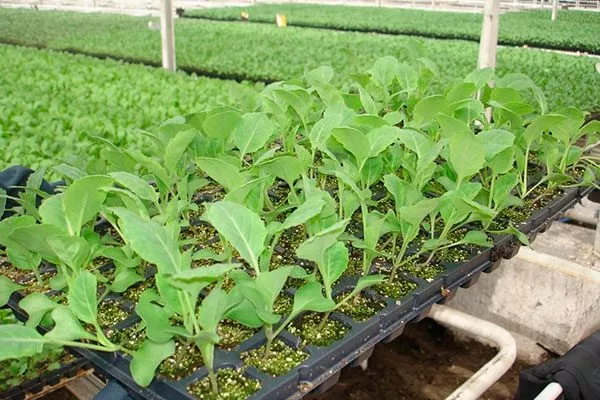
Rules:
- Before sowing, seeds are disinfected using Fitosporin or a solution of potassium permanganate, after which they are briefly heated in water at a temperature of about 45 degrees, and then quickly cooled.
- For planting, use containers with drained bottoms and fill them with soil consisting of turf, humus, compost, and coarse sand—roughly equal parts. Ash is added to the substrate (200 g per 10 kg of potting mix).
- Thermal treatment of the substrate is mandatory to destroy pathogens - pouring boiling water over it or baking it in the oven at +200 degrees.
- The seeds are placed in furrows 2 cm deep at a distance of 3-4 cm from each other, with approximately 5-6 cm between rows.
- After sowing, moisten the soil surface and cover the container with plastic wrap. At temperatures of 20-23 degrees Celsius, the first shoots appear in 5 days maximum.
- After the sprouts appear, the cover is removed and the containers are moved to a well-lit place at a temperature of +8-12 degrees.
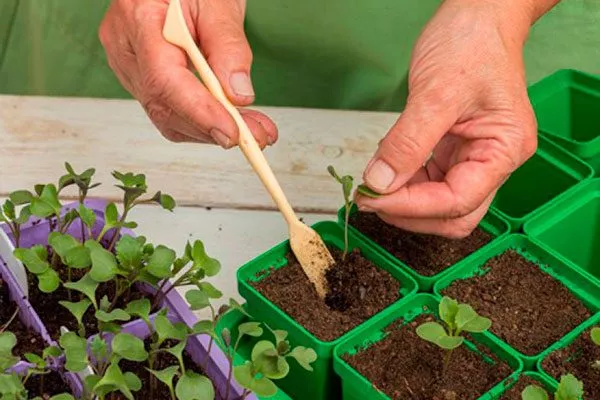
Caring for seedlings at home
To successfully grow healthy seedlings, certain conditions must be met, as future yields depend on them. Key requirements:
- Lighting and daylength. Seedlings require plenty of light—at least 10 hours per day.
- Watering. Regular and moderate watering is essential. Excess water can cause blackleg disease, while insufficient moisture can lead to plant death.
- Mineral nutrition. As seedlings develop 2-3 true leaves, it is recommended to apply mineralized fertilizers to strengthen the plant's immune system.
- Adaptation to environmental conditions. Two weeks before planting outdoors, plants should be gradually acclimated to outdoor conditions, increasing their time outdoors daily.
Transplanting cabbage into the garden
Before transplanting seedlings, it's important to properly prepare the bed. Choose a well-lit, elevated location, avoiding shade from taller crops. Consider crop rotation as well: it's best to plant this crop after tomatoes, potatoes, cucumbers, zucchini, beets, and peas.
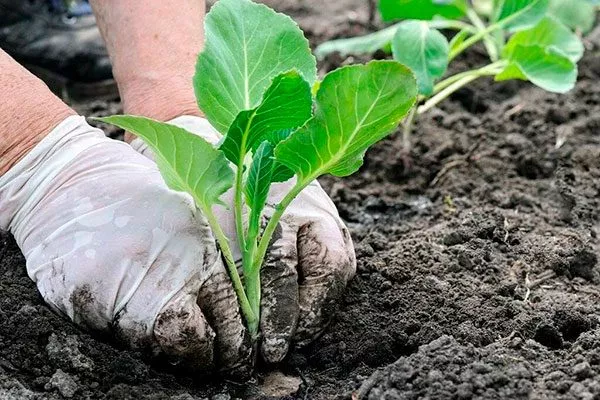
Caring for Vyuga cabbage in open ground
The plant requires regular watering—every 6–7 days if there's no precipitation. During the warm summer months, the soil should be watered more frequently, depending on the condition of the topsoil. After watering, to prevent a hard crust from forming, loosen the soil beneath the bushes to a depth of 7–9 cm. This improves oxygen access to the roots and promotes better plant development.
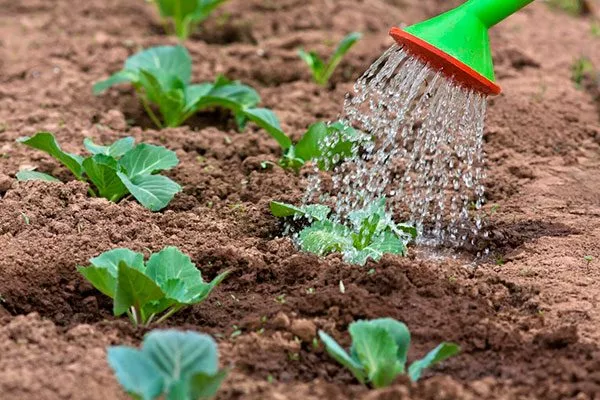
The Vyuga cabbage variety requires fourfold application of fertilizers:
- Two weeks after transplanting to a permanent location, 500 ml of diluted bird droppings infusion and a mineral complex are applied to each bush.
- After another two weeks, the same compositions are used.
- When the coils begin to form, fertilizers with a high content of phosphorus and potassium are added.
- Potassium sulfate is added 15-20 days before harvesting.
Cabbage of this variety is hilled twice per season: the first time three weeks after planting to strengthen the stem, the second time during the formation of heads to stabilize the plant due to its increasing weight.
Diseases and pests of the variety
The Vyuga cabbage variety is resistant to many diseases, but is susceptible to blackleg and downy mildew. Clubroot poses a serious threat and requires a four-year break before planting cruciferous vegetables in an infested bed.
Disease prevention includes:
- disinfection of seeds and soil before sowing;
- thorough weeding and removal of plant debris at the end of the season;
- compliance with crop rotation;
- treating plants to protect them from insects, especially in early spring when pests become active.
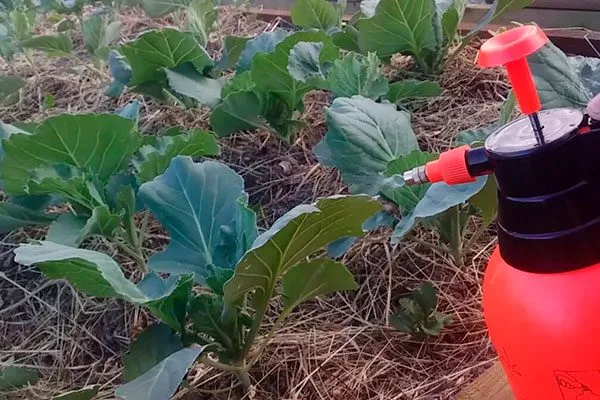
To combat the problem, folk remedies, bioinsecticides and, if necessary, chemical preparations are used.
Harvesting and storage
The Vyuga variety is best harvested in dry, clear weather in September-October. The heads are carefully cut with sterile tools, dried, and stored in a cellar, hanging by the stalk. Ensure the storage area maintains a humidity of 90-95% and a temperature of 0 to 5 degrees Celsius.
- ✓ Storage temperature must be strictly maintained within the range from 0 to +5 degrees Celsius.
- ✓ Humidity in the storage room should be at 90-95%.
- ✓ Heads of cabbage should not touch each other to avoid rotting.
Difficulties in growing
To successfully grow Vyuga cabbage, it's essential to follow watering, fertilizing, and care recommendations. A proper approach to agricultural practices will help avoid most problems and achieve excellent results in vegetable growing.
Reviews
Vyuga cabbage is a late-ripening variety with a long shelf life, excellent transportability, and high yields. It easily tolerates spring frosts and autumn cold snaps, making it cultivated throughout Russia.