
The Roselle variety of Brussels sprouts was first developed in 1995 by German breeders from the Zamen Mauser Quedlinburg agricultural firm. This mid-season plant is cultivated in almost all regions of Russia and is known for its abundant yields and resistance to major diseases and pests.
Description of the variety
A distinctive feature of Rosella is the uniform formation of ovaries and ripening of fruits, which significantly facilitates the harvesting process. Note other characteristics:
- purpose – consumption raw, freezing, salting, pickling, canning and other types of processing;
- yield type – high, from 1 hectare industrial complexes collect on average from 115 to 175 centners, and gardeners from 0 square meters collect from 1 to 1.8 kg, sometimes more;
- maturity period – mid-early, from the time of sowing the planting material to the harvest of fruits it takes 150-160 days, and from the moment of transplanting the seedlings into the beds - from 110 to 125 days;
- marketability, shelf life, transportability – good;
- resistance to diseases, pests, sudden cold snaps and droughts – at a high level.
- ✓ The optimal soil pH for seedlings should be within 6.0-7.5.
- ✓ The soil should be well drained to avoid water stagnation.
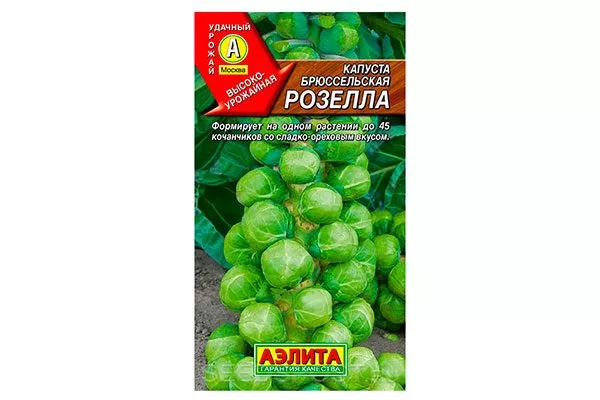
Features of external indicators and taste
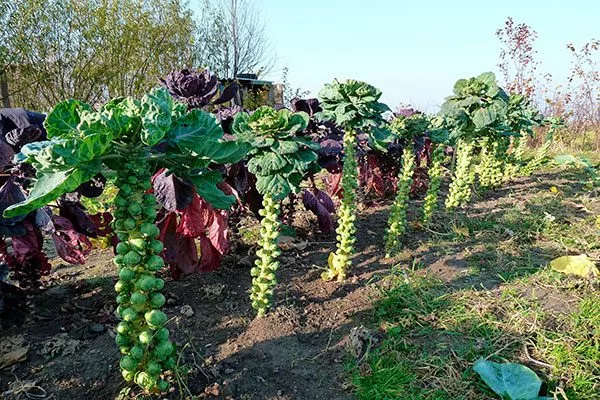
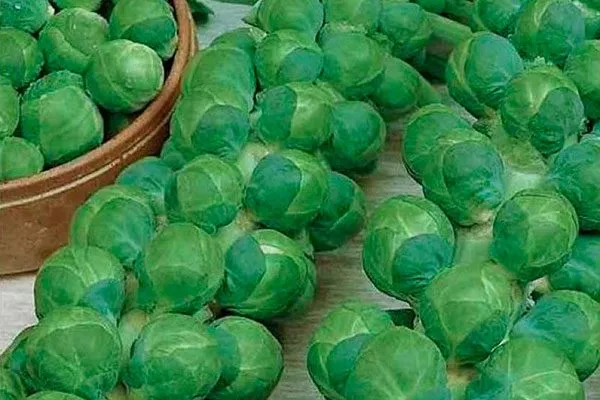
The bush is considered medium-sized, but under very favorable conditions it can grow tall. On average, the height ranges from 80 to 100 cm. Other distinguishing characteristics:
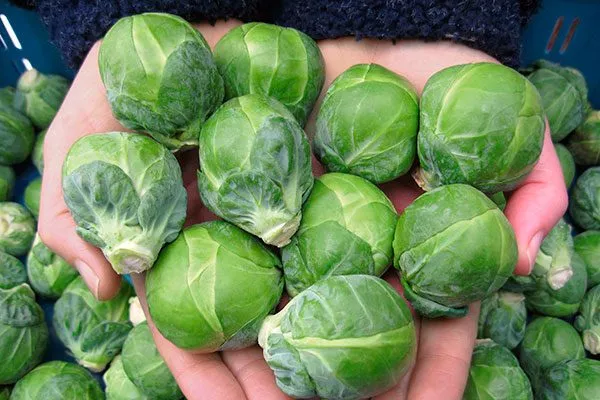
- shape of heads of cabbage – narrow obovate;
- the main color of the heads is classic green;
- weight of turns – 12-14 g;
- the number of heads of cabbage on one bush – 42-45 pcs.;
- density – high;
- leaf blades – have a concave shape and large size, a slightly bubbly surface with a slight waxy coating;
- leaf edges – have a bend;
- leaves on the stem – dark green with an anthocyanin tint.
Basics of planting and care
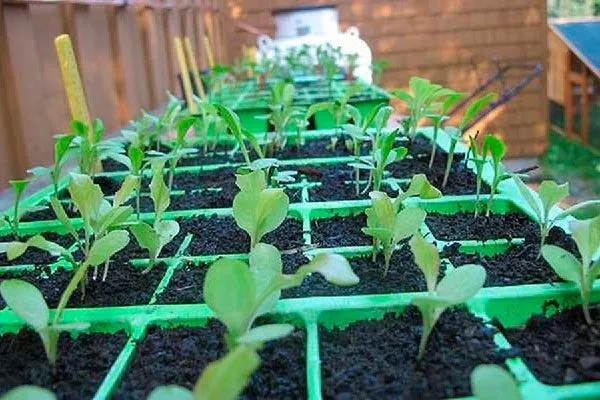
The sowing period for Brussels sprouts Rosella begins in late March and lasts approximately 2-3 weeks. The grown seedlings can be transplanted into open beds after May 20th.
Features of planting and care activities:
- To grow successfully, this variety requires a well-lit place, as it loves warmth and light.
- Sowing is done using seedlings. The soil mixture should include the following components: turf, a small amount of peat, vermiculite, and organic matter. The seeds are planted 1.5-2 cm deep.
- The cabbage transplanting scheme provides for a distance of 75x55 cm between plants.
- The seedlings are transplanted to a permanent location at the age of 40-50 days.
- Outdoor care includes watering once or twice a week, hilling for better root development, using traditional pest control methods, and fertilizing with organic and mineral fertilizers. The first fertilizing with complex mixtures is done 10 days after planting the seedlings, and 10 days after that, phosphorus-potassium compounds are added.
- 10 days after planting, apply complex mineral fertilizer (NPK 10-10-10).
- 20 days after the first feeding, use phosphorus-potassium fertilizer (P2O5 - 50%, K2O - 30%).
- Stop applying nitrogen fertilizers one month before harvest.
Advantages and disadvantages
Rosella is a great help for gardeners thanks to the following characteristics:
The only drawback of this variety is its high light requirements. Therefore, it should be planted in open areas as much as possible.
Reviews
Over its long history, Rosella cabbage has earned an exceptionally positive reputation. This variety is prized not only by gardeners and vegetable growers, but also by large-scale farmers for its many remarkable fruit qualities and characteristics. The key to growing it is planting it in sunny beds.