
Moskovskaya cabbage is a late-ripening variety. It is characterized by high yields and increased juiciness. It is divided into two subspecies, designated 9 and 15. It has been in existence for almost 100 years, developed by Russian breeders.
Description of the variety
Scientists from the All-Russian Research Institute of Vegetable Crops and Seeds (VNIISSOK) worked on creating the specimen in 1937. Selected specimens of Pushkin cabbage were used for selection.
The first variety developed was Moskovskaya 9, the second was 15. State variety trials were conducted over a period of six years, after which variety 9 was included in the State Register. Variety 15 was tested from 1957 to 1968.
Initially, Moscow cabbage was intended for cultivation in the following sectors of Russian territory:
- Northwest;
- Central Russia;
- Far East;
- Volga-Vyatka regions.
Gradually, the variety was adapted for cultivation in all regions of the country.
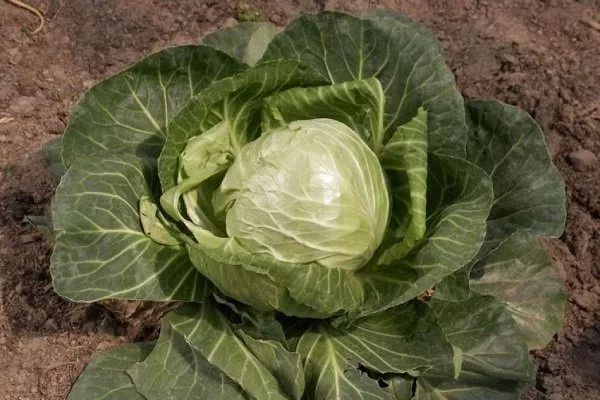
Botanical description and characteristics:
- the period of full maturity is from 115 to 160 days;
- the bush is spreading and requires a lot of space in the garden;
- leaf rosette up to 110 cm in diameter;
- leaves are large, wrinkled, round or oval;
- color - green-gray with a light coating;
- wavy edges;
- the surface of the head is smooth;
- the veins on the fruit are hard, but there are few of them;
- the weight of a mature head of cabbage is from 4 to 18 kg;
- juiciness - high;
- the shape of the vegetable is round or slightly flattened;
- the shade at the cut site is yellow-white;
- the size of the stalk is 20–30 cm in length;
- the taste is sweet (sugar content is 7–8%);
- special feature: the variety contains a lot of vitamin C (12–14%);
- yield - 60-90 tons are harvested from 1 hectare, but cases of up to 105 have been noted, largely depending on the frequency of soil moistening;
- the shelf life is high (stored for up to 8 months), transportability is average;
- the difficulty of care is average;
- high immunity;
- No cracking of heads is observed.
Moscow cabbage is versatile—it's used for first courses (cabbage soup, borscht) and second courses (braised cabbage rolls, stuffed cabbage rolls), pickling, fermenting (due to its juiciness), canning, and eating fresh (salads). This variety makes a delicious juice.
Advantages and disadvantages
Varieties of the variety
| Name | Ripening period (days) | Cabbage head weight (kg) | Keel resistance |
|---|---|---|---|
| Moscow late 9 | 140 | 6-8 | High |
| Moscow late 15 | 140-160 | 3.3-6 | Average |
Moscow cabbage is divided into two subvarieties. Each has its own distinctive characteristics:
- Moscow late 9. It matures in a maximum of 140 days. The heads are relatively small, weighing 6–8 kg. With proper spacing between seedlings, they can grow up to 18 kg. It is highly resistant to clubroot.
- Moscow late 15. The growing season lasts from 140 to 160 days. The average fruit weight is 3.3 to 6 kg, with a maximum of up to 15 kg.
Landing features
The Moscow cabbage variety is traditionally grown exclusively from seedlings, as it is considered a late-ripening variety. Seedlings are easy to care for and plant.
- ✓ Optimum soil temperature for sowing seeds: +5…+10°C.
- ✓ Seeding depth: 1-2 cm.
- ✓ Distance between plants when planting seedlings: 50-70 cm.
Sowing seeds directly into open beds is only permissible for residents of the southern regions of the country. Favorable weather and climate conditions here facilitate successful cultivation.
Seedling method
In central Russia, seedlings are planted from March 15 to April 15, in the south from mid-April to May, and in the north from late March, as summers are very short. Before sowing, it is recommended to prepare the planting material. Here's how to do it correctly:
- Select the largest seeds. Soak them in a salt solution (1 tablespoon salt per 200 ml water) for 15 minutes. Discard any seeds that float to the surface.
- Disinfect the remaining specimens in a light pink solution of potassium permanganate. Leave for 15–20 minutes, then rinse.
- Then soak in water at 60–70°C for 30 minutes.
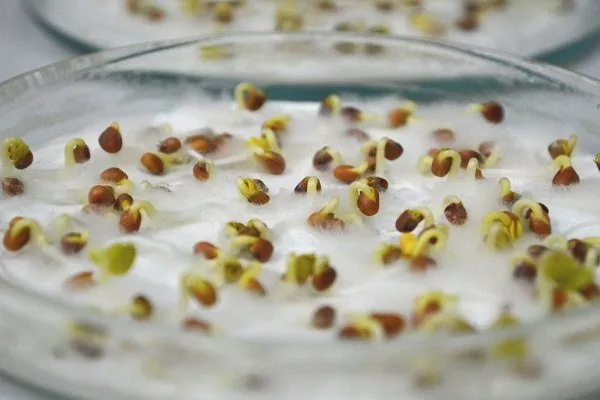
- Wrap the seeds in a damp cloth, place them on the bottom of a plate, and leave for 3-4 days to germinate.
Prepare the containers and potting mix. Common boxes and containers, plastic cups and bottles, peat pots, and plates are all suitable. The substrate can be purchased at the store or made at home, choosing one of the following options:
- peat - 1 part, sand - 1/4 part, garden soil - 3 parts;
- in equal proportions - soil, peat and humus.
Sowing order:
- Make drainage holes in plastic containers.
- Place small stones and perlite/expanded clay in a layer of up to 2 cm on the bottom.
- Fill the soil mixture almost to the top.
- Water generously and allow the moisture to soak in.
- Use a toothpick to make mini-holes 1 cm deep.
- Insert the seeds, sprinkle with soil, water.
- Cover with film/glass.
Requirements for seedling maintenance:
- Temperature. During the day - + 15–18°C, at night - + 12–14°C.
- Watering. Moisten the soil as it dries out, avoiding over-watering/over-drying.
- Lighting. Daylight hours: 14–16 hours.
- Picking. This is done after two true leaves have formed. The bushes are replanted into individual cups with a minimum capacity of 400 ml.
- Stratification. Two weeks before transplanting outdoors, begin hardening off the plants. Take them outside daily, gradually increasing the interval.
- Top dressing.It is carried out three times:
- after 15 days - per 1 liter of water - 4 g of superphosphate and 2 g of ammonium nitrate, potassium;
- on the 15th day after the first feeding, use the same composition, but add it to 500 ml of water;
- 15 days before transferring the seedlings to the garden - per 1 liter of water - 8 g of potassium, 3 g of ammonium nitrate, 5 g of Superphosphate.
Seed method
Sowing of planting material of the Moskovskaya variety directly into the garden is carried out: in the South - in April, in the Middle Belt - April - May, in the North - in April (necessarily in a greenhouse).
Planting pattern:
- between rows - 70–80 cm;
- between seeds in one row - from 50 to 80 cm.
Sowing - step-by-step instructions:
- Level the prepared beds (dug and fertilized) with a rake.
- Mark the area allocated for Moscow cabbage.
- Make holes 3 cm deep at the distance indicated in the planting diagram.
- Pour warm water generously and let it soak in completely.
- Place 1-2 seeds.
- Cover with soil, but do not compact it.
- Lightly moisten the top.
- Cover with thick plastic.
On sunny, warm days, open the cover for 7–9 hours, watering periodically (as the soil dries). When a sprout with two true leaves forms, remove the film completely.
Features of agricultural technology
Agronomic practices include a number of steps, including preparing the beds, transplanting seedlings, and subsequent care. Moscow cabbage isn't considered a fussy plant, but it's important to follow some basic guidelines.
Selecting a site and preparing the soil
Late-season cabbage varieties prefer plenty of light and warmth. Plant in an open, sunny location. Loamy or sandy loam soil is preferred, with a pH of 5–6. If the pH is higher, apply a limestone solution of 5 kg of lime and 10 liters of water per 10 square meters.
The soil is prepared in the fall:
- Clear the garden of debris, branches, and leaves.
- Dig to a depth of 35 cm.
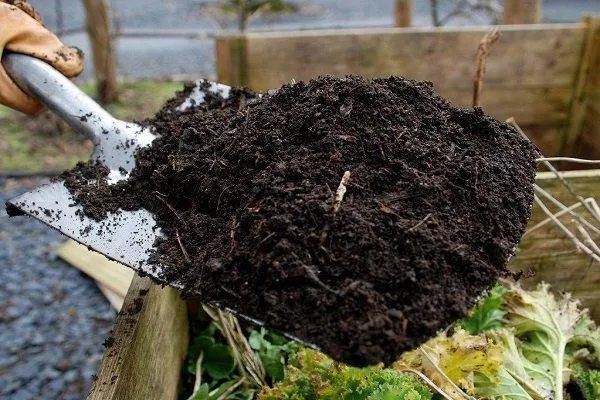
- Apply fertilizer by spreading rotted manure or compost (5 to 7 kg per square meter). If the soil is depleted, add mineral fertilizers such as superphosphate (35–40 g per square meter).
In the spring, carry out preparatory activities again:
- Dig over the soil and add fertilizer again. For 1 square meter, you'll need 200–300 g of wood ash and 1 tablespoon each of saltpeter and superphosphate.
- Level the beds, dig holes.
- Place fertilizer in each hole. There are two options (per 1 square meter):
- wood ash - 1 tbsp, nitroammophoska - 1 tsp, compost - 300-400 g;
- urea - 40 g, wood ash - 1-2 tbsp.
Timing and procedure for planting seedlings in open ground
The seedlings are being transplanted in open bedsWhen the seedlings have 4-6 full leaves, Moscow cabbage reaches 45 days of age, maximum 60 days. The sprout height is 20 cm. Approximate timeframe:
- from May to June - in the Central Belt;
- from the end of May to the beginning of June - in the South.
Rules for transplanting seedlings:
- Remove the seedlings from their containers. Since the root system is still weakened, use the transshipment method:
- rub the sides of the glass with your hands;
- turn the pots upside down;
- hold the bush with one hand and the container with the other;
- Shake it slightly and the plant will fall out.
- Place the seedlings in the center of the prepared hole.
- Holding the bush with one hand, sprinkle it with soil on all sides.
- Tamp lightly and moisten.
- Make a groove around the root zone (water is added to it to prevent the root part of the hole from being washed away and to prevent the long stalk from being exposed).
- Apply a layer of mulch to maintain moisture levels.
Care instructions
The main requirement of Moscow cabbage is abundant wateringHowever, sprinkling is not recommended, especially during the fruit formation/growth period (it will lead to cracking). This method also encourages snail and slug infestations.
Full list of agricultural works:
- Moisturizing. Water once a week. If the weather is hot and dry, double the frequency. For each plant, 3 liters of settled, warm water is sufficient for the first month. Subsequently, increase the watering to 5–7 liters.
- Mulching. This procedure is not mandatory, but it is recommended to maintain normal moisture levels and reduce the frequency of watering. Use peat, straw, grass, branches, and similar materials as mulch.
- Loosening and weeding. This will need to be done after each watering. This will help oxygen reach the roots and kill weeds that rob the soil of nutrients.
- Hilling. The Moscow procedure is important for cabbage. Long stalks will fall over without hilling. Cover the cabbage head with soil up to the base, leaving 2–3 cm between the soil and the plant to prevent rot.
Fertilizing cabbage deserves special attention. It's done as follows:
- On the 25th day after planting in the ground. Use organic matter such as humus or bird droppings. Add 2 kg of the working solution to 10 liters of water, and pour 1.2–1.5 liters of the working solution under each bush.
- When forming a head of cabbage. Potassium and nitrogen are essential. Dissolve 20 g of each in 10 liters of water. The minimum volume for one plant is 2 liters.
Diseases and pests
Moskovskaya cabbage is characterized by strong immunity, especially to clubroot. A small number of diseases and pests pose a threat to the variety:
| Disease / pest | How to recognize? | Prevention and treatment / control |
| Blackleg | Blackening of the stem at the bottom, root rot, drying out of the trunk. | Avoid dense plantings, avoid overwatering, and apply fungicides at 15-20 day intervals. Suitable fungicides include Fitosporin-M, Albit, Fundazol, and Gamair. Carefully read the dosage instructions. |
| Downy mildew (Peronosporosis) | The plant is most often affected in greenhouse conditions due to high humidity. Symptoms include the underside of the leaves becoming covered with a light, flour-like coating. | Treatment and prevention methods are identical to the previous disease. |
| Bacteriosis mucosae | The surface of the head of cabbage becomes covered with mucus, which causes rotting. | Crop rotation is important. When watering, avoid dripping onto the heads. For treatment, use biofungicides such as Planriz, Binoram, etc., according to the instructions. |
| Cruciferous flea beetle | Formation of small holes on the leaves. | Dust cabbage with tobacco dust or wood ash. During an infestation, spray with anabasine sulfate insecticide (1 g per 1 liter of water). |
| Slug | Hollow heads of cabbage. | Avoid high humidity. Spray the insects with Bitoxibacillin (4 g per 1 liter of water). |
| Cabbage fly | The root system is affected by fly larvae. | Use any insecticides according to the instructions. |
Harvesting, storage and use of crops
Moscow cabbage is harvested late, starting in mid-October. It's acceptable to harvest it after frost. But the key indicator is the vegetable's readiness. This is easy to verify:
- squeeze the head of cabbage in your hands;
- determine the density;
- If it is tight and cannot be compressed, go ahead and assemble it.
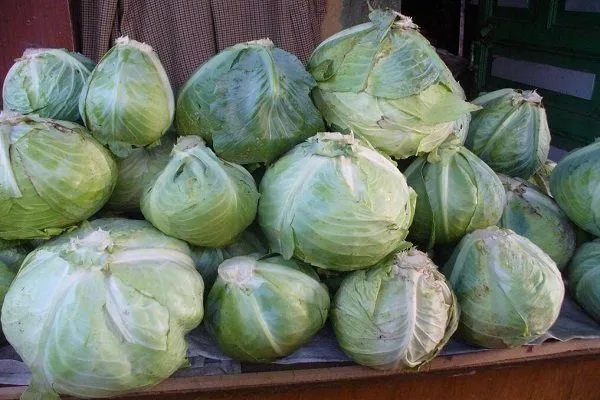
Cut off the heads with a sharp knife, leaving 5 cm (2 in) stalks. Then leave them in a ventilated area for a few days to dry, then store. Conditions:
- place the heads of cabbage in 1 layer;
- it is acceptable to wrap in cling film or paper;
- temperature in the cellar is + 1–3°C;
- humidity level - 85-95%.
Gardeners' reviews of the variety
Moscow cabbage is undemanding in terms of growing conditions and is grown in all regions of Russia. One important characteristic is its requirement for adequate watering. Large heads are quite dense, with no air pockets between the leaves. Transportability is average (it is recommended to transport it over long distances in boxes filled with sawdust).