
June cabbage has been around since the last century. During this time, it has changed its name twice. First, it was June 3200, then June Early. This variety is considered early maturing and can be grown using both seedlings and direct-seeded methods. It is deservedly popular among home cooks when preparing dishes using fresh produce.
Botanical description of the variety
June Cabbage was bred in 1967, but was only added to the State Register four years later. The variety is distinguished by its high yield, uniform ripening, and presentable appearance.
When it was added to the Register in 1971, it was stated that the variety was intended for cultivation in all regions of Russia. The optimal climate for a bountiful harvest with minimal care is moderate and warm, and this is the central part of the country.
Appearance and application
June cabbage is an early-ripening variety. It reaches maturity 90–110 days after sowing. When grown from seedlings, transplanting into the garden occurs 30–45 days after germination.
Brief description of the variety:
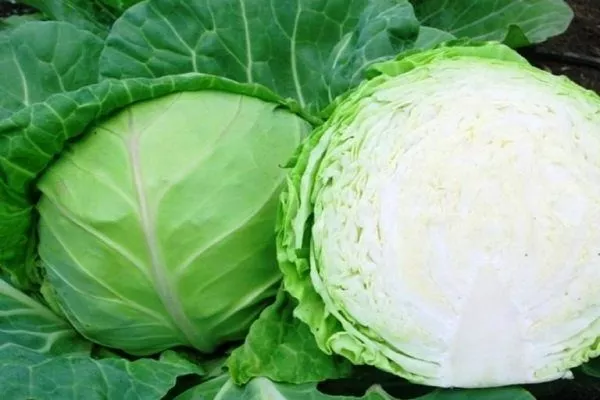
- the outlet is compact and raised (size varies from 40 to 50 cm);
- leaves are medium-sized (10–15 cm in diameter), with wavy edges;
- color - soft green;
- the shade on the cut is white-yellow;
- cabbage head density is average;
- the shape of the forks is round (sometimes it grows slightly flattened);
- the structure of the foliage is slightly pubescent with thin veins;
- stalk length - medium;
- the taste is sweet, a little sour, but after heat treatment only the sweetness remains;
- surface - has a light waxy coating;
- weight - from 900 to 2500 g.
June cabbage is commonly used to prepare salads, vegetable side dishes, fillings, and borscht.
The leaves will break if cooked too long. It's recommended to cook and simmer for the minimum possible time, as specified in a specific recipe.
Productivity and composition
From 3 to 7 kg of the vegetable can be harvested per square meter, depending on growing conditions and care. June cabbage is considered very nutritious. It contains many beneficial substances, the most prominent of which are:
- vitamins - PP, K, C, A, U (very rare) and all B;
- microelements - magnesium, potassium, iodine, calcium, zinc, phosphorus, iron;
- acids - folic and pantothenic.
Cabbage contains up to 3.8–4% sugar and 8–8.2% dry matter. Per 100 g of product, there are 25–27 kcal.
This variety is recommended for fresh consumption and use for gout, kidney disease, coronary heart disease, and urolithiasis. Key beneficial properties:
- strengthening the immune system;
- acceleration of metabolism;
- reduction of inflammatory processes;
- improving the condition of nails, hair, and facial skin;
- strengthening bones and joints;
- tissue regeneration;
- normalization of blood sugar levels, etc.
Advantages and disadvantages
June cabbage is the choice of many gardeners and large-scale agronomists for growing. This is due to the variety's numerous positive attributes.
Agrotechnical features
Growing techniques include many important points: planting seeds (for seedlings or directly into the ground), transplanting (with the seedling method), watering, observing timing and temperature conditions, etc. If you don't adhere to established rules, you shouldn't expect a rich harvest.
- ✓ Optimum soil temperature for seed germination: +3–5°C.
- ✓ Required daylight hours for seedlings: 12–15 hours.
How to prepare planting material?
Proper seed pre-treatment determines plant resistance to adverse conditions, the rate of sprout formation, and more. Please note the following key steps for seed preparation:
- Calibration. Sort out the planting material, selecting the highest quality (without damage, mold, etc.) and large grains.
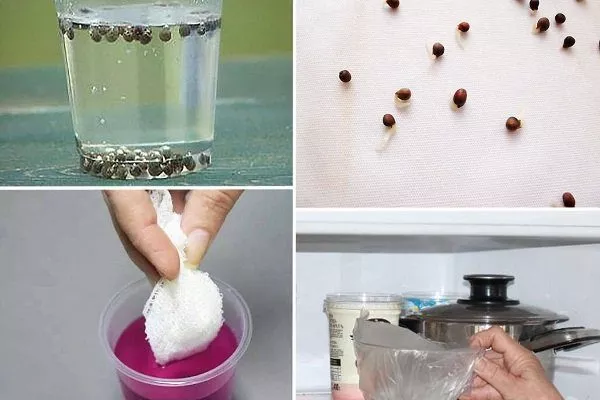
- Checking for germination. Make a salt solution: 1 tablespoon of salt per 200 ml of water. Soak the seeds for 15–20 minutes. The hollow seeds will float to the surface. Discard them, as they won't sprout.
- Disinfection. There are two options considered best for cabbage:
- soak in a light pink solution of potassium permanganate for 30 minutes;
- Soak the seeds in a solution of 1 liter of water and 1 g of Fitosporin for 10–11 hours.
- Warming up. Place the planting material in hot water (temperature from + 60 to + 70°C) for 25–30 minutes.
- Germination. Wrap the seeds in wet cheesecloth and place them in a container with a small amount of water at the bottom. Leave until sprouts form (3 to 5 days).
When disembarking into open ground Hardening off the seeds is also recommended. Place the damp seeds in a damp cloth, transfer them to the side shelf of the refrigerator, and leave for 8–9 hours. Then move them back to room temperature for the same amount of time. Repeat this process 2–3 times.
Site selection and soil preparation
This early cabbage variety requires plenty of light. The area designated for sowing should be fully sunlit, with no shaded areas.
Be sure to take into account the rules of crop rotation:
- good neighbors - garlic, lettuce, onion, radish, dill, celery, mint, chamomile, sage, marigolds;
- unacceptable neighbors - carrots and tomatoes;
- the best predecessors - potatoes, onions, peas, zucchini, carrots, beans;
- unwanted precursors - mustard, horseradish, radish, rapeseed, any kind of cabbage.
Proper soil preparation is crucial. The first thing to consider is the soil pH. June cabbage prefers a pH of 5-6. Typically, soil is more acidic. You'll need to bring the soil to a neutral level. Follow these steps:
- Dissolve 5 kg of lime in 10 liters of water.
- Mix thoroughly.
- Water the garden at the rate of 10 square meters.
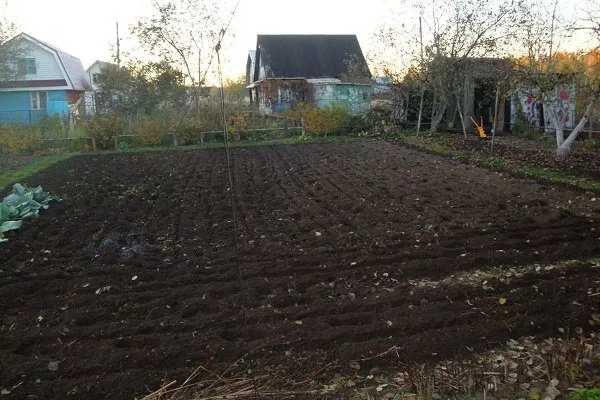
The vegetable prefers fertile, loose soil. Prepare it in the fall:
- Remove all debris, leaves, branches.
- Dig it up and apply fertilizerFor every square meter, add 7 kg of compost or rotted manure. If necessary, add superphosphate (40 g per square meter).
- In the spring, dig up the area again, having first cleared it.
- Apply fertilizer. Mix 1 tablespoon of calcium nitrate with the same amount of superphosphate (calculated per 1 square meter), add 300 g of wood ash (scatter over the garden).
- Use a rake to level the surface.
Planting dates
For the first sprouts to appear, the variety requires a soil and air temperature of 3–5°C. Once the plants begin to grow, it's best to cover them with plastic to prevent slowing their development. To avoid this, sow the seeds at 10–16°C, but this will delay the harvest period.
Climate conditions vary across different regions. In some areas, the threat of recurrent frosts persists until mid-June. At that point, crop protection is a priority.
The sowing period depends on the cultivation method and region:
| Region of Russia | For seedlings | Into open ground |
| Southern region | From March 15 to March 30. | From the end of March to mid-April. |
| Central part, Moscow region | From April 1 to 15. | From mid-April to early May. |
| Siberia, the Urals, and the Leningrad region | From April 15 to 30. | From early to mid-May. |
How to plant in open ground?
When planting June cabbage, it's important to follow a proper plant spacing. The optimal spacing for this variety is 60 cm between rows and 45 cm between seeds within a row.
Step-by-step instructions for planting seed:
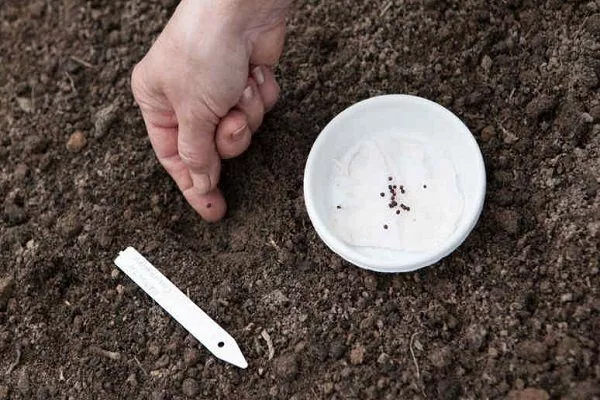
- In the prepared area, dig holes according to the diagram. For seeds, plant them 2.3–3 cm deep, and for seedlings, plant them along the length of the root system (so that the plant "sits" 3–4 cm below the lower cotyledon leaf).
- Add fertilizer to each hole. Choose one of the following options depending on the soil composition in your specific garden:
- 1 tbsp. wood ash, 250–300 g compost – for heavy and podzolic soils;
- 1 teaspoon of nitroammophoska – a universal product for all types of soil.
- Mix with soil to prevent the planting material from getting burned.
- Water generously with warm, settled water. Wait until it is absorbed.
- Insert a bush or put in 2 seeds.
- Sprinkle with soil and compact lightly with your palms.
- Moisten, but use half as much water.
To maintain the desired level of humidity, sprinkle with mulch - straw, leaves.
Features of growing using seedlings
The seedling method is best used in cold climates, as the optimal temperature for sowing occurs late and summers are short. June-bearing cabbage has a fairly robust root system and transplants easily.
First, prepare containers—peat pots, plastic cups/bottles, containers, or wooden crates. You'll also need a potting mix. It's available at garden centers. If you prefer, you can make your own. The best mixes for early cabbage:
- peat, garden soil and humus, taken in equal proportions;
- turf soil - 3 parts, loose peat - 1 part, fine river sand - 1/3.
Be sure to disinfect the soil. Preheat in the oven at 180–200°C for 30–35 minutes.
What to do next:
- Make drainage holes in the bottom of the containers and lay a 2–3 cm layer of small stones, expanded clay or perlite.
- Add the soil mixture so that 2 cm remains from the surface to the edge of the glass.
- Pour water over it and let it soak in.
- Use a toothpick to make 1–1.5 cm deep indentations. The distance between seeds should be 5–7 cm.
- Insert 2 seeds at a time, sprinkle with soil without compacting.
- Moisten with a spray bottle and cover the containers with plastic wrap or glass.
Next, create the following conditions (before transplanting into open ground):
- Temperature. Until seedlings appear (approximately 5 days), keep the seeds in a room at a thermometer reading of + 18–20°C, then reduce the temperature to + 10–12°C, and after another 7 days, increase it again to + 15–17°C.
- Lighting. The optimal daylight hours are 12 to 15 hours. During the dark hours, illuminate the seedlings with a lamp.
- Watering. Before sprouts appear, mist with a spray bottle. Afterward, water with a thin stream from a watering can. Repeat this procedure as the soil dries out.
- Film. Keep the cover on the container until the sprouts reach a height of 2 cm.
- Picking. Carry out the procedure 15 days after removing the cover.
- Top dressing. There should be three of them:
- immediately after picking - per 1 liter of water - 2 g of ammonium nitrate, 4 g of Superphosphate, 1 g of potassium salt;
- 10 days after transplantation - the same composition, but for 0.5 liters of water;
- 2 days before transferring to open ground, leave the saltpeter and superphosphate at the same concentration, and add 7 g of potassium salt.
- Hardening. Carry out this process 12 days before transplanting into the garden. To do this, take the seedlings outside every day, gradually increasing the time (start with 1–2 hours).
Care
Caring for June cabbage isn't difficult. Simply follow the same steps as growing any vegetable, but keep a few subtleties in mind.
Pay close attention to watering. This variety does not survive without water. One bush requires approximately 4 liters per application. Water at least twice a week, and up to 4 times during drought. Features:
- Immediately after transplanting the seedlings, do not water them for 5-6 days - otherwise they will not take root;
- Reduce watering by half 30 days before harvest;
- Stop adding water completely 14 days before full maturity;
- Do not allow drops to fall on the leaves.
Other important events:
- Loosening. This procedure saturates the soil and root system with oxygen and eliminates weeds. Loosen the soil after each watering or rain around the root zone or throughout the cabbage beds.
- Hilling. June-bearing cabbage doesn't require frequent hilling, but it should be done. This encourages additional lateral root growth and strengthens the plant's stability. Hill the cabbage twice: when 5-7 leaves form and 2-3 weeks later.
- Loosen the soil after each watering or rain to ensure oxygen reaches the roots.
- Hill up the plants twice: when 5–7 leaves form and 2–3 weeks later to strengthen the root system.
Fertilizing requires special attention. It's done twice, taking into account that fertilizers were applied during sowing. Pour 2 liters of the following solution under each bush:
- the first time, when 5-6 leaves have formed on the plants, nitrogen is needed for accelerated growth of green mass (use liquid mullein diluted with water in a ratio of 2:10 or add urea - 30 g per 10 liters of water);
- the second time, when the head of cabbage is formed - for 10 liters of water - 10 g of ammonium nitrate or a solution of 10 liters of water, 5 g of Double Superphosphate, 4 g of urea and 8 g of potassium sulfate.
There's no need to overfeed. Large amounts of nitrates will accumulate. If you don't want to make your own mixtures, buy complex fertilizers such as Agricola, OMU, Planta, or Sotka. Use according to the instructions.
Diseases and pests
June cabbage is considered resistant to many diseases and pests, but under unfavorable conditions and improper care, the following problems arise:
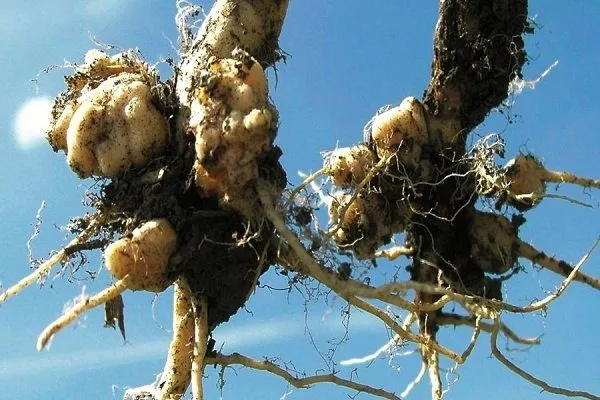
- Kila. It most often affects plants, especially at a young age. Symptoms include growths on the root system, drying of lower leaves, and stunted growth. A characteristic feature is that it spreads very quickly. It is important to begin treatment promptly.
The main cause is acidic soil. For treatment, use Bordeaux mixture at a 1% concentration or products such as Thiovit Jeta or Hom, as directed. Spray twice, 7 days apart.

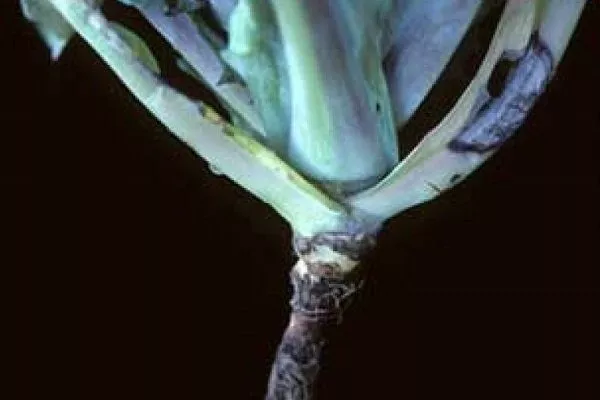
- Blackleg. Less common. Causes include cool water during irrigation and dense plantings. Symptoms include blackening of the roots and stems at the base.
For treatment, use Fitosporin (dilute according to instructions) and 1% Bordeaux mixture.
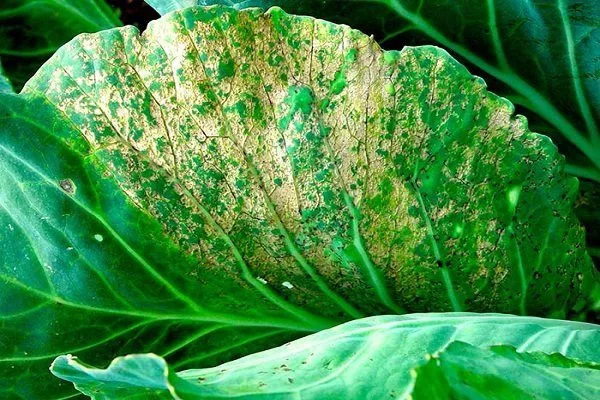
- Downy mildew. It appears in excessively rainy weather and consistently high humidity (watering is done moderately, but groundwater is close to the surface of the earth).
How to recognize: formation of yellow spots on the top of the leaves and a gray coating on the bottom.
To suppress the infection, spray with Fitosporin, Fundazol, Gamair.
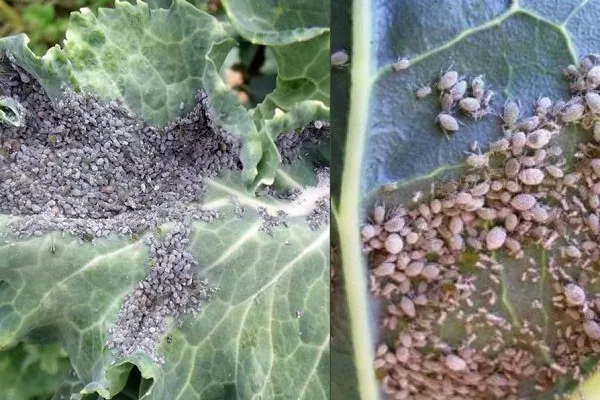
- Aphid. The insects are very small and light-colored. A coating on the cabbage leaves indicates their presence. To control them, use Komandor, Actellic, Intavir, or an ash-soap solution (200 g of soap and 150 g of wood ash per 5 liters of water).
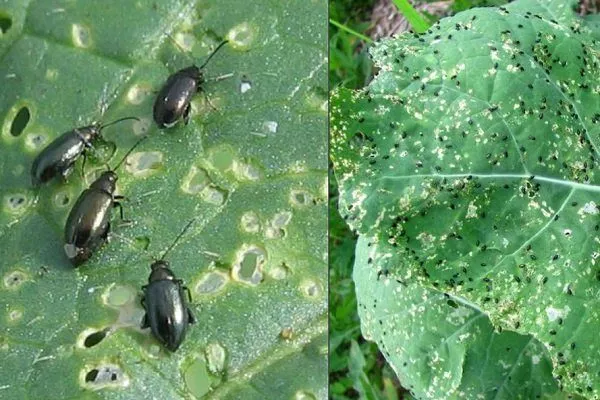
- Cruciferous flea beetle. Signs include chewed leaves and drying out. To combat the pest, use Actellic, Karate, and a solution of soap and garlic (200 g of soap and 100 g of crushed garlic per 5 liters of water).
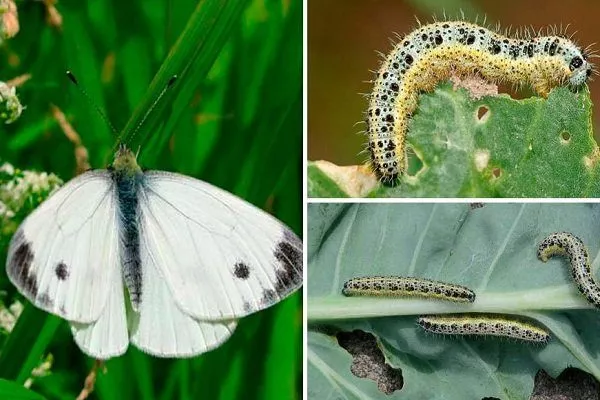
- White butterfly. The presence of the disease is indicated by rotted or yellow/dry leaves. Treat plants with Intavir or Fitoverm.
To prevent pest infestations and disease, take preventative measures. These include the following:
- In the fall, remove all plant debris, and if there is any infected material, burn it;
- Dig up the garden at the first frost;
- Sprinkle the soil with wood ash or tobacco dust 1-2 times a month;
- disinfect seeds, containers for seedlings, garden tools and beds;
- do not thicken the plantings;
- adhere to crop rotation rules;
- do not allow liquid to stagnate too much after watering;
- Dispose of any garden plants that have insects or signs of disease (many pests carry bacteria).
How to collect and store?
June cabbage leaves are tender. When harvesting the heads, proceed with care. Here's how:
- If you decide to pull out the cabbage by the roots, first thoroughly moisten the soil (otherwise the leaves will break);
- when harvesting dry cabbage, cut it with a sharp knife, leaving a 7 cm stalk;
- Place the forks in a ventilated area or under a canopy to dry for 2-3 days (avoid direct sunlight).
Helpful Tips
Experienced vegetable growers successfully grow early cabbage varieties, but beginners sometimes face difficulties, especially when it comes to seedlings. Gardeners recommend:
- if the seedlings are stretching too much, give them more light and reduce the temperature by 2–4°C;
- When cabbage growth stops, pay attention to the soil moisture level;
- If the lower leaves dry out for no reason, replant the bushes (they are too dense);
- If wilting occurs, but there are no other signs of disease, start loosening the soil more often (there is a lack of oxygen);
- cabbage turns yellow when it lacks iron and phosphorus or when there is an excess of salts;
- If you need to grow the largest heads of cabbage possible, shade them (cover them with burdock, make a net camouflage shelter at a height of 50–70 cm);
- To prevent leaves from becoming loose, spray with boric acid.
Reviews from gardeners
June cabbage is considered a dietary and healthy product. It can replenish micronutrient deficiencies after spring vitamin deficiency. Growing this vegetable is easy. The number of cultivation procedures is the same as for other varieties. Variations occur in the amount of water and fertilizer applied.