
Black cabbage is a relatively newcomer to our country. It also goes by other names, including kale, toscana, cavolo nero, black palm, and dinosaur cabbage. Nutritionists consider this variety an essential part of a healthy lifestyle. Almost all Hollywood stars eat this variety, as it contains numerous nutrients.
The origin of black cabbage
It is believed that black cabbage appeared in Greece as early as the 4th century BC, but there is no precise data on its origin. Other historians claim it originated in Rome.
There is information that the variety was cultivated until the 17th century AD, but then this crop was supplanted by other varieties of cabbage, which were distinguished by increased resistance to unfavorable factors.
The variety was brought to Russia during the time of Peter the Great, that is, in the 18th century, due to the fact that it could withstand frost.
Tuscan cabbage was actively grown and distributed throughout Europe and America, but even here its cultivation ceased, switching to simpler varieties of white cabbage.
Already in the 20th century, the variety became popular again, so it began to be bred, developing new subspecies - for example, Grunkol, Braunkol, etc.
General description of black cabbage
Black cabbage belongs to the Brassicaceae family, specifically the Brassicaceae. Its scientific name, Brassica oleracea var. sabellica, is an annual, ornamental plant with leafy, capitate, and curly-leaved (with wavy edges, neatly arranged in a rosette).
Characteristic features:
- only the leaves are used as food;
- the stem is dense and strong;
- seed material is small;
- bush - in appearance resembles the structure of a palm tree;
- plant height in the full ripening phase is from 1 to 1.5 m;
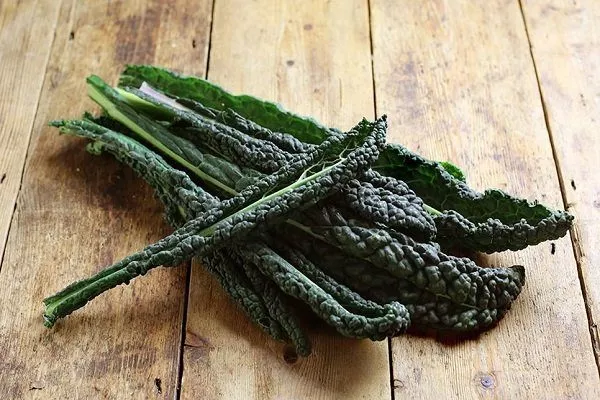
- leaves - juicy, feathery, corrugated;
- shape – straight, oblong (there are lanceolate varieties with tapered and pointed ends);
- leaf blade dimensions: 7 to 9 cm in width, 55 to 60 cm in length;
- surface - wrinkled with bubbly appearance;
- edges - slightly curled inward;
- color – dark green, but with a tint of black, smoky and bluish tones;
- external resemblance – with Savoy cabbage;
- germination rate – from 75 to 80%;
- frost resistance – the lowest temperature at which Black Tuscany does not spoil or lose its beneficial properties is -20°C;
- taste – moderately sweet.
Many gardeners leave the variety outdoors until spring and harvest it after frost. Low temperatures promote the release of sugars, making the product suitable for dieters, and its flavor and texture are improved.
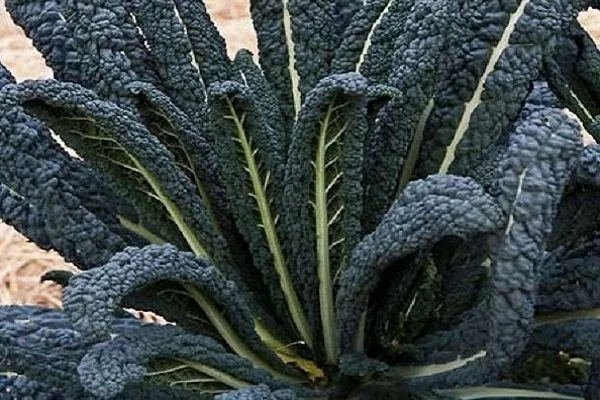
Characteristics of the variety
Black cabbage is considered a dietary and highly nutritious vegetable due to its uniquely rich composition. However, it doesn't always provide benefits. If consumed in moderation or with contraindications, complications and unpleasant consequences can occur.
Nutritional value and composition
There are only 49 kcal per 100 g of product. The nutritional value of kale is invaluable – here are the percentage values:
- protein – 3%;
- carbohydrates – 6-8%;
- fats – 0.7%;
- starch – 0.5%;
- dietary fiber – 2%;
- healthy sugar – 4-6%;
- ash – 1.5%;
- water – about 85%.
Its rich composition means it offers a wide range of beneficial properties. Black Tuscany contains the following substances:
- linoleic/linolenic acid – 1.15/1.82 g;
- oleic/palmic acid = 0.05/0.08 g;
- vitamin B1/B2 – 0.11/0.12 g;
- vitamin A/C – 240/120-130 mg;
- choline/pantothenic acid – 0.8/0.9 mg;
- vitamin K/B9 – 400/140 mcg;
- vitamin E/B3/B6 = 1.55/1/1.25 mg;
- calcium/magnesium – 150/50 mg;
- iron/phosphorus – 1.7/0.95-1 mg;
- manganese/potassium – 0.67/100 mg;
- selenium – 0.91 mcg;
- sodium/zinc – 40/0.6 mg;
- serine and tyrosine – 0.12 g each;
- valine and arginine – 0.18 g each;
- leucine, lysine and isoleucine – 0.22 g each;
- glycine and alanine – 0.17 g each;
- glutamic and aspartic acid – 0.3 g each;
- histidine – 0.08 g;
- threonine – 0.15 g;
- phenylalanine – 0.3-0.4 g;
- proline – 0.2 g.
The benefits and harms of black cabbage
Official medicine recommends eating black cabbage for ailments affecting many systems and internal organs—kidney and liver diseases, digestive organs, the endocrine and cardiovascular systems, etc.—because this variety possesses the following properties:
- cleanses the body of toxins, cholesterol, free radicals and other harmful substances;
- builds a protective shell on cellular structures, thereby preventing the development of pathological disorders, including oncological ones;
- has antioxidant and anti-inflammatory effects;
- restores disturbed hormonal balance;
- alleviates the condition during premenstrual syndrome and menopause;
- saturates the body with nutrients, thereby strengthening the immune system;
- normalizes visual acuity;
- strengthens bones, joints and teeth;
- helps improve the condition of hair and skin.
What harm and what contraindications occur:
- if the kidneys are diseased, it provokes a relapse or the formation of stones in the organ and gallbladder;
- poor blood clotting – vitamin K makes it difficult to liquefy biological fluids;
- with inflammation of the thyroid gland - the disease worsens;
- with increased acidity of the stomach - gastritis becomes acute;
- no contraindications in case of severe overeating of the product - flatulence, diarrhea, intestinal spasms.
If you consume black cabbage in small quantities - a maximum of 200-300 g per day, then there will be no side effects.
Planting in the ground
Black cabbage takes 45-60 days to grow from seedlings in open beds. Growing it from seedlings is not recommended, as the stems and root system are fragile when young.
Kale is sown in the garden in late April, when air and soil temperatures stabilize at 4-5°C. Don't worry about recurrent frosts—the seeds will easily survive them.
Not all gardeners recommend treating seeds before sowing, but most agree that it's necessary. These simple steps will help the plant develop strong immunity to adverse factors. This is especially important for accelerating the growth and development of planting material.
What you need to do – step-by-step instructions:
- Calibrate the seeds by size and discard the smallest ones. Additionally, remove any damaged or diseased seeds. Discard any hollow seeds. To do this:
- make a saline solution - 1 tbsp of salt per 200 ml of water;
- pour out the planting material for 15 minutes;
- select all the seeds that float to the surface, and prepare the seeds that are at the bottom for sowing;
- rinse.
- Disinfect to kill all pathogens. There are several disinfection options:
- soak in a light pink solution of potassium permanganate for about 20 minutes;
- treat for the same time in a 3% hydrogen peroxide solution.
- Since you're sowing directly into the garden, check the seeds for germination. To do this, follow these steps:
- wet a piece of gauze and wrap the planting material in it;
- place it in a container with a small amount of warm water at the bottom;
- Leave for 3-4 days to germinate, moistening the cloth daily.
To speed up the germination process, gardeners use growth stimulants (Kornevin, Epin) – follow the specific instructions. Alternatively, try one of the following:
- prepare an ash solution - 1 tbsp of charcoal per 500 ml of warm water (keep it in it for 3-4 hours, then plant immediately);
- Heat water to 50°C, add 6 cloves of garlic (chopped) to 200 ml, leave for 30 minutes.
After treating the seeds, begin sowing in pre-prepared soil:
- On a flat surface of the garden, make furrows or holes with a hoe to a depth of 1-2 cm and a width of 50 cm between them.
- Water the beds and let the liquid soak in.
- Plant the seeds at a distance of 35 cm from each other (2-4 seeds in one hole).
- Sprinkle with soil and compact very lightly.
- Moisten slightly.
Caring for black cabbage
Despite its unusual variety, black cabbage is considered undemanding and fully adapted to both southern and northern climates. However, there are some nuances that deserve special attention.
Watering
Since Tuscany is more accustomed to moderate and cool weather conditions, frequent soil watering will be necessary during hot periods. Here are some guidelines:
- pour only settled water and exclusively into the root zone;
- Do not allow drops to fall on the leaves, as their structure is delicate (the sun and heat will cause a burn);
- if the outside temperature does not exceed +35°C, it is enough to water twice a week, if it is hotter, then 3 or 4;
- humidification is carried out mainly in the evening (after 19:00);
- the water temperature should not exceed room temperature;
- You need to add enough water so that the top layers of soil are moderately moist (the specific amount depends on the type of soil) - do not allow the liquid to stagnate (this will cause rotting processes).
Mulching
Black cabbage absorbs moisture from the top layers of soil, so it's important to maintain moisture levels there. Experienced vegetable growers use mulching to achieve this. Here's how to do it right:
- Prepare mulch. This can be hay or straw, peat, grass, moss, or sawdust.
- Moisten the beds.
- Place a 2-2.5 cm layer under each bush within a radius of 15-25 cm (the younger the cabbage, the smaller the diameter of the circle).
If possible, spread mulch over the entire surface of the cabbage bed – this will help retain moisture for longer.
Top dressing
It is recommended to fertilize the black cabbage variety once a month, so during the entire growing season it is enough to apply fertilizer twice:
- first time – when the plant gets stronger;
- the second time – in 25-30 days.
What to fertilize with:
- Root feeding. Use chicken manure or mullein – 200 g of organic material per 10 liters of water (leave for 1-2 days). Afterwards, sprinkle the soil with wood ash to prevent pests.
- Foliar application of fertilizers. Dissolve 1.5-2 g of the following in 1 liter of water: manganese, boric acid, and ammonium molybdate (or calcium nitrate, which is better for delicate leaves). Spray the green foliage with the solution.

If the soil is very poor and the plant is growing too slowly, apply additional mineral fertilizer, dividing the feedings into three equal portions. What to use in this case:
- 10 liters of water;
- Superphosphate – 40 g;
- potassium salt – 20 g.
One bush requires from 400 to 600 ml of root feeding solution.
Removing wilted leaves
If foliage is wilting, it should be removed immediately. Otherwise, it will attract insect pests and cause the remaining foliage to wilt.
There are many reasons for this, including various diseases, excess moisture, or, conversely, a lack of moisture. Most often, the cause is simple: the black cabbage is simply too hot. To remedy this, create shade over the beds.
Additional actions
Sometimes the beds need to be loosened, but this shouldn't be done too often because the roots are too close to the surface. Rules:
- loosening depth – 3-5 cm;
- the procedure is carried out immediately after watering;
- If there is mulch, then it is not necessary to loosen it every time.
Basic growing conditions
The black variety of cabbage has its own specific requirements for key aspects, such as light and soil type. However, there's one factor that doesn't affect this plant's development: temperature. Tuscany is frost-resistant, and in hot weather, shade and frequent watering are sufficient.
- ✓ The optimal soil acidity for black cabbage should be within the range of 4.5-6 pH, which is often overlooked.
- ✓ To prevent the accumulation of nitrates, it is necessary to provide the plant with sufficient light, minimizing shade.
Lighting
A rich, dark green color requires plenty of light. Lighting also affects the height of the cabbage stem, which in turn affects the number of leaves and overall yield. Growing black cabbage in the shade will lead to the following consequences:
- growth slows down;
- nitrates accumulate;
- the leaves are dying.
Soil requirements
All crops love fertile soil. Black cabbage is no exception, so before planting, it's important to fertilize the beds. This is done twice:
- In autumn. Compost or rotted manure is required at a rate of 6-7 kg per square meter. If the soil is very depleted, additionally fertilize with superphosphate at a rate of 40 g per square meter.
- In the spring. Apply fertilizer again, but this time add 1 tbsp each of superphosphate and saltpeter, 200 g of wood ash.
- Check the soil acidity and deacidify it with lime if necessary.
- Add organic fertilizer (compost or rotted manure) in the fall.
- In spring, add mineral fertilizers (superphosphate and saltpeter) and wood ash.
If you missed one of the fertilizers, add 1 tablespoon of ash, 1 teaspoon of nitroammophoska, and 300 g of compost to each hole. If these components are not available, use 2 tablespoons of charcoal and 40 g of urea.
In addition to enriching the soil with nutrients, the soil is prepared as follows:
- In the fall, dig up the garden – for the black cabbage variety, 15-20 cm is enough.
- In the spring, repeat the procedure, then level the surface with a rake, breaking up all lumps of earth.
Don't forget to clear the garden of debris, old leaves, branches, etc. beforehand. Other preparation features:
- pay attention to the acidity of the soil (optimally 4.5-6 pH) - deacidify with lime (5 kg per 10 liters of water);
- the variety prefers light soil, so if the soil is heavy, add peat or rotted sawdust (at the rate of 5 kg per 1 sq. m);
- Black cabbage does not like to be next to anyone, so do not plant anything between the rows;
- Consider crop rotation rules - the best predecessors are: beans, cucumbers, tomatoes, potatoes, beets, green manure;
- Do not plant after onions and other types of cabbage, peas, radishes, carrots and cruciferous crops.
Pests and diseases
Black kale isn't particularly resistant to diseases. Practice preventative measures—disinfect seeds and tools, promptly remove wilted leaves, monitor lighting and humidity levels, mulch, etc.
What diseases and pests are most common:
| Disease/pest | Signs | Treatment/control methods |
| Blackleg | The root collar rots and the root turns black. | Spraying with 1% Bordeaux mixture or preparations (Planriz, Trichodermin, Fundazol), according to the instructions. |
| Powdery mildew | Whitish, yellowish or greyish spots with a coating appear on the leaves, after which they die off. | Use 1% Bordeaux mixture or Fitosporin (according to instructions). |
| Kila | The root system becomes compacted, the plant stops developing and dies. | The only way is to spray with a light pink solution of potassium permanganate. |
| Cabbage fly | The danger comes from the larvae that eat the root. | Pollination with tobacco dust or naphthalene is recommended. |
| Cruciferous flea beetle, whitefly, whitefly | These insects eat leaves. | To combat the disease, tobacco dust, wood ash or preparations such as Borey, Aktara, and Decis are used. |
| Cabbage moth and cutworm | They affect green mass. | They can be destroyed by dusting with wood ash and treating with insecticides – Altyn, Borey, Sensei. |
| Slugs and snails | They cover the cabbage with unpleasant slime and gnaw on the leaves. | Yeast mash (ingredients: 10 liters of water, 400 g of sugar, 20 g of yeast) works well to repel them. |
| Aphid | It clings to the leaves, causing it to look like a coating. | For spraying, use a solution of ash and tobacco (200 g of each component per 10 liters of water). A soap solution works well (5 bars of laundry soap per 5 liters of water). |
Harvest timing
Harvest the first crop 45 days after sowing. Pick the ripest leaves first, and save the unripe ones for later. However, this isn't very convenient, so farmers recommend waiting until the cabbage is fully ripe and then harvesting it completely.
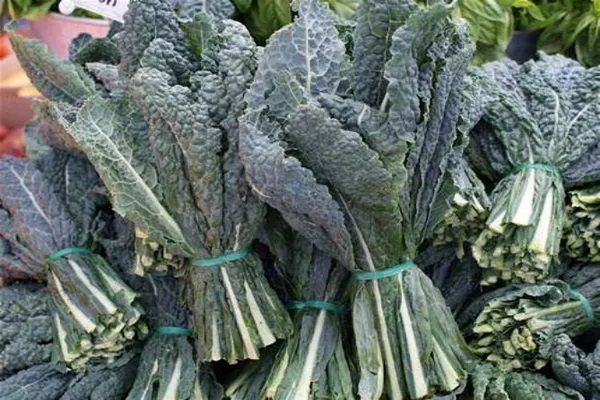
Collection rules:
- cut the leaves with a sharp knife;
- The time is exclusively early morning, so that the leaves retain the necessary level of moisture.
Rules for storing black cabbage
Tuscany cabbage isn't stored the way you'd normally store it—it's not stored in a cellar, as the leaves have already been cut. Ideally, for short-term storage (maximum 6-7 days), it should be placed in the refrigerator (vegetable shelf), wrapped in paper first.
For long-term storage, the freezing method is used. Rules:
- Sort out all the leaves - throw away any damaged ones, those with signs of spoilage, etc.
- Rinse thoroughly and shake off excess water.
- Lay out on a cloth or paper towel until completely dry.
- If necessary, cut with a knife (to the desired size) and dry again.
- Place in plastic bags - it's best to use vacuum bags, but if you don't have them, try to remove as much air as possible from the bags.
- Place in the freezer.
- Store for up to 90 days.
The product should be packaged in individual portions only, as it should not be re-frozen after defrosting. This significantly reduces the taste and nutritional value.
Culinary uses
Black cabbage is used in a variety of dishes. It's especially popular in Europe and other parts of the world (it's less common in Russia, as people only recently discovered it). Here's what chefs around the world prepare:
- Ribollitta bread soup – in Italy;
- mashed potatoes and cabbage – in the Netherlands;
- stew - in Ireland (and on Halloween, at that);
- soup – in Portugal, Turkey;
- concentrate for various dishes - in Japan;
- Kohlwurst cabbage sausage – in Germany;
- chips - in the state of Illinois (USA).
Black cabbage is added to almost every dish, as it retains its nutritional value even when cooked (only 10%, which is considered normal). But fresh salads, vegetable smoothies, cocktails, and mixes are especially delicious.
Black cabbage not only improves your health with its many beneficial properties, but also adds an exotic and harmonious touch to any garden bed. The key is to strictly follow the planting and care instructions, adhere to the growing conditions, and remember that frost improves the vegetable's quality.