
Brussels cabbage belongs to the mid-late Brussels sprouts category with increased fruiting productivity. It is intended for outdoor cultivation and is a hybrid of the nodular variety. Harvesting occurs 130-150 days after planting.
Description and characteristics of the variety
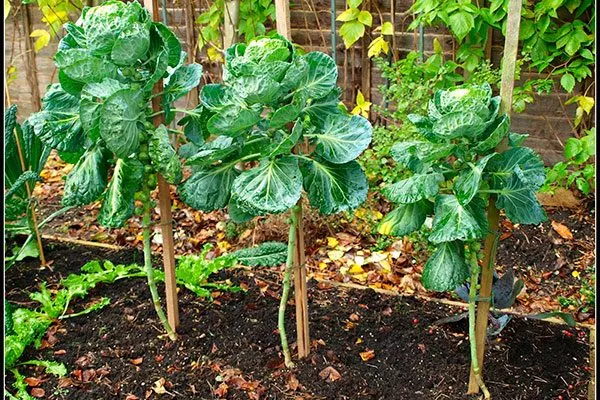
Brussels F1 ripens evenly, allowing for simultaneous harvesting. The variety is considered cold-hardy, making it resistant to spring frosts and early autumn cold snaps. Appearance and physical properties:
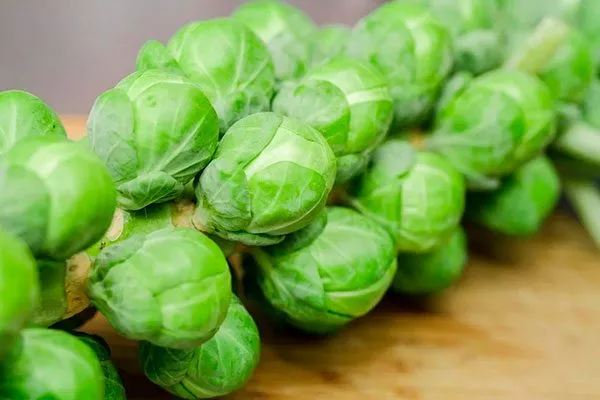
- the heads are round in shape and small in size;
- the weight of the heads is from 15 to 25 g maximum;
- the color of the leaves is dark green on top and slightly lighter inside;
- the structure of the heads is compacted;
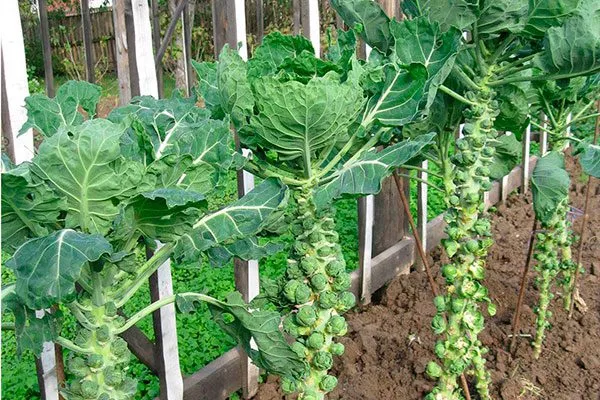
- the number of turns on one long stem is from 20 to 55 pieces;
- leaves are slightly wavy, but strongly concave inward;
- fruit firmness – increased;
- The stems are strong and do not break.
Specifications:
- nutritional properties – dietary;
- disease resistance – normal, the variety is especially resistant to fusarium;
- taste – delicate, juicy;
- presentation – excellent;
- the amount of vitamins is higher than in white cabbage varieties.
Advantages and disadvantages
Brussels appeared relatively recently, but has already managed to win the love of both gardeners and consumers.
There is one drawback - increased demands on lighting.
Productivity
The Brussels F1 variety is quite productive – 4 to 6 kg can be harvested from 1 square meter, depending on the number of heads of cabbage on the stem and their weight/size.
- ✓ Ensure a distance of at least 60 cm between plants for optimal root development.
- ✓ Mulch the soil to retain moisture and prevent weed growth.
Growing and care
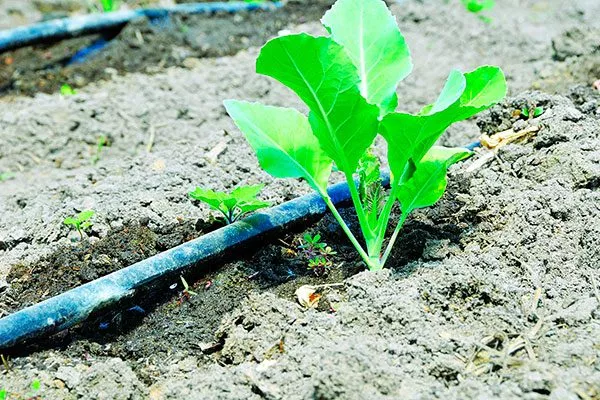
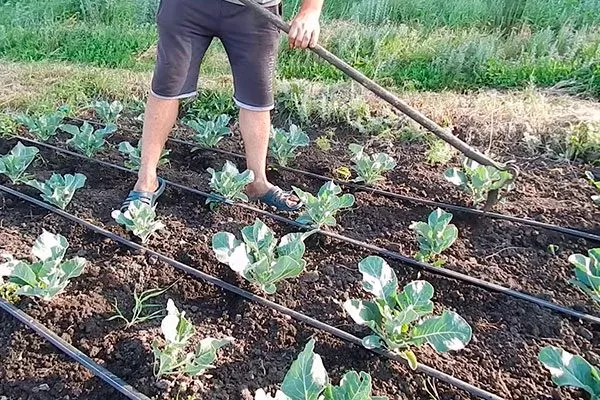
Brussels sprouts prefer sunny locations, so the best spot is an open area with no signs of shade. Planting is done using the standard seedling method. The best time to transplant to open beds is April-May (earlier in the south, later in the central part of the country).
- ✓ Watering should be done in the morning to avoid the development of fungal diseases.
- ✓ Use water at a temperature of at least 18°C to prevent stress on plants.
Hybrid characteristics and recommendations for cultivation after planting:
- Brussels sprouts have the ability to withstand prolonged periods of drought thanks to their robust root system. However, the quality and quantity of the heads, their texture, and flavor are significantly dependent on soil moisture. During dry periods, it is recommended to water the sprouts weekly, using 3-5 liters of water per plant, while avoiding complete soil drying out to a depth of 20-30 cm.
- Fertilizing Brussels sprouts is also important, but be aware of their tendency to accumulate nitrates and sensitivity to excess fertilization. In fertile soils, minimal fertilization is sufficient. During the active growth phase, organic fertilizers, including green manures, are suitable, and during the fruiting stage, infusions of banana peels or wood ash are beneficial. If you don't want to prepare mixtures, buy mineral complexes:
- after planting – a weak solution of nitrogen preparations;
- At the initial stage of head formation - phosphorus-potassium compounds, reducing the recommended doses by half.
- Hilling is not carried out for this hybrid, because the lower heads of cabbage are formed at the base of the stem.
- To prevent plants from leaning too much, install supports at the first sign of instability.
- A month before harvest, limit the plant's growth by pinching the terminal buds and trimming the leaves. This will direct all the plant's energy toward producing large, high-quality heads of cabbage.
Reviews
Brussels sprouts are versatile, easy to grow, and have excellent flavor. Planting is standard, but it's important to choose a sunny spot. Monitor the soil moisture levels around the trunk.