
Broccoli Monaco is a hybrid cabbage variety characterized by decent yields, impeccable flavor, and strong resistance to adverse conditions. This late-ripening F1 variety is characterized by its low maintenance, good shelf life, and excellent transportability.
History of the hybrid's creation
The hybrid's homeland is considered to be Monaco, hence its name. The broccoli was bred in 2008, but it was added to the Russian state register in 2012 after variety testing. The agricultural company "Sibirsky Sad" received a license to produce and sell the seeds.
Cultivation regions
According to the Russian State Register, the variety is recommended for planting and subsequent cultivation in private plots, but no specific regional guidelines are provided. Despite this, Monaco grows easily both in the south of the country and in the Far East. Therefore, gardeners consider it a universal variety.
Monaco F1: Description of the Variety
Monaco broccoli contains a complex of vitamins, macro- and microelements that have a positive effect on the human body. Broccoli is a dietary product with the following physical properties:
- leaves - loosely packed, medium-sized, with a waxy coating, slightly bubbly structure, wavy edges and a greyish-green tint;
- leaf petioles are medium in length;
- bracts - there are none, which makes care easier;
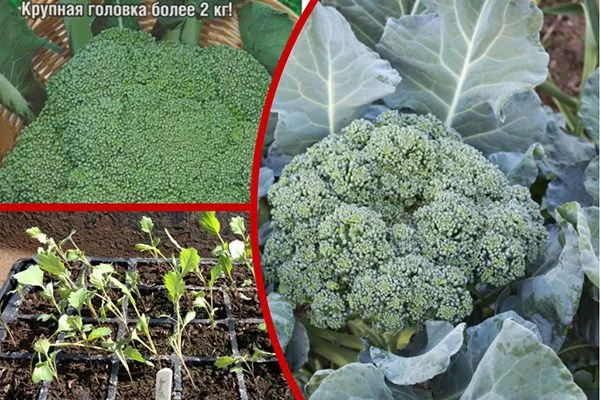
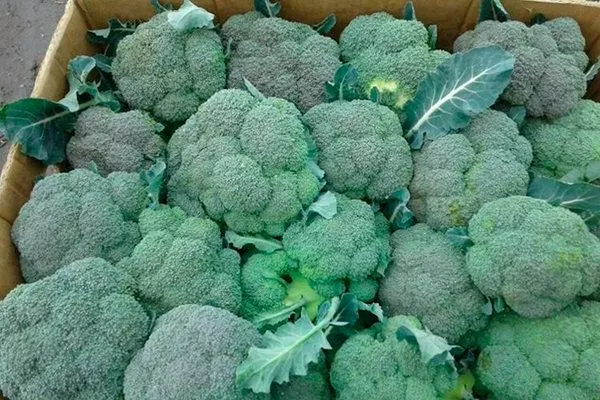
- the head is round, but can have a dome shape, classic green color with a slight grayish tint, weighing from 600 to 700 g (under very favorable conditions, you can grow cabbage weighing up to 2 kg);
- heads of cabbage are quite dense, with juicy pulp;
- sizes - usually large;
- bushes - fashionable and durable;
- root system – developed;
- taste – delicate, slightly sweet and pleasant;
- the surface of the head is slightly bumpy;
- The socket is compact.
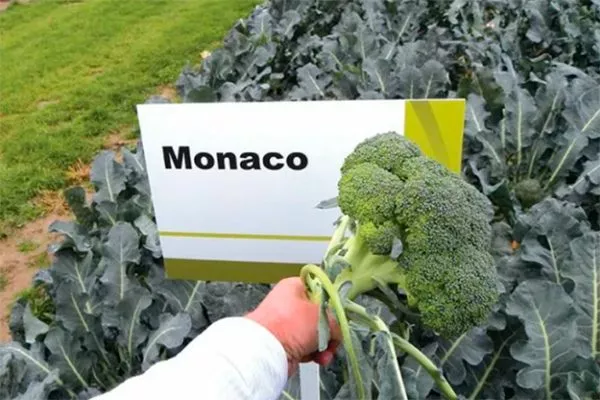
The crop is formed both in the central fork and in the side ones.
Main characteristics
The new hybrid boasts impressive characteristics, making it a favorite among vegetable growers. However, before planting it in your garden, be sure to familiarize yourself with all the variety's nuances. It takes about 70 days from transplanting the seedlings to harvesting.
Drought resistance
Monaco F1 easily tolerates short-term moisture shortages, but if the soil is left unwatered for an extended period, both the aboveground part and the root system will begin to dry out, refusing to develop further. Stagnant water is strictly prohibited, as this will cause the root system to rot.
Frost resistance
If spring temperatures fluctuate around 0 degrees Celsius, the cabbage won't be harmed, but this shouldn't last long. Keep in mind that subsequent frosts may prevent the cabbage from ripening (the critical temperature is -5 degrees Celsius).
Monaco cabbage yield and fruiting
Monaco is considered a high-yielding hybrid, yielding up to 8 kg of cabbage per square meter. However, this yield is achieved through a double harvest. Specifically, the first flush involves cutting heads from the central part of the plant, and the second flush involves cutting heads from the outer florets.
Resistance to diseases and pests
Broccoli cabbage is most often susceptible to fusarium wilt, to which Monaco has a strong resistance. The variety is tolerant to bacterial wilt. Pests favor the hybrid for its sweet flesh, so be sure to spray it with insecticides preventatively.
Scope of application
Monaco is a versatile cabbage, perfect for soups, main courses, mashed potatoes, casseroles, stews, and more. The heads can be frozen and canned for the winter. Neither cooking nor freezing has a negative impact on the vegetable's nutritional properties.
Advantages and disadvantages
According to vegetable growers, the main advantage of Monaco cabbage is its high yield. Consumers note its excellent taste. But the hybrid also has many other positive aspects:
Planting and growing a hybrid
Since Monaco is a late-ripening cabbage, it's best to plant it using seedlings—this speeds up the ripening process. However, in southern Russia, it's primarily sown in open ground.
- ✓ Optimum soil temperature for planting: +12-13°C.
- ✓ Distance between plants: minimum 40 cm, between rows: 60 cm.
Features of planting in different ways for the Monaco F1 variety:
- Timing for planting broccoli in the garden. Planting begins when the soil temperature stabilizes at 12-13 degrees Celsius and the air temperature reaches 15-17 degrees Celsius. This typically occurs between April 20th and the first ten days of May.
- Timing for planting Monaco broccoli seedlings. For the seedling method, sowing time is determined based on climatic conditions. Transplanting into the beds occurs approximately 40-45 days later, so the planting material is laid exactly six weeks beforehand. Typically, this period is from May 20 to April 15.
- Sowing Monaco broccoli seeds directly into the ground. In March, prepare the beds. To do this, dig the soil and add organic fertilizer with a mineral complex: 8-10 kg of rotted manure and 200 g of superphosphate or a similar fertilizer per square meter.
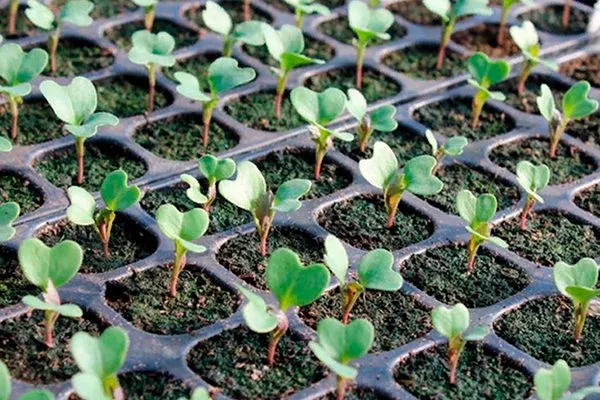
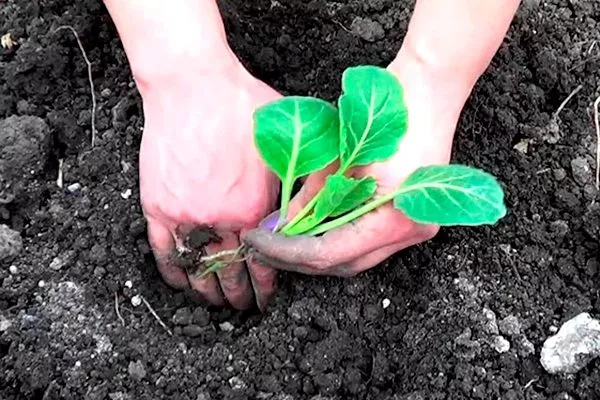
On planting day, dig holes or form furrows. The distance between seedlings should be at least 40 cm, and between rows, 60 cm, as the root system is extensive. Place 2-4 seeds per hole. Thin out the seedlings later, leaving the strongest and healthiest plants. - Planting broccoli seedlings for seedlings. To begin, prepare a substrate of equal parts peat, compost, and turf. Add 50 g of any potassium-phosphorus-based fertilizer to the mixture (10 kg), and 200 g of crushed wood ash.
It's best to sow in disposable cups or peat pots—this eliminates the need to transplant seedlings. Plant the seeds to a depth of 1.5 cm, spacing them no more than 5 cm apart when sowing in large groups. After sowing, gently mist with a spray bottle and cover each container with plastic wrap.
Next, open the door for ventilation, water occasionally, and when 2-4 leaves appear, transplant (if you sowed in shared containers). Transplant into garden beds using the standard method.
Further care for broccoli Monaco
The care procedures are standard, but there are some varietal characteristics that you should pay attention to:
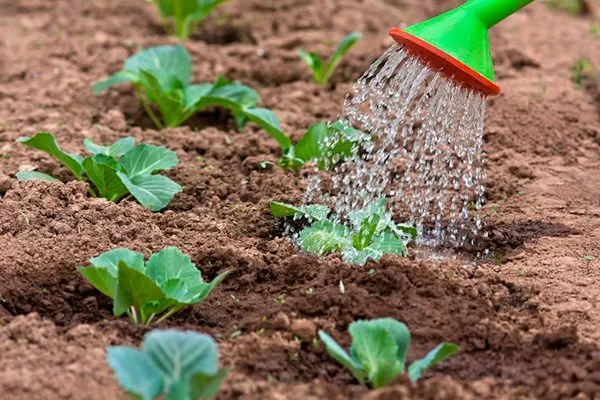
- How to water. When the plants are young, water them every 3-4 days; once a week is sufficient as they mature. The recommended amount of water is 2.5-3 liters. Avoid watering broccoli with tap water, as it is intolerant to harmful compounds. Therefore, allow the water to stand in sunlight for at least 3 days.

Use a watering can to irrigate, preventing water from dripping onto the leaves and stems. For convenience, create mounds of soil around the tree trunks to ensure the water reaches the roots rather than spilling out. - Loosening and mulching. These are essential steps that ensure the root system receives the required amount of oxygen and reduces the risk of pest infestation. These procedures are performed the day after watering or immediately after all the water has been absorbed.
Use only natural materials as mulching material – wood sawdust, straw, freshly cut grass without signs of diseases/pests, peat, humus.
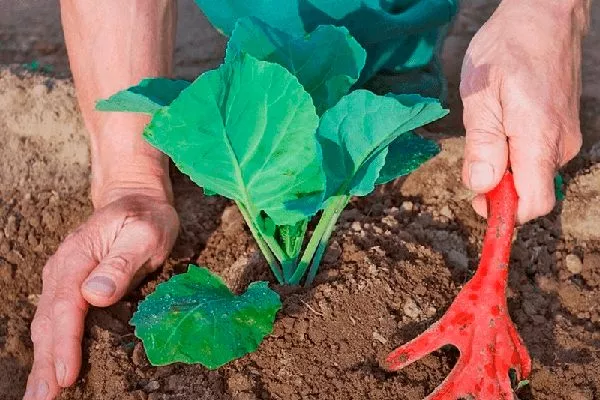
- Hilling. During the growing season, the rosette is hilled twice: the first time three weeks after transplanting the seedlings or one and a half months after sowing them in open ground. The second time is exactly 10 days after the first hilling.
- How to feed Monaco broccoli. This hybrid requires fertilizing three times per season, but many gardeners fertilize more frequently to ensure larger heads and a bountiful harvest. The first time, apply nitrogen-containing fertilizers or urea to the bushes. This should be done 15 days after transplanting or 20-30 days after sowing the seeds in open beds.
The second time is 15-20 days after the first feeding. Use mineral complexes based on potassium and phosphorus. The third time is when the heads are forming. However, you can continue fertilizing after the third time, right up until the heads are the size of a large orange.
- First feeding: 15 days after transplanting or 20-30 days after sowing, with nitrogen-containing preparations.
- Second feeding: 15-20 days after the first, with mineral complexes based on potassium and phosphorus.
- Third feeding: when heads are forming.
Harvesting and storage
Broccoli is best harvested when fully ripe. Never allow it to become overripe, as the firm florets will become too soft. They will also lose their flavor and color.
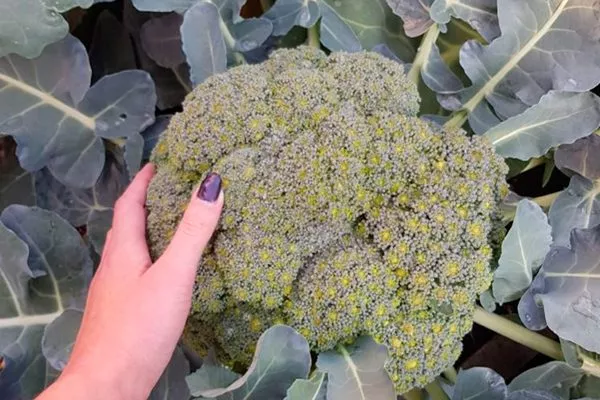
Use a sharp knife to cut the broccoli, rather than twisting the heads. Be sure to leave the leaves on, as this will allow the broccoli to be stored longer. A basement, cellar, or balcony can be used for storage, but the humidity level should not exceed 65%. Otherwise, the heads will begin to turn black and mold.
Reviews
Monaco broccoli is an easy-to-grow modern hybrid with a sweet flavor and a delicate texture. While it's disease-resistant, it's susceptible to pests, so be sure to carry out preventative treatments in early spring. Don't forget to cover young plants overnight if frost is expected.