
Romanesco kale is an Italian hybrid of broccoli and cauliflower. Its pyramid-shaped florets have a rich salad color and a delicate, nutty, creamy flavor without the characteristic bitterness. Although considered exotic, this variety can be grown in the garden just like cauliflower. With proper farming practices, you can harvest the star-shaped florets by fall.
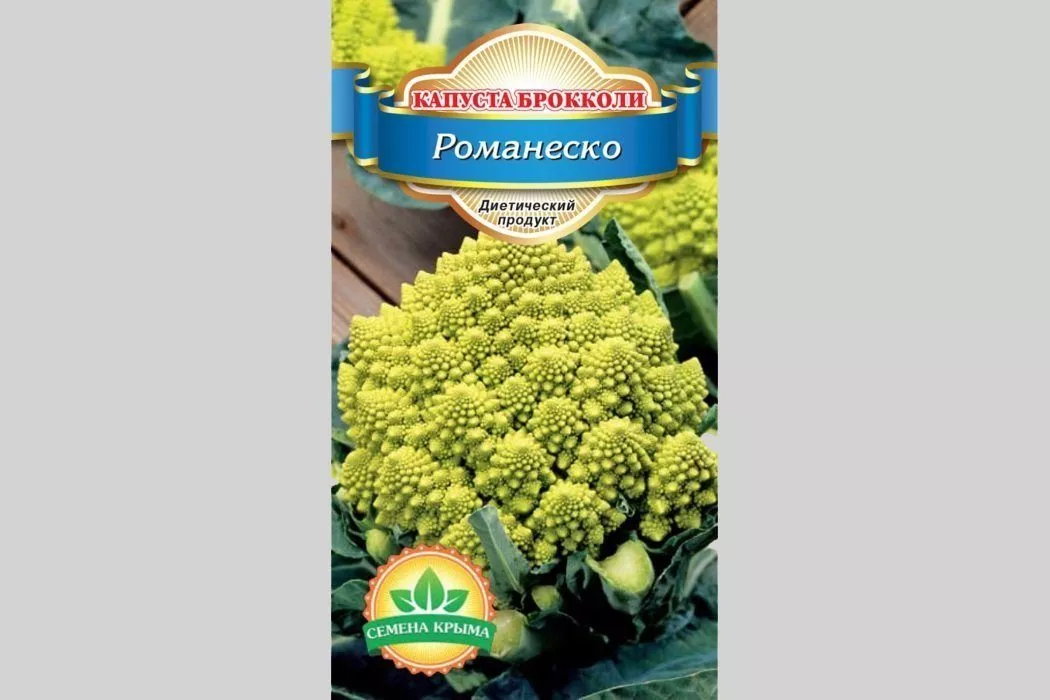
Romanesco cabbage
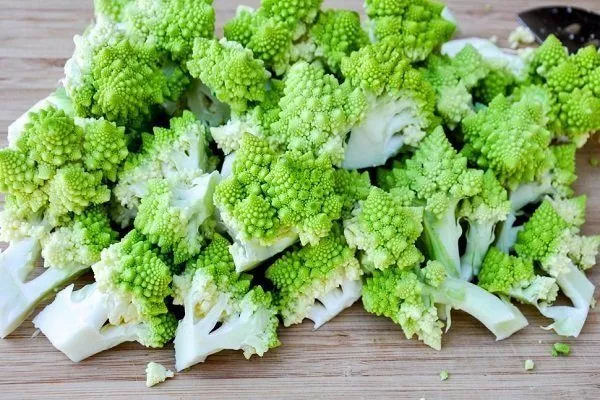
This cabbage is called Romanesque broccoli in Italy, Roman cabbage in France, and pyramidal cauliflower in Germany.
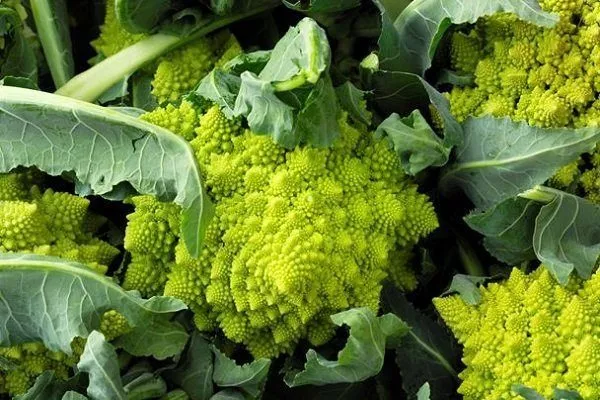
Romanesco is a hybrid of broccoli and cauliflower.
Breeding history
Romanesco kale, also known as Coral Cabbage or Romanesque Broccoli, is of Italian origin. Historical accounts claim the variety originated in Rome in the 16th century, but there is no concrete evidence to support this claim.
It only gained worldwide popularity in the 1990s. It is believed to have been developed by Roman breeders by crossing cauliflower and broccoli, which explains the flower's whimsical, beautiful shape, with its florets arranged in a logarithmic spiral.
Romanesco is loved not only in Italy, but also in France and Germany. Moreover, cabbage has recently become increasingly common in gardens in the CIS countries.
Description of the variety
Romanesco (Brassica oleracea in Latin) belongs to the Cruciferae family and is an original annual plant that bears exotic and useful fruit heads, the characteristics of which we will learn about below.
Appearance
To understand what this cabbage is, you need to consider its parameters:
- FormThis annual plant's signature feature is its inflorescences, which resemble lemon-green pyramids, densely packed together and surrounded by succulent, glaucous-green leaves. They form a fractal spiral of numerous similarly shaped buds. A fractal is a complex geometric figure in which a certain part is constantly repeated, constantly changing its size. For example, cabbage is made up of buds, each subsequent one consisting of a set of similarly shaped, but much smaller, buds. Essentially, the flowers form a spiral unfolding from the center.
Due to this structure, Romanesco resembles the Fibonacci sequence, in which each subsequent number is equal to the sum of the two preceding numbers (0, 1, 1, 2, 3, 5, 8, 13, and so on ad infinitum). Counting the spirals in each direction reveals that they always correspond to this sequence, although the fractal does not continue indefinitely, but has a breakpoint. - DimensionsDepending on growing conditions, the heads can reach 1 m in height, and the heads themselves weigh an average of 500 g. Inflorescences no wider than 10 cm are edible. The size of the heads does not depend on when the seedlings are transplanted to a permanent location.
- TasteThis variety belongs to the same group as cauliflower, but its flavor is more reminiscent of broccoli. Romanesco has a more delicate texture and a nutty, creamy flavor. It lacks the bitterness typical of cauliflower and broccoli.
The heads of cabbage can be stored for about 3 days, but they can also be separated into florets, placed in bags, frozen and consumed within 1 year.
Composition and beneficial properties
The nutritional value of cabbage is as follows (per 100 g):
| Element | Content per 100 g |
| Squirrels | 2.9 g |
| Fats | 0.4 g |
| Carbohydrates | 6.5 g |
| Ash | 0.9 g |
| Water | 89 g |
Romanesco is an easily digestible and dietary product – the caloric content per 100 g is only 25 kcal.
This cabbage variety contains dietary fiber, carotenoids, vitamins (B, A, C, E, and K), macro- and microelements (zinc), and antioxidants. Interestingly, Romanesco cabbage contains up to 120 mg of vitamin C per 100 g, while broccoli and cauliflower contain 80 and 40 mg, respectively. It also contains more carotene and mineral salts, although it has less fiber.
Thanks to this composition, Romanesco has the following beneficial properties for the human body:
- helps restore the sensitivity of taste buds and get rid of the metallic taste in the mouth;
- fights cancer cells and other neoplasms due to the content of special substances – isocyanates;
- improves colon motility, helping to prevent constipation, diarrhea and hemorrhoids;
- normalizes beneficial microflora in the intestines by stopping the processes of putrefaction and fermentation;
- thins the blood and improves the elasticity of blood vessels, increasing their strength;
- removes excess bad cholesterol, waste and toxins, helping to prevent the development of atherosclerosis.
Romanesco cabbage is beneficial for absolutely everyone, but it should not be consumed in excessive quantities, as this can lead to bloating and flatulence.
The following video explains in detail what Romanesco cabbage is:
Varieties of the variety
| Name | Ripening period | Weight of the head of cabbage | Disease resistance |
|---|---|---|---|
| Puntoverde F1 | 110 days | 1.5 kg | High |
| Veronica | 110 days | 2 kg | Average |
| Pearl | 120 days | 700-750 g | High |
| Emerald Cup | 110-120 days | 400-500 g | Average |
The State Register of the Russian Federation includes four varieties of Romanesco cabbage recommended for cultivation in private plots. These include:
- Puntoverde F1A mid-season hybrid—heads can be harvested 110 days after the first shoots emerge. Produces heads weighing up to 1.5 kg.
- VeronicaLike the previous variety, it is mid-season, but produces larger heads of cabbage, weighing around 2 kg.
- PearlThis is a mid-late variety—heads can be harvested 120 days after the first shoots emerge. The fruits are medium-sized, weighing 700-750 g.
- Emerald CupThis variety has a growing season of 110-120 days. It produces small fruits weighing up to 400-500 g, which in appearance more closely resemble broccoli.
Agricultural technology
Breeding Romanesco is more challenging than other varieties of this vegetable crop, as any improper technique can result in the inflorescences simply failing to set. To prevent this, consider the following cultivation practices:
- Grow cabbage using seedlings, sowing seeds in mid-March to late April, two months before planting the seedlings in their permanent location. However, in southern regions, direct sowing of seeds into the ground is also possible, but the resulting heads may not be as attractive. Planting in the south can begin in the first ten days of May.
- For cabbage, choose well-lit areas where the following crops were previously grown:
- potatoes (the best predecessor, since after them the soil remains loose);
- onion;
- carrot;
- tomatoes;
- cucumbers;
- legumes;
- beet.
According to crop rotation rules, Romanesco should not be planted after other members of the Brassicaceae family. This means that undesirable predecessors include all types of cabbage, lettuce, radishes, turnips, and rutabaga. After these crops, the plant can only be cultivated after 4-5 years.
- Cabbage should only be grown in alkaline soil, as it does not thrive in acidic conditions. If necessary, soil acidity can be reduced by liming in the fall or adding wood fertilizer or dolomite flour at a rate of 200-400 g per square meter. Manure or compost (2 buckets per square meter) is also recommended as a fertilizer. When applying fertilizer, the soil should be thoroughly dug over to ensure that pests and disease spores are killed by low temperatures over the winter. In the spring, immediately before planting, it is advisable to fertilize the soil with mineral fertilizers containing copper and molybdenum.
- When growing cabbage, pay special attention to the microclimate, as it does not tolerate sudden temperature fluctuations, extreme heat, or prolonged cold. In such conditions, seedlings develop poorly, rot, or dry out. To ensure a good harvest, the plant also requires timely watering and fertilizing.
With proper care of the plant, you can begin harvesting full heads with tight, star-shaped inflorescences as early as September – October.
Growing seedlings
This Italian exotic is grown primarily from seedlings. Heads actively form when the ambient temperature reaches at least 18°C. This means that seeds for seedlings should be sown 45-60 days before similar weather conditions arrive in the region and the threat of further frost has passed. Typically, in northern and central regions, seeds for seedlings should be sown in late April, and in southern regions, from mid-March.
- ✓ The soil temperature during planting should not be lower than +10°C to prevent stress on the seedlings.
- ✓ Optimum soil moisture should be maintained at 70-75% of the total moisture capacity.
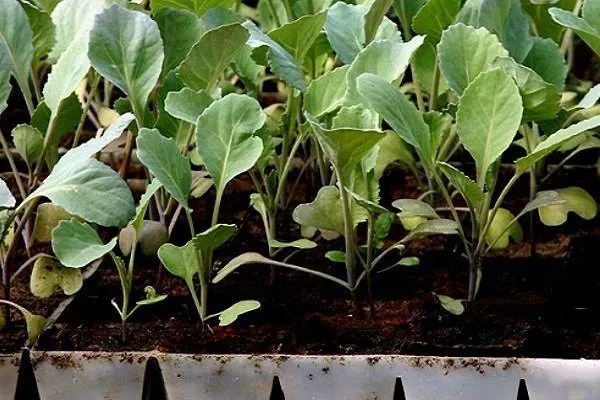
You can grow strong seedlings in stages:
- Substrate preparationPlace expanded clay in a shallow box or container, then top it with 30% sand, 40% turf, and 30% peat. Add a handful of turf ash to the soil mixture to reduce its acidity. To disinfect the soil, water it with a solution of potassium permanganate or bake it in the oven. Read more about this. Here.
- Seed treatmentTreat the seeds with a solution of potassium permanganate or Fitosporin to protect them from fungal and bacterial diseases.
- SowingMake small holes 1 cm deep and 5 cm apart in the soil surface. Place a few seeds in each hole to ensure germination, then sprinkle with soil mixture and mist with a spray bottle.
- CareDuring the first 2-3 weeks, until the first shoots appear, maintain the room temperature at 20°C. Subsequently, lower it to 10°C during the day and 8°C at night (for this purpose, the seedlings can be moved to the balcony); otherwise, the sprouts will not grow and develop quickly. To obtain strong seedlings with a developed root system, it is equally important to provide the sprouts with moderate lighting using special lampsOtherwise, the sprouts may become elongated. Furthermore, seedlings need to be watered regularly, avoiding overwatering or overdrying the soil, which can lead to blackleg disease and plant death.
Strong seedlings will be able to withstand adverse weather conditions and form a dense, spiral-shaped head of appropriate size by the end of the growing season.
Planting cabbage in the ground
The seedlings should be transplanted to their permanent location after the threat of frost has passed. This is typically in June. The air temperature should remain at least 18°C, otherwise the inflorescences will not develop to the desired size.
Strengthened seedlings at the age of 45-60 days can be transplanted to a pre-treated area in the following order:
- Prepare holes 45-50 cm apart. Leave 60 cm between rows to allow for easy harvesting. Therefore, the optimal planting pattern is 50x60 cm.
- Water the soil with hot water or a rich pink solution of potassium permanganate.
- Carefully remove the seedlings from the container, being careful not to damage the root system, and place them in the holes. Press gently to ensure good root contact with the soil. Water the seedlings again.
If Romanesco is grown in the south by direct seeding, the same planting pattern should be followed, spacing the seeds 50 cm apart. An acceptable distance between rows is 60 cm.
Caring for seedlings
After planting in a permanent location, the seedlings need to be properly cared for, which involves a number of agricultural practices.
Watering and loosening
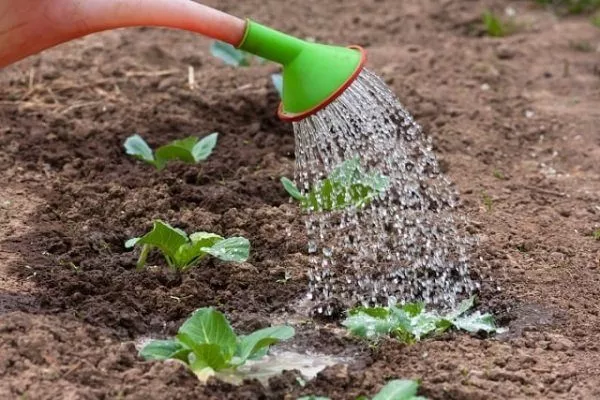
To form heads the plant needs water generously and regularly During the period of shoot formation, as it is a moisture-loving plant and requires adequate soil moisture. During dry summers, water the seedlings every 3-4 days, avoiding overwatering, as this promotes rotting in the root system.
A few minutes after watering, the soil under each plant should be loosened superficially to allow air to reach the roots. Weeding should also be done at this time, otherwise weeds will deprive the cabbage of nutrients.
Timely destruction of weeds will help prevent an invasion dangerous pests for cabbage and the development of various diseases.
Top dressing
To obtain a good harvest during the growing season, cabbage needs to be fed 3 times, following this scheme:
- 7-10 days after planting, water the seedlings with a solution prepared from 0.5 liters of mullein or bird droppings and 1 tbsp. of complex mineral fertilizers per 10 liters of water.
- Two weeks after the first feeding, apply nitrogen fertilizer. To prepare the nutrient solution, mix 30 g of ammonium nitrate, 40 g of superphosphate, 2 g each of potassium chloride and boric acid in 10 liters of water.
- After another two weeks, when the heads begin to form, apply a third fertilizer. To do this, prepare a solution of 0.5 liters of mullein or bird droppings, 30 g of superphosphate, 30 g of ammonium nitrate, and 20 g of potassium chloride per 10 liters of water. Add 0.5 liters of fertilizer to each bush.
- 10 days after planting, add a urea solution (10 g per 10 l of water) to stimulate leaf growth.
- During the period of head formation, use potassium-phosphorus fertilizers (20 g of superphosphate and 10 g of potassium sulfate per 10 liters of water) to improve the quality of the crop.
In the future, cabbage does not need any additional feeding, since its late application can lead to the fact that the inflorescence heads will not form, and instead, bouquets of cabbage leaves will be obtained.
Protection from diseases and pests
Romanesco is susceptible to diseases common to all members of the Cruciferae family. These include:
- keel;
- blackleg;
- mucous bacteriosis;
- mosaic;
- gray or white rot;
- Alternaria.
When infected, spots, dark spots, and a white coating often appear on the leaves. In this case, the affected plants should be dug up and burned, and the rest of the planting treated with copper-containing products, such as Trichoderma or Bordeaux mixture. This will help protect against bacterial or fungal infections.
Pests pose no less of a threat to cabbage, especially:
- aphid;
- cruciferous flea beetles;
- cabbage flies;
- scoops;
- slugs and snails;
- whiteflies.
These insects suck nutrients from leaves and also transmit bacteria and fungi, causing various plant diseases. In most cases, infected plants must be eradicated, and the remaining seedlings treated with insecticides.
To protect Romanesco from insect attacks, it's a good idea to plant herbs (dill, sage, cilantro) near the cabbage bed in advance, as their scent repels pests. Bay leaves and sprigs of wormwood should also be placed under the bushes. Wood ash also helps combat insects. It can be used alone or mixed with mustard powder to dust the plants and the spaces between rows.
Harvesting and storage
Cabbage heads ripen in the fall, and harvesting can last until early October. Although the plant can reach a height of 1 m, its inflorescences are small, and they should not be allowed to overripe. Heads left on the roots for too long lose their tenderness and juiciness, and in the worst case, rot or dry out.
Harvesting should be done in the morning hours, before the sun's rays have had time to warm up the entire plant.
The heads should be carefully cut off and stored at a temperature of 5 to 7°C for 4-7 days. After harvesting, they should not be refrigerated immediately, as they will lose their nutritional value and begin to spoil. However, cabbage can be deep-frozen and consumed within a year.
Rules and methods of preparation
To cook Italian exotic food deliciously, you need to follow these rules:
- Be careful not to overcook the florets, as prolonged boiling will cause them to become tasteless and unpleasant. However, if properly cooked, the vegetable has a delicate, creamy flavor with nutty notes.
- Cabbage can be paired with cheese, eggs, mushrooms, onions, or carrots. It can also be served with stewed meat or cooked spaghetti.
- Season romaine kale with black pepper, sea salt, oregano, thyme, basil, or garlic. You can also use special Italian herb blends, which typically include peppercorns, marjoram, juniper, bay leaf, oregano, nutmeg, and coriander.
Romanesco can be used in a variety of recipes, some of which are discussed below:
- Casserole with cheese sauceBoil 1 head of cabbage for 10 minutes if whole, or 5 minutes if individual florets. In a dry, hot frying pan, fry 2 tablespoons of flour until golden brown. Pour in 250 ml of milk and whisk thoroughly until smooth, eliminating lumps. Sprinkle with 100 g of grated cheese and stir until melted, then add Italian herbs to taste. Place the florets in a baking dish, pour the sauce over them, and bake for 20 minutes at maximum temperature.
- Fried inflorescences in batterA great dish for fast food lovers. The florets are soft on the inside and crispy on the outside. Separate the head of cabbage into florets, boil for 4 minutes, and then plunge into ice water for a minute. Next, beat 3 eggs with 3 tablespoons of flour, adding spices and salt to taste. Heat oil in a deep frying pan, dip the florets in the batter, and fry for 20-30 seconds. Place the cabbage in a colander to drain excess fat. Serve with boiled rice, mashed potatoes, or meat.
- Vegetable omelette with mushroomsBoil 150 g of cabbage and a couple of mushrooms, such as button or oyster mushrooms. Cut the mushrooms into slices, 2 tomatoes into rings or wedges, and 1/2 an onion into cubes. Beat 4 eggs with 1 tbsp of flour and 50 g of cheese, season. Fry the onions until browned, add the tomatoes, and let them simmer until the juices evaporate. Add the florets and mushrooms, and after a few minutes, pour in the egg mixture and cook over low heat for 7 minutes.
- SoupBoil 450g of chicken fillet and cut into strips. Steam 300g each of broccoli and Romanesco. Add finely chopped onion, broccoli, salt, and pepper to the chicken broth. Simmer for 10-15 minutes and blend. Add the meat and Romanesco to the resulting creamy soup, stir, and season with 2 tbsp of 10% cream or 1 tbsp of butter.
- Italian frittataSeparate 150g of Romanesco and 50g of broccoli into small florets. Boil in salted water for about 5-7 minutes. Grate half a carrot and half an onion on a medium grater, then fry in hot oil. Separately, beat 2 eggs with 10% cream. Place the carrots and onions in a baking dish, add the cabbage, and pour in the egg mixture. Sprinkle with 100g of grated cheese and bake for 30 minutes at 180°C.
- Stuffed zucchini with cabbageMince 450g of chicken fillet and 1 carrot. Cut 2-3 medium zucchini into rings, removing the cores. Fill the rings with the filling and place a cauliflower floret in the center of each. Bake the rings in the oven for 30-40 minutes at 180°C. Cover the baking sheet with foil. Serve the rings with 2 tablespoons of sour cream seasoned with chopped dill.
- Vegetable saladRinse 1 small head of cabbage under running water, then separate the florets. Bring water with a lemon wedge to a boil, add the florets, and cook for 3-5 minutes. Then drain them in a colander, rinse with cold water, and pat dry with a paper towel. Peel 150 g of daikon, rinse, dry, and cut into strips. Rinse 1 bell pepper, remove the seeds, and cut into strips. Next, cut the tomato into small pieces.
To prepare the sauce, in a deep bowl mix 3 tablespoons of grainy mustard, 1-2 tablespoons of olive oil and 1 tablespoon of freshly squeezed lemon juice.
Place all ingredients in a salad bowl and add chopped dill, parsley, basil, or celery for flavor. Season the salad with salt, ground black pepper, toss with the dressing, and toss to combine.
You can make a vegetable salad with Romanesco cabbage using the recipe in the following video:
Romanesco cabbage is considered an exotic Italian variety, although it is becoming increasingly popular in our region every year. It consists of numerous brightly colored florets, and if you look closely, you'll notice that they closely replicate the shape of the parent plant. Growing such unique heads of cabbage in your own garden isn't easy, but with proper gardening practices, any gardener can accomplish this.